
21 min 51 sec
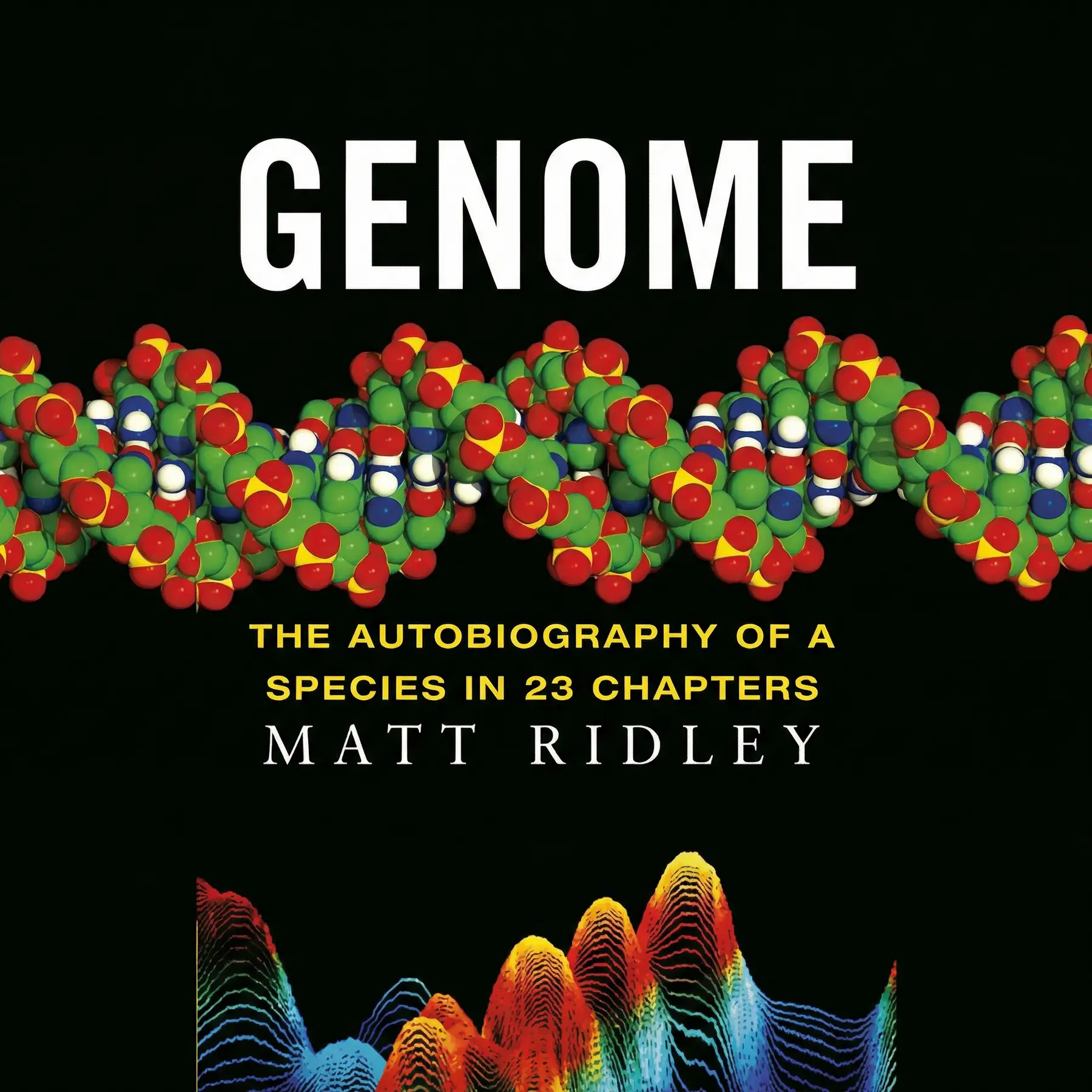
Genome: The Autobiography of a Species in 23 Chapters
By Matt Ridley
Genome explores the intricate map of human DNA, revealing how 23 pairs of chromosomes narrate our evolutionary history, influence our personalities, and dictate the future of medicine and human identity.
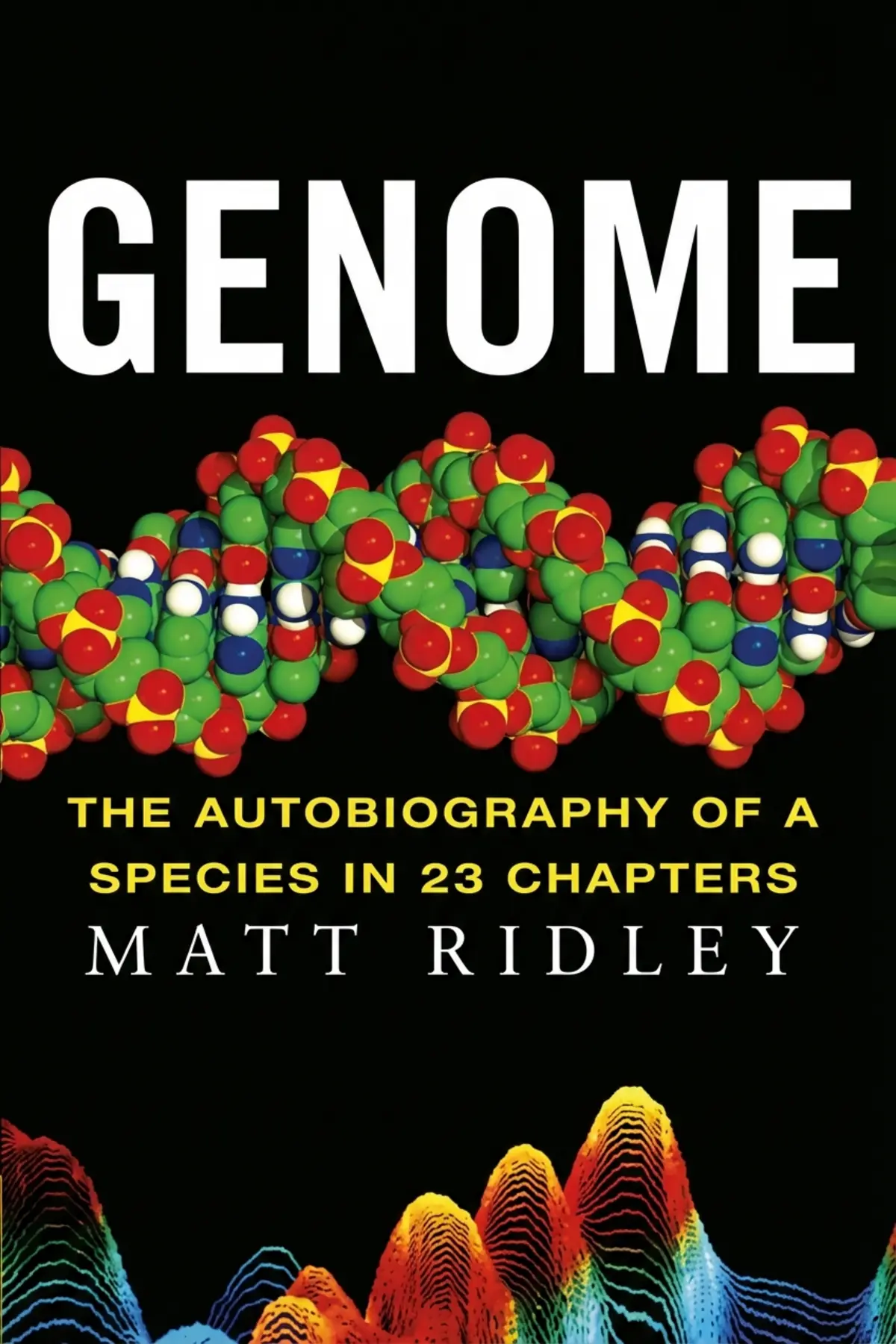
Table of Content
1. Introduction
2 min 01 sec
Imagine for a moment that every single cell in your body contains a hidden library. Inside this library is a set of instructions so detailed and so vast that they tell the entire story of how you came to be, from the distant ancestors you share with the creatures of the sea to the specific traits that make you who you are today. This isn’t science fiction; it is the reality of your genome. For centuries, the inner workings of life were a profound mystery. We knew that traits were passed down, and we could see the results of evolution, but the ‘how’ remained locked away in microscopic code.
A major shift occurred in 1996 with the birth of Dolly the sheep. As the first mammal cloned from an adult cell, Dolly forced the world to confront the reality that we were beginning to master the mechanics of life itself. It sparked a global conversation: were we overstepping our bounds? Were we trying to play a role traditionally reserved for nature or a higher power? This debate only intensified in the year 2000, when leaders in the United States and the United Kingdom announced that the human genome had finally been mapped. For the first time, humanity held the ‘book’ of its own life.
In this exploration, we are going to dive deep into that book. We will look at how our DNA is structured and what it reveals about our connection to the rest of the animal kingdom. We will investigate how tiny errors in this code can lead to devastating illnesses and how ‘junk’ segments of our DNA might actually hold the key to identifying individuals. We will also tackle the big questions: How much of your personality is written in your genes? Can we ever truly escape the aging process? And perhaps most importantly, as we gain the power to edit this autobiography of our species, what does that mean for our future and our freedom? Let’s begin this journey through the 23 chapters of the human story.
2. The Genetic Library of Life
2 min 04 sec
Discover the immense scale of the human genome and how a simple four-letter alphabet encodes the most complex information on the planet.
3. A Shared Ancestry and the Speed of Adaptation
2 min 16 sec
Explore our close genetic ties to chimpanzees and learn why humans might actually be slower to adapt than the smallest organisms.
4. The Power of a Single Genetic Error
2 min 06 sec
Learn how the repetition of a tiny genetic ‘word’ can determine the difference between health and a fatal illness like Huntington’s.
5. The Mystery and Utility of Junk DNA
2 min 04 sec
Uncover the surprising truth that most of our genome consists of seemingly useless sequences and how they are used in modern forensics.
6. The Genetic Architecture of Personality
2 min 06 sec
Investigate how our brain chemistry and genes influence our behavior, and where the environment fits into the equation.
7. The Biological Clock of Aging and Cancer
1 min 58 sec
Understand the evolutionary reasons why our bodies eventually break down and how cancer cells manage to bypass the aging process.
8. The Dawn of Genetic Modification
1 min 48 sec
Delve into the revolutionary potential of gene therapy and the ethical debates surrounding the modification of life.
9. The Long Shadow of Eugenics
1 min 53 sec
Reflect on the disturbing history of the eugenics movement and how it continues to influence our view of genetic testing today.
10. Reconciling Genetics with Free Will
1 min 58 sec
Examine the tension between biological determinism and our sense of freedom, and why accepting our genes might actually be liberating.
11. Conclusion
1 min 37 sec
As we conclude this journey through the human genome, it is clear that we have entered a new epoch. The mapping of our 23 chromosomes is not just a scientific achievement; it is a profound expansion of human self-knowledge. We now know that we are part of a continuous thread of life that stretches back billions of years, and that our bodies are the result of an incredibly complex dance between ancient viral code, evolutionary trial and error, and the precise instructions that make each of us unique.
This knowledge brings with it a new set of responsibilities. We are standing on the cusp of a world where we can potentially eliminate genetic diseases, extend the human lifespan, and even influence the traits of future generations. But as we move forward, we must carry the lessons of history with us. We must balance our desire for health and perfection with a deep respect for individual choice and the natural diversity of our species.
The most important takeaway is that our genes are not a prison. While they provide the blueprint for our bodies and the foundations of our personalities, they do not rob us of our agency. By understanding the code that makes us who we are, we gain the tools to live better, healthier, and more self-aware lives. The ‘autobiography’ of our species is still being written, and for the first time, we have the opportunity to pick up the pen and help shape the chapters yet to come. Take this knowledge as an invitation to marvel at the complexity of your own existence and to embrace the future with both curiosity and caution.
About this book
What is this book about?
Genome offers a comprehensive look at the blueprint of the human species, organized around the twenty-three pairs of chromosomes that make up our genetic heritage. By treating each chromosome as a chapter in an autobiography, it explores the deep history of life, from our shared ancestry with other primates to the tiny molecular details that differentiate us as individuals. The book delves into the mechanics of genetics, explaining how simple combinations of molecules create the complexity of a human being. Beyond the science, this exploration promises to clarify the philosophical and ethical dilemmas posed by our growing genetic knowledge. It addresses the tension between biological determinism and free will, the dark history of eugenics, and the revolutionary potential of gene therapy. Listeners will gain a clear understanding of why we age, how diseases like cancer function at a cellular level, and what our DNA suggests about the future of our species. Ultimately, it provides a window into the core of human existence, showing how our past is written in our cells and how our future might be shaped by our ability to read that code.
Book Information
About the Author
Matt Ridley
Matt Ridley is a distinguished member of the English House of Lords and an award-winning author renowned for his ability to make complex scientific concepts accessible to a general audience. His acclaimed works include The Red Queen, The Rational Optimist, and The Agile Gene, all of which explore the intersections of biology, evolution, and human behavior.
Ratings & Reviews
Ratings at a glance
What people think
Listeners find this work engaging and expertly composed, serving as an excellent primer on genetics that stays approachable for beginners. The text provides an absorbing exploration of the human genome, where one listener mentions that it triggers profound questions regarding biology and philosophy. They value the thorough examination of the genetic field and find the topic compelling, with one review emphasizing its unique method of examining human chromosomes. The narrative flow and tempo earn praise, and one listener characterizes the experience as a well-crafted kaleidoscopic adventure in learning.
Top reviews
Sebastian
Picked this up after a recommendation from a biology-major friend, and I was genuinely surprised by how accessible it was. The structure is brilliant; Ridley organizes the book into 23 chapters, each representing a chromosome, which turns a complex subject into a well-crafted kaleidoscopic adventure. It’s less of a dry textbook and more of a narrative history of what makes us human. I was particularly gripped by the discussion on how our environment—like high-stress jobs—can actually flip genetic switches to affect our heart health. To be fair, some of the science regarding specific gene locations is likely dated since it was published in the late 90s, but the overarching logic of the 'selfish gene' remains incredibly compelling. It evokes deep biological and philosophical questions that I’m still chewing on weeks later. If you want to understand the blueprint of life without needing a PhD, this is the place to start.
Show moreMaksim
Ever wonder how much of your personality is actually 'you' and how much is just a series of switches being flipped in your DNA? This book provides a fascinating dive into the world of the human genome, tackling everything from intelligence to sexual orientation with a journalistic flair. I loved the section on how we share 98% of our genes with chimpanzees, yet that tiny 2% difference accounts for the entirety of human civilization. It’s an intriguing subject that Ridley handles with an engaging style, though he definitely isn't afraid to voice his own opinions. The chapter on 'Conflict' was a standout for me, explaining the silent war between maternal and paternal genes. It’s a captivating read that makes you realize your body is less a single entity and more a chaotic colony of competing instructions. Truly eye-opening stuff for anyone interested in the nature vs. nurture debate.
Show moreJom
The structure of this book is brilliant; organizing human history and biology through 23 pairs of chromosomes makes the massive scale of the genome feel manageable. I was mesmerized by the facts about how genes aren't just blueprints but are actively responding to our behavior. The idea that our social status can actually change our blood chemistry is mind-blowing. Ridley's writing style is fluid and engaging, turning what could have been a dry academic slog into a genuine page-turner. Even the more technical parts about CAG repeats in DNA felt clear and urgent. It’s a kaleidoscopic adventure in learning that connects the dots between our ancient ancestors and our modern lives. While it is out of date in the specifics, the philosophical questions it raises about free will and genetic determinism are timeless. This is essential reading for anyone who wants to understand the human condition from the inside out.
Show morePannipa
As someone who hasn't touched a science textbook since high school, I found Ridley's prose to be a breath of fresh air. He avoids the dense jargon that usually kills my interest in non-fiction and instead focuses on the fascinating 'why' behind our biology. Each chapter feels like a self-contained story, covering everything from the origins of life to the future of genetically modified foods. The way he describes the 'Selfish Gene' philosophy is so clear that it finally clicked for me. I also loved the bit about how we are attracted to people with different immune system genes through body odor—it’s such a weird, cool fact! Even though it was written in 1999, the book feels vibrant and relevant. It’s a captivating dive into what makes us tick, and I’d recommend it to anyone who enjoys a good 'how-it-works' story about the human race.
Show moreJames
Matt Ridley has a knack for taking dense, microscopic concepts and turning them into a narrative that feels like a globe-trotting mystery. The way he links Chromosome 4 to the 'Fate' of Huntington’s Disease was both fascinating and heartbreaking. It’s a deep look into genetics that doesn't shy away from the ethical dilemmas, like whether we should even want to know our genetic destiny if the disease is incurable. My only real gripe is that the book shows its age in the bibliography. Since genetics moves at light speed, some of the specific correlations feel like relics of a past era of research. Still, the prose is sharp and the pacing is excellent. Ridley avoids getting bogged down in jargon, making the heavy lifting of molecular biology feel like a breeze for a novice reader like me.
Show morePornthip
Not what I expected from a science book, look, it's actually quite readable. Instead of a linear history, it's a collection of thematic essays tied to different chromosomes. I found the chapter on stress and cortisol to be the most practical part of the whole thing. It explains why people in low-control jobs have higher heart attack rates, which is a wild bridge between sociology and biology. The truth is, Ridley is a journalist at heart, so he focuses on the human stories and the scientists behind the discoveries rather than just the math. It’s a great introduction for novices, though more advanced readers might find his quick sketches of theories a little too superficial. Occasionally his personal politics peek through the curtain, but it’s easy enough to ignore for the sake of the excellent science communication on display here.
Show moreWaree
Finally got around to reading this classic, and I finally understand why it’s so highly recommended in biology circles. The author takes a novel approach to discussing human chromosomes, making each one a character in the story of our species. The section on the P.53 gene and its role in suppressing tumors was particularly well-explained; it makes you appreciate the invisible battles your cells are fighting every second. Ridley manages to be captivating without being condescending, which is a rare feat for science writers. My only caveat is that the data on things like the 'gay gene' or IQ heritability should be taken with a grain of salt given how old the source material is. Science has moved on, but the way Ridley explains the *mechanism* of genetics is still top-tier. It’s a well-written, fast-paced dive into our biological blueprint that I think most people would enjoy.
Show moreMay
Gotta say, the chapter on 'Fate' featuring Huntington’s Disease haunted me long after I finished the page. Ridley doesn't just explain the science; he explores the human cost of our genetic knowledge. This is a well-crafted look into the world of the human genome that balances technical detail with compassionate observation. I appreciated the table of IQ correlations for twins—it really puts the nature vs. nurture argument into a new perspective. However, I did find his constant jabs at 'social determinism' a bit repetitive after a while. We get it, Matt, you think genes are the primary driver! Despite that, the pacing is great and the book functions as a fantastic introduction for anyone who is a complete novice in the field. It’s an intriguing subject that will definitely make you look at your own body and family history in a completely different light.
Show moreMarasri
To be frank, Ridley walks a tightrope between hard science and journalistic storytelling, and he doesn't always stay balanced. The concept of using the 23 chromosomes as a framework is clever, but it feels a bit forced at times, like he's trying to fit square pegs into round holes just to keep the gimmick going. While the writing is neither incompetent nor exceptional, I found myself getting irritated by his frequent detours into free-market advocacy and 'big government' warnings. What does that have to do with DNA? It felt like I was reading a science section of the New York Times that had been edited by a Tory politician. There’s some interesting trivia here—especially regarding IQ correlations in twins—but the book is significantly dated. It’s a decent primer if you’ve never read anything on the subject, but there are more objective and modern options available now.
Show moreAim
I'll admit the concept of a chapter for every chromosome is clever, but the author's personal biases are impossible to ignore. Ridley’s regressive views on gender roles and his insistence that boys and girls are hard-wired to like specific things felt more like outdated stereotypes than rigorous science. Even worse was the chapter on eugenics; he decries the historical horrors of the movement while seemingly defending the underlying logic in the surrounding chapters. It’s a hypocritical mess that left a bad taste in my mouth. Plus, quoting Gould on IQ in a way that feels intentionally misleading didn't help his credibility. If you can look past the godawful politics, there’s some okay science writing, but honestly, why bother? Genetics has advanced so much since 1999 that this book is more of a historical curiosity than a reliable scientific resource. I’d recommend skipping this and picking up something by Dawkins or even Bill Bryson instead.
Show moreReaders also enjoyed
Alien Earths: The New Science of Planet Hunting in the Cosmos
Lisa Kaltenegger
A Life Decoded: My Genome: My Life
J. Craig Venter
A Planet of Viruses
Carl Zimmer
A Short History of Nearly Everything
Bill Bryson
AUDIO SUMMARY AVAILABLE
Listen to Genome in 15 minutes
Get the key ideas from Genome by Matt Ridley, plus 5,000+ more titles in English and Thai.
- 5,000+ titles
- Listen as much as you want
- 7-day free trial
- Cancel anytime







