
23 min 07 sec
The Science and Technology of Growing Young: An Insider's Guide to the Breakthroughs That Will Dramatically Extend Our Lifespan . . . and What You Can Do Right Now
By Sergey Young
Explore the cutting-edge innovations in longevity science. This guide reveals how artificial intelligence, genetic engineering, and regenerative medicine are converging to potentially extend the human lifespan to two hundred years.
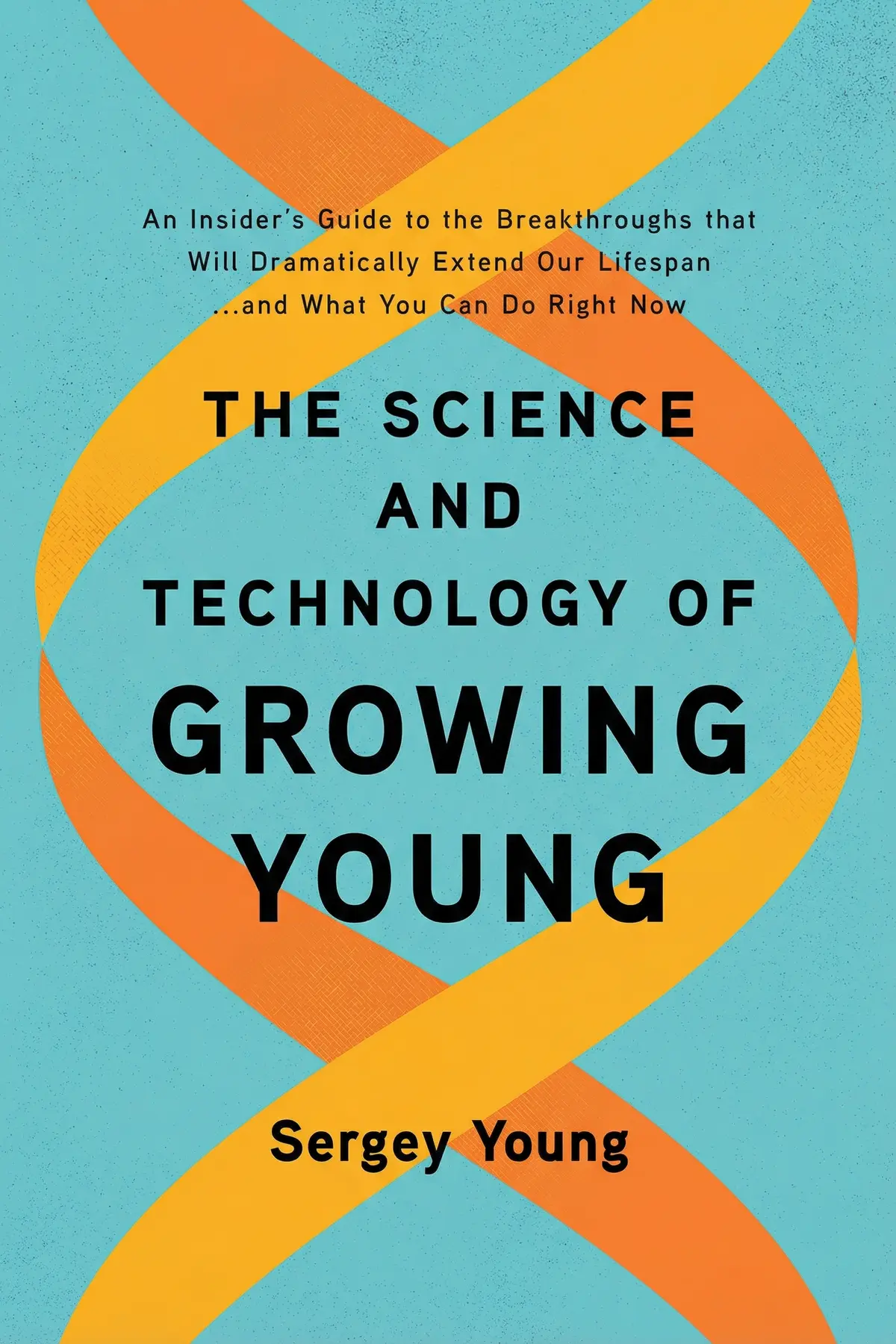
Table of Content
1. Introduction
2 min 19 sec
Imagine waking up on the morning of your two-hundredth birthday. You don’t feel the aches and pains typically associated with extreme old age. In fact, your body feels as vibrant and resilient as it did when you were twenty-five. You’ve spent the night in a room where the air quality and temperature were perfectly calibrated by an intelligent system to optimize your recovery. Your bed has quietly monitored your heart rate and sleep cycles, while microscopic agents inside your bloodstream performed routine cellular repairs. As you start your day, a series of non-invasive sensors provide a comprehensive update on your health, confirming that every system in your body is functioning at its peak. This isn’t just a scene from a speculative novel; it is the vision of the near future described in The Science and Technology of Growing Young.
We are currently standing at the edge of what can only be described as a Longevity Revolution. For most of human history, life was short and often defined by the constant threat of infection and malnutrition. However, the last century saw a massive leap in life expectancy, and we are now on the verge of another, even more dramatic shift. The breakthroughs occurring in laboratories today—ranging from artificial intelligence to genetic reprogramming—are fundamentally changing our relationship with time and biology.
In this exploration, we will look at how the convergence of technology and biology is moving us toward a world where aging is no longer an inevitable decline, but a manageable condition. We will see how data is becoming the most powerful medicine available, allowing us to catch diseases before they even manifest. We will also dive into the world of precision medicine, where treatments are designed for your specific genetic code rather than a generic average.
But this journey isn’t just about the technology of tomorrow. It’s also about the actions you can take today. To benefit from the incredible innovations on the horizon, you must remain healthy enough to reach them. We will discuss the essential pillars of health that serve as your bridge to the future. By understanding these developments, you can prepare yourself for a world where living to one hundred and fifty or even two hundred years becomes the new standard for the human experience.
2. The Dawn of the Longevity Revolution
2 min 06 sec
Explore how humanity is transitioning from a world of short, fragile lives to an era where living for two centuries is a scientific possibility.
3. The Shift Toward Proactive Diagnostics
2 min 12 sec
Discover how wearable technology and constant biological monitoring are moving medicine from treating sickness to maintaining constant wellness.
4. Precision Medicine and AI-Driven Personalization
2 min 33 sec
Learn how doctors are moving away from one-size-fits-all treatments to find medical solutions tailored to your unique genetic signature.
5. Harnessing the Power of Genetic Engineering
2 min 22 sec
Understand how revolutionary tools like CRISPR are allowing scientists to edit the code of life to delete diseases and repair cellular damage.
6. The Rise of Bionic Bodies and Lab-Grown Organs
2 min 11 sec
Imagine a world where waiting lists for organ transplants are obsolete because we can simply grow or print the parts we need.
7. Digital Immortality and the Future of Consciousness
2 min 27 sec
Explore the controversial and fascinating possibility of digitizing the human mind to preserve our personalities beyond our biological limits.
8. Addressing the Ethics of an Ageless World
2 min 32 sec
Examine the social, environmental, and moral implications of a massive increase in the human lifespan and how we might overcome them.
9. Building Your Bridge to the Future
2 min 15 sec
Identify the immediate, science-backed steps you can take today to ensure you stay healthy enough to benefit from future breakthroughs.
10. Conclusion
2 min 10 sec
The journey through the science and technology of growing young reveals a world that is rapidly transforming. We have moved from a time when human life was a brief, fragile spark to an era where we can realistically envision living for two centuries or more. This shift is being driven by the convergence of massive data, artificial intelligence, genetic editing, and regenerative medicine. We are learning to see the human body not as a machine that must inevitably break down, but as a biological system that can be monitored, repaired, and sustained indefinitely.
The throughline of this revolution is the transition from reactive to proactive care. By using the ‘Internet of Bodies’ to monitor our health in real time and utilizing AI to find treatments tailored specifically to our genetic code, we are removing the guesswork from medicine. We are also finding ways to replace worn-out parts with bionic or lab-grown alternatives and exploring the digital frontiers of consciousness. While these changes bring up significant ethical and environmental questions, the potential for a more democratic and healthy world is within our grasp if we navigate these developments with intention.
As we look toward this bright future, your most important task is to maintain your current health. Think of your body as a vessel that must carry you across a bridge to a land of new possibilities. The most actionable step you can take right now is to prioritize your sleep. Scientific evidence consistently shows that getting at least seven hours of quality rest per night is one of the most effective ways to lower your risk of chronic disease and sharpen your mental clarity. By protecting your sleep, choosing a nutrient-dense diet, staying active, and utilizing the diagnostic tools already at your disposal, you are building your own personal bridge to a longer, more vibrant life. The Longevity Revolution is here, and you have the power to be a part of it.
About this book
What is this book about?
The Science and Technology of Growing Young investigates the rapid acceleration of medical technology and its implications for human aging. Sergey Young, a longevity investor and advocate, outlines a future where biological age is reversible and chronic diseases are relics of the past. The book navigates the transition from reactive healthcare, which treats symptoms, to proactive medicine, which utilizes constant monitoring and personalized data to prevent illness before it starts. Beyond the futuristic horizon of bionic organs and digital consciousness, the narrative provides a practical bridge for the present. It details immediate lifestyle changes—such as nutritional choices, sleep hygiene, and diagnostic screenings—that can help individuals stay healthy long enough to benefit from the coming technological wave. The book promises a dual perspective: a visionary look at the innovations that will redefine what it means to grow old and a grounded manual for optimizing health in the here and now.
Book Information
About the Author
Sergey Young
Sergey Young is the founder of the Longevity Vision Fund, which provides funding for startups creating technological innovations to increase longevity. He is on the board of the American Federation for Aging Research and runs the nonprofit Longevity@Work, whose aim is to improve health in the workplace.
Ratings & Reviews
Ratings at a glance
What people think
Listeners find this book thorough and accessible, with one listener mentioning that it is full of actionable advice. Furthermore, the work provides a positive perspective on the future of medicine, helping audiences understand aging and increase lifespan above 100 years. They also value the scientific information, with one listener praising the lack of difficult medical jargon. However, the healthcare discussion draws varied responses from listeners.
Top reviews
Som
This book serves as a perfect entry point for anyone intimidated by dense medical journals or the jargon-heavy prose of typical longevity experts. Sergey Young offers an incredibly optimistic and comprehensive look at the future of medicine without getting bogged down in complex terminology that usually requires a PhD to decipher. I found the section on AI-powered precision medicine particularly fascinating, as it paints a picture of a world where healthcare is truly individualized. While some might find the 'living to 200' scenario a bit far-fetched, it’s a refreshing change of pace from the usual doom and gloom regarding aging. It really makes you feel like the 'Longevity Revolution' is something we can participate in right now. Highly recommended for those who want a readable, big-picture view of where our health is heading.
Show moreSuthinee
As a reader who usually avoids science books because they feel like homework, I found this to be a total page-turner. Sergey Young has a way of explaining breakthroughs in CRISPR and stem cells that actually makes sense to a layperson. The book is packed with practical recommendations that don't cost a fortune, balancing out the talk of expensive future tech. It’s comprehensive, covering everything from diet to the ethics of overpopulation. I especially liked the '10 tips' at the end—they are simple but backed by a lot of the experts he interviewed. This is the first health book that actually made me feel like I have more time than I thought to achieve my goals.
Show moreWatcharee
Wow. I didn't expect a book about living longer to be such a page-turner. Gotta say, Sergey Young’s passion for the subject really leaps off the page. He takes these massive, scary concepts like genetic engineering and makes them feel like tools for empowerment rather than something out of a horror movie. I loved the focus on personalized care and the idea that we are the 'CEOs of our own health.' It’s optimistic, easy to read, and provides a great summary of what’s happening in the world’s most advanced labs. If you want to feel excited about the future of medicine, this is the book to read. It changed how I view aging entirely.
Show moreTar
Picked this up because the idea of living to 150 sounds both terrifying and thrilling. Not gonna lie, some of the 'Far Horizon' predictions about bionic bodies and digital immortality felt like a sci-fi novel, but Young’s enthusiasm is contagious. The book is structured well, moving from practical habits you can start today to the high-tech breakthroughs coming down the pipeline. I appreciated that he didn't use overly complex language, making it accessible for my parents to read as well. My only gripe is that he glosses over the massive economic and social hurdles of these technologies. It’s a very 'techno-optimist' view, but it definitely succeeded in making me rethink my daily habits and my long-term future.
Show moreKom
Having slogged through PubMed for years to find longevity tips, I appreciated the lack of dense, exclusionary terminology here. Young bridges the gap between the lab and the living room quite effectively. He references heavy hitters like Longo and Sinclair, but filters their work through a lens of accessibility. The book does lean heavily into the author’s perspective as an investor, which provides a unique look at the business of staying young. However, I do wish he had addressed the skepticism surrounding some of these startups more directly. Still, it is a very comprehensive overview of the current landscape. It’s an easy read that manages to be both informative and genuinely inspiring for anyone looking to increase their lifespan.
Show moreCharles
Young’s vision of a 'bionic' future where we swap out organs like car parts is certainly provocative. I found the section on AI-driven diagnostics to be the most grounded and exciting part of the book. In my experience, most longevity books focus either only on diet or only on labs, but this one tries to do it all. It covers the 'Longevity Revolution' from the perspective of someone who sees the money and the tech flowing into the field. While the health advice (exercise, less sugar, less stress) is nothing new, the way it’s framed within the context of 'staying alive long enough to live forever' is a great motivator. It's a quick, easy-to-read guide that will definitely get you thinking.
Show moreRohan
After hearing Sergey Young on several podcasts, I was curious to see if his book offered more than just venture capital hype. It turns out, it’s a very solid, comprehensive guide for the average person. He does a great job of distilling the work of people like Sinclair and de Grey into something digestible. While the 'practical' tips aren't exactly groundbreaking (we all know sugar is bad!), his explanation of why they matter for our 'internal software' is quite effective. I do wish there were more footnotes for some of the bolder futuristic claims. However, his optimism is a welcome change from the typical 'aging is inevitable' gloom. It’s a fast read that leaves you feeling empowered about your health choices.
Show moreYui
Ever wonder if the future of health is just better marketing? Frankly, I had high hopes for this one, but it felt a bit like reading a very long, high-budget investment brochure. The 'Near Horizon' advice is mostly common sense—stop smoking, eat your veggies, and get some sleep—which you can find in any wellness magazine for free. Truth is, I was looking for deeper biological insights similar to what David Sinclair provides. Instead, we get a lot of optimistic speculation about robots and 3D-printed organs. The writing is engaging and very easy to digest, which is a plus, but the lack of original scientific depth was a letdown. It’s a decent primer if you’re brand new to the topic, but seasoned biohackers might find it a bit superficial.
Show moreUraiwan
Personally, I found the dichotomy of this book a bit jarring. On one hand, you have very basic health advice that you could get from a blog post. On the other, you have wild predictions about living to 200 in a bubble with robot servants. It’s a bit of a 'Jetson' look at the future that feels more like wishful thinking than a roadmap. To be fair, Young is an enthusiast and a booster for the industry, so his bias is clear from the start. The writing is smooth and the stories about various startups are interesting if you care about the business side of things. I just wish there was a bit more journalistic objectivity when discussing the actual timelines for these technologies.
Show moreOat
Look, Sergey Young clearly knows his way around a boardroom, but as a science guide, this felt incredibly thin. He spends more time talking about his Longevity Vision Fund and various startups than the actual mechanics of cellular repair or metabolic pathways. I wanted more de Grey and less George Jetson. The book basically says that technology will solve every ethical and physical problem we have, which feels like a major cop-out. It's essentially a list of cool-sounding gadgets and 'futuristic' scenarios that lack a solid grounding in peer-reviewed reality. For an insider’s guide, it felt surprisingly outside of the actual science. If you want a feel-good book about the future, this is fine, but if you want to understand the 'how' of longevity, skip it.
Show moreFeatured in
Readers also enjoyed
AUDIO SUMMARY AVAILABLE
Listen to The Science and Technology of Growing Young in 15 minutes
Get the key ideas from The Science and Technology of Growing Young by Sergey Young, plus 5,000+ more titles in English and Thai.
- 5,000+ titles
- Listen as much as you want
- 7-day free trial
- Cancel anytime







