
21 min 41 sec
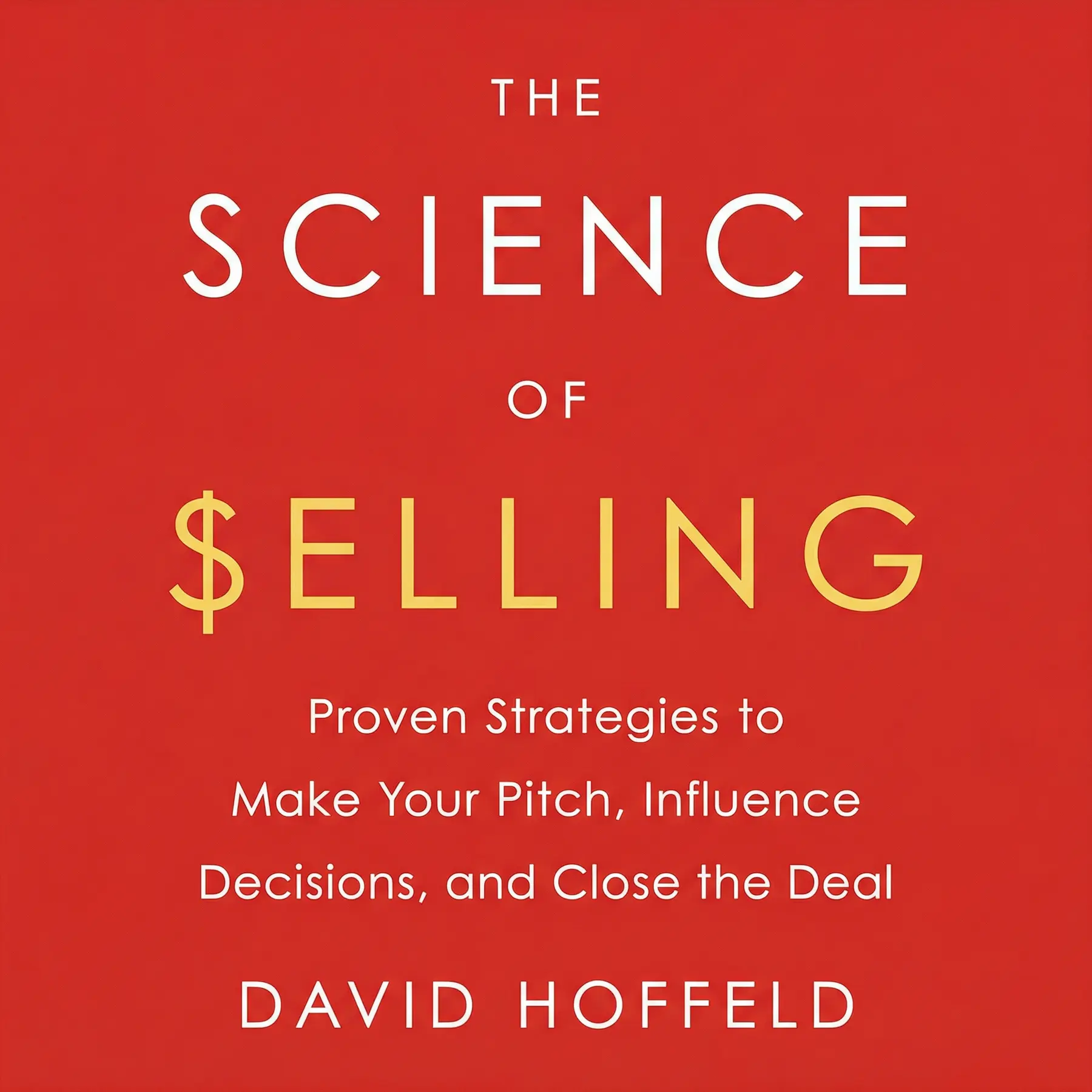
The Science of Selling: Proven Strategies to Make Your Pitch, Influence Decisions, and Close the Deal
David Hoffeld uses neuroscience and behavioral economics to reveal the hidden mechanics of persuasion. This summary provides evidence-based strategies to align your sales approach with how the human brain actually makes decisions.
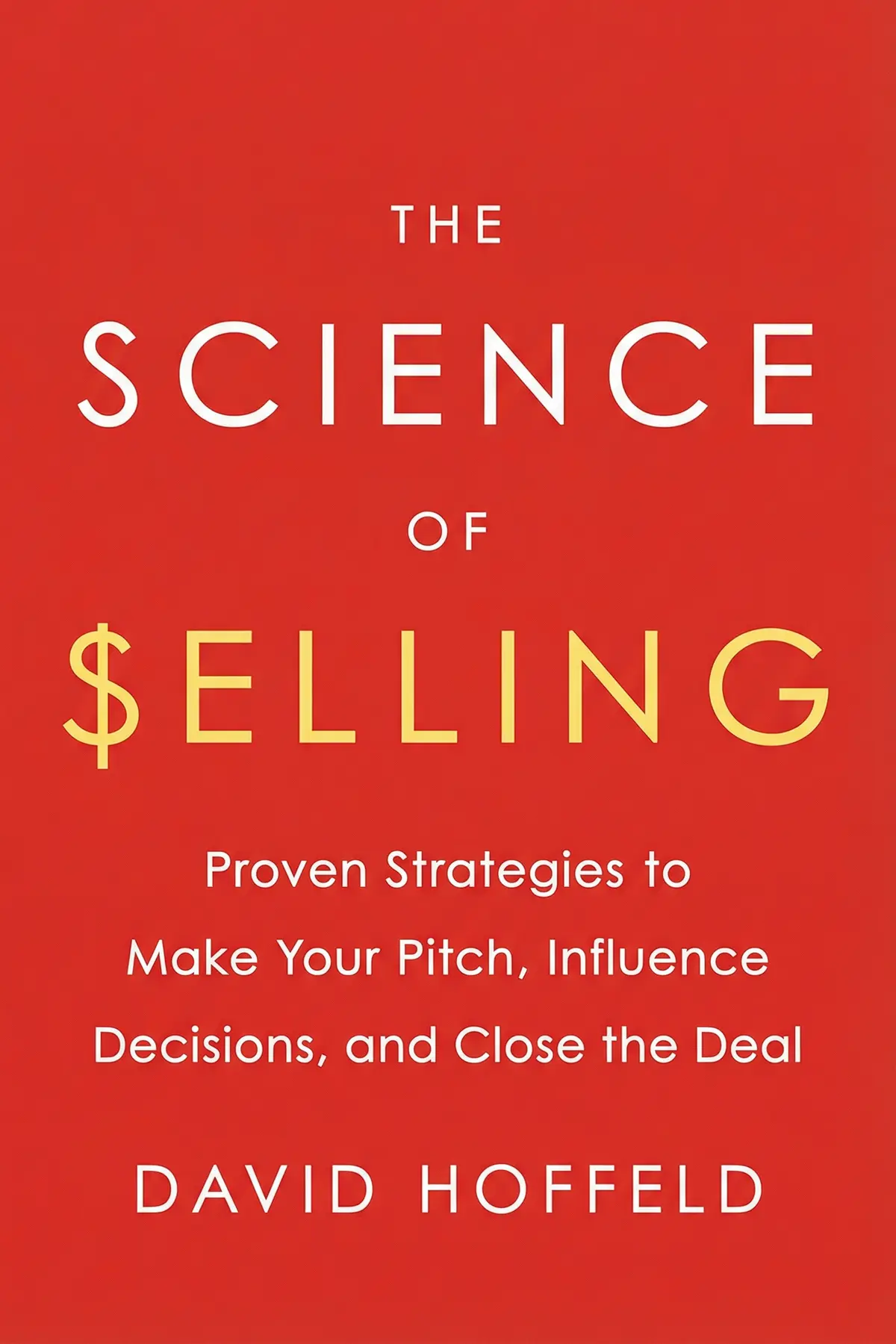
Table of Content
1. Introduction
1 min 57 sec
For generations, the world of sales has been shrouded in a kind of mystic aura. We’ve been told that great salespeople are born, not made—that they possess a ‘gift of gab’ or an innate charisma that allows them to talk anyone into anything. This perspective treats selling as an art form, something subjective and unpredictable that relies more on intuition and ‘gut feeling’ than on any structured methodology. But what if that entire premise is wrong? What if the ability to influence another person’s decision isn’t a mysterious talent at all, but a predictable result of how the human brain is wired?
In this exploration of The Science of Selling, we are stepping away from the world of unproven anecdotes and ‘hustle’ culture. Instead, we are diving deep into the hard data of social psychology, neuroscience, and behavioral economics. David Hoffeld argues that the most effective way to sell is to align your sales process with the way the brain actually makes choices. This means understanding the biological and psychological triggers that cause a person to say ‘yes’ or ‘no.’
Throughout this summary, we will explore why traditional sales training so often fails and how we can use the concept of neuroplasticity to literally rewire our brains for better performance. We’ll break down the specific mental hurdles every buyer must clear before they can commit to a purchase, and we’ll look at the surprising ways that seemingly irrelevant factors—like a person’s mood or the order in which you present information—can completely change the outcome of a pitch. By the end, you’ll see sales not as a high-pressure performance, but as a collaborative, evidence-based process designed to help buyers reach the best possible conclusion.
2. The Biological Foundation of Selling
2 min 24 sec
Traditional sales training often fails because it relies on myths. Discover how neuroplasticity and evidence-based strategies can transform your natural abilities into high-performance skills.
3. Navigating the Six Whys
2 min 45 sec
Every purchase is the result of six specific internal decisions. Learn to address each ‘Why’ systematically to eliminate buyer hesitation before it even begins.
4. The Impact of Emotional States
2 min 45 sec
Human logic is often at the mercy of mood. Discover how a buyer’s emotional state dictates their openness to persuasion and how you can influence it.
5. Strategic Questioning and Instinctive Elaboration
2 min 30 sec
Questions are the most powerful tools in a salesperson’s kit. Learn why they trigger an unstoppable mental process and how to layer them for maximum impact.
6. The Art of Listening and Avoiding Inattentional Blindness
2 min 28 sec
Most sales pitches miss the mark because they focus on the wrong details. Learn to see the world through your customer’s eyes to uncover their true motivators.
7. The Psychology of Value and Inoculation
2 min 34 sec
Perception is everything in sales. Learn how to frame your offering as an investment rather than a cost by using social exchange theory and competitive anchoring.
8. Optimizing Choice and the Narrative Paradigm
2 min 33 sec
Too many options can paralyze a buyer. Discover how to simplify the decision process and use the power of storytelling to bypass critical resistance.
9. Conclusion
1 min 45 sec
As we have seen, the traditional image of the salesperson as a high-pressure ‘closer’ is rapidly being replaced by a more sophisticated, evidence-based approach. Selling is not about magic or manipulation; it is about understanding the human brain and aligning your message with the way people are biologically wired to process information and make choices. By methodically addressing the Six Whys, managing the emotional state of your interactions, and using the power of layered questioning, you can transform the sales process from a stressful confrontation into a collaborative journey toward a solution.
One final, actionable takeaway from David Hoffeld’s research is the importance of hiring and developing for ‘intrinsic motivation.’ While many sales organizations focus on external rewards like commissions and bonuses, the data shows that the most consistent top performers are those who are driven by a personal desire to master their craft. They are the ones who treat sales as a science, constantly seeking out new data and refining their techniques not just for the money, but for the satisfaction of improvement.
Remember that every interaction is an opportunity to practice these strategies. Whether you are framing your price with an anchor, using a story to bypass skepticism, or simply offering a client a positive environment, you are applying principles that have been tested in laboratories and real-world markets alike. When you stop guessing and start following the science, you don’t just close more deals—you build stronger, more trusting relationships with your customers by providing the clarity they need to make the best decisions for their lives and businesses.
About this book
What is this book about?
The Science of Selling moves past traditional, anecdotal sales advice to provide a framework built on peer-reviewed research. David Hoffeld explains that selling isn't an art form reserved for the charismatic; it is a predictable process rooted in social psychology and neuroscience. The book promises to equip sales professionals with a systematic way to influence others by understanding the cognitive shortcuts and emotional triggers that drive human behavior. Readers will learn how to navigate the internal decision-making process of their customers, known as the Six Whys, and how to use techniques like anchoring and storytelling to make their pitches more compelling. By focusing on the buyer’s perspective and the actual biological ways we process information, this guide offers a roadmap for turning sales from a game of chance into a reliable, repeatable science.
Book Information
About the Author
David Hoffeld
David Hoffeld is the CEO and chief sales expert at the Hoffeld Group, a leading sales and consultancy firm. His insightful approach to sales has landed him lecture spots at Harvard Business School and features in the Wall Street Journal, Fast Company, and U.S. News & World Report.
Ratings & Reviews
Ratings at a glance
What people think
Listeners find that this work offers excellent insights based on scientific research and consider it essential reading for sales leaders looking to refine their existing sales strategies. The material is simple to digest and educational, with one listener highlighting its deep dive into psychology. They also value the narrative quality, as one review characterizes the experience as an engaging journey.
Top reviews
Jan
Finally, a sales book that doesn't just rely on anecdotal 'hustle' culture stories or outdated 'always be closing' mantras. David Hoffeld does a brilliant job of anchoring every technique in actual neuroscience and social psychology research. I found the breakdown of the Six Whys® to be incredibly logical and immediately applicable to my current pipeline. Instead of guessing why a prospect is stalling, the framework helps you identify the specific mental hurdle they haven't cleared yet. The writing style is engaging, moving quickly through various case studies without feeling like a dry academic textbook. If you are tired of the typical fluff found in the business section, this data-driven approach is exactly what you need to level up your process. It truly transforms the art of selling into a repeatable, verifiable science.
Show moreKru
This book is a total game-changer for sales leaders who want to move away from 'gut feeling' coaching toward a more evidence-based methodology. Hoffeld’s integration of the 'asymmetric dominance effect' and 'anchoring' provides a clear roadmap for designing presentations that align with how the human brain actually makes decisions. I loved the emphasis on storytelling; specifically, how a compelling narrative framework with a character and conflict can bypass the buyer’s natural skepticism. The advice on using pictures to leverage the 'picture superiority effect' has also significantly improved the engagement levels of my team's slide decks. It is rare to find a business book that is this well-researched yet remains so accessible and easy to implement. This is now mandatory reading for my entire sales organization.
Show moreClaire
Hoffeld successfully bridges the gap between academic social psychology and the high-stakes world of modern sales in a way few authors manage. As a former psychologist myself, I was impressed by the accuracy of the research cited, from Simon Asch’s line experiments to the latest in neurobiology. He takes these complex concepts and distills them into 'The Six Whys,' making them incredibly useful for practitioners. The storytelling throughout the book keeps the pace moving, making it feel more like an engaging journey than a lecture. I found the advice on 'Why Now'—creating urgency without triggering reactance—to be particularly nuanced and helpful. This is an essential resource for anyone who wants to understand the hidden forces that drive every 'yes' or 'no' in a negotiation.
Show moreJib
As someone who transitioned from a background in education to a corporate role, I was struck by how much this book mirrors effective pedagogical strategies. Hoffeld emphasizes that influence is the foundation of selling, which is something every good teacher understands instinctively. The psychological studies, like the one regarding the 'primacy effect' and how we perceive someone named John, were fascinating to revisit in a commercial context. I specifically appreciated the section on 'second level questions' because it forces you to dig deeper into the buyer’s motives rather than just accepting surface-level answers. While some of the trademarked terminology feels a bit like marketing jargon, the core evidence is undeniable. It is a solid resource for anyone who wants to understand the 'why' behind consumer behavior.
Show moreSupaporn
Ever wonder why presenting only one option to a client often leads to a 'no' even if the product is perfect? The chapter on single-option aversion was an eye-opener for me and has already changed how I structure my proposals. Hoffeld explains that the brain perceives more risk when it lacks a comparison point, which is such a simple but profound insight. I also found the 'three layers of questions' to be a practical toolkit for discovery calls. It prevents you from staying in the 'fact-finding' zone and pushes the conversation toward the emotional drivers of a purchase. My only minor complaint is that the book can get a bit repetitive toward the end. Still, the actionable strategies for handling objections based on the Six Whys are worth the read alone.
Show moreRome
After hearing several colleagues rave about the 'science-backed' framework, I decided to see if the hype was real and I wasn't disappointed. The section on the 'Hawthorne Effect'—how people change their behavior when they know they are being observed—was particularly useful for my management style. Hoffeld does a great job of explaining why traditional sales training often fails and offers a more robust alternative based on how the brain processes information. I especially liked the 'Inoculation Theory' for neutralizing competitors before they even have a chance to speak. The book is dense with information, so you might need to take notes to keep all the heuristics straight. It’s a very practical guide that avoids the usual 'rah-rah' motivational nonsense and sticks to what actually works in the field.
Show moreGioia
The chapter on heuristics, specifically single-option aversion and anchoring, alone is worth the price of admission for this book. I've always struggled with when to introduce the price of my services, but Hoffeld explains the science of why starting high sets a mental benchmark that benefits the seller. I also appreciated the tips on mirroring posture and word usage to build rapport more effectively. Truth is, most salespeople are just winging it, and this book provides a much-needed structure to the madness. It is a bit long-winded in some of the case study descriptions, and I think it could have been trimmed down by fifty pages. Regardless, the insights into how to handle the 'Why Spend Money' objection are pure gold for anyone closing high-ticket deals.
Show moreYulia
Gotta say, the section on neutralizing competitors by asking 'Why Your Industry Solution' changed my entire approach to my initial discovery calls. Most of us spend too much time talking about our specific product without realizing the prospect hasn't even committed to the category yet. Hoffeld's 'Three Layers of Questions' provides a fantastic template for peeling back the onion and finding the real pain points. I did find some of the 'mirroring' advice a little bit cliché, as that's been taught in sales for decades, but the scientific context he adds makes it more believable. Overall, it’s a very solid 4-star read that offers a lot of 'aha!' moments for both new and experienced reps. It turns the sales process into a logical sequence of commitments.
Show moreTakeshi
To be fair, much of what Hoffeld presents here is effectively a meta-analysis of social psychology experiments that have been circulating in the self-help world for years. If you have already read a lot of Cialdini or behavioral economics, you might feel like some of this is a repackaged version of existing theories. I found the constant use of the Registered Trademark® symbol for common-sense concepts to be a bit distracting and overtly 'salesy' for a book about science. However, the way he applies the Hawthorne effect and the Gorilla Experiment specifically to the sales floor is quite clever. It is a decent synthesis of information, even if it doesn't offer many brand-new discoveries. It serves as a good refresher for those who need a structured way to implement psychological triggers in their daily calls.
Show moreAroha
Frankly, I felt a bit spiritually bankrupt after finishing this, as if I had just read a manual on how to systematically manipulate my friends and colleagues. While the science behind the social proof and the 'likability bias' is clearly well-documented, the application feels a bit fake and calculated. The book teaches you how to 'appear' genuine and how to use 'positive labels' to trigger compliance, which left a bad taste in my mouth. I understand that the business world is competitive, but this approach turns every human interaction into a series of psychological ploys. If you are looking for a book on building long-term, authentic relationships, this might not be the right choice. It focuses more on the mechanics of the 'win' than the ethics of the connection.
Show moreReaders also enjoyed
AUDIO SUMMARY AVAILABLE
Listen to The Science of Selling in 15 minutes
Get the key ideas from The Science of Selling by David Hoffeld, plus 5,000+ more titles in English and Thai.
- 5,000+ titles
- Listen as much as you want
- 7-day free trial
- Cancel anytime







