
The Ethics of Ambiguity
Simone de Beauvoir
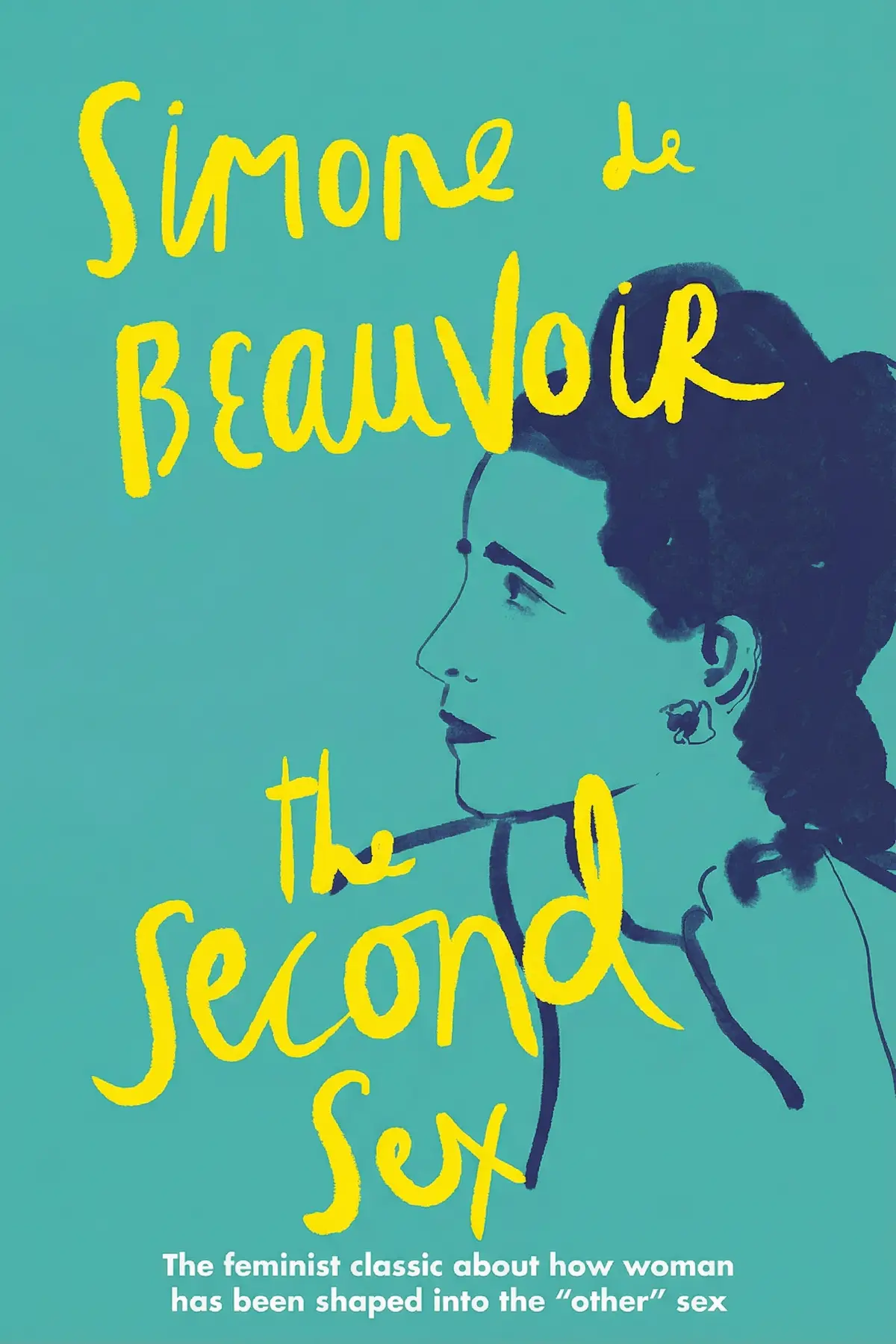
A profound investigation into the social, historical, and philosophical forces that define womanhood. This classic work argues that femininity is not an innate trait but a condition imposed by a male-dominated society.
2 min 30 sec
In 1949, a book arrived on the intellectual scene that would forever alter the way we think about gender, identity, and the structures of power. That book was Simone de Beauvoir’s The Second Sex. It contains one of the most famous lines in philosophical history: “One is not born, but rather becomes, a woman.” At the time, this was a radical, almost scandalous assertion. It challenged the deeply held belief that being a woman was a natural, biological fate. Instead, de Beauvoir argued that what we call “womanhood” is a complex identity manufactured by cultural, historical, and social forces.
Even though the world has seen significant shifts in the decades since its publication, the core of de Beauvoir’s analysis remains incredibly sharp. She sets out to answer a fundamental question: Why is the female experience defined as secondary? To answer this, she introduces two vital concepts that serve as the foundation for everything that follows. The first is the concept of “the Other.” In philosophy, every self needs an opposite to define itself. A master only exists because there is a slave; a subject only exists because there is an object. In the grand narrative of human history, man has claimed the role of the essential Subject, while woman has been relegated to the role of the Other—the non-essential object who exists primarily to validate man’s status.
Following this is the tension between “immanence” and “transcendence.” Transcendence is the realm of action, creativity, and the ability to shape the world. It is the outward-reaching power usually associated with the masculine. Immanence, on the other hand, is the realm of the static, the domestic, and the internal. It is a state of being closed-in and passive. De Beauvoir’s throughline is clear: society has historically forced women into immanence, denying them the right to transcend their circumstances and act as independent beings. Over the course of this exploration, we will trace how this happened, how it is reinforced through every stage of life, and what it would take to finally break these cycles of subjugation. We aren’t just looking at history; we are looking at the very architecture of the female soul as shaped by a world that was never designed for her autonomy.
2 min 52 sec
Explore the philosophical roots of gender inequality and how society positions man as the default human and woman as his secondary opposite.
2 min 35 sec
Discover why physical differences and psychological theories fall short of explaining or justifying the secondary status of women.
2 min 26 sec
Trace the historical shift from early societies that respected the female principle to the rise of private property that transformed women into assets.
2 min 33 sec
Examine how religious stories and cultural myths have been used to cement the idea of female sin and passivity throughout the ages.
2 min 01 sec
Analyze the subtle ways children are socialized from birth to adopt either active or passive roles, creating the gender divide early in life.
2 min 17 sec
Understand the difficult transition into womanhood, where girls begin to realize their loss of freedom and the objectification of their changing bodies.
2 min 14 sec
Examine how sexual initiation often reinforces power dynamics, where the male is the active ‘conqueror’ and the female is the passive recipient.
2 min 14 sec
Deconstruct the glorification of motherhood to reveal how it often restricts a woman’s autonomy and deepens her state of immanence.
2 min 20 sec
See how the institution of marriage and the gender-wage gap keep women financially dependent on men, preventing true independence.
2 min 26 sec
Envision a future where gender is understood as a construct and both men and women work together to achieve true equality and freedom.
1 min 46 sec
We have traveled through the long and complex landscape of what it means to ‘become’ a woman. From the early days of matriarchal reverence to the rise of private property that turned women into assets, and from the restrictive myths of religion to the everyday socialization of children, the throughline is unmistakable. Society has constructed a version of femininity that is defined by passivity, domesticity, and, above all, ‘Otherness.’
But the most powerful takeaway from Simone de Beauvoir’s work is that because this identity is constructed, it can be dismantled. We are not trapped by our biology, nor are we destined by ancient myths. The ‘Second Sex’ only remains secondary as long as we allow the structures of immanence—economic dependency, domestic isolation, and the male gaze—to go unchallenged. True liberation isn’t just about individual success; it’s about a wholesale transformation of how we value labor, how we raise our children, and how we interact in our most intimate moments.
As you move forward from this summary, consider the ‘muses’ and ‘Others’ in your own life and in the world around you. Notice where passivity is expected and where action is reserved for only one group. The path to equality begins with the radical act of mutual recognition—seeing every person as a sovereign subject capable of shaping their own destiny. By embracing this, we don’t just free women; we free the human spirit to reach for a transcendence that belongs to everyone. The journey from ‘becoming’ a woman to simply being a free human being is the great task of our time, and it is a task that requires the courage and cooperation of us all.
This summary explores Simone de Beauvoir’s landmark argument that the status of women is a cultural construct rather than a biological destiny. It traces the journey of how women are socialized into the role of the Other—a secondary being whose existence is defined in relation to men. By examining history, religion, and the stages of a woman’s life, from the nursery to old age, the book reveals the systemic ways women are encouraged toward passivity and domesticity. It offers a blueprint for liberation, calling for a transformation of society where both sexes recognize each other as sovereign, independent peers.
Simone de Beauvoir (1908–1986) was a preeminent French philosopher, intellectual, and writer. A leading figure in existentialism, her extensive body of work includes novels, essays, and autobiographies. The Second Sex stands as her most influential achievement, widely recognized as a foundational text of modern feminist philosophy that continues to shape gender discourse worldwide.
Simone de Beauvoir
Listeners view this work as a fundamental text that provides a deep introduction to gender equality, with one listener highlighting its thorough investigation of women’s oppression. They also admire the book’s intelligence, with one review pointing to its remarkable mastery of philosophy, labeling it a cornerstone of feminist literature. Nevertheless, feedback regarding the translation is split, with some considering it effective while others do not. Finally, opinions on the core content and certain exclusions are divided; while some enjoy the material, others find it redundant, and while some think it is still relevant, others suggest it has become dated.
Simone de Beauvoir’s work is an intellectual marathon that remains startlingly relevant decades after its initial publication. Her command of philosophy and history is stunning as she deconstructs the concept of woman as the "Other" in a world built by men. Frankly, the thesis that "one is not born, but rather becomes, a woman" provides the most irrefutable evidence for how gender is socially constructed. While the text is undeniably dense, the way she synthesizes biology, psychoanalysis, and historical materialism is nothing short of brilliant. It felt like I was finally seeing the architectural blueprints of my own social cages. This is a foundational map of the female experience that every person should grapple with at least once. It isn't just a book; it is a total reckoning with what it means to exist as a relative being.
Show moreReading this felt like tracing the invisible lines of my own family tree back through generations of silent struggle and unavowed guilt. I saw my mother and my grandmother in these pages—women who often found their reason for being in the free conscience of a masculine figure. Beauvoir captures that sense of displacement in professional life and the confusing pull of motherhood with such forensic precision that it’s almost painful. The truth is, our ambitions and dreams are often the result of subliminal indoctrination passed down through centuries of tamed mentality. This book gave me the vocabulary to describe the fragmented pieces of my own persona. It’s an emotional experience as much as an intellectual one. I finished it feeling a collective roar of indignation and a renewed desire for individual emancipation. It’s a demanding read, but absolutely essential for anyone looking to understand the roots of systemic inequality.
Show moreWow, the sheer intelligence required to synthesize philosophy, mythology, and sociology into one cohesive manifesto is staggering to behold. Beauvoir’s exploration of the "double trap" of modernized society—where equality exists in appearance but not in ethos—hit me like a ton of bricks. She argues that humanity is male and man defines woman relative to him, and once you see that pattern, you can't unsee it anywhere. The chapters on the development of the young girl and the trauma of puberty were particularly illuminating. Not gonna lie, it’s a long journey, but the payoff is a much sharper understanding of how we are all shackled to preordained roles. This book doesn't just ask questions; it demands a total reinvention of the endemic hierarchies we take for granted. It is a masterpiece of existentialist thought that still holds a mirror up to our modern failures.
Show moreThis isn't just a book; it's a foundational map of the female experience viewed through the lens of existentialist philosophy. Beauvoir’s command of her subject matter is breathtaking, ranging from the intricacies of historical materialism to the psychological nuances of puberty. The truth is, she exposes how the categories in which men think of the world are established from their own point of view as absolute. I found her discussion on the "mystery" of woman to be a particularly sharp critique of how men use mystification to avoid seeing women as peers. Even though it was written decades ago, her points about the socio-political organizations of the West only having equality "de jure" and not "de facto" still ring true. It’s an essential read for anyone who wants to understand the endemic hierarchy of our culture. It sharpened my feminism and opened my eyes to the need for a collective front.
Show moreEver wonder why the world feels like it wasn't built for you? Beauvoir answers that question with brutal, forensic precision in this seminal manifesto. She meticulously tracks how the female is assigned the role of the "inessential" while the male is always the "independent" and the "essential" actor. I loved the way she connected the biological aggressive role of men to their social function as masters, showing how physiology is used to justify sovereignty. It's a subversive account that puts you on the ropes, reminding us that femininity is an artificial construction rather than a destiny. Personally, I found the section on the "religion of Maternity" to be incredibly brave and insightful for its time. While the book is a massive undertaking, the roar of collective indignation at the end makes every page worth it. It’s a call to arms for individual emancipation that we still need to hear today.
Show moreFinally got around to this behemoth, and while the ideas are groundbreaking, the translation I picked up felt clunky and unnecessarily difficult at times. The core arguments regarding women's oppression and the lack of autonomous existence are vital, yet I found the middle sections on biology quite repetitive. To be fair, Beauvoir was writing in a specific French context in 1949, so some of the psychoanalytical references feel a bit dated now. However, her exploration of how women seek their reflection in the mirror of the masculine mind is still incredibly sharp. It’s a classic for a reason, even if it requires a lot of patience to get through the slower chapters. I appreciated the holistic approach, but I think a modern edit could help clarify some of the denser existentialist jargon for new readers.
Show moreAs someone who came to this after reading newer feminist theory, I was surprised by how much Beauvoir already covered back in 1949. Her analysis of the "myth of submission" and how men encourage allurements only to be annoyed by them is still spot-on today. Look, some of the scientific data she uses is definitely old, but the sociological observations remain incredibly poignant and relevant. I particularly enjoyed the sections on how property and patriarchy became intertwined during the shift to agricultural societies. There’s a certain dryness to her tone that can be exhausting, yet her logic is a form of power that exposes the sly tyranny of the masculine mind. It's a comprehensive evaluation of oppression that doesn't pull any punches. I did find the repetition regarding motherhood a bit much, but the overall impact of the book is undeniable. It's a heavy lift but worth the effort.
Show moreThe chapter on the independent woman really hit home for me, especially regarding how we view our own professional ambitions and the unavowed guilt of indecision. Beauvoir’s exploration of how women’s wings are clipped only for society to deplore that they cannot fly is a hauntingly accurate metaphor. In my experience, the sense of being "the other" is something that is felt before it is understood, and this book provides the framework to understand it. I was particularly struck by her discussion on how love can be a source of life or a mortal danger depending on whether it’s based on strength or weakness. The text is admittedly long and sometimes gets lost in its own philosophical weeds, but the gems you find are transformative. It forces you to ask if your yearnings are truly your own or just the result of generations of taming. A truly challenging and rewarding piece of literature.
Show moreTo be fair, it’s impossible to deny the historical weight of this text, but certain sections feel incredibly dated by modern standards. I struggled with the chapters on biology, which seemed to drag on forever without adding much to the main point. The translation quality was also a bit hit-or-miss, making some of the more abstract philosophical points feel like a chore to decipher. That being said, the central idea of woman as the "inessential" compared to man as the "absolute" is still a powerful lens. I found the analysis of the Cinderella myth and the status of the prostitute as a scapegoat to be the most interesting parts. It's a significant work of feminist history, but I wouldn't call it a light or particularly engaging read. You have to really work for the insights buried under the repetition.
Show moreLook, I know it's a classic, but the density of this book makes it nearly inaccessible for a casual reader like me. I found the writing style to be incredibly circular, often spending fifty pages to make a point that could have been stated in five. To be fair, Beauvoir is clearly a genius, but the translation I read was so academic and dry that I lost interest several times. Many of the sections on biology and Freud felt completely irrelevant to my life and quite dated in their assumptions. While I agree with the general sentiment of gender equality, the delivery here felt more like a textbook than a manifesto. I appreciate what this book did for the movement, but I think there are much better, more modern ways to engage with these themes today. It just felt like a massive struggle without enough reward.
Show more
William B. Irvine

Fay Bound Alberti
Nigel Warburton

Daniel Goleman
John Rawls

Virginia Woolf
AUDIO SUMMARY AVAILABLE
Get the key ideas from The Second Sex by Simone de Beauvoir, plus 5,000+ more titles in English and Thai.







