
22 min 17 sec
The Self-Driven Child: The Science and Sense of Giving Your Kids More Control Over Their Lives
Discover why fostering autonomy is the key to raising resilient, motivated children. This guide helps parents transition from being a controlling boss to a supportive consultant, reducing stress and boosting success.
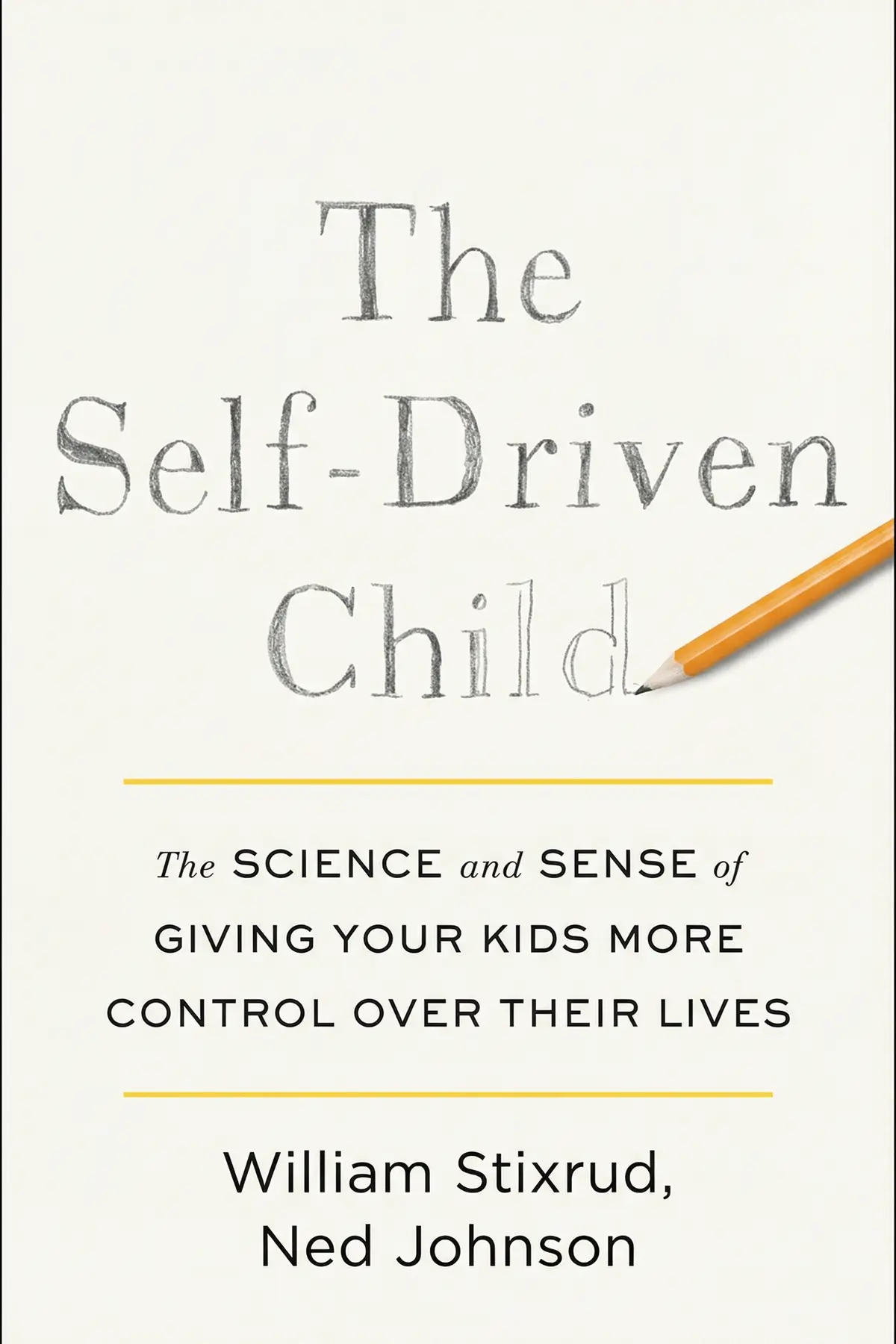
Table of Content
1. Introduction
1 min 49 sec
In the modern world, the path to adulthood can feel like a high-stakes obstacle course. From the moment children enter school, they are often met with a relentless schedule of testing, extracurricular activities, and the constant hum of digital distractions. As parents, the natural instinct is to jump into the driver’s seat. We want to steer them toward the best colleges and the most stable careers, believing that if we can just manage their time and choices effectively enough, we can protect them from failure. But what if this protective instinct is actually causing more harm than good?
This is the central question posed by William Stixrud and Ned Johnson in their work, The Self-Driven Child. They argue that when we take over the steering wheel of our children’s lives, we inadvertently strip them of the most important ingredient for long-term mental health and success: a sense of agency. This summary explores the science of why children need control to thrive. We’ll look at how high-pressure environments create toxic stress that can literally alter a child’s brain chemistry and why the traditional model of the “parent as boss” is often a recipe for defiance and burnout.
Over the next several sections, we are going to look at a new way of parenting—one that treats the parent as a consultant rather than a supervisor. We will examine the biological link between autonomy and motivation, the contagious nature of anxiety, and the practical ways we can help our children navigate everything from homework and technology to the massive leap into college life. The goal is to move away from a dynamic of constant friction and toward a household where children feel empowered to own their lives, make their own informed decisions, and develop the resilience they need to face the future with confidence. It’s a journey that requires letting go, but the rewards are a more peaceful home and a child who is truly self-driven.
2. The Biological Link Between Control and Stress
2 min 55 sec
Explore why a sense of agency is the most critical factor for human well-being. Understand how a lack of control can lead to toxic stress and long-term developmental issues.
3. Fostering Motivation Through Autonomy
2 min 34 sec
Learn why direct commands often fail and how giving your child the power of choice can actually lead to better outcomes and increased internal drive.
4. The Parent as a Consultant
2 min 52 sec
Discover the ‘consultant model’ of parenting, where trust replaces micromanagement and children are empowered to make their own life-changing decisions.
5. Managing the Contagion of Anxiety
2 min 28 sec
Understand how a parent’s stress can unintentionally infect a child and why your most important job might be maintaining your own sense of calm.
6. Creating a Healthy Relationship with Technology
2 min 37 sec
Examine the impact of constant connectivity on the developing brain and discover how to model balanced habits that prioritize real-world connection.
7. Reevaluating the Path to College
2 min 33 sec
Challenge the assumption that every child is ready for university at eighteen. Explore signs of readiness and the benefits of taking a different route.
8. Redefining Success Beyond the Classroom
2 min 44 sec
Break free from the narrow definition of academic achievement and learn how to help your child find fulfillment through their unique strengths and passions.
9. Conclusion
1 min 45 sec
As we come to the end of this journey through The Self-Driven Child, the most important takeaway is the power of letting go. We have seen how the modern environment, filled with external pressures and digital noise, can leave our children feeling powerless and stressed. We have explored the biological necessity of agency and how it serves as the ultimate antidote to the anxiety that plagues so many young people today.
To raise a child who is resilient, motivated, and truly independent, we must be willing to change our own behavior first. This means shifting our role from the one who makes all the decisions to the one who provides the support and information needed for our children to make their own. It means becoming a pillar of calm in a frantic world, modeling the kind of balanced life we want for them, and broadening our view of what it means to succeed.
A final, actionable piece of advice to take with you is to protect your child’s time for reflection. In a world of constant stimulation, we often forget the value of simply doing nothing. The next time you are in the car together, instead of suggesting they check their phone or watch a movie, encourage them to just look out the window and let their mind wander. This kind of daydreaming isn’t wasted time; it’s when the brain processes experiences, generates new ideas, and begins to form a vision for the future.
By giving our children the space to dream and the power to choose, we aren’t just making our lives easier—we are giving them the greatest gift a parent can offer: the ability to drive their own lives with confidence, purpose, and joy. It isn’t an easy path, and there will be mistakes along the way, but it is the surest route to helping them become the capable, self-driven adults they are meant to be.
About this book
What is this book about?
The Self-Driven Child addresses a growing crisis in modern parenting: the rise of anxiety and stress in children who feel they have no control over their own lives. As academic and social pressures mount, many parents respond by tightening their grip, micromanaging schedules and decisions in an attempt to ensure future success. However, authors William Stixrud and Ned Johnson argue that this approach is counterproductive. By depriving children of agency, parents inadvertently trigger toxic stress that can hinder brain development and kill intrinsic motivation. The book provides a roadmap for parents to step back and empower their children. Through clinical insights and practical examples, it explains how to foster a sense of control, manage the influence of technology, and rethink the traditional path to adulthood. The promise is simple yet profound: by giving children the authority to make their own choices—and even their own mistakes—parents can help them develop the self-regulation and confidence needed to navigate the complexities of the modern world. It is an invitation to move from a high-conflict power struggle to a relationship built on trust and calm guidance.
Book Information
About the Author
William Stixrud
William Stixrud is a clinical neuropsychologist and the founder of The Stixrud Group, a practice comprising clinical psychologists. He serves on the teaching faculty at Children’s National Medical Center and is an assistant professor of psychiatry and pediatrics at the George Washington University School of Medicine. Ned Johnson is the founder and president of PrepMatters, an educational advising and tutoring firm located in Washington, DC. His expertise has been highlighted by several major media outlets, including NPR, NewsHour, the New York Times, the Wall Street Journal, and Time magazine.
Ratings & Reviews
Ratings at a glance
What people think
Listeners find this parenting resource exceptionally easy to read and view it as vital for both caregivers and teachers. The content is rooted in scientific evidence, delivering transparent explanations of its ideas, and listeners value the real-world guidance it provides. They appreciate the strategy regarding motivation and emotional health, specifically the focus on fostering deep connections between parents and children. The author's voice is well-liked, and listeners observe that the book yields results, with one highlighting its beneficial influence on academic performance.
Top reviews
Sarocha
Ever wonder why your teenager seems perpetually stressed despite your best efforts to manage their schedule? This book argues that the missing ingredient is agency. Stixrud and Johnson, a neuropsychologist and a test prep expert, make a compelling case that our kids need to feel in control of their own lives to thrive. I loved the concept of the parent as a 'non-anxious consultant' rather than a boss or a manager. It’s a terrifying shift to make, especially when you’re used to hovering over homework, but the science they present regarding the prefrontal cortex is hard to ignore. The chapters on the importance of sleep and the dangers of chronic stress were particularly eye-opening. Not gonna lie, I’ve already started using the phrase 'You’re the expert on you' with my daughter, and the change in our communication has been immediate. This is a must-read for anyone feeling the pressure of the modern achievement culture.
Show moreSiraporn
The chapter on sleep was a total game-changer for our household. We always knew it was important, but seeing the science of how a tired brain simply cannot regulate emotions or learn effectively changed our priorities overnight. Stixrud and Johnson do a fantastic job of translating complex brain science into actionable parenting strategies. Frankly, I was skeptical about the 'consultant' model at first—it felt like I was giving up my authority. However, the authors explain that by giving kids more control, we actually foster a deeper sense of responsibility and trust. My son’s anxiety levels have noticeably dropped since we stopped treating every B-minus like a catastrophic event. It’s not just about grades; it’s about his long-term mental health. This book is a rare find that is both deeply informative and incredibly practical for everyday life.
Show moreGai
Wow. This is hands down the best parenting book I have encountered in years. It’s not just another list of 'tips and tricks' for discipline; it’s a fundamental shift in how to view the parent-child relationship. The authors argue that a sense of control is the antidote to the epidemic of anxiety and depression we see in kids today. I particularly liked the 'reverse engineering' approach—thinking about what kind of adult you want your child to be and then giving them the space to practice those skills now. The anecdotes from their clinical practice and test prep business felt very authentic and relatable. It’s clear that they understand the modern pressures families face. If you are worried about your child's motivation or stress levels, please read this. It provides a roadmap for moving from a relationship based on power to one based on connection and support.
Show moreHannah
Finally got around to reading this after hearing several educators recommend it, and the research-backed approach is refreshing. Unlike many parenting books that rely on anecdotes, Stixrud and Johnson base their advice on how the brain actually develops. They explain that agency is the primary factor in human well-being, which makes so much sense when you look at the current mental health crisis. Since applying the 'non-anxious presence' technique, I’ve noticed a significant improvement in my son’s willingness to tackle difficult school projects on his own. He’s taking more ownership because he knows I’m not going to swoop in and do it for him. The writing is clear, the tone is encouraging, and the practical 'What to do tonight' summaries at the end of each chapter are incredibly helpful. This is essential reading for anyone raising kids in today's high-pressure environment.
Show moreEye
In my experience, parenting books often offer vague platitudes, but Stixrud and Johnson provide a concrete framework for building a child’s autonomy. The concept of the 'Self-Driven Child' isn't about letting kids do whatever they want; it's about fostering the internal motivation they need to succeed in the long run. I was particularly impressed by the discussion on how toxic stress shuts down the learning centers of the brain. Since we stopped focusing so much on high-stakes achievement and more on our son's emotional well-being, his academic performance has actually improved because he's no longer paralyzed by fear of failure. It’s a paradox, but it works. The authors' combined expertise in neuropsychology and academic coaching makes for a very well-rounded perspective. This book changed the way I look at my role as a parent, and I cannot recommend it highly enough.
Show moreNum
As a parent of a middle schooler, the shift in dynamics discussed here was exactly what I needed to hear. The authors provide a grounded, research-backed look at how helicopter parenting can actually weaken a child's internal locus of control. Truth is, I was definitely the parent working harder than my kid to solve his problems, and as they point out, that just makes the child weaker. I appreciated the practical advice on letting kids make age-appropriate choices, even if it means they might fail occasionally. Some of the suggestions, like letting a middle schooler choose their own school, felt a bit extreme for my household, but the underlying philosophy is sound. The writing style is very accessible, though it does get a bit repetitive in the middle sections. Still, the focus on building resilience through autonomy is a message that every parent in high-pressure school districts needs to hear.
Show moreSeksan
Picked this up because I felt like I was working harder than my own kid to get his homework done. The authors' central thesis—that we should be our children’s 'non-anxious presence'—is something I struggle with daily, but it’s so necessary. I found the distinction between 'healthy stress' and 'toxic stress' to be one of the most useful parts of the book. It helped me realize that by protecting my kids from every minor struggle, I was actually preventing their brains from developing the resilience they need for adulthood. The tone is supportive and not at all judgmental, which is a relief in the world of parenting books. My only minor gripe is that the advice can feel a bit simplistic when dealing with more complex behavioral issues. Overall, it’s a solid 4-star read that I’ll likely revisit as my kids enter their teenage years.
Show moreA
Gotta say, I was skeptical about the 'consultant' model at first, thinking it might lead to a household with no rules. However, the authors emphasize that being a consultant doesn’t mean being a doormat. It means providing children with the information they need to make their own decisions while remaining a supportive safety net. The research on brain plasticity was especially encouraging, reminding us that it’s never too late to help a child develop better self-regulation. My teenager actually responded quite well when I told him I was resigning as his 'manager.' We’ve had fewer arguments and more actual conversations. The book is a bit long, and some of the chapters on standardized testing felt a little too specific to the authors' day jobs, but the core message is vital. It’s a grounded, sensible approach to raising independent humans.
Show moreWaree
To be fair, this book feels like it was written exclusively for a very specific demographic of high-intensity, upper-middle-class families. If you aren't already a helicopter parent or someone obsessed with Ivy League admissions, a lot of this advice might seem like common sense. The authors spend a significant amount of time trying to convince parents to just calm down and let their kids breathe. While the neuropsychology behind brain development is fascinating, the book is overlong and could have been a series of long-form articles. I also found the 'moral vacuum' a bit troubling; there’s a heavy emphasis on making choices that make the child feel happy or in control, but not much on the importance of duty or self-sacrifice. It’s an interesting perspective for parents of anxious high-schoolers, but it lacks a broader view on character building beyond just personal autonomy.
Show moreVilaiporn
Truth is, while the brain science here is fascinating, the authors occasionally veer into territory that feels a bit too permissive for my taste. They suggest that children should have a huge amount of latitude in making decisions, but in my experience, kids often lack the maturity to understand the long-term consequences of those choices. While I agree that helicopter parenting is a problem, I think this book swings the pendulum a bit too far in the opposite direction. It focuses heavily on the child's happiness and 'sense of control,' but misses the importance of teaching responsibility and self-discipline through parental guidance. That said, the sections on chronic stress and the impact of social media are very well-written and worth reading. It’s a useful perspective for parents who are overly controlling, but it should be taken with a grain of salt.
Show moreFeatured in
Readers also enjoyed

AUDIO SUMMARY AVAILABLE
Listen to The Self-Driven Child in 15 minutes
Get the key ideas from The Self-Driven Child by William Stixrud, plus 5,000+ more titles in English and Thai.
- 5,000+ titles
- Listen as much as you want
- 7-day free trial
- Cancel anytime







