
20 min 42 sec
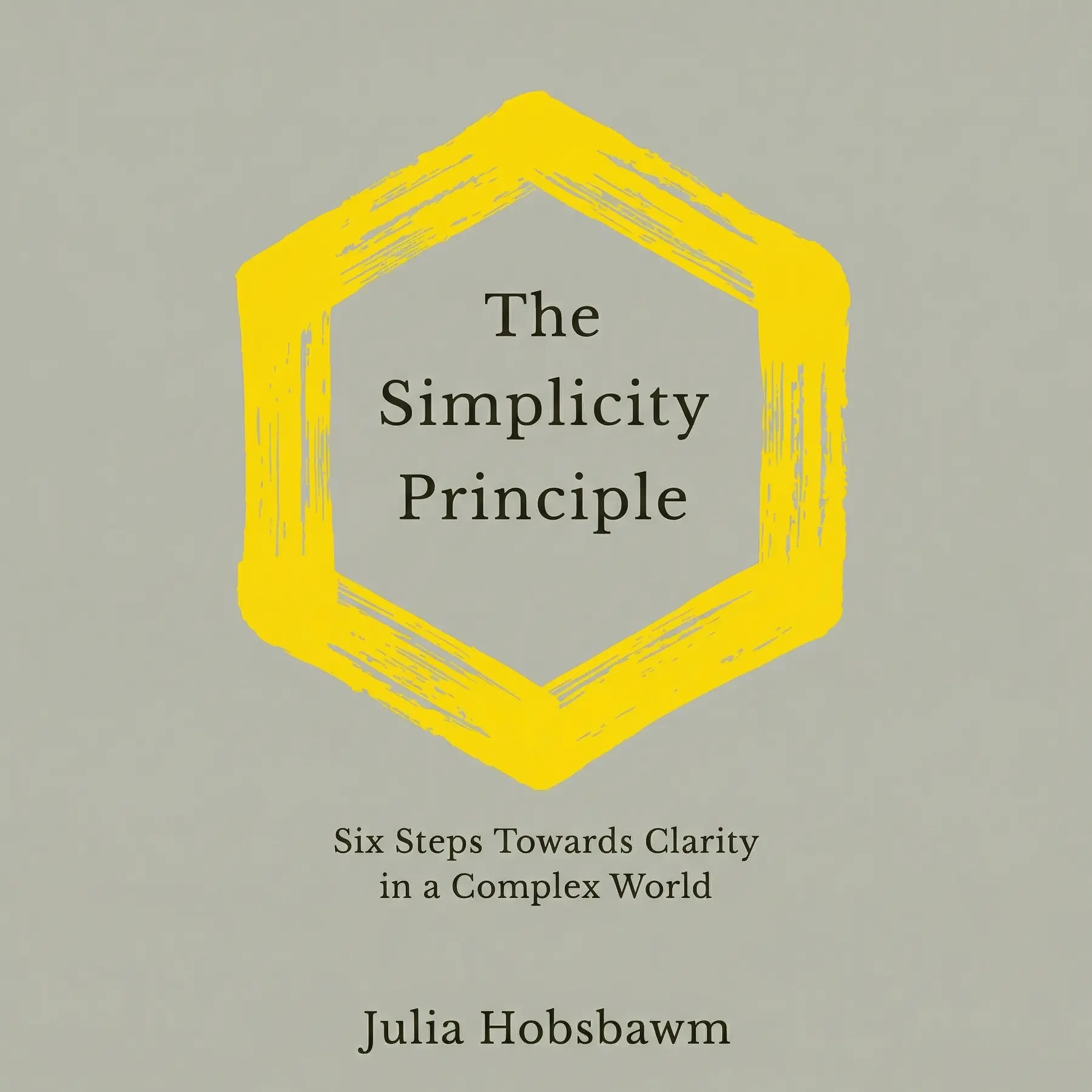
The Simplicity Principle: Six Steps Towards Clarity in a Complex World
The Simplicity Principle offers a strategic framework to overcome the overwhelm of our digital age. By identifying six key areas of focus, it teaches us how to reclaim clarity, purpose, and meaningful time.
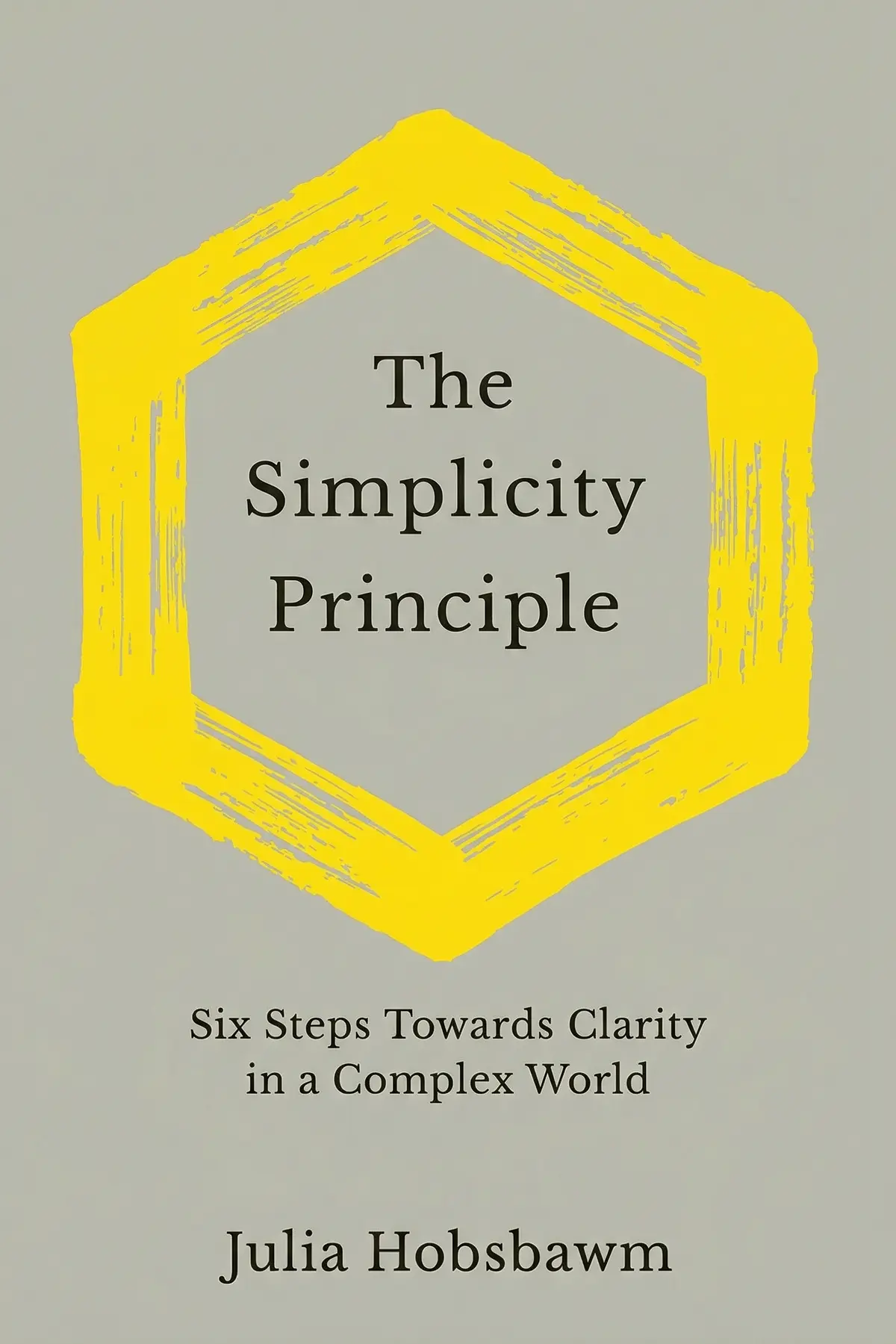
Table of Content
1. Introduction
1 min 54 sec
Imagine your average afternoon. You are likely sitting in front of a screen, perhaps with several dozen browser tabs open, trying to juggle three different projects while your phone vibrates with a steady stream of notifications. You might feel a persistent mental fog, a sense that you are busy but not actually productive. You know you should probably drink some water, maybe stand up and stretch, or finally answer that one critical email that’s been sitting in your inbox for three days. But instead, you find yourself mesmerized by a random social media clip or a news alert that has nothing to do with your actual life.
This isn’t just a personal failing; it is the hallmark of the modern condition. We live in an era of unprecedented complexity, where the very tools meant to make our lives easier often end up making them more cluttered and stressful. We are connected to everyone, yet we feel isolated from our own priorities. We have access to all the world’s information, yet we feel less certain than ever.
The solution to this overwhelm is surprisingly straightforward, though it requires a radical shift in perspective. To find our way back to a meaningful, fulfilling existence, we have to embrace the concept of simplicity. But simplicity isn’t just about getting rid of things; it’s about a disciplined focus on what is essential.
In the following segments, we are going to explore a framework inspired by the natural world—specifically the architecture of the beehive—to help us untangle our complicated lives. We will look at why we crave simplicity even in our politics and our technology, and how a six-sided approach can provide the structural integrity we need to thrive. We will discover why saying ‘no’ is a superpower, why our brains need a ‘reset’ button, and how to combat the modern epidemic of ‘infobesity.’ By the end of this journey, you’ll have a clear set of tools to help you quiet the noise and reconnect with your true purpose.
2. The Paradox of Progress
2 min 18 sec
Why does the technology meant to save us time often leave us feeling more distracted and exhausted than ever before?
3. Learning from the Hive
2 min 04 sec
Discover how the humble honeybee provides a perfect geometric blueprint for organizing a chaotic human life.
4. The Power of Clarity and Refusal
2 min 11 sec
In an age of constant notification pings, the most successful people are those who have learned the art of saying ‘no.’
5. Protecting Your Inner Snowflake
2 min 04 sec
Why staying true to your unique values is the ultimate shortcut to a simpler, more authentic life.
6. The Art of the Mindful Reset
2 min 04 sec
Learn why doing absolutely nothing is sometimes the most productive thing you can do for your brain.
7. Curing Infobesity
2 min 00 sec
Are you drowning in data? Discover how to curate a ‘Knowledge Dashboard’ to protect your mental health.
8. The Necessity of Real Connection
2 min 05 sec
Why digital networking is no match for the biological power of a simple, face-to-face interaction.
9. Mastering Your Individual Rhythm
2 min 13 sec
Forget the standard nine-to-five. Learn how to align your productivity with your body’s unique internal clock.
10. Conclusion
1 min 49 sec
As we look back at the various threads of the simplicity principle, a clear throughline emerges: our lives do not have to be as complicated as they feel. We have been swept up in a digital and social whirlwind that values ‘more’ over ‘better’ and ‘fast’ over ‘meaningful.’ But by looking to the natural wisdom of the hexagon and the efficiency of the beehive, we can begin to rebuild our lives on a more solid, streamlined foundation.
The journey toward clarity starts with a commitment to the six facets of Hexagon Action. It requires us to find clarity by setting boundaries and saying ‘no.’ It demands that we honor our individuality and stand by our core values. It reminds us of the vital necessity of resetting our minds and being selective about the information we consume. It urges us to prioritize real, physical human connections over virtual ones and to honor our own biological relationship with time.
If this all feels like a lot to change at once, the best approach is to start small. Don’t try to overhaul your entire life by Monday morning. Instead, pick one area—perhaps your information diet or your digital boundaries—and set a single, realistic goal. Maybe you decide to turn off your notifications after 8 p.m., or you commit to one face-to-face meeting a week instead of an email chain.
Simplicity is not a destination you reach and then stay at forever; it is a practice. It is a daily choice to cut away the non-essential so that the truly important things have room to grow. By adopting these principles, you aren’t just making your life easier; you are making it more yours. You are reclaiming your attention, your energy, and ultimately, your happiness in a complex world.
About this book
What is this book about?
Modern life often feels like a losing battle against a rising tide of notifications, complex systems, and endless information. We are more connected than ever before, yet we feel increasingly fragmented, exhausted, and unfocused. The Simplicity Principle serves as a direct response to this modern malaise, offering a structured and practical way to cut through the noise and return to what truly matters. Drawing inspiration from the natural world, the book introduces a framework designed to help individuals and organizations streamline their priorities. By focusing on six essential pillars—Clarity, Individuality, Reset, Knowledge, Networks, and Time—it provides a roadmap for transforming a chaotic existence into one of focused fulfillment. The promise is simple: by adopting the patterns found in nature, we can navigate the complexities of the twenty-first century without losing our sanity or our sense of purpose.
Book Information
About the Author
Julia Hobsbawm
Julia Hobsbawm, OBE, is a prominent entrepreneur and the author of the book Fully Connected: Social Health in an Age of Overload. Her work in the field of modern organizational health extends to her role as the Editor at Large for Arianna Huffington’s Thrive Global platform. Additionally, she shares her insights through her regular column in PWC’s Strategy + Business magazine.
Ratings & Reviews
Ratings at a glance
What people think
Listeners find that although perspectives differ on the book’s intricate structural layout, many value its original intellectual strategy for sharpening focus via the "Hexagon Action" framework. Furthermore, they appreciate the compelling analogies involving nature and the lives of bees to demonstrate ideas of integration and productivity. Additionally, listeners point out the practical tips regarding "mindful-less-ness" and techniques for resetting to avoid burnout, with one listener remarking that the text is notably pertinent for professionals dealing with a persistent "always-on" culture.
Top reviews
Ingrid
Finally got around to reading this and I’m genuinely surprised by how much the geometry of nature can teach us about productivity. The hexagonal framework is a brilliant way to visualize the different facets of our lives, from Time to Networks. I loved the historical references, especially the bits about her father, Eric Hobsbawm, and his approach to noticing while traveling. It’s a very grounding book that encourages you to step back from the 'always-on' machine age. Some might find the language a bit high-brow, but I thought it added a layer of sophistication that is usually missing in this genre. It’s not just about doing more; it’s about being more connected to the natural rhythms of life. This is definitely a book I’ll be returning to when I feel the need to reset.
Show moreDome
Ever wonder why a beehive is so efficient? This book dives deep into that question, using nature’s geometry as a framework for human productivity. I actually enjoyed the Hexagon Action system, even if it feels a bit rigid at times. The author draws fantastic parallels between the way bees organize their hives and how we can structure our chaotic digital lives. It’s definitely more of an intellectual business read than a standard self-help book. I found the Reset chapter particularly helpful for dealing with my 'always-on' work mentality. The advice on noticing during travel was a highlight for me. However, the sheer number of sub-lists can be overwhelming if you try to implement everything at once. It’s best to treat it as a philosophy rather than a step-by-step manual.
Show moreYongyut
As someone working in a corporate environment, I found the intellectual depth here quite refreshing compared to standard self-help fluff. Julia Hobsbawm is clearly a brilliant thinker, and she brings a high level of academic rigor to the table. The way she links the concept of Clarity to the structure of a hexagon is fascinating. It’s refreshing to see a business book that doesn't talk down to its audience. I particularly appreciated the references to Adam Galinsky's work on how new stimuli affect the brain. Yes, the structure is complex, but the world we live in is complex too. It’s a book for people who want to understand the why behind their lack of focus. It might not be for everyone, but it’s a solid read for the right professional.
Show moreJin
After hearing so much buzz about the 'always-on' culture, I appreciated how this book addresses the need to disconnect. The Reset pillar was particularly impactful for me, especially the discussion on how travel and meditation can prevent burnout. Hobsbawm’s writing is very intellectual, which makes the advice feel more grounded in research than your average blog post. I liked the inclusion of the Hexagon Action steps, as they provide a visual way to think about personal growth. That being said, the book can be quite dense. It’s not something you can breeze through in an afternoon; you really have to sit with the concepts and reflect. It’s a great resource for business professionals who feel overwhelmed by the complexity of the modern world. I’m glad I took the time to finish it.
Show morePot
To be fair, Hobsbawm offers some truly interesting concepts like 'mindful-less-ness' that resonate in our burnout-prone culture. The idea of shutting off the subconscious to allow for restoration is a powerful alternative to the typical mindfulness tropes we see everywhere. That said, the obsession with the number six feels a bit like a gimmick after a while. Every single section has to have exactly six points, which often leads to filler content that doesn't add much value. The book struggles with its own identity, wavering between a business text and a philosophical treatise. It requires a lot of mental energy to sift through the complex language to find the actionable gems. I’d recommend it to people who enjoy deep, theoretical dives into productivity. Just don't expect a quick fix.
Show moreNarongrit
Look, there is a decent core message buried under the heavy layers of organizational theory and hexagonal obsession. I think Hobsbawm makes some great points about the dangers of our 'always-on' culture and the need for a total reset. Her advice on noticing your surroundings to stimulate neuroplasticity is genuinely helpful for mental health. However, the book desperately needs a better editor to trim the fat. The structure is so repetitive that it starts to feel like a gimmick halfway through. It’s as if she forced her thoughts into this six-sided mold even when they didn't fit. If you have the patience to dig for the good bits, you’ll find some value. Just be prepared for a lot of academic jargon and odd tangents along the way.
Show moreCha
Not what I expected from a book titled after simplicity. I thought this would be a practical guide to decluttering my life, but it turned out to be a very complex deep-dive into geometry and social theory. The author is clearly very smart, but her style is more suited for a lecture hall than a self-help shelf. I did enjoy the bits about 'mindful-less-ness' and the importance of emptying the mind. Those sections were actually quite liberating. But the constant focus on the number six—six steps, six fixes, six thinkers—felt forced and made the whole thing harder to remember. It’s a bit of a mixed bag. There are some gems of wisdom here, but you have to be willing to wade through a lot of fluff to find them.
Show moreRiley
Picked this up because the cover looked sleek and promising, but the content inside is a labyrinth of lists. You’d think a book about simplicity would be, well, simple. Instead, Hobsbawm gives us six main pillars, each with six sub-steps, and then even more variations on top of that. It’s mathematically perfect according to her, but it’s practically exhausting for the reader. I struggled to keep track of the different axioms by the time I reached the halfway point. The rambling sections on bee larvae and hexagonal cells felt a bit too esoteric for a book supposed to help with clarity. There is some decent research buried in here, particularly regarding neuroplasticity and travel. Unfortunately, the delivery is so dense that it defeats the purpose of the message.
Show moreMontri
The irony is almost too much to bear with this one. For a book that claims to champion simplicity, the organizational structure is incredibly dense and, frankly, quite messy. Julia Hobsbawm attempts to use the hexagon as a grounding metaphor, but she ends up burying her best points under endless lists of six-within-six. It felt like I was reading a collection of the author's random daily thoughts rather than a cohesive strategy for productivity. While the sections on the life of bees were charming, they didn't actually help me navigate my digital clutter. If you are looking for a quick guide to clearing your head, this isn't it. The writing style is far too rambling and esoteric for a general audience seeking practical advice. I wanted clarity, but I left feeling more confused than when I started.
Show moreLucas
This book felt more like a stream-of-consciousness journal than a structured guide to clarity. It’s ironic that a book called The Simplicity Principle is one of the most incoherent things I've read all year. The author seems obsessed with the number six, even reaching for bizarre connections like people being buried six feet deep. What does that have to do with being productive? The metaphors about bees and honeycombs were stretched way too thin and became a distraction from the actual advice. I felt like I was losing the will to finish as the chapters became more rambling and less focused. There are much better books on productivity that actually practice what they preach. This one is just too much snowflakery and not enough substance.
Show moreReaders also enjoyed
AUDIO SUMMARY AVAILABLE
Listen to The Simplicity Principle in 15 minutes
Get the key ideas from The Simplicity Principle by Julia Hobsbawm, plus 5,000+ more titles in English and Thai.
- 5,000+ titles
- Listen as much as you want
- 7-day free trial
- Cancel anytime







