
13 min 40 sec
Available in:English
The Skills-Powered Organization: The Journey to the Next-Generation Enterprise
The Skills-Powered Organization explores the transition from rigid job hierarchies to fluid, skills-based systems, offering a roadmap for businesses to achieve agility and resilience in an era of rapid technological disruption.
Table of Content
1. Introduction
1 min 24 sec
In the modern corporate world, many of us feel a lingering sense of friction. We see it when a company struggles to pivot toward a new technology, or when a talented employee feels trapped by a job description that was written three years ago and no longer reflects the reality of their daily contributions. This friction isn’t just a minor annoyance; it’s a symptom of a systemic failure. For over a hundred years, we have organized human labor around the concept of the “job.” We define a role, box it into a department, and expect it to remain relatively static. But the world is no longer static.
Today, we are witnessing a seismic shift—a transition from the job-centric model to a skills-powered paradigm. This is the core thesis of the journey we are about to take. We will explore how organizations can thrive by dismantling the rigid structures of the past and instead focusing on the granular skills of their workforce. This throughline suggests that by treating skills as the primary unit of work, companies can achieve a level of agility and innovation that was previously impossible. We’ll look at why the traditional job is becoming an endangered species and how redefining what we value in employees can lead to a more resilient, inclusive, and efficient future. Whether you are a senior leader or an individual contributor, understanding this revolution is essential for navigating the next generation of the enterprise.
2. The Obsolescence of the Traditional Job Framework
2 min 14 sec
Discover why the century-old model of rigid job descriptions is failing in today’s fast-paced market and how technological disruption is forcing a radical rethink of work.
3. Adopting Skills as the New Corporate Currency
2 min 01 sec
Explore the benefits of moving away from job titles toward a system where individual competencies drive value, agility, and employee satisfaction within the organization.
4. Redefining Human and Technical Capabilities
2 min 11 sec
Learn how modern enterprises differentiate between technical expertise and human-centric skills, and why the expression of those skills is more important than mere possession.
5. The Evolutionary Path Toward Modern Work
2 min 15 sec
Contextualize the current shift by looking at the four industrial revolutions and understanding how our approach to work has evolved from standardization to democratization.
6. Democratizing Opportunity Through Strategic Planning
2 min 19 sec
Understand how a skills-first approach expands the talent pool and how distinguishing between sunrise and sunset skills can future-proof your career and company.
7. Conclusion
1 min 16 sec
As we conclude our look into the skills-powered organization, the primary takeaway is clear: the era of the fixed job description is over. We are entering a new age where organizational success is defined by the ability to identify, deploy, and develop human skills with precision and speed. This shift is not merely a change in HR policy; it is a fundamental transformation of the corporate operating system. By moving from jobs to skills, businesses can unlock the full potential of their people, bridge the gap between human and machine work, and build a culture of continuous growth.
To put these ideas into practice, start by looking at your own work or your team’s contributions through a more granular lens. Ask yourself: what are the core skills being used here, and which of them are ‘sunrise’ skills that will grow in importance? For leaders, the challenge is to begin dismantling the silos that keep talent trapped in specific departments. Experiment with small, skills-based projects or internal marketplaces. The journey to the next-generation enterprise is a long one, but it begins with the recognition that people are not their job titles—they are a rich and evolving collection of capabilities waiting to be unleashed. Embracing this reality is the key to thriving in the complex, fast-changing economy of the twenty-first century.
About this book
What is this book about?
The Skills-Powered Organization examines a fundamental shift in the corporate landscape: the move away from the traditional job-centric model that has dominated business for over a century. Authors Ravin Jesuthasan and Tanuj Kapilashrami argue that the old way of organizing work—through fixed roles and static job descriptions—is no longer viable in a world defined by artificial intelligence, the gig economy, and constant market volatility. The book provides a strategic framework for transforming a legacy business into a modern enterprise where skills, rather than titles, are the primary currency. It promises to show leaders how to unlock hidden talent, foster a culture of continuous learning, and build a more inclusive workforce by focusing on what people can actually do rather than the degrees they hold. By dismantling functional silos and adopting a more granular view of human capability, organizations can become significantly more agile and innovative, ensuring they remain competitive in the Fourth Industrial Revolution.
Book Information
About the Author
Ravin Jesuthasan
Ravin Jesuthasan is a celebrated futurist and expert on the evolution of work. He serves as a senior partner and global leader for Transformation Services at Mercer and is the author of several influential books, including the Wall Street Journal bestseller Work without Jobs. Tanuj Kapilashrami is an international banking executive who serves as the chief strategy and talent officer at Standard Chartered Bank. In addition to her corporate leadership, she holds board positions at Sainsbury’s PLC and NHS England.
Ratings & Reviews
Ratings at a glance
What people think
Listeners find the move from conventional job roles to models based on skills to be a massive change; while some listeners believe the necessary cultural shift can be an intimidating hurdle, they value the authors' powerful outlook on the future of work. Furthermore, they find it useful that the book shows how emphasizing personal abilities rather than strict structures promotes improved adaptability and strength within an organization. Listeners also point to the hands-on advice regarding actual implementation, with one listener noting the effectiveness of the Spotify "squad model" as a clear example of how to reconfigure talent to meet changing demands. They also like the emphasis on ongoing education, noting the roadmap provided for identifying "sunrise" skills to future-proof an organization in the age of AI.
Top reviews
Nuk
Ever wonder why your company feels so slow despite having top talent? Jesuthasan and Kapilashrami argue it's because we’re stuck in a 19th-century mindset of rigid job descriptions. The breakdown of the 'squad model' used by Spotify was a huge highlight for me, showing how fluid teams can tackle complex projects without getting bogged down in department silos. While some of the theory gets a bit dense, the transition from fixed roles to a skills-based currency is described with convincing urgency. It’s clear that AI is making traditional task allocation obsolete, and this book offers the best roadmap I've seen for navigating that change. A must-read for any leader looking to future-proof their workforce.
Show moreNina
The concept of 'skills as currency' is absolutely brilliant and feels like the inevitable end-point of our current gig-economy trajectory. Jesuthasan and Kapilashrami do a fantastic job of showing why traditional hierarchies are failing to keep up with the pace of digital transformation. I particularly liked the emphasis on continuous learning; it's no longer a 'nice to have' but a survival requirement. The transition from a job-centric model to a skills-powered one is a massive cultural shift that will take years, but this book gives you the tools to start the conversation. It’s rare to find a business book that feels both profoundly theoretical and immediately applicable.
Show moreCameron
Imagine a world where your interview focuses purely on what you can actually do rather than the fancy names on your resume. That’s the future described here, and frankly, it sounds a lot more meritocratic and efficient. This book is a masterclass in understanding how the Fourth Industrial Revolution is reshaping the relationship between talent and opportunity. I found the distinction between technical 'hard' skills and 'enabling' human skills particularly useful for my own team development. While the authors are clearly proponents of this shift, they do acknowledge the massive effort required to change corporate DNA. It's a thought-provoking look at the end of the 'job' as we know it.
Show moreUbolwan
Finally got around to reading this, and frankly, the timing couldn’t be better. With generative AI moving so fast, the idea that a job title can define someone for five years is just laughable now. I loved the focus on 'human' skills—critical thinking and empathy—as the real differentiators in an automated world. The book is well-structured, moving from the history of work to practical frameworks for the next-generation enterprise. My only gripe is that it feels a bit repetitive in the middle chapters. Still, if you want to understand why skills are the new currency, this is the book to pick up.
Show moreJulian
Wow, talk about a wake-up call for anyone clinging to their old-school org chart. This book paints a vivid picture of a world where 'jobs' are replaced by a more granular, fluid approach to tasks. The authors explain how technology has essentially rendered the traditional operating system of the corporation obsolete. I was particularly struck by the discussion on 'democratizing' work through talent marketplaces. It's an optimistic vision, though I worry that smaller companies might struggle with the tech investment required to implement these skills-based models. Regardless, the shift is clearly happening, and ignoring these trends would be a massive mistake for any business leader.
Show moreSomsak
Stop hiring for titles and start hiring for potential and specific competencies. This is the main takeaway I got from this insightful deep dive into the modern workforce. The authors make a strong case that the 150-year-old model of 'groups of jobs' is broken. In my experience, the biggest hurdle is getting leadership to let go of their silos, and this book provides the data to help make that case. The section on AI is particularly strong—it doesn't just talk about automation as a job-killer but as a tool for redesigning work. The book is dense, but the sheer volume of actionable insight makes it worth the effort.
Show moreSamuel
After hearing Ravin speak at a conference, I had to grab this to see the full framework for myself. The authors argue convincingly that the mismatch between rigid structures and fluid challenges is the biggest bottleneck to growth today. By focusing on granular skills, organizations can become significantly more agile, allowing them to pivot resources in real-time. I think the section on cultural transformation is the most important, as no amount of tech will fix a company that doesn't value continuous learning. It’s a dense read, and the language is definitely 'corporate,' but the logic is sound. This is essential reading for anyone in management or HR.
Show moreTang
As an HR practitioner, I found the core argument for dismantling job hierarchies quite compelling, though the actual execution feels like a monumental mountain to climb. The authors do a great job explaining 'sunrise' and 'sunset' skills, which helps in visualizing where the market is heading as AI takes over technical tasks. However, I wanted more granular detail on how to handle the inevitable pushback from middle management who benefit from the status quo. To be fair, the shift to a skills-powered paradigm is necessary, but the book sometimes makes it sound easier than the messy reality of corporate culture. It's a visionary piece of writing, even if it leaves some of the hardest logistical questions unanswered.
Show moreSing
This book provides a solid history of how we got here, but its real value lies in its look toward the future. It’s fascinating to see how the 'squad' mentality can increase agility and resilience in the face of sudden market shifts. Personally, I found the chapters on human-machine collaboration to be the most insightful part of the text. The writing style is professional and academic, which might be a turn-off for some, but the depth of research is undeniable. I think the authors could have spent more time on the psychological impact of losing the 'title' identity, but the overall framework is incredibly robust for planning out a five-year talent strategy.
Show moreNiphon
Look, the vision here is great, but I’m skeptical about how many organizations can actually pull this off without total chaos. The authors present a very polished view of the skills-powered paradigm, yet the reality of dismantling deep-seated departmental boundaries is often much uglier than they suggest. I appreciated the case studies, like Spotify, but those are tech-native companies—applying this to a traditional manufacturing firm feels like a different beast entirely. It’s an interesting read for sure, but it borders on being overly idealistic at times and feels a bit like 'consultant-speak.' If you're looking for a silver bullet for your recruitment woes, you won't find it here.
Show moreReaders also enjoyed
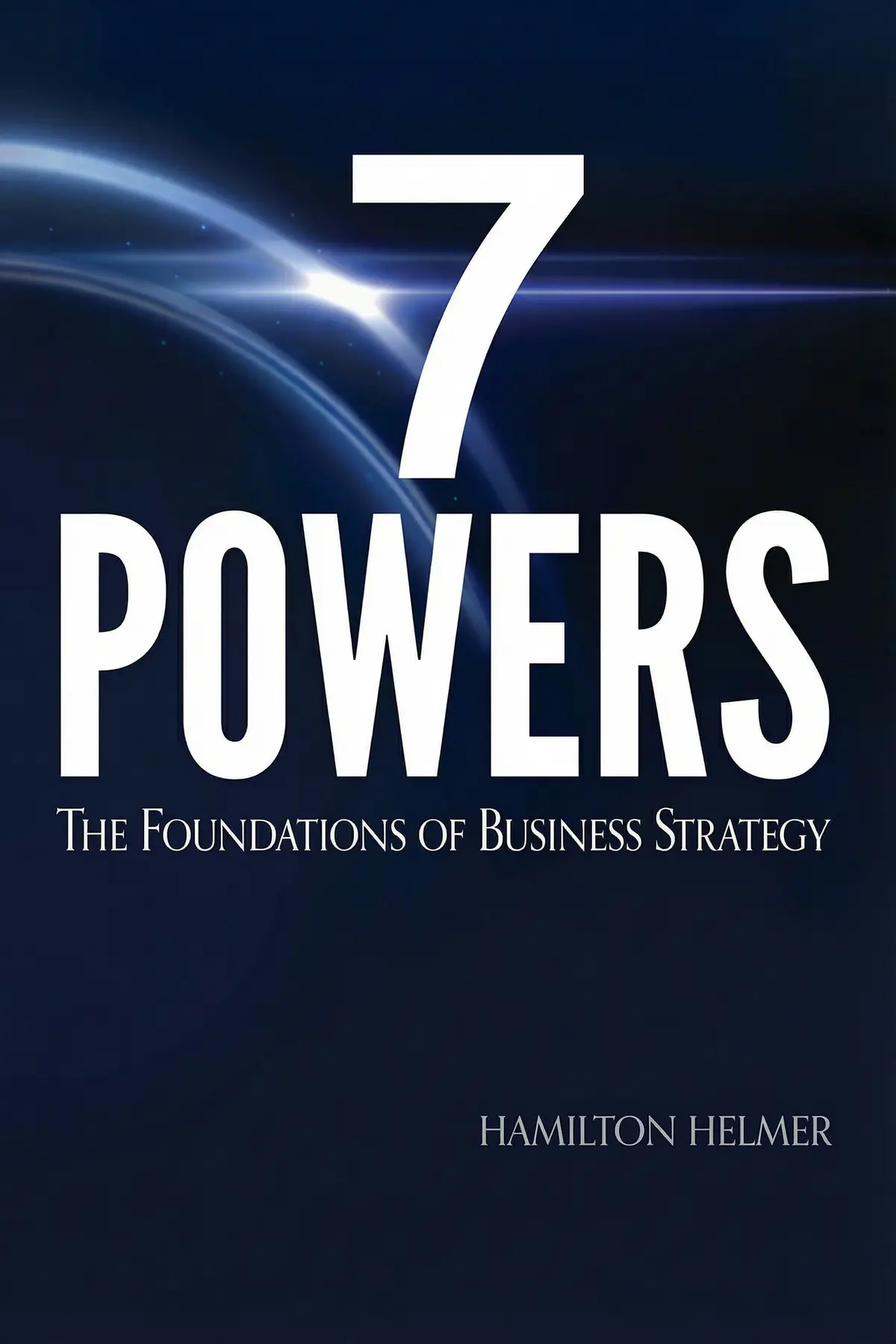
7 Powers: The Foundations of Business Strategy
Hamilton Helmer

A Bigger Prize: How We Can Do Better Than the Competition
Margaret Heffernan
A Year with Peter Drucker: 52 Weeks of Coaching for Leadership Effectiveness
Joseph A. Maciariello
AUDIO SUMMARY AVAILABLE
Listen to The Skills-Powered Organization in 15 minutes
Get the key ideas from The Skills-Powered Organization by Ravin Jesuthasan, plus 5,000+ more titles in English and Thai.
- 5,000+ titles
- Listen as much as you want
- 7-day free trial
- Cancel anytime







