
Civilization: The West and the Rest
Niall Ferguson
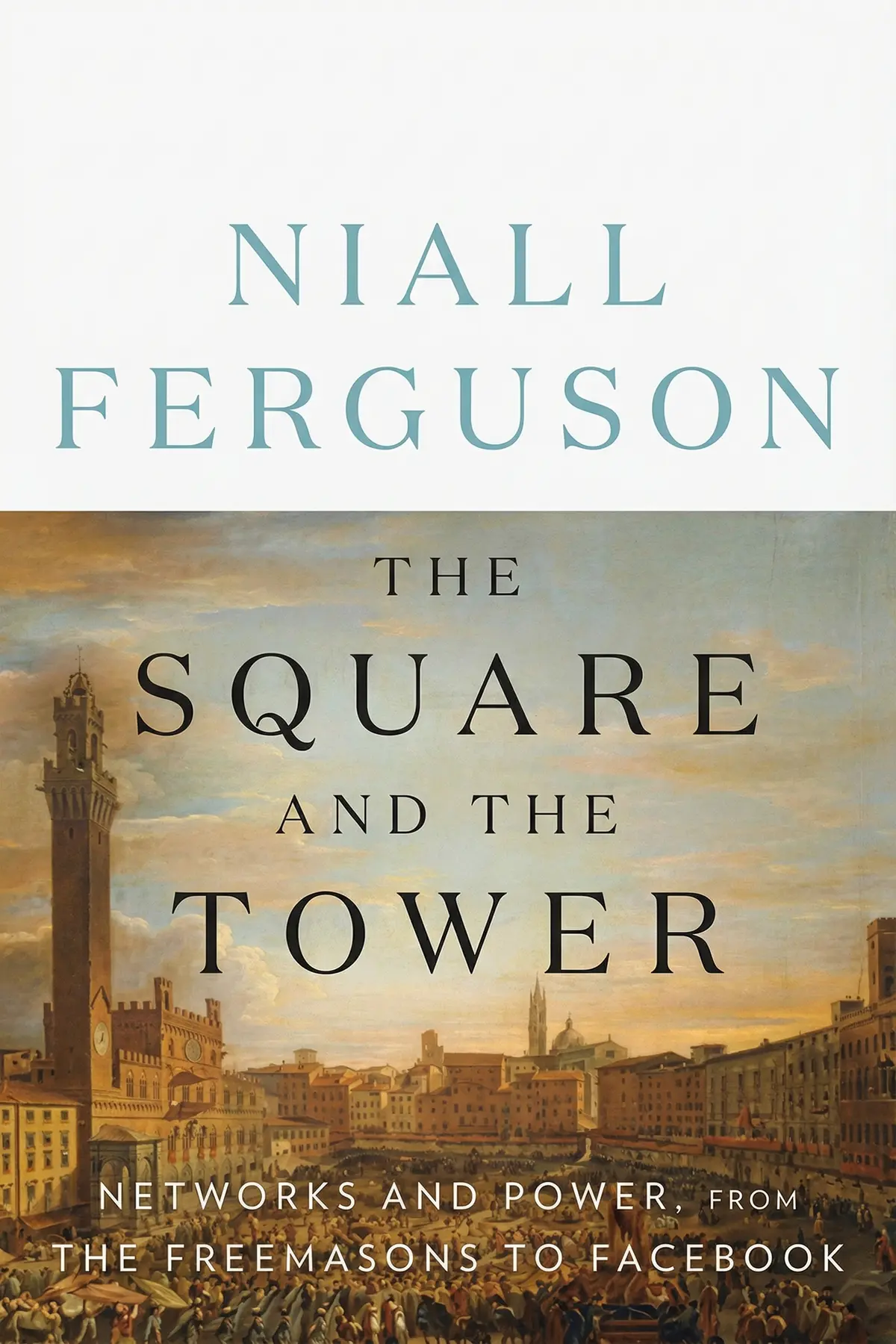
Niall Ferguson’s historical analysis explores the eternal struggle between top-down hierarchies and horizontal networks, revealing how decentralized groups from the Reformation to Facebook have repeatedly reshaped the world’s power dynamics.
2 min 08 sec
When we look at the world today, it often feels like we are living through a period of unprecedented instability. We see social media platforms swaying elections, decentralized terrorist cells evading the world’s most powerful militaries, and viral movements toppling long-standing regimes. To the casual observer, it seems like the old rules of power no longer apply. But as we dive into the insights of Niall Ferguson, we begin to realize that this isn’t a new phenomenon. It is, in fact, the latest chapter in a long-standing competition between two distinct ways of organizing human society: the hierarchy and the network.
For centuries, the story of history was written by those at the top of the pyramid. We studied the lives of kings, the decrees of popes, and the strategies of generals. This is the world of the “tower”—a vertical structure where power flows from a single point at the top down to the masses below. However, beneath the shadow of these towers, there has always been the “square.” The square represents the network: the informal, horizontal connections that exist between people in marketplaces, coffee houses, and online forums.
In this exploration, we are going to look at how these two forces have interacted since the dawn of the modern age. We’ll see how a single invention in a 15th-century workshop broke the monopoly of the Catholic Church, how the British managed to rule a quarter of the planet by leveraging existing local systems, and how the digital revolution of our own time is once again tilting the scales in favor of the network.
This isn’t just a history of technology; it’s a history of how we relate to one another. By understanding the mechanics of how ideas spread and how organizations fail, we can start to make sense of the modern chaos. We will discover that while the tower often seems permanent and impenetrable, it is the square—the vibrant, messy, and often unpredictable web of human connection—that truly sets the world in motion. Let’s begin our journey through the history of networks and power, tracing the throughline from the Gutenberg press to the Silicon Valley giants of today.
2 min 19 sec
Discover how the tension between top-down pyramids and horizontal webs defines human progress, proving that history is as much about informal connections as it is about kings.
2 min 35 sec
Learn how the position of a single individual in a network can determine the flow of information and even the stability of a nation’s entire power structure.
2 min 25 sec
Explore how the sudden drop in the cost of information and the opening of new trade routes shattered the medieval monopoly on knowledge and authority.
2 min 21 sec
Witness how a decentralized religious movement used the printing press to survive persecution and outmaneuver the most powerful hierarchy in Europe.
2 min 17 sec
Understand the different outcomes of the American and French Revolutions by looking at how they were organized as either resilient networks or fragile hierarchies.
2 min 21 sec
Explore the unique stability of the 19th century, where the great powers of Europe created a sophisticated web of alliances to keep the peace for nearly a hundred years.
2 min 17 sec
See how the British Empire used a combination of local hierarchies and high-tech infrastructure like the telegraph to weave the first truly globalized society.
2 min 20 sec
Investigate the dark irony of how the 20th century’s most destructive movements started as underground networks only to become the most rigid hierarchies in history.
2 min 13 sec
See how the rigid corporate and political towers of the mid-20th century began to crumble, giving way to the organic and unmappable rise of the internet.
2 min 26 sec
Examine the modern volatility of decentralized terrorism and social media polarization, and why our future depends on finding a way to regulate the digital wild west.
1 min 56 sec
As we wrap up our journey through Niall Ferguson’s sweeping history of human connection, the primary lesson is that the battle between hierarchies and networks is the true engine of historical change. We’ve seen that while the “towers” of kings and corporations are the most visible parts of our world, it is the “squares”—the informal webs of connection—that often hold the real power to innovate, disrupt, and transform.
From the way the printing press empowered a lone monk to challenge the Catholic Church, to the way the internet allowed a political outsider to capture the White House, the pattern remains the same. Technological shifts lower the cost of information, which in turn empowers networks to bypass the old gatekeepers. However, as we have also seen, networks are not a panacea. They can be just as prone to chaos, polarization, and even tyranny as any hierarchy. The decentralized nature of a network makes it resilient, but it also makes it difficult to govern.
In our current era, the speed of our digital connections has overwhelmed the slow-moving structures of the nation-state. We are living through a time of intense friction as our old hierarchies struggle to keep up with the viral nature of modern ideas and movements. The challenge for the future is not to choose one over the other, but to find a way for the square and the tower to coexist. We need the order and stability of hierarchy to provide laws and safety, but we need the dynamism of the network to drive progress and freedom.
As you move forward, keep this dual perspective in mind. When you see a new technology or a social movement, ask yourself: Is this a new tower trying to build itself, or is it a network trying to tear an old one down? By recognizing these ancient patterns in our modern world, we can better navigate the turbulence of the 21st century. The square and the tower will always be with us, and the future will be shaped by those who understand how to master the strengths of both.
The Square and the Tower investigates the hidden history of networks—the informal, decentralized webs of connection that have often been overshadowed by the visible structures of kings, emperors, and governments. Niall Ferguson argues that while we often view history through the lens of hierarchies, it is the tension between these vertical towers of power and the horizontal squares of social and technological networks that truly drives change. The book promises to reframe your understanding of global events by showing how technological shifts, from the printing press to the internet, empower networks to challenge established orders. You will journey through the Protestant Reformation, the rise of the British Empire, the chaos of the 20th-century world wars, and the contemporary age of social media. By the end, you’ll see how these recurring patterns of connectivity explain the volatility of our modern world and why the battle between the square and the tower is far from over.
Niall Ferguson is a prominent British historian known for his extensive scholarly range and his participation in significant public debates. He holds positions as a research fellow at both Oxford and Stanford Universities. Beyond academia, Ferguson is a contributing editor for Bloomberg television and has authored several acclaimed historical works, including Civilization: The West and the Rest. He also has experience in the political sphere, having served as an advisor to John McCain during his 2008 presidential campaign.
Niall Ferguson

Niall Ferguson
Niall Ferguson
Listeners find the book intellectually stimulating and historically deep, especially appreciating its analysis of hierarchies as a model and how it relates to the modern social networking revolution. Furthermore, the text is dense with detail and fascinating topics, with one listener praising the extensive discussion on network science. Nevertheless, the style and rhythm get varied feedback; while some deem it well-composed, others view it as wandering, and one listener remarks on a lack of original insights or structural clarity.
Niall Ferguson has an incredible knack for synthesizing massive historical shifts into a single, digestible framework that feels both ancient and urgent. By contrasting the 'Tower' of traditional hierarchies with the 'Square' of horizontal networks, he provides a brilliant lens through which we can view everything from the Reformation to the Silicon Valley boom. The way he applies network science to the spread of the printing press was particularly illuminating for me. To be fair, the book is quite dense and requires some heavy lifting, but the payoff is a much deeper understanding of how power actually flows. I loved the deep dives into the Rothschilds and the Illuminati, which were handled with scholarly rigor rather than sensationalism. It is a masterpiece of historical synthesis that explains why our current era of social media feels so chaotic. Truly a provocative read.
Show moreWow, Ferguson really managed to connect the dots between the 15th-century printing press and the rise of populist movements today in a way that feels totally original. The central metaphor of the Square and the Tower is so simple yet so powerful for understanding the world. I was particularly fascinated by the section on 'Homintern' and how small, elite networks can infiltrate and topple massive hierarchies. In my experience, most history books stay in their lane, but Ferguson jumps from economics to technology to religion with total confidence. The book is packed with maps and charts that actually help visualize the arguments rather than just taking up space. It’s a long read, but it’s the kind of book you’ll be thinking about for months after you finish it.
Show moreFinally got around to this one, and the sheer scope of the research is undeniably impressive. Ferguson takes us on a whirlwind tour of history, arguing that we’ve entered a second 'Networked Age' that mirrors the upheaval following Gutenberg’s press. Frankly, I found the early sections on network theory—complete with nodes and spidery graphs—a bit dry, but they are essential for the later chapters. The analysis of the 2008 financial crisis through the lens of network fragility was a highlight for me. However, the narrative does meander occasionally, losing its focus in a sea of historical vignettes that don't always feel connected to the main thesis. It’s a big, ambitious book that asks the right questions about our digital future, even if it doesn't always provide easy answers. Definitely recommended for history buffs who like a bit of theory with their facts.
Show moreAs someone who spends too much time worrying about the impact of social media on democracy, seeing the parallels between the 16th-century religious wars and today's Twitter battles was eye-opening. Ferguson argues that networks are not inherently good; they can spread vitriol just as easily as they spread enlightenment. Not gonna lie, some of the technical jargon regarding 'betweenness centrality' went over my head, but the historical examples kept me grounded. The chapter on Henry Kissinger—who is clearly a hero of Ferguson’s—offered a rare look at how a master of hierarchy tries to navigate a networked world. My only real gripe is that the book ends on a somewhat ominous note regarding Trump and the tech giants without offering much hope for a middle ground. It is a dense, rewarding read that demands your full attention.
Show moreEver wonder why certain ideas spread like wildfire while others die in committee? Ferguson’s exploration of the 'Square' explains this beautifully through the history of the Freemasons and other secret societies. He makes a compelling case that our current obsession with 'connectivity' is actually a recurring historical cycle. I found the analysis of the 1815 Congress of Vienna particularly relevant to our modern geopolitical mess. The truth is, the book is a bit of a maximalist project; it tries to cover everything from the Medicis to the 2008 crash. While this leads to some pacing issues, the sheer volume of 'aha!' moments makes it worth the slog. He’s not the most elegant writer, but his ability to draw connections across centuries is unmatched. A very solid piece of historical analysis.
Show moreTruth is, this book changed how I look at my own office's hierarchy. Ferguson’s point that hierarchies are just a special, restricted kind of network is a minor revelation. The historical sweep is breathtaking, moving from the Spanish conquistadors to the 'Davos Man' with ease. I did find his treatment of the tech giants a bit harsh, though he makes a strong point about their role in creating the 'anarchy' of the 2010s. The writing is dense, and he loves a good footnote, but the narrative moves fast enough that you don't get stuck. There were a few moments where the connection to the main 'Square vs Tower' theme felt a bit forced, but that’s a minor quibble in an otherwise excellent work. A must-read for anyone interested in the mechanics of power.
Show moreIs this history or just an incredibly long polemic dressed up in academic language? While the central conceit of hierarchies versus networks is fascinating, Ferguson’s own political leanings often overshadow the data. He seems deeply fearful of the 'anarchy' that networks bring, consistently siding with the 'Tower' as the only way to maintain order. The section on the Cambridge Apostles was interesting but felt like a detour from the larger argument about global power structures. Look, the writing is sharp, and the man knows how to tell a story, but I found the binary categorization of human history to be overly simplistic. At times, the book felt like a series of loosely connected essays rather than a coherent whole. It’s thought-provoking, certainly, but I finished it feeling like I’d read a very long defense of the establishment.
Show moreThe first fifty pages felt like a textbook on network theory, which might alienate readers looking for a standard narrative history. Ferguson is clearly brilliant, but he has a tendency to name-drop and self-reference that can get a bit tiring after a while. Personally, I think the book shines when he’s discussing the 'Gutenberg Age' and the way the printing press dismantled the Church's hierarchy. However, the later chapters on Islamic terrorism and the 2016 election felt rushed and less rigorous than the historical sections. It’s a weird mix of cutting-edge sociology and old-school conservative historiography. While I appreciate the effort to create a 'grand theory' of everything, the execution is a bit uneven. It is a solid 3-star read: informative, occasionally brilliant, but ultimately a bit too bloated for its own good.
Show morePicked this up after hearing a lot of hype about its 'revolutionary' take on history, but I found the actual argument to be somewhat recycled. Network theory has been around for decades, and Ferguson doesn't really add much new to the science itself. What he does do is apply it to a massive range of historical events, with varying degrees of success. Some chapters, like the one on the Taiping Rebellion, are fascinating and fresh. Others, especially those focusing on contemporary politics, feel like they belong in an op-ed rather than a history book. The pacing is a major issue; the book speeds up and slows down at random intervals. It’s a decent overview of the tension between order and disruption, but don't expect it to change your worldview entirely.
Show moreLook, I wanted to love this because the premise is so relevant, but the author's personal biases are woven so tightly into the data that it becomes hard to trust the conclusions. Ferguson basically argues that unless we have a strong, hierarchical state, we are doomed to revolutionary chaos. He spends a lot of time dismissing the potential for positive change through networks while ignoring the atrocities committed by the 'Towers' he so admires. The prose is often arrogant, and the structure is completely scattershot. One minute you're in the Renaissance, the next you're talking about George Soros. It felt like a 400-page version of a 'get off my lawn' speech directed at Silicon Valley. There are some interesting facts hidden in here, but you have to dig through a lot of ideological baggage to find them.
Show more

James Shapiro
Miles Taylor

Ben Macintyre

Charles C. Mann
Ron Chernow
Andrew Ross Sorkin
Philip Freeman
AUDIO SUMMARY AVAILABLE
Get the key ideas from The Square and the Tower by Niall Ferguson, plus 5,000+ more titles in English and Thai.







