Empire: How Britain Made the Modern World
Niall Ferguson
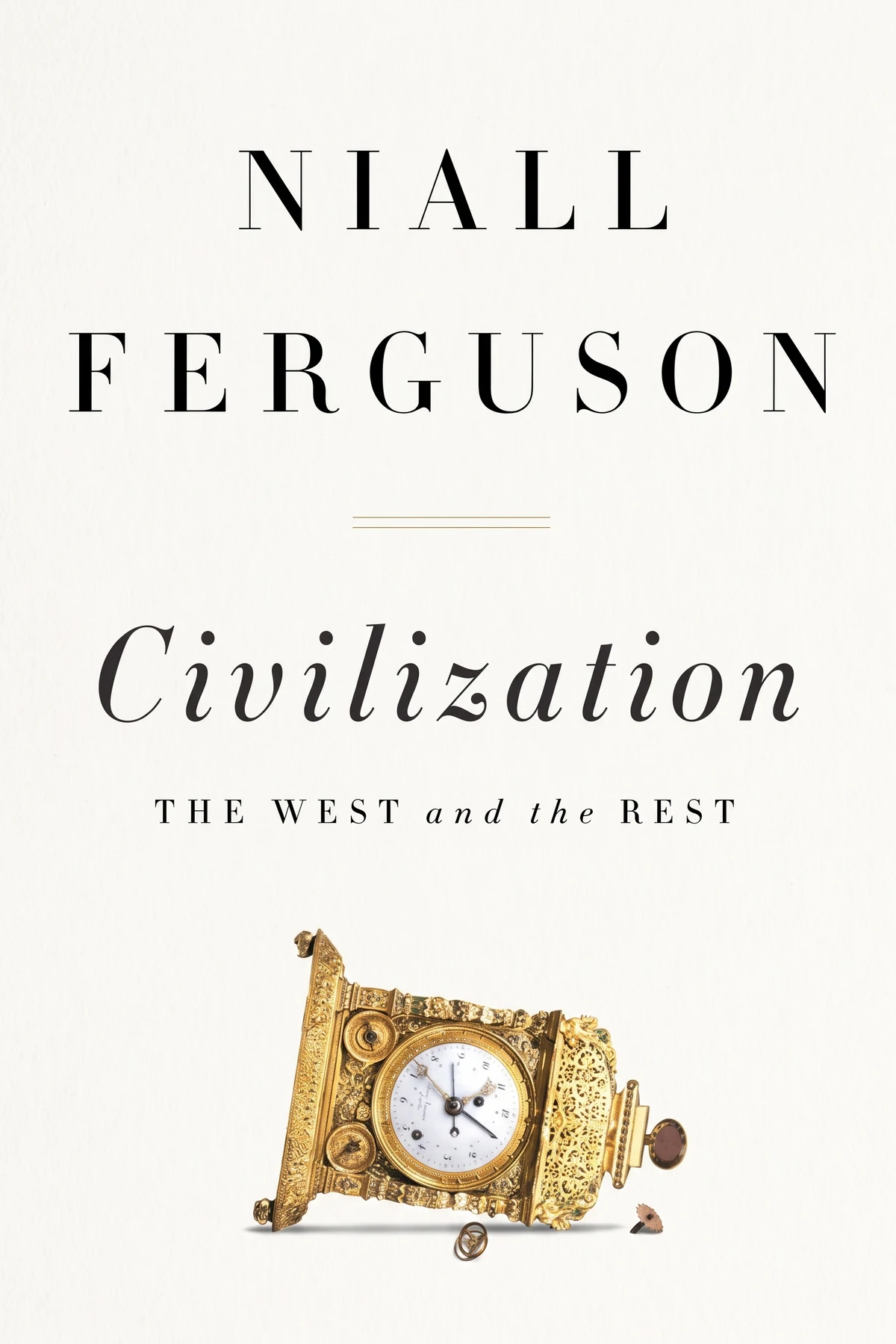
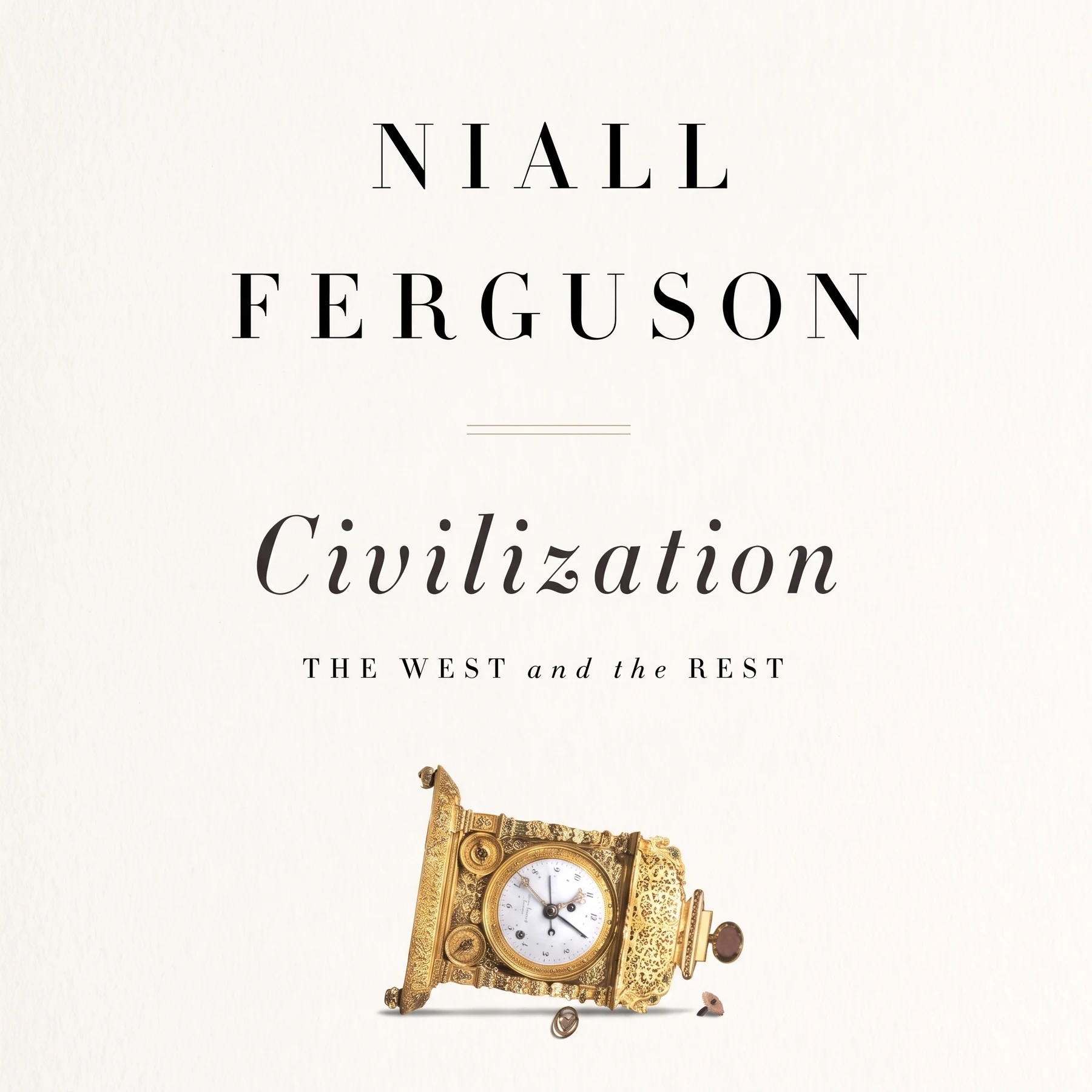
Civilization examines the six specific institutional breakthroughs—or killer apps—that allowed Western nations to rise from obscurity to global dominance, while exploring whether the West is now facing an inevitable decline.
1 min 59 sec
Imagine for a moment that you are a world traveler in the year 1411. If you were to survey the globe, the last place you would bet on for future dominance would be Western Europe. At that time, the centers of innovation, wealth, and power were undeniably in the East. The Ming dynasty in China was a marvel of centralized organization, capable of erecting the sprawling Forbidden City and maintaining a level of technological sophistication that made Europe look like a primitive backwater. While Chinese society was orderly and advanced, European states were small, fractious, and frequently decimated by disease and poor sanitation.
Yet, a profound shift was about to occur. Over the next five hundred years, the global balance of power underwent a radical transformation. By the dawn of the twentieth century, Western nations—which in 1500 controlled only a tiny fraction of the earth’s surface and population—had come to dominate nearly two-thirds of the world’s territory and the vast majority of its economic output. This transition, often called the Great Divergence, saw the West pull ahead in terms of wealth, health, and military strength in a way that seemed almost miraculous.
In this summary, we will explore the theory that this rise was not a matter of luck or mere exploitation. Instead, it was driven by six specific institutional breakthroughs—what historian Niall Ferguson calls ‘killer applications.’ These include competition, science, the rule of law, modern medicine, the consumer society, and a unique work ethic. We will examine how these developments allowed the West to leapfrog over older, more established civilizations. We will also look at the modern implications: what happens when the rest of the world begins to ‘download’ these same apps while the West itself starts to delete them? This is the story of how the world as we know it was built, and why its current structure may be more fragile than we think.
2 min 13 sec
European fragmentation, rather than being a weakness, created a pressurized environment of constant rivalry that birthed modern capitalism and military innovation.
2 min 00 sec
By separating the study of nature from religious dogma, Western scholars unlocked technological advancements that left other empires behind.
2 min 03 sec
The divergent histories of North and South America demonstrate how the distribution of land and political power creates vastly different social outcomes.
1 min 52 sec
Western medical breakthroughs did more than just save lives; they allowed empires to expand into new territories and raised the global ceiling for human potential.
1 min 53 sec
The Industrial Revolution succeeded not just through production, but by creating a world where people everywhere wanted to buy the same things.
2 min 07 sec
A unique combination of religious values and social trust created a workforce that was exceptionally productive and prone to saving for the future.
1 min 59 sec
The story of the last century has been one of non-Western nations realizing they could catch up by adopting Western institutional models.
2 min 02 sec
As Western societies face financial instability and a loss of cultural confidence, the foundations of their five-hundred-year dominance are beginning to crumble.
1 min 30 sec
The story of Western civilization over the last five hundred years is one of the most remarkable transformations in human history. From its origins as a collection of warring, impoverished states, the West managed to unlock a specific set of institutional secrets that allowed it to redefine the global standard for wealth, health, and power. Through the ‘killer apps’ of competition, science, property rights, medicine, consumerism, and the work ethic, the West created a model of society that eventually the entire world wanted to emulate.
However, we have also seen that these institutions are not the exclusive property of any one region or race. They are systems that can be adopted by anyone with the will to implement them. As we look at the contemporary world, we see a fascinating reversal: the East is rapidly ‘downloading’ these apps to fuel its own rise, while many in the West are ‘deleting’ them through fiscal irresponsibility, a decline in work ethic, and a loss of cultural self-belief.
The takeaway is clear: dominance is not a permanent state. It is the result of specific choices and institutional strengths. If the West wishes to remain a leading force in the twenty-first century, it must rediscover the value of its own foundational principles. It must foster competition, respect rational inquiry, protect the rule of law, and maintain the drive for productivity that made its rise possible in the first place. The ‘Great Divergence’ may be over, but the competition for the future is only just beginning.
For five centuries, Western civilization has exerted an outsized influence on the global stage, transforming from a fragmented, impoverished region into a powerhouse of economic and political might. In Civilization: The Six Killer Apps of Western Power, Niall Ferguson investigates the underlying causes of this remarkable shift. He moves beyond simple explanations like geography or imperialism to identify six specific institutional developments—Competition, Science, Property Rights, Medicine, Consumerism, and Work Ethic—that provided the West with its unique advantage. The book promises a deep dive into how these 'killer apps' reshaped everything from military technology to life expectancy and economic productivity. Ferguson compares the trajectories of different nations, such as the divergent paths of North and South America or the stagnation of the Ottoman Empire, to illustrate how these institutions function. Ultimately, the book offers a sobering look at the modern landscape, suggesting that as Western societies lose touch with these foundational principles and other nations begin to adopt them, the era of Western dominance may be drawing to a close.
Niall Ferguson is one of the leading and most controversial historians of his generation. He is the author of many bestsellers on financial and political history, including The Ascent of Money, Empire and War of the World. In addition to his academic work he has written and presented many highly successful television series based on his books, including Civilization.
Listeners find this historical account to be deeply insightful and thoroughly documented, tracing five centuries of Western civilization. The prose is highly engaging, complemented by the author’s superb narration, and listeners describe it as a captivating journey that maintains their interest from start to finish. They value the stimulating subject matter and consider it essential, while one listener remarked that it helped bridge several gaps in their own knowledge of history.
Finally got around to reading this, and it really filled in some massive gaps in my understanding of why certain nations succeeded while others struggled. The author’s focus on property rights in North versus South America was particularly illuminating and offered a fresh perspective I hadn't considered before. While some critics find Ferguson a bit too glib, I appreciated his ability to distill complex geopolitical trends into digestible, fascinating stories. It feels like a well-researched defense of Western values, though it does occasionally veer into a territory that feels a bit too partisan. Regardless of your political leanings, it’s a must-read for anyone who wants to understand the mechanics of global power. I’m personally glad I took the time to work through this dense but rewarding historical survey.
Show moreFrankly, I found the comparison between the development of North and South America to be the most compelling section of the entire work. Ferguson argues that the different approaches to property rights and the rule of law set these two continents on entirely different trajectories. It’s a powerful argument that makes sense of why the United States became a superpower while its southern neighbors struggled with instability. The prose is brilliant, and the author narrates the history of the last half-millennium with a confidence that is hard to ignore. This isn’t just a dry textbook; it’s a vivid, often provocative exploration of why our world looks the way it does today. For those interested in geopolitics, this is absolutely a must-read that will stick with you.
Show moreAs someone who usually finds history dry, I was surprised by how much this felt like a fascinating journey rather than a lecture. Ferguson has a way of making complex economic theories feel relevant to our current global situation, particularly in his analysis of work ethics and consumption. He doesn’t shy away from controversial topics, and his take on the potential collapse of modern civilization is genuinely sobering. Some of the tangents, like the discussion on the French Revolution in the medicine chapter, felt a bit disorganized, but they were still interesting. This is a brilliantly narrated book that covers an incredible amount of ground without ever becoming boring or repetitive. It’s a thought-provoking piece of work that definitely filled in some major holes in my knowledge.
Show moreNiall Ferguson’s take on global history is nothing if not breathless, leaping through five centuries of dominance with the energy of a man who’s had too much coffee. He identifies six specific "killer apps"—from competition to the Protestant work ethic—that supposedly allowed the West to pull ahead of the Rest. While the statistics he throws around act like intellectual Molotov cocktails, I couldn’t help but feel a little exhausted by the sheer speed of his arguments. It is an insightful look at how institutional development shaped the modern world, even if it feels a bit simplistic at times. The narrative is engaging and brilliantly paced, making it a great entry point for anyone curious about the "Great Divergence." Truth is, it’s a thought-provoking journey that managed to hold my interest through some very dense subject matter.
Show moreEver wonder why the Industrial Revolution happened in Britain rather than China, which had been technologically superior for centuries? Ferguson tackles this question head-on, arguing that a unique combination of competition and science created a superior framework for growth. The chapter on consumption was especially eye-opening, showing how the desire for better clothes and goods fundamentally changed the global economy. Some parts of the book are definitely more compelling than others, and I found his take on the decline of the West to be a bit alarmist. Still, the writing is sharp and the author manages to make economic history feel like a high-stakes thriller. It’s a fascinating historical journey that challenges you to rethink what makes a civilization truly great in the long run.
Show moreAfter hearing so much about Ferguson's polarizing reputation, I went in expecting a polemic but found a remarkably well-researched narrative instead. The way he compares the development of diverse cultures through the lens of institutional "apps" is a clever, if slightly gimmicky, way to frame the story. I particularly enjoyed the section on medicine and how it was used both as a tool for progress and a justification for colonial rule. There are moments where he seems to oversimplify the role of luck, which is where his argument differs sharply from thinkers like Jared Diamond. Look, the book isn't perfect, but it’s an incredibly engaging read that makes you feel smarter for having finished it. It’s definitely one of the more thought-provoking books I’ve picked up this year.
Show moreThis book is essentially 500 years of history condensed into a high-octane roller coaster ride that rarely slows down for nuance. Ferguson is a master storyteller, and his ability to weave together disparate threads like the Ming dynasty and the American Revolution is truly impressive. He makes a compelling case for why things like the rule of law and the work ethic were essential to Western ascendancy. However, the sheer volume of information can be overwhelming, and I found myself needing to pause frequently to process his rapid-fire statistics. Not gonna lie, some of his pop-culture references felt a bit out of place in a serious academic work. Despite that, the book remains a fascinating historical journey that successfully bridges the gap between scholarly research and popular reading.
Show moreTo be fair, the chapter on medicine and its role in colonial Africa was eye-opening, even if the author's tone can be a bit dismissive at times. I appreciated the deep dive into the specific institutions that helped the West gain its footing, particularly the emphasis on competition between petty European states. However, I felt that Ferguson’s focus on the "Best" countries meant he ignored a lot of the world that didn't fit his specific narrative. The writing is certainly engaging, but I occasionally felt like I was being lectured by a very smart, very confident professor who wasn't open to questions. It’s a solid read if you’re looking to fill in historical gaps, but take some of the broader conclusions with a grain of salt. It is an insightful book, but it lacks the balance I was hoping for.
Show morePicked this up on a whim and was immediately struck by how Ferguson uses statistics as weapons to drive his points home. He moves at 120 miles per hour, jumping from the Ottoman Empire to the invention of the printing press in just a few paragraphs. While I found the concept of the "six killer apps" useful for organizing the information, it did feel a bit like history for the iPhone generation. There are plenty of aha moments throughout the book, but I wish he had spent more time exploring the counter-arguments to his thesis. Gotta say, I found it to be a gripping read that offered a lot of food for thought regarding the future of Western dominance. It’s a well-researched effort, even if it feels like it’s trying a bit too hard to be provocative.
Show moreThe whole "killer apps" branding feels like a desperate attempt to sound hip, which is ironic for a book defending traditional Western institutions. Ferguson is clearly a brilliant researcher, but his tone can be incredibly condescending to anyone who doesn't subscribe to his specific worldview. He dances through five hundred years of history, often ignoring the darker aspects of imperialism to focus on his chosen themes of competition and medicine. While some of the anecdotes are interesting, the overall structure felt a bit disorganized and prone to strange tangents about the French Revolution. I wanted to like this more, but it felt more like a political manifesto than a balanced historical analysis. In my experience, there are better books on this subject that offer more nuance without the elitist snark.
Show more
Michael Axworthy
Tom Standage

Ishmael Beah
William J. Bernstein
Ben Macintyre
AUDIO SUMMARY AVAILABLE
Get the key ideas from Civilization by Niall Ferguson, plus 5,000+ more titles in English and Thai.