
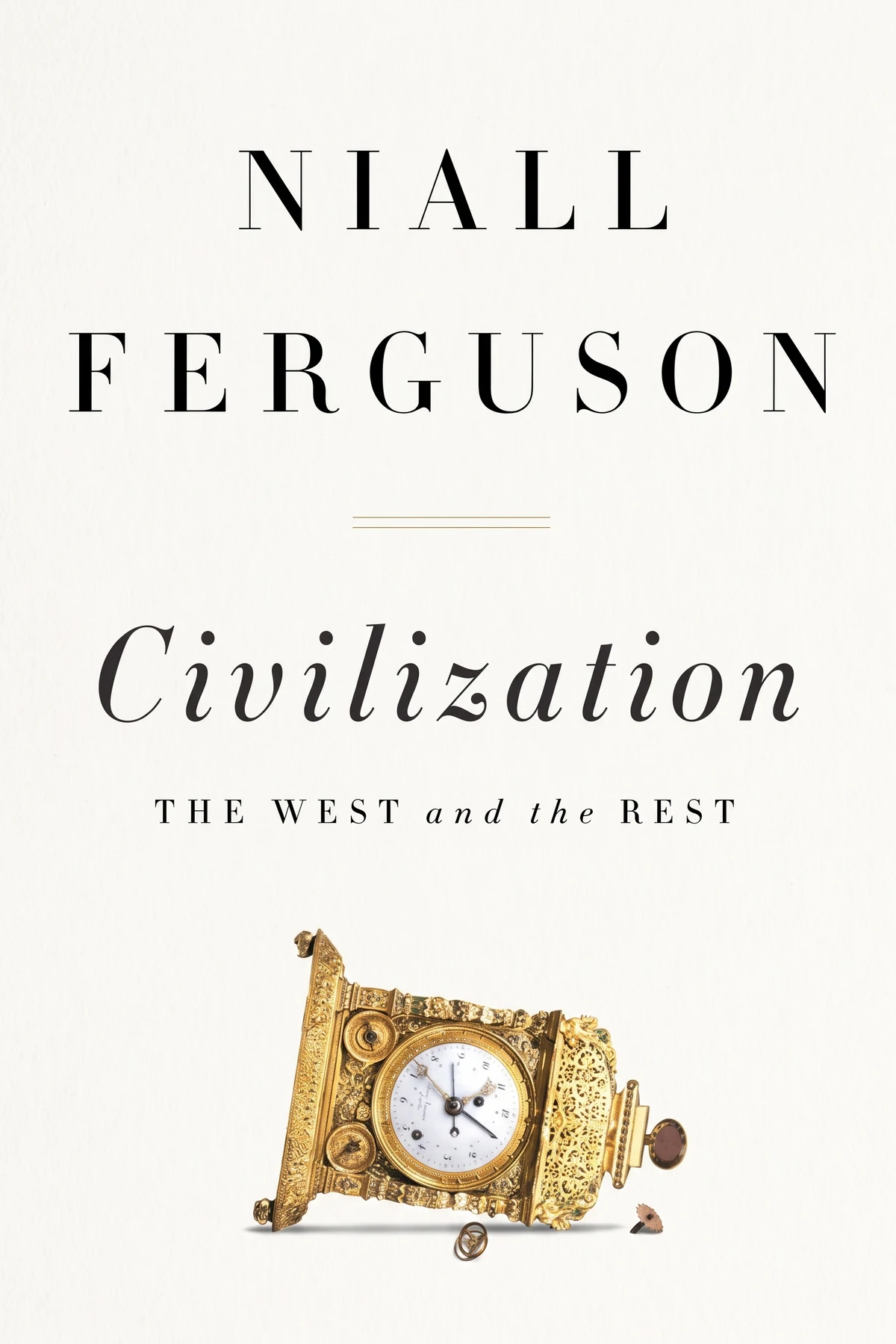
Civilization: The West and the Rest
Niall Ferguson
Empire explores the four-century trajectory of British global dominance, detailing how a small island nation utilized piracy, commerce, and conflict to construct the largest territorial power in human history.
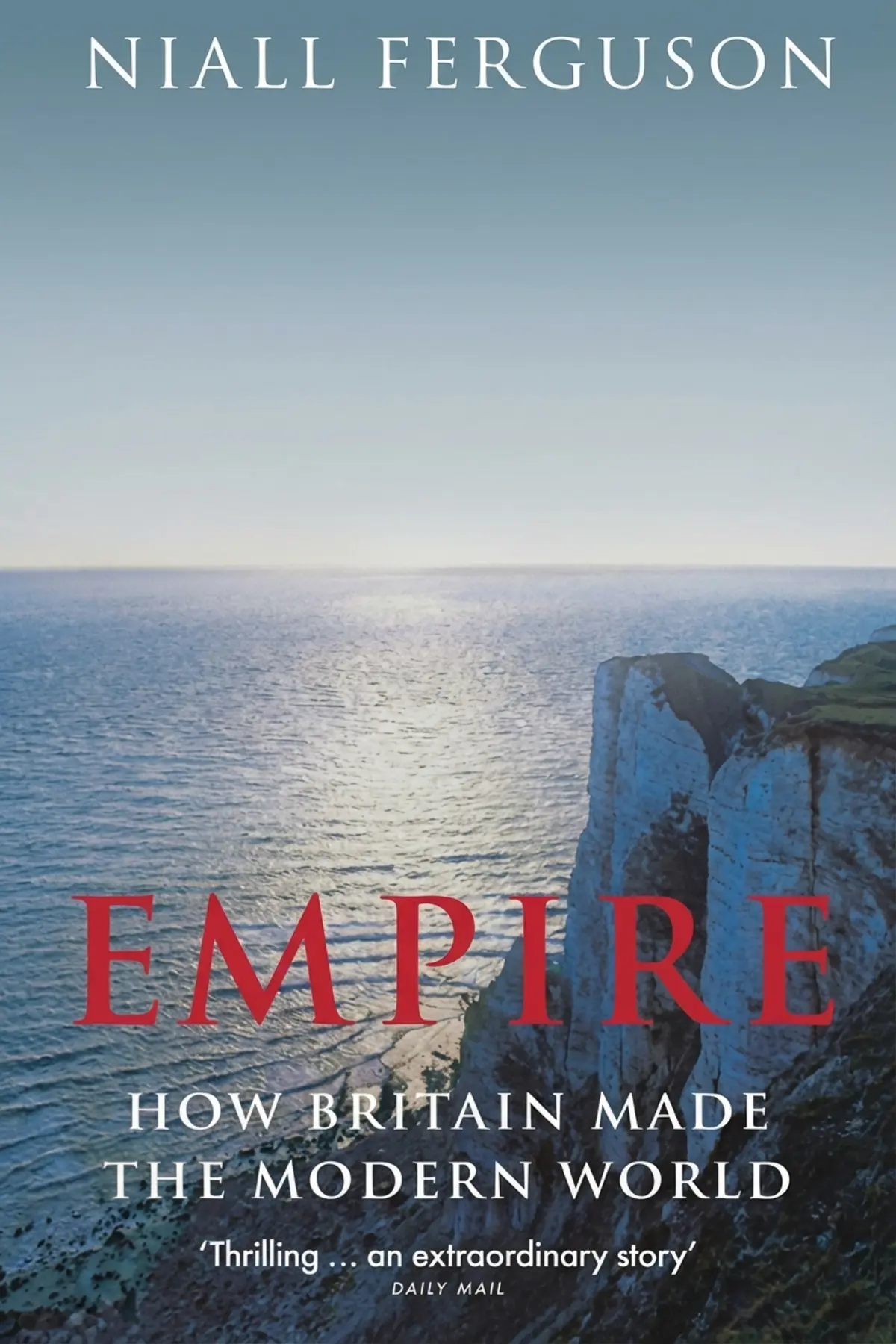
1 min 34 sec
When we look at the world map today, we see the echoes of an era that officially ended only a few decades ago. The legacy of the British Empire is everywhere—in the languages we speak, the legal systems we follow, and even the sports we play. But how did a damp, relatively isolated island off the coast of Europe manage to gain control over nearly a quarter of the Earth’s landmass?
This isn’t just a story of kings and queens or grand military strategies. It is a messy, complicated saga of accidental discoveries, opportunistic pirates, and a voracious appetite for consumer goods. In the twenty-first century, our conversations about colonialism are often polarized. We tend to view the era either through the lens of its undeniable atrocities or through a nostalgic filter of progress and order. However, the reality presented here is far more nuanced.
As we navigate the next few centuries of history, we will see how the British Empire acted as a catalyst for globalization. It pioneered intercontinental communications and distributed life-saving medical advances, but it also presided over systems of extreme exploitation. We will explore the throughline of this imperial journey: a project that was born out of a desire to disrupt Spanish power, grew through the mechanisms of a revolutionary financial system, and was eventually sacrificed during the fight against global fascism. This is a story of how an empire was built, why it thrived, and why, in the end, it had to go away. By understanding this rise and fall, we gain a clearer perspective on the globalized world we inhabit today.
1 min 50 sec
England entered the colonial race as an underdog, relying on state-sponsored pirates to challenge Spanish dominance before ever considering building its own permanent settlements.
1 min 49 sec
A national obsession with sugar and tea transformed the British Empire from a collection of outposts into a sophisticated, consumer-driven commercial network.
1 min 44 sec
Through a series of eighteenth-century conflicts, culminating in the Seven Years’ War, Britain outmaneuvered France to become the world’s dominant naval and colonial power.
1 min 48 sec
The British Empire was built on unprecedented mass migrations, including both the hopeful journeys of indentured servants and the horrific forced transport of millions of enslaved Africans.
1 min 57 sec
The loss of the American colonies taught Britain a vital lesson in governance, leading to a more flexible approach that favored self-rule for white-settler territories.
1 min 49 sec
Victorian-era attempts to impose Christian values on colonial subjects often backfired, leading to violent resistance and a more direct form of British governmental control.
1 min 47 sec
The late nineteenth century saw a renewed imperial push into Africa, driven by a mix of humanitarian idealism and the ruthless commercial ambitions of men like Cecil Rhodes.
1 min 49 sec
The Boer War and the onset of World War I exposed the fragility of the Empire, as the costs of maintaining global dominance began to outweigh the benefits.
2 min 03 sec
Exhausted by World War II and facing pressure from an anti-colonial United States, the British Empire finally dissolved, leaving behind the Commonwealth as its legacy.
1 min 52 sec
In the final analysis, the story of the British Empire is one of profound transformation. We have seen it grow from a desperate island nation using pirates to steal Spanish silver into a global hegemon fueled by the world’s appetite for sugar and tea. We explored how it pioneered a new kind of financial system that allowed it to win world-spanning wars, and how its own internal moral evolution eventually led it to dismantle the very systems of slavery and exploitation that had once sustained it.
The throughline of this journey is the paradox of progress. While the Empire committed undeniable atrocities and engaged in systemic theft of land and labor, it also functioned as a primary driver of the modern, interconnected world. It laid the groundwork for the international legal systems, telecommunications, and trade routes that define our lives today.
As we’ve seen, the Empire didn’t simply ‘fail.’ It was eventually outpaced by newer powers and rendered obsolete by its own domestic shifts in morality and the massive economic toll of two global conflicts. Today, the Commonwealth stands as a reminder of that former unity, though the stigma of colonialism remains a powerful force in international politics.
The lesson of this history isn’t necessarily that empires are ‘good’ or ‘bad’ in a simple binary sense. Instead, it teaches us that global systems of power are often built on accidental and messy foundations. They are driven by human desires—for sweetness, for wealth, for religious certainty—and they are always, eventually, subject to the changing tides of economic and moral reality. By understanding the rise and fall of the British Empire, we are better equipped to navigate the complexities of our own globalized era and to consider what kind of cooperative global order might be possible in the future.
This summary provides a sweeping historical analysis of the British Empire, tracing its origins from sixteenth-century piracy to its peak as a global hegemon and its eventual twentieth-century dissolution. It examines the dual nature of British influence, acknowledging both the brutal realities of the slave trade and colonial violence alongside the spread of parliamentary democracy, international trade networks, and modern infrastructure. Readers will discover how the demands of consumerism—specifically for sugar and tea—drove the expansion of the East India Company and how financial innovations borrowed from the Dutch allowed Britain to outspend its rivals. The narrative also covers the shift toward Victorian moralism and missionary zeal, the strategic 'Scramble for Africa,' and the profound toll of two World Wars that ultimately rendered the imperial project unsustainable. By the end, the throughline becomes clear: the empire was a complex, often contradictory force that fundamentally reshaped the modern world for better and for worse.
Niall Ferguson is a writer and historian who currently serves as the Milbank Family Senior Fellow at Stanford University’s Hoover Institution. Prior to that, he was a Professor of International History at Harvard University. He is the author of multiple best-selling books, including Colossus: The Rise and Fall of the American Empire and Civilization: The West and the Rest.
Niall Ferguson
Niall Ferguson
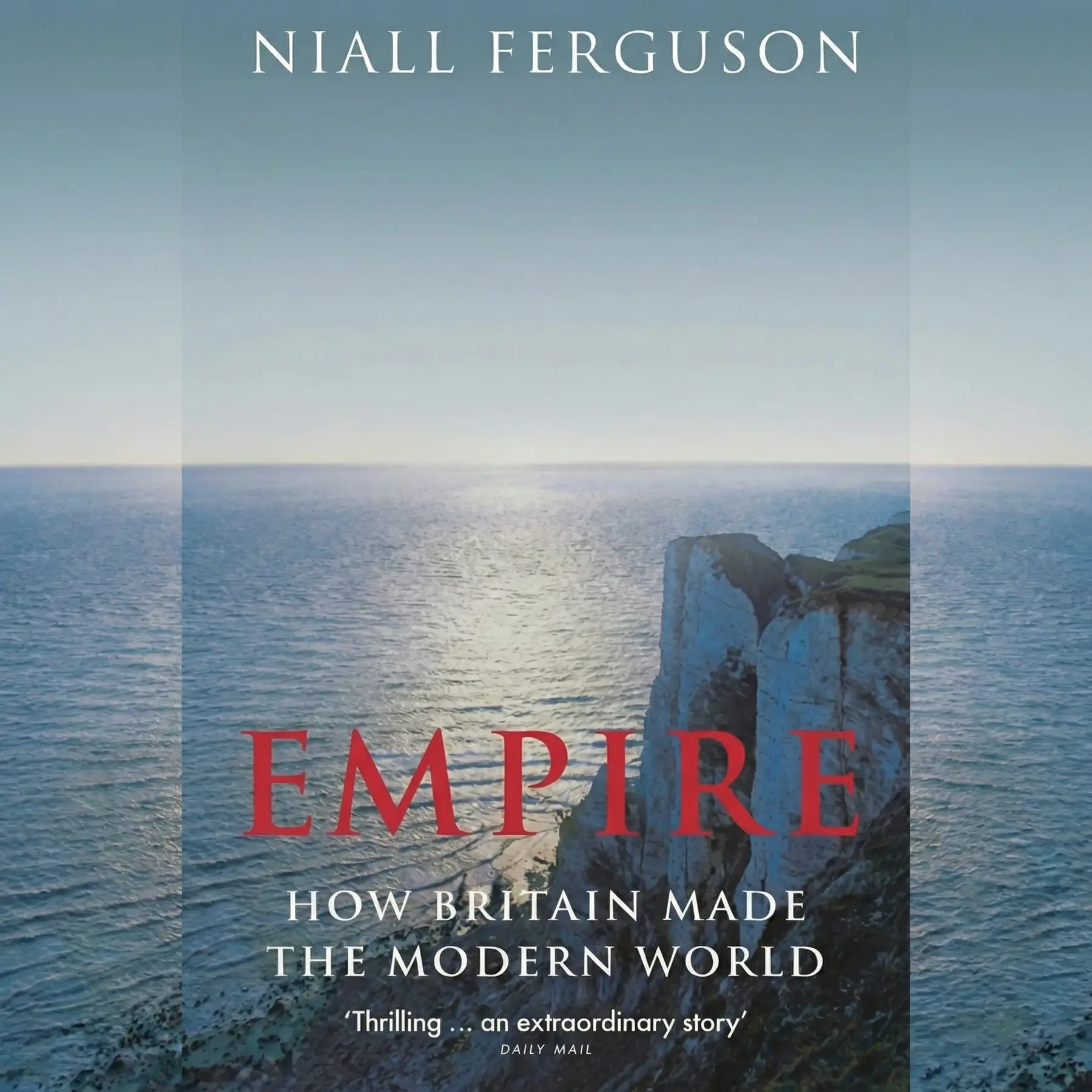
Listeners consider this historical work to be immersive and skillfully crafted, grounded in deep scholarship and a truthful storytelling style. It offers significant perspectives on the history of Britain, and one listener points out the way it describes major accomplishments with great precision. There is appreciation for the text's emphasis on factual data over political correctness, while one review emphasizes the thorough exploration of the British Empire's reach.
Pick this up if you want a history that isn’t afraid to look at the macro-level impact of British rule without drowning in modern sensibilities. Ferguson writes with a fluidity that makes three hundred years of global dominance feel like a fast-paced thriller. While some critics find his tone a bit too celebratory, I appreciated the focus on economic institutions and the hard facts of naval supremacy. The book argues that the British Empire, despite its many stains, paved the way for the globalized world we inhabit today. His descriptions of the 'pirates, planters, and mandarins' who built the system are particularly vivid. Some might find his lack of focus on the colonized experience frustrating, but as a survey of how the 'metropole' functioned, it is unparalleled. It is a dense but rewarding read for anyone tired of overly politicized history.
Show moreEver wonder how a tiny island nation ended up controlling a quarter of the globe? This book provides a comprehensive and engaging answer that focuses on the 'nuts-and-bolts' of imperial expansion. Ferguson doesn't shy away from the 'vicious colors' the empire showed during the Indian Mutiny, but he balances it by showing the long-term benefits of the legal and linguistic frameworks Britain left behind. The narrative moves quickly, jumping from the sugar plantations of the West Indies to the halls of power in New Delhi. I found the sections on the Victorian 'mandarins' particularly fascinating. It’s a refreshing change of pace to read a historian who values economic reality over modern-day moralizing. Frankly, it’s one of the most honest accounts of the British project I’ve encountered, even when the facts are uncomfortable to swallow.
Show moreFinally got around to reading this and I’m struck by how vivid the character sketches are. Ferguson has a real knack for storytelling that makes even the most complex financial history accessible. I particularly enjoyed the section on how the British Empire essentially bankrupted itself to stop even worse regimes during World War II. It’s a powerful argument that puts the 'moral' cost of empire into a different light. The truth is, the world Ferguson describes is messy and amoral, but he handles the complexity with a sophistication that most popular historians lack. The color plates in the Penguin edition are also a nice touch and really bring the era to life. This isn't just a list of dates; it's a look at the very DNA of our current global system.
Show moreGotta say, Ferguson is one of the few historians who can make me rethink my preconceived notions. I started this book with a very negative view of the British Empire, and while I haven't completely changed my mind, I have a much deeper appreciation for the 'liberal' institutions they exported. The chapters on missionary activity and the abolition of the slave trade were particularly nuanced. He shows that the Empire was often a contradiction: a force for both exploitation and enlightenment. The writing is sharp, and the pacing is perfect for someone who wants to learn without getting bogged down in academic jargon. It’s an engrossing read that tackles huge themes with ease. Highly recommended for anyone who wants to understand why the world looks the way it does today, regardless of their political leanings.
Show moreIs it possible to enjoy a book while fundamentally disagreeing with its core conclusion? Ferguson is a brilliant narrator, even if his 'pro-Empire' leanings are obvious from the first chapter. The way he traces the origins of the empire from state-sponsored piracy in the Caribbean to the eventual collapse after WWII is masterful. However, you can definitely tell this was written as a tie-in for a Channel 4 television series. Some of the case studies feel a bit rushed, likely to fit a specific broadcast segment, and the final chapter on the United States feels tacked on. To be fair, his command of the financial aspects of history is where he shines most. It’s an informative, if slightly biased, interpretation that challenges the reader to think about whether a less bloody path to modernity was even possible.
Show moreNot what I expected from a modern historian, as Ferguson seems refreshingly unconcerned with current trends of historical revisionism. He presents a world where British naval power and capital markets were the primary engines of global progress. I appreciated the specific details he included, like the anecdote about Lord Curzon’s childhood governess, which humanized these otherwise distant historical figures. While the book is quite short given the massive scope of the subject, it hits the high points with precision. My only real gripe is that it occasionally feels like a defense of the 'Anglo-sphere' rather than a detached historical analysis. Still, for a general reader looking to understand the foundations of the modern world, this is a top-tier recommendation. It's informative, briskly paced, and unapologetically bold in its delivery.
Show moreAs someone who enjoys a broad-brush overview, this provided an excellent snapshot of the British imperial project. I was particularly interested in the link Ferguson draws between the fall of the Empire and the rise of American power post-1945. His analysis of Roosevelt’s anti-imperialist stance and how it forced Britain’s hand was eye-opening. While the book is definitely a 'modernist' history that favors the victors, it’s packed with statistics and insights that you won't find in more emotional accounts. It’s not a perfect book—the skipping over of major events like the Opium Wars is a bit of a letdown—but as a primer on how Britain shaped the global economy, it’s excellent. Just be prepared for a very pro-Western perspective that doesn't always give the 'periphery' its due.
Show morePersonally, I found the first half of this book far more compelling than the conclusion. Ferguson does an excellent job explaining the early days of the Empire—the mercantilism, the migrations, and the sheer audacity of the early settlers. But as the book progresses into the 20th century, the arguments start to feel a bit thin. He makes these facile comparisons between Britain and its rivals that seem designed to let the British off the hook for their own atrocities. For instance, describing the Boer War deaths as 'gross negligence' while labeling other empires as 'abusive' feels like a semantic trick. The book is well-written and certainly entertaining, but I found myself questioning his omissions. Why is there so little mention of the Opium Wars or the specific struggles of those in East Asia? It’s a good survey, but far from the definitive word on the subject.
Show moreAfter hearing so much about Ferguson’s controversial stance, I dove into this expecting a nuanced debate, but what I found was mostly apologist rhetoric. He acknowledges the horrors like the Boer concentration camps or the Amritsar Massacre, yet he often follows these admissions with comparisons to other, 'worse' empires. It feels like he’s saying Britain wasn't perfect, but at least they weren't the Belgians. The language used throughout is quite jarring; using the word 'natives' so casually and focusing almost exclusively on British Lords and Viceroys while ignoring the actual people living in these colonies felt outdated. The truth is, he seems more interested in defending the neoliberal economic system than examining the human cost of imperialism. If you want a people’s history, look elsewhere. This is history written by the elite, for the elite, and it leaves a bitter taste.
Show moreWow. I really thought Ferguson would offer a balanced perspective after his introduction, but this is just a romanticized eulogy for the glory days of world control. He essentially argues that the Empire allowed the 'developing world' to become modern, as if modernity can only be defined by Western liberal standards. The complete absence of African and Asian voices is staggering. He spends pages on the personality quirks of British bankers but barely a paragraph on the millions who suffered under their policies. When he does mention native resistance, he often brackets it with terms like 'terrorism.' It is a whitewashed version of history that omits the most brutal details of the struggle for independence. If you want a book that ignores the perspective of the colonized to preserve a sense of British pride, then you've found it. I found it deeply problematic.
Show more
Ishmael Beah
William J. Bernstein
Ben Macintyre
Charles C. Mann
James Shapiro
AUDIO SUMMARY AVAILABLE
Get the key ideas from Empire by Niall Ferguson, plus 5,000+ more titles in English and Thai.







