
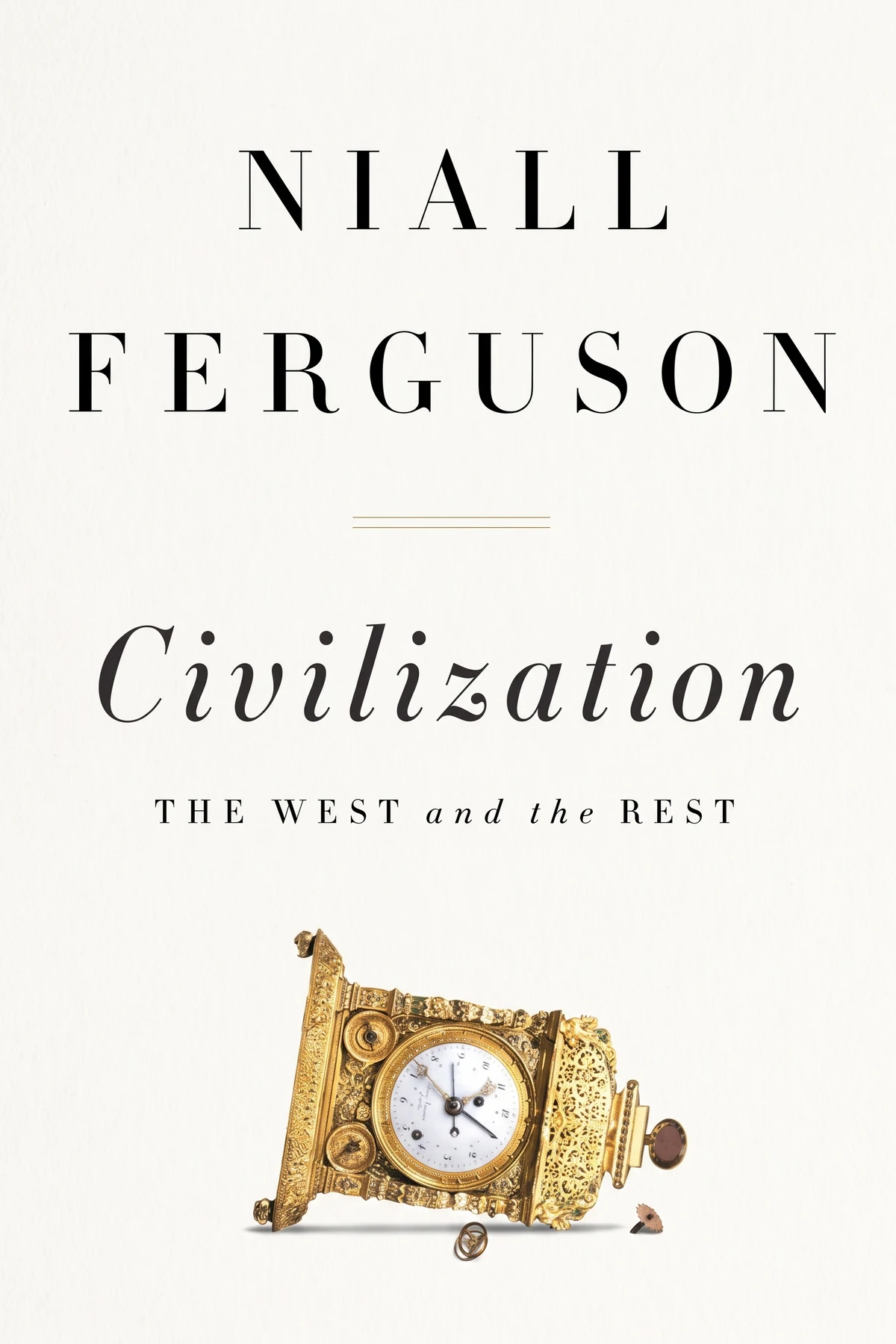
Civilization: The West and the Rest
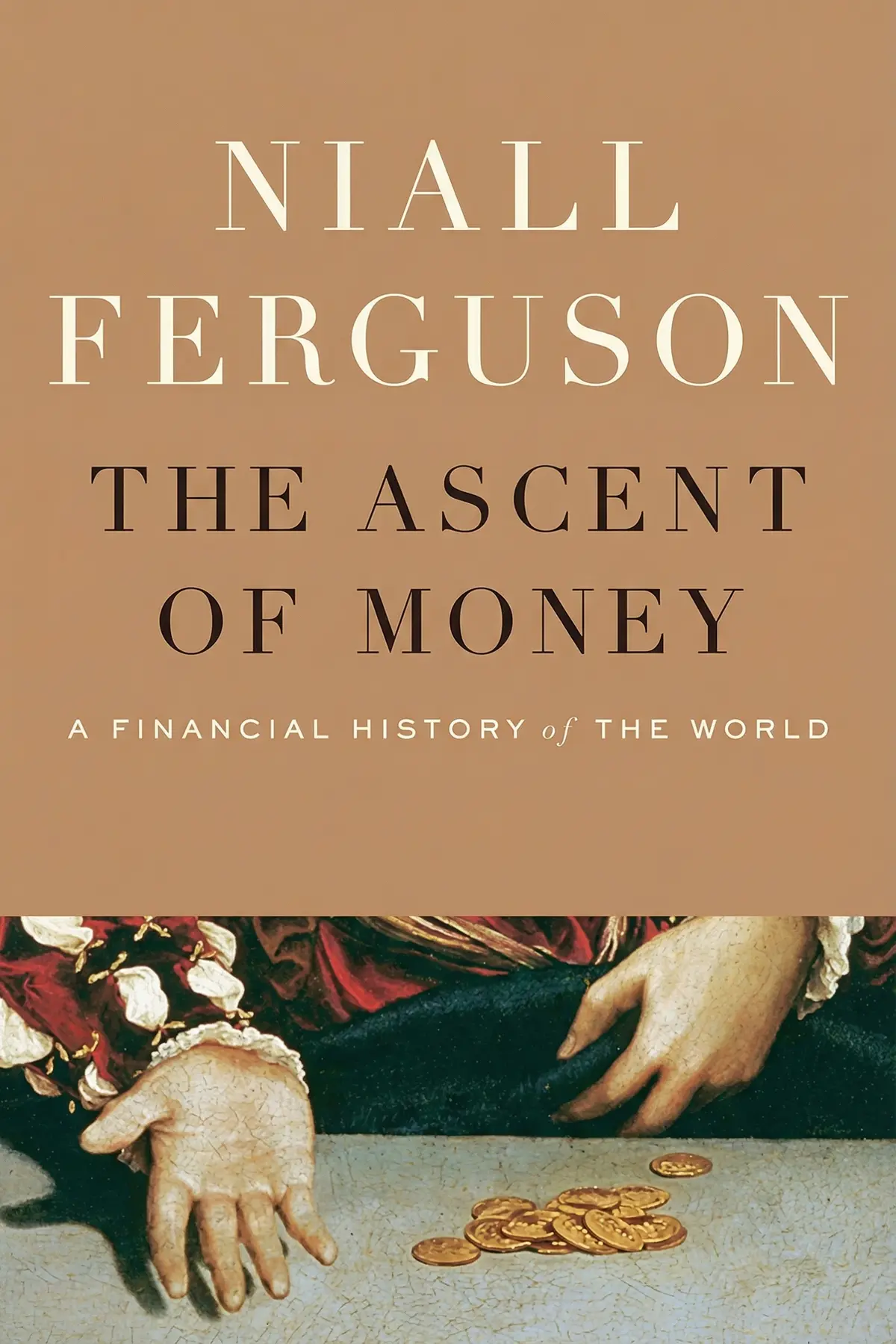
Niall Ferguson
A sweeping exploration of the evolution of finance, tracing how trust, credit, and markets transformed from ancient clay tablets into the complex, globalized systems that define the modern world today.
1 min 57 sec
Money is often viewed as a cold, static object—a pile of gold coins, a stack of bills, or a digit on a screen. But to truly understand the history of our world, we must view the financial system as something much more dynamic and alive. It is helpful to think of the global economy not as a machine, but as an ecosystem. Just as Charles Darwin observed that life evolves through the rigorous process of natural selection, the world of finance moves through a process of market selection.
In nature, species that adapt to their surroundings thrive and reproduce, while those that cannot keep up with a changing environment eventually face extinction. The financial world operates on nearly identical principles. Innovation is the engine of this evolution. When a new way of managing risk or expanding credit is introduced, it acts like a beneficial genetic mutation. If the innovation works, it is imitated and spread by other firms, becoming a standard part of the financial environment. If a firm clings to outdated models or fails to generate a return, it simply disappears, leaving space for more efficient players to take its place.
Throughout this exploration, we will see how major catastrophes, such as the Great Depression or the more recent 2008 collapse, serve as mass extinction events. They wipe out old practices and allow entirely new financial species to emerge. This throughline—that finance is an evolutionary process driven by human trust and institutional competition—is the key to understanding how we moved from ancient barter systems to the high-speed, digital global markets of today. We are about to embark on a journey that reveals how money is not just a tool for trade, but the very scaffolding of human progress.
2 min 17 sec
Uncover why physical gold failed the Spanish Empire and why the true value of your money rests entirely on the collective belief of society.
2 min 00 sec
Explore the ancient origins of debt and how the simple act of lending actually generates the money that drives modern economic expansion.
2 min 14 sec
Trace the centuries-long journey from medieval Italian merchant banks to the complex global insurance and real estate markets of today.
1 min 57 sec
Challenge the common perception of bankers as predators and learn how access to credit serves as the most powerful tool for lifting communities.
2 min 17 sec
Discover how small nations like the Netherlands used superior financial architecture to outmaneuver massive, resource-rich empires.
2 min 08 sec
See how our biological impulses of greed and fear are amplified by the financial system, creating a world of inevitable highs and lows.
2 min 14 sec
Learn why even the smartest investors fall for the trap of unsustainable growth and how every market bubble eventually meets its end.
2 min 05 sec
Examine the dangerous relationship between governments and the printing press, and how mismanagement can lead to the ruin of hyperinflation.
2 min 13 sec
Contrast the rise of private insurance with the development of the welfare state and explore the trade-offs between safety and incentive.
2 min 06 sec
Analyze how the noble goal of universal home ownership led to the 2008 global financial crisis through a series of risky political choices.
1 min 58 sec
As we look back at the long and winding ascent of money, one thing becomes clear: the financial system is a mirror of our own human journey. It is a story of incredible ingenuity, constant evolution, and the deep, abiding power of trust. From the ancient clay tablets of Mesopotamia to the digital transactions of the modern era, we have used finance to bridge the gap between our current resources and our future dreams. It has been the most effective tool we have ever devised for lifting people out of poverty, funding scientific breakthroughs, and building the infrastructure of modern life.
Yet, we must also respect its volatility. Because the system is built on human emotions like greed and fear, it will always be prone to cycles of mania and despair. It will produce bubbles that inevitably burst and crises that challenge our political stability. The key takeaway is not to fear this system, but to understand its nature. By recognizing that finance is an evolutionary process, we can better prepare for the inevitable ‘extinction events’ and appreciate the new innovations that rise from the ashes.
In our daily lives, this means understanding that money’s value is based on collective confidence, that credit is a tool for progress when used wisely, and that no growth lasts forever. The ascent of money is not a straight line up; it is a complex climb with many pitfalls. But despite its flaws, it remains the essential engine of our civilization. As we continue to innovate and adapt, the financial system will continue to evolve, reflecting our highest aspirations and our most human weaknesses. By staying informed and recognizing these historical patterns, we can navigate this complex landscape with greater clarity and purpose.
The Ascent of Money offers a comprehensive deep dive into the historical forces that shaped our financial reality. It reframes the history of humanity through the lens of economic development, arguing that the rise of money is as fundamental to our progress as any scientific discovery. By tracing the lineage of banking, bonds, stocks, and insurance, the narrative reveals how finance emerged as a powerful evolutionary force that can both build civilizations and trigger devastating collapses. The book promises to demystify the complex mechanisms of the global economy, from the origins of credit in Mesopotamia to the subprime mortgage crisis of the 21st century. It explains why some nations thrive while others stagnate, the psychological reasons behind market bubbles, and the inextricable link between political power and monetary policy. Ultimately, it provides a crucial framework for understanding the volatility and necessity of the financial systems that govern our lives.
Niall Ferguson is one of Britain’s most renowned historians, currently working for prestigious institutions across both Britain and the United States. His academic work is primarily centered on international and economic history. Beyond his scholarly contributions, Ferguson is a prominent public commentator and a frequent writer for various major newspapers and magazines. He is also recognized for creating and presenting several acclaimed television documentary series, including the popular adaptation of his book, The Ascent of Money.
Niall Ferguson
Niall Ferguson
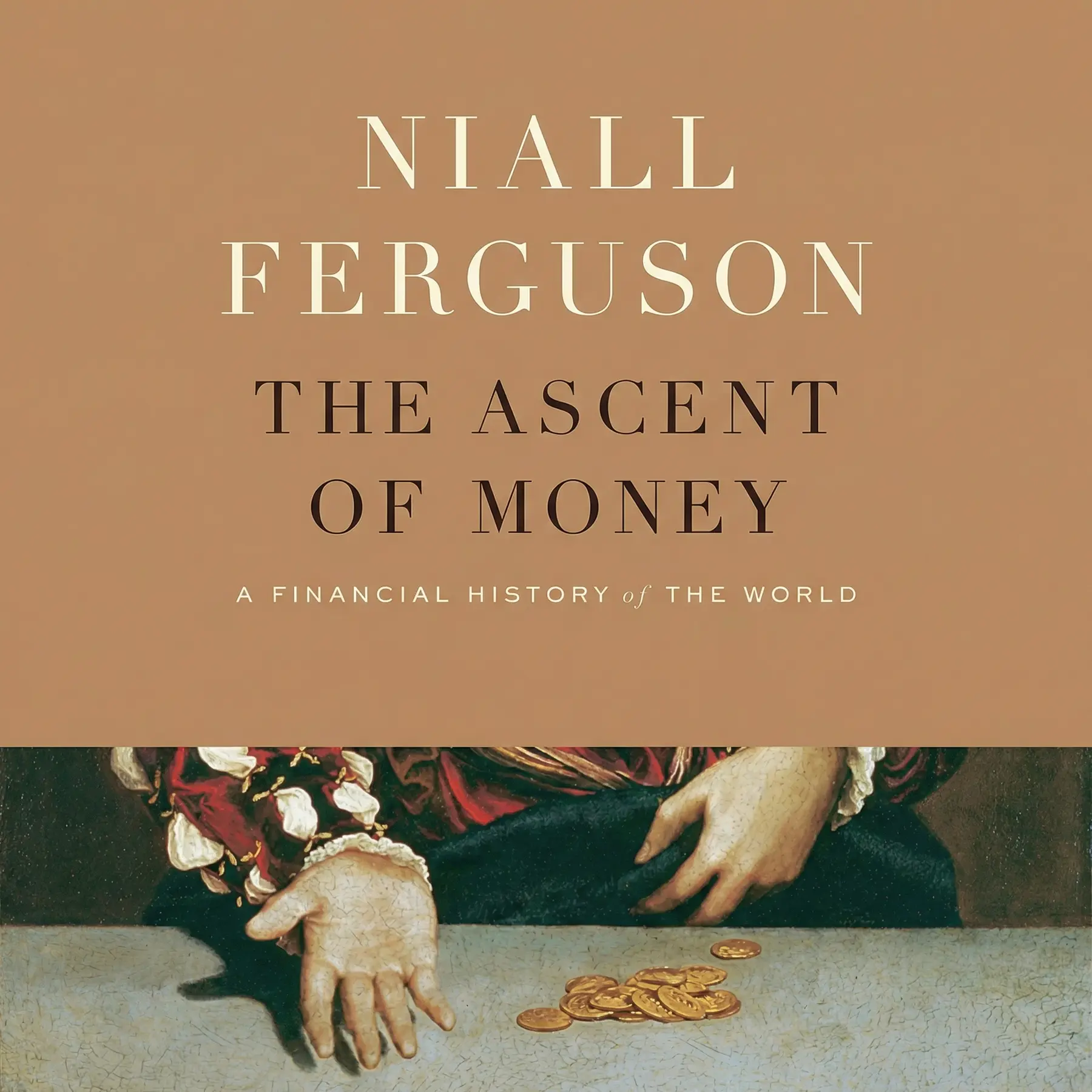
Listeners find the work absorbing and masterfully composed, offering deep historical background on the evolution of currency and financial markets. Furthermore, they value its educational depth—one listener highlights how it is loaded with factual data—and its capacity to simplify complex financial events. Listeners also commend the narrative style, which merges compelling tales with specific technical financial points, viewing it as essential reading for anyone curious about the world of finance.
Ferguson manages to turn what could have been a dry recitation of ledger sheets into a sweeping epic of human ingenuity. His central thesis—that financial evolution is as fundamental to human history as any technological breakthrough—is argued with such vigor that it’s hard not to be swept up. I particularly enjoyed the sections on the Medici and how the Italian Renaissance was essentially bankrolled by early financial innovation. It’s fascinating to see how the bond market actually dictated the outcome of major wars. Frankly, if you want to understand why the West rose to prominence while others lagged, this is the blueprint. The writing is incredibly dense with data yet moves at the pace of a thriller, making the complex world of 'Planet Finance' feel accessible. It is easily one of the most informative books on my shelf.
Show moreMoney is the root of most progress—that's the bold claim here, and Ferguson defends it with an incredible mountain of data. This isn't just a book about coins and paper; it's a history of how humanity learned to manage risk and time. The section on the 'evolutionary' nature of finance was particularly enlightening, showing how institutions mutate or go extinct based on their environment. I was captivated by the account of how the Rothschilds used their superior information networks to dominate the 19th-century markets. Look, you might not agree with his pro-market stance, but you can't deny the depth of his scholarship. The footnotes alone provide a better education than most college courses. It’s a dense, rewarding read that completely changed how I look at my bank account.
Show moreThe footnotes alone are worth the price of admission, revealing a depth of research that puts most pop-history to shame. Ferguson is at his best when he’s digging into the archives of the House of Rothschild or explaining the hubris of Long Term Capital Management. He has this knack for taking the 'nitty-gritty' details of quantitative finance and making them feel like essential plot points in the story of mankind. I particularly liked his exploration of insurance as a way of spreading risk, which is something we often take for granted. It’s a very informative read that doesn't stoop to 'simplify' the history, yet remains remarkably clear. Even if you aren't a numbers person, the historical drama keeps you turning the pages. Excellent work.
Show morePicking this up years after the Great Financial Crisis offers a bizarrely prophetic experience, even if the author's timing was slightly off. Ferguson was finishing this manuscript just as the subprime disaster began to boil over in 2008, and those frantic footnotes add a layer of unintended tension. He brilliantly tracks the evolution from clay tablets to 'Chimerica,' explaining how the symbiotic relationship between Chinese savings and American spending shaped our current era. While I think he’s a bit too dismissive of the human cost of these financial 'mutations,' his ability to explain bond markets and insurance without putting the reader to sleep is impressive. The prose is sharp, occasionally arrogant, and always engaging. It’s a must-read for anyone trying to grasp the invisible forces that actually run the world.
Show moreThe way this book weaves nitty-gritty financial mechanics with historical anecdotes is nothing short of masterful. I finally feel like I understand the story of John Law and the colossal bubble he created in Regency France, despite having read about it elsewhere. Ferguson has this Scottish grit to his analysis that makes even the most boring aspects of insurance and real estate feel vital. He argues that poverty is caused by a lack of financial institutions rather than the presence of rapacious ones, which is a provocative take. My only real gripe is that it feels very Western-centric; I would have loved to see more on alternative systems outside the Anglo-American bubble. Still, the storytelling approach makes the medicine go down smoothly. It’s definitely a high-quality historical survey.
Show moreEver wonder why certain countries thrive while others remain trapped in cycles of debt? Ferguson argues that it comes down to the 'ascent' of financial tools like banks, bonds, and stock markets. I found his analysis of the US-China 'Chimerica' relationship to be the most prescient part of the book, especially given the current trade climate. He writes with a certain 'master of the universe' flair that can be polarizing, but his command of the subject is undeniable. The book successfully bridges the gap between historical narrative and economic theory. It’s not perfect—the 2008 publication date means it misses the final fallout of the Lehman collapse—but the long-term context it provides is invaluable. It’s an essential addition to any history buff's library.
Show moreFinally got around to reading this, and the chapter on 'Chimerica' remains the most clear-sighted analysis of US-China relations I’ve encountered. Ferguson’s ability to draw parallels between the pre-WWI era and our modern globalized world is both impressive and a little terrifying. He treats finance as a living, breathing ecosystem, which helps explain why bubbles are almost an inevitable part of the process. I did find some of the behavioral economics sections toward the end a bit rushed compared to the deep historical dives earlier on. Also, the lack of focus on regulatory oversight feels like a major blind spot in light of what happened right after the book was published. Regardless, the storytelling is top-notch and the historical context is something every voter should understand.
Show moreWhile the prose is undeniably sharp, I found it difficult to stomach Ferguson’s blatant apologetics for Western imperialism. He presents the spread of financial institutions as a purely benevolent evolution, ignoring the 'labor' and exploitation that underpinned these systems. Truth is, he does a great job of making the mechanics of the Mississippi Company or the Rothschild empire understandable, but the ideological bias is thick. He puts a polished, academic mask over the rougher edges of history, making imperialism sound like a simple matter of credit management. If you can filter out the center-right preaching, there is a lot of factual value here. However, I’d recommend reading this alongside Naomi Klein’s 'The Shock Doctrine' just to keep your perspective balanced. It's a smart book, but it's far from objective.
Show moreDoes anyone actually understand the stock market after reading these types of books, or am I just a dolt? Ferguson is clearly a world-class academic, and his research is deep, but some of the more abstract concepts still felt like they were sliding off my brain. I appreciated the chapter on the 'property-owning democracy' and the dangers of excessive leverage, but the jump from historical bonds to modern derivatives was a bit dizzying. To be fair, the book is packed with fascinating stories—the rise of the bond market during the Napoleonic wars was a highlight. But by the end, I felt like I had learned more about Ferguson’s political leanings than the actual 'how-to' of finance. It's a solid history, but don't expect it to make you a Wall Street expert overnight.
Show moreNot gonna lie, this felt more like a manifesto for the Chicago School of economics than a balanced historical account. Ferguson spends so much time justifying the Darwinian 'survival of the fittest' in finance that he ignores the catastrophic human toll of these market failures. His take on the Chilean 'economic miracle' is incredibly one-sided, glossing over the political violence that made it possible. I also found the constant imperialist undertones to be quite grating after a while. Sure, he’s a brilliant writer and the stories about the Medici are well-told, but the underlying ideology is hard to ignore. It feels like he’s trying to prove that 'Planet Finance' is the only way for civilization to exist. If you’re looking for a critical look at capitalism, this definitely isn’t it.
Show more
James Shapiro
Pankaj Mishra
Charles C. Mann

Ben Macintyre

Fay Bound Alberti
Ron Chernow

Philip Freeman
Andrew Ross Sorkin
AUDIO SUMMARY AVAILABLE
Get the key ideas from The Ascent of Money by Niall Ferguson, plus 5,000+ more titles in English and Thai.







