
Phaedo
Plato
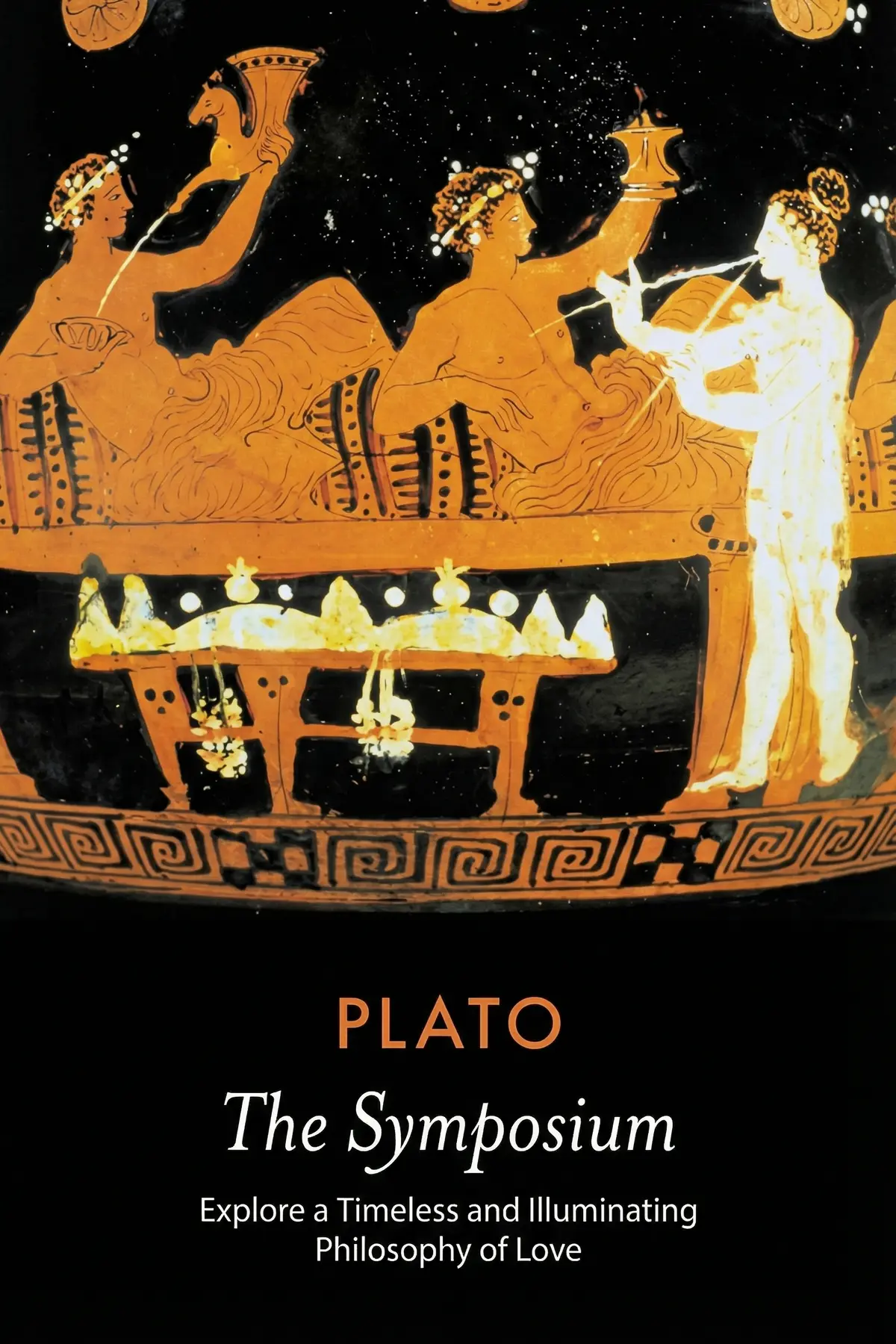
Explore an ancient Athenian banquet where the greatest minds of Greece debate the essence of love, from its mythological origins and physical desires to the spiritual pursuit of eternal truth and wisdom.
1 min 25 sec
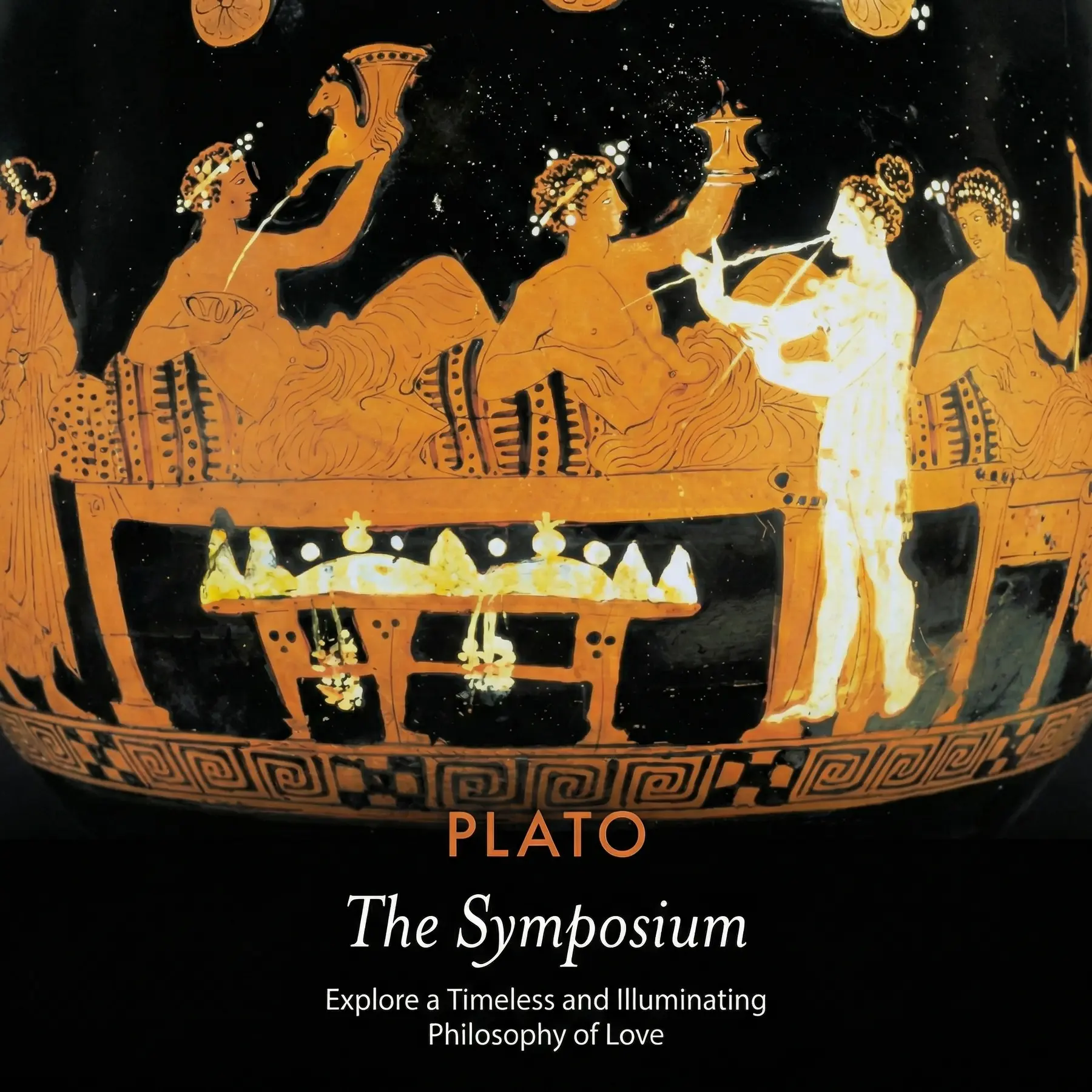
Imagine stepping back into the vibrant heart of ancient Athens, a city teeming with intellectual energy and high-stakes debate. You are invited to a private gathering, a symposium, where the wine flows as freely as the ideas. But this isn’t just a party; it is a serious exploration of the human heart. Among the guests are poets, doctors, and philosophers, all coming together to celebrate the power of love.
At the center of this dialogue is the work of Plato, a man whose thoughts have shaped the very architecture of Western philosophy for over two millennia. In his famous text, he reconstructs a series of speeches that each attempt to define eros—that powerful, often confusing force of desire that drives human behavior. This work isn’t a dry lecture; it’s a living, breathing conversation that captures the tension between our physical needs and our spiritual aspirations.
As we walk through these different perspectives, you’ll notice a throughline: the idea that love is much more than a feeling. It is a transformative power that can lead us from the most basic attractions to the highest peaks of wisdom. Whether you view love as a source of courage, a biological necessity, or a path to the divine, the insights shared at this ancient banquet remain as challenging and relevant today as they were when they were first spoken. Prepare to see love not just as an emotion, but as a journey of the soul.
2 min 27 sec
Discover how the most primal form of affection acts as a powerful catalyst for human bravery and a shield against dishonor in both private and public life.
2 min 37 sec
Not all love is created equal; explore the crucial difference between the superficial urges of the body and the enduring bonds of the soul.
2 min 23 sec
Travel back to a time of mythical circular beings to understand the deep, intrinsic ache for companionship and the search for wholeness.
2 min 50 sec
Follow Socrates as he reveals love’s ultimate purpose: a step-by-step ascent from physical attraction to the heights of universal truth.
1 min 45 sec
As the sun rises over the city of Athens and the guests finally depart, the echoes of their debate linger. We have traveled through a landscape of ideas that define the very core of human experience. From Phaedrus, we learned that love is a catalyst for our highest moral potential, giving us the strength to be brave and honorable. From Pausanias, we were reminded to distinguish between the superficial urges of the body and the enduring connections of the mind. Aristophanes gave us a myth that perfectly captures the profound ache of our loneliness and our eternal search for wholeness. And finally, Socrates showed us that our personal loves are actually the first steps on a grand staircase leading toward universal wisdom.
The throughline of Plato’s Symposium is clear: love is a dynamic, upward force. It is the energy that refuses to let us stay stagnant. It pushes us to be better citizens, better friends, and more insightful thinkers. The challenge it leaves us with is to look at our own lives and ask where we are on that ladder. Are we stuck on the bottom rungs, focused only on the temporary and the physical? Or are we allowing our connections with others to pull us toward a deeper understanding of the world?
Love, in its truest form, is an invitation to growth. It is the bridge between who we are and who we could become. By embracing the lessons of these ancient speakers, we can begin to see our relationships not just as sources of comfort, but as paths to excellence. As you go back to your daily life, carry this thought with you: every time you admire something beautiful or feel a deep connection to another person, you are participating in a divine journey toward the truth.
What is the true nature of love? Is it a simple physical urge, a social contract, or something far more divine? In this exploration of one of the most famous works of Western philosophy, we dive into a legendary gathering of thinkers in ancient Athens. Through a series of diverse speeches, the narrative examines the many faces of love, known to the Greeks as eros. The promise of this journey is to move beyond modern, superficial definitions of romance and uncover the profound psychological and spiritual roots of human connection. You will see how love can inspire unparalleled bravery, how it can be refined from a physical attraction into an intellectual force, and how it ultimately serves as a guide toward wisdom and the appreciation of universal beauty. By looking through the eyes of various speakers, including the iconic Socrates, you will gain a timeless perspective on why we long for others and what that longing says about our place in the universe.
Plato (428/427 BC–348 BC) was a monumental Greek philosopher during the Classical era. A devoted student of Socrates and the influential mentor to Aristotle, he is credited with laying the foundations of Western philosophical thought. Plato established the Academy in Athens, which is recognized as one of the first organized institutions of higher learning in Europe. His extensive body of work includes legendary texts such as The Republic and Phaedo, which remain essential reading for anyone studying political theory, ethics, and the human condition.
Plato
Plato
Listeners find the work to be an engaging experience that offers a high-quality translation and excellent value for the price. Furthermore, they appreciate it as an enduring masterpiece on the concept of love, with one listener mentioning that Socrates provides deeply stimulating insights. The use of a dialogue format results in varied reactions among listeners.
Few works from the ancient world feel quite as immediate as this one. It's a timeless treatise on the nature of love that transcends its Athenian setting to ask questions that still haunt us today. The translation I read was very good, capturing the distinct voices of the seven guests without losing the philosophical weight of Socrates’ final arguments. Honestly, the way the dialogue builds from the lighthearted to the transcendent is masterful. While the subject matter is deep and occasionally exhausting, the payoff is a much clearer understanding of why we desire what we desire. It’s easily one of the best values for money in terms of intellectual growth and literary pleasure.
Show moreThis is essentially a high-stakes philosophy drinking game that somehow became a foundational text of Western civilization. I was struck by the sheer variety of opinions, ranging from the poetic to the medical to the purely erotic. When Alcibiades crashes the party at the end, wearing a flower crown and demanding everyone get on his level, the energy shifts in such a brilliant way. It grounds Socrates’ abstract theories about the ‘Form of Beauty’ in the messy reality of unrequited love and human jealousy. The translation was surprisingly modern and punchy, making it accessible even if you aren't a philosophy major. Truth is, I’ll be thinking about Diotima’s ladder for a long time.
Show moreAfter hearing about the 'ladder of love' for years, reading the source material reveals a far more complex and sensual reality than the modern cliché suggests. This is a work of consummate beauty that functions as both a philosophical inquiry and a piece of high-quality drama. Socrates' analytical depth is balanced perfectly by the arrival of the drunken Alcibiades, providing a visceral ending to an abstract evening. The translation I chose was excellent, keeping the wit and sarcasm of the original Greek intact throughout the text. It is a timeless treatise that proves some human experiences haven't changed in over two thousand years. If you want to understand the roots of Western romance, start here.
Show moreGotta say, the ancient Greeks knew how to throw a dinner party. This isn't just some dusty old philosophy book; it's a vibrant, drunken, and surprisingly funny look at why we fall in love. The contrast between the high-minded talk about divine beauty and the sudden entrance of a completely wasted Alcibiades is literary gold. Personally, I found the translation to be incredibly fluid, which helped make the more complex arguments about physical vs. mental procreation much easier to digest. It’s a timeless treatise that manages to be both deeply intellectual and wildly entertaining at the same time. Whether you're into history or just want to see how Socrates ruins a party with logic, this is a must-read.
Show moreEver wonder why we're constantly searching for a 'soulmate' to complete us? That entire concept traces back to Aristophanes’ speech in this dialogue, where he describes original humans as ball-shaped creatures with four arms and two heads. It is easily the most charming part of the book, even if the subsequent sections by Socrates get a bit too analytical for my taste. The dialogue style receives mixed reactions from me; sometimes it flows like a real party, and other times it feels like a heavy lecture. Still, the exploration of both homoerotic and heterosexual desire provides a fascinating window into Greek culture. It’s an interesting read that definitely lives up to its massive reputation.
Show morePlato's decision to channel his deepest insights through the voice of a woman, Diotima, is a masterstroke in an otherwise male-dominated setting. Her explanation of Love being the child of Poverty and Resource adds a layer of psychological depth that the earlier speeches lack. Frankly, I think this section is where the book truly earns its status as a timeless treatise. The discussion on mental procreation—the idea that we seek immortality through ideas and virtue rather than just biological children—is incredibly thought-provoking. My only complaint is that the translation, while accurate, occasionally feels a bit stiff during the more technical arguments. Nevertheless, it’s a brilliant exploration of the human heart that stays with you.
Show morePicked this up because it was cheap and I’d heard it was the origin of 'Platonic love.' It turns out that the actual book is much more erotic and complicated than that watered-down phrase suggests. The guests at the symposium aren't just talking about friendship; they are debating the very soul of desire and the pursuit of virtue. While I struggled with the middle sections where the speeches get a bit long-winded, the overall value of the work is undeniable. The contrast between the different viewpoints creates a rich tapestry that makes you question your own definitions of beauty. It’s a great value for anyone wanting to dip their toes into ancient philosophy.
Show moreThe arrival of a wasted Alcibiades at the end totally shifts the energy from abstract theorizing to raw, human messiness. Up until that point, the dialogue style was a bit hit-or-miss for me, with some speakers feeling like they were just showing off their rhetorical skills. However, the story Alcibiades tells about trying—and failing—to seduce Socrates is both hilarious and touching. It gives the reader a glimpse into the actual personality of Socrates, beyond just his logic and questions. The translation was very good, making the ancient jokes land with surprising effectiveness for a modern audience. It’s an interesting read, though it requires a fair bit of focus to keep everyone’s arguments straight.
Show moreTo be fair, I found the intellectual gymnastics here a bit draining compared to the more straightforward dialogues I've encountered. While the treatise on the nature of love is undoubtedly timeless, the rigid structure of the seven speeches makes for a somewhat stop-and-start reading experience that might frustrate casual readers. Eryximachus and his medical jargon were particularly dry, though things picked up once Aristophanes started his hilarious myth about ball-shaped humans. Socrates eventually brings a very thought-provoking perspective regarding the 'ladder of love,' yet the transition from physical desire to abstract form feels like a massive leap. It is a very good translation and certainly offers great value for money, but be prepared for a mental workout.
Show moreWait, so we're just supposed to ignore the blatant pederasty because it’s 'classic' literature? Look, I understand that historical context is everything, but the constant focus on older men pursuing teenage boys made this an incredibly uncomfortable read for me. Socrates is clearly a genius, and his analytical approach to the concept of beauty is genuinely impressive, but the social dynamics are just too jarring to ignore. I was expecting a poetic, universal exploration of romance and instead got a series of speeches justifying a very specific, problematic cultural practice. The dialogue style also feels incredibly repetitive after a while, with each speaker trying to out-philosophize the last. It's a foundational text, sure, but definitely not the spiritual journey I expected.
Show more
William B. Irvine

Nigel Warburton
John Rawls
Colin Ward
Robert Nozick
Nassim Nicholas Taleb
AUDIO SUMMARY AVAILABLE
Get the key ideas from The Symposium by Plato, plus 5,000+ more titles in English and Thai.







