
How Progress Ends: Technology, Innovation, and the Fate of Nations
Carl Benedikt Frey
A deep dive into the historical relationship between workers and machines, examining why technological progress sometimes fuels widespread prosperity and at other times creates deep economic divisions and social unrest.
1 min 19 sec
Imagine waking up to find that the skills you spent a lifetime perfecting are suddenly worth nothing. It is a terrifying thought, yet it is a scenario that has repeated itself throughout human history. We often speak of technological progress as a rising tide that lifts all boats, but as we look closer at the archives of our industrial past, a more complicated story emerges. There are periods where innovation creates massive wealth for the few while leaving the many in the shadows of obsolescence.
This exploration takes us on a journey from the smoky factories of the Industrial Revolution to the gleaming server farms of the modern Silicon Valley. We will see how societies have grappled with the ‘trap’ of technology—the reality that while automation drives long-term growth, the short-term pain can be devastating enough to topple governments and tear the social fabric. Through the lens of Carl Benedikt Frey’s insights, we will investigate why the mid-twentieth century was such a rare exception of shared prosperity and why that era’s stability has begun to crumble. By the end, you will understand the historical patterns that govern our current age of artificial intelligence and why the choices we make today about labor and capital will define the stability of our future.
2 min 13 sec
Discover why historical progress was often stalled by rulers who feared social unrest, and how the eventual triumph of the Industrial Revolution fundamentally changed the political calculus between labor and capital.
2 min 15 sec
Explore the vital distinction between technologies that enhance human capabilities and those that replace them entirely, revealing why certain innovations lead to shared wealth while others leave segments of the population behind.
2 min 21 sec
Learn about the unique period between 1870 and 1970 when education and industry moved in tandem, creating a robust middle class and ensuring that productivity gains translated into higher wages.
2 min 34 sec
Examine the sudden reversal of fortune starting in the 1980s, where computers and artificial intelligence began hollowing out middle-skill jobs, leading to the economic polarization and social friction we witness today.
1 min 22 sec
The history of progress is not a steady climb, but a series of turbulent waves. As we have seen through the exploration of the ‘technology trap,’ the long-term benefits of innovation are undeniable, but the short-term costs are often paid by those least able to afford them. From the lamplighters of old New York to the factory workers of the twentieth century and the office professionals of today, the arrival of new tools has always forced a renegotiation of power and value.
The lesson of the ‘Great Leveling’ is that shared prosperity is possible, but it is not an automatic result of better machines. It requires a deliberate alignment of education, policy, and social safety nets to ensure that people are augmented by technology rather than replaced by it. As we stand on the threshold of the AI era, we must remember that our institutions must evolve as fast as our inventions. We cannot afford to ignore the lessons of the past. By understanding that technology’s impact is shaped by the choices we make as a society, we can work toward a future where innovation serves as a bridge to opportunity for everyone, rather than a trap for the many. The path forward involves not just building smarter machines, but building a more inclusive society that can weather the storms of change.
The Technology Trap explores the long-standing tension between technical innovation and the global workforce. While we often view progress as an objective good, Carl Benedikt Frey reveals that history is a series of winners and losers. The book navigates the shift from the first industrial age—where workers suffered through decades of stagnation—to the mid-twentieth century's Great Leveling, where the middle class flourished. It promises to decode why our current era of digital automation feels more like the harsh early 1800s than the prosperous 1950s. By examining the interplay of capital, labor, and political power, it explains why the benefits of new inventions do not always trickle down automatically. The promise is a deeper understanding of the economic forces behind today's political polarization and a framework for thinking about the impending AI revolution. It argues that the way we manage these transitions determines whether a society thrives or fractures under the weight of its own ingenuity.
Carl Benedikt Frey is a prominent Swedish-German economic historian and economist. He holds the position of Dieter Schwarz Associate Professor of AI & Work at the Oxford Internet Institute. In addition to his academic teaching, he directs the Future of Work program at the Oxford Martin School. His research focuses heavily on the historical transitions of labor markets and the socio-economic impacts of automated technologies, making him a leading voice in the global conversation about the evolution of the modern workforce.
Carl Benedikt Frey
Listeners find the historical survey of technology presented in the book highly interesting and appreciate its comprehensive historical perspective. They also consider the material enlightening, though one listener describes the work as a lengthy socio-economic academic treatise. Additionally, the coverage of automation is well-regarded, with one listener highlighting the revolution propelled by AI and automation. Ultimately, listeners describe the book as a hefty read.
Ever wonder why it took centuries for the Industrial Revolution to actually kick off despite humans being naturally inventive? Frey answers this by diving into the political resistance of the past. For a long time, feudal rulers actually suppressed automation because they feared the civil unrest that comes when workers lose their livelihoods. It wasn't until the competitive pressure between European nations became a matter of survival that governments finally sided with capital over labor. This shift is what Frey calls the privatization of technological advance. The book is an absolute feast for history nerds, especially the sections comparing the Luddites to modern-day populist movements. The distinction between enabling technology (which helps workers) and replacing technology (which makes them redundant) is a brilliant framework. It really helped me categorize why I feel optimistic about some AI tools but nervous about others. A hefty, well-researched, and timely treatise.
Show moreI found the chapter on the 'Great Leveling' particularly illuminating regarding our current political climate and the rise of populism. Frey argues that the middle class was a product of a specific type of industrialization that is now being hollowed out by AI. The book isn't just about machines; it's about the power dynamics between those who own the technology and those who are displaced by it. Look, the historical perspective here is simply massive. He spans the Roman period to the modern day to show how technology wipes out jobs and renovates society without asking permission. His analysis of how the automobile created a new middle class while the lamp-lighter’s job vanished forever is a perfect illustration of the 'replacing' vs 'enabling' dynamic. It’s a dense read, almost like a socio-economic textbook, but the prose is lucid enough to keep you engaged. If you want to understand why the real wages of low-skilled workers have plunged, read this.
Show moreThe distinction Frey makes between enabling and replacing technologies is a game-changer for how I view the current AI revolution. He argues that we are moving away from the 'enabling' era of the 20th century, which boosted the middle class, back toward a 'replacing' era that resembles the early Industrial Revolution. It’s a chilling thought. The historical examples are rich, from how the Roman elite suppressed water mills to keep the masses busy, to the way electricity freed up women's time in the American household. This isn't just a book about gadgets; it's a book about power, politics, and who gets a slice of the pie. The writing is academic but accessible, and the tentativeness of his conclusions is actually a relief. He doesn't pretend to have all the answers. Instead, he gives you the tools to ask better questions about where our society is headed. Highly recommended for econ nerds and history buffs alike.
Show moreFinally got around to finishing this massive tome, and the historical depth is simply staggering. Frey takes us from the agricultural revolution all the way to the eve of the AI age with remarkable clarity. What stayed with me was the idea that technological progress is not an inevitable law of nature, but a political choice. When the English government decided to side with industrialists over the Luddites, they changed the course of human history. The book covers everything: agriculture, the printing press, automobiles, and the racial history of unions. It’s a wonderful read for anyone who wants to understand how the emergence of the middle class was tied to specific technological shifts. Personally, I think the 'tentativeness' of his future predictions is a strength. He avoids the hubris of most Silicon Valley prognosticators and sticks to the facts. It’s a deep, analytical, and ultimately essential guide to the most pressing challenge of our time.
Show moreThis book provides a sobering look at how we perceive progress through the lens of history. Frey’s central argument is both simple and terrifying: while technology eventually makes everyone better off, the "short run" of transition can last an entire lifetime. I was particularly struck by the description of the Industrial Revolution as a period of misery for the artisan class. The way industrialists used children as pliable labor sounds like something out of a horror novel, yet it was the reality of mechanized progress. Frey does an excellent job of showing that there is no guarantee that innovation will be "nice" for the people living through it. While the book is a bit repetitive in the middle sections, the historical depth is undeniable. It’s an essential read for anyone trying to understand why there is so much anxiety surrounding AI today. We are living in a moment where the gears of change are turning faster than our social safety nets can catch us.
Show morePicked this up after hearing Frey's work mentioned in a discussion about the future of work. The truth is, most of us have a very sanitized view of the Industrial Revolution. We think of it as a glorious leap forward, but Frey reminds us it was a devastating regression for many. He brilliantly documents how the English government eventually backed industrialists to stay competitive, even if it meant general immiseration for the working class. The book is roughly 80% history and 20% future-gazing, which I actually appreciated. It’s not another hyped-up tech book full of baseless predictions. Instead, it's a fact-based account that proceeds mechanically through time. My only gripe is that his policy prescriptions at the end—like zoning changes and earned income credits—feel a bit tame compared to the massive scale of the problems he describes. Still, it’s a highly interesting historical view that provides a much-needed perspective on the looming spectre of AI.
Show moreTo be fair, I didn't expect a book about the dismal science of economics to be this readable. Frey has a modestly engaging style that makes the dry task of analyzing labor trends quite fascinating. The core of the 'technology trap' is that we are caught between wanting the long-term benefits of innovation and fearing the short-term pain of displacement. The author is very clear: people don't live in the 'long run.' If automation ruins your career at forty, it doesn't matter that your grandchildren will have cheaper electronics. I loved the examples of how different technologies, like the printing press or steam power, were resisted by guilds. It makes you realize that our current debates about AI are just the latest chapter in a very old story. The book is a bit long-winded, and it occasionally feels like a Fordist assembly line of facts, but the synthesis of information is masterly. It definitely challenged several of my assumptions about why the West industrialized first.
Show moreAs someone who works in tech, reading about the 'immiseration' of the English artisan class was a serious wake-up call for me. We often fall for the upbeat propaganda that technology is a tide that lifts all boats. Frey proves that for several generations during the 1800s, the tide actually drowned quite a few people. The privatization of technological advance was a Darwinian struggle for national competitiveness. I found the section on how China suppressed automation for centuries—leading to their eventual decline—to be particularly fascinating. It shows that the 'trap' isn't just about adopting technology, but also about the risks of not adopting it. The book is definitely a hefty read and could have used a more aggressive editor to trim the repetitive bits. However, as an assemblage of facts, it's hard to beat. It provides a much-needed historical anchor for the often-unmoored debates we have about automation today.
Show moreFrankly, Frey’s book is a bit of a slog, even if the core message is vital. It feels like an elephantine expansion of his famous academic paper on automation, and at times the repetition is exhausting. The introductory essay really contains the crux of the entire argument, making the subsequent 400 pages feel somewhat indulgent. I found myself obsessing over whether the irrelevant technical minutiae of industrial organization were truly necessary to prove his point. To be fair, the research is top-notch and the historical survey is incredibly thorough. He covers everything from Roman engineering to the advent of the washing machine. However, the book struggles to advance a truly novel theoretical point beyond the idea that history repeats itself and governments should probably do more to help the losers of progress. It is a competent synthesis of existing literature, but for a middle-brow audience, it might feel a little bloated and dry.
Show moreMaybe I’m in the minority, but this felt like a collection of other people’s research stitched together with very little new insight. While Frey is clearly a brilliant academic, this book is far too long for the slim contribution it actually makes to the field. He spends hundreds of pages documenting historical waves of change that any history buff already knows. The distinction between 'enabling' and 'replacing' technology is useful, but he repeats it so many times that it loses its impact. I felt nourished but bloated by the end. The prose is serviceable but lacks any real flair, making the 'elephantine size' of the tome a real chore to get through. Not gonna lie, I expected more bold declarations or scientific breakthroughs given the hype. Instead, it’s just a very long summary of the fact that technological change is painful and governments have to deal with it. It’s a decent reference book, I suppose, but not a particularly exciting read.
Show more
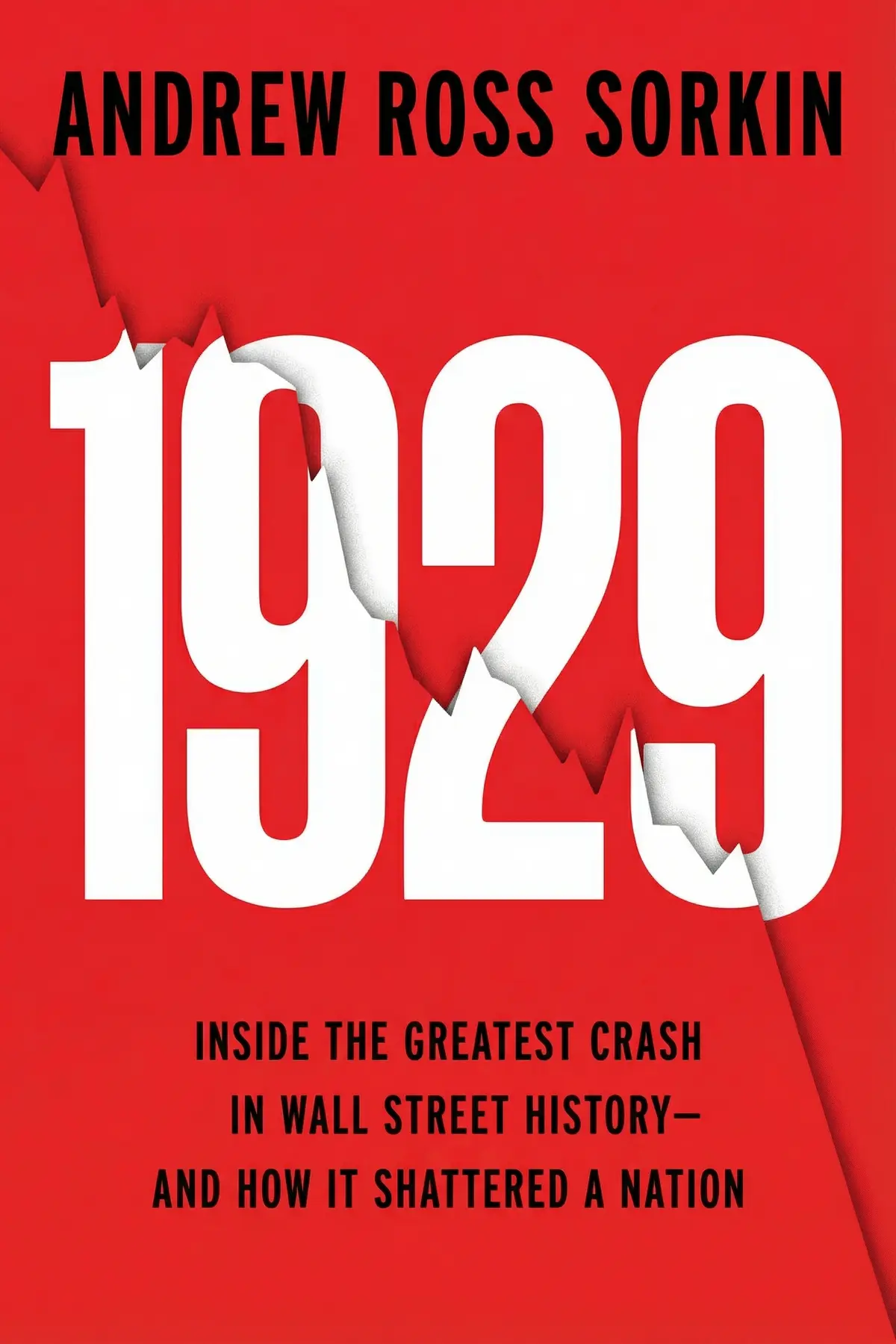
Andrew Ross Sorkin
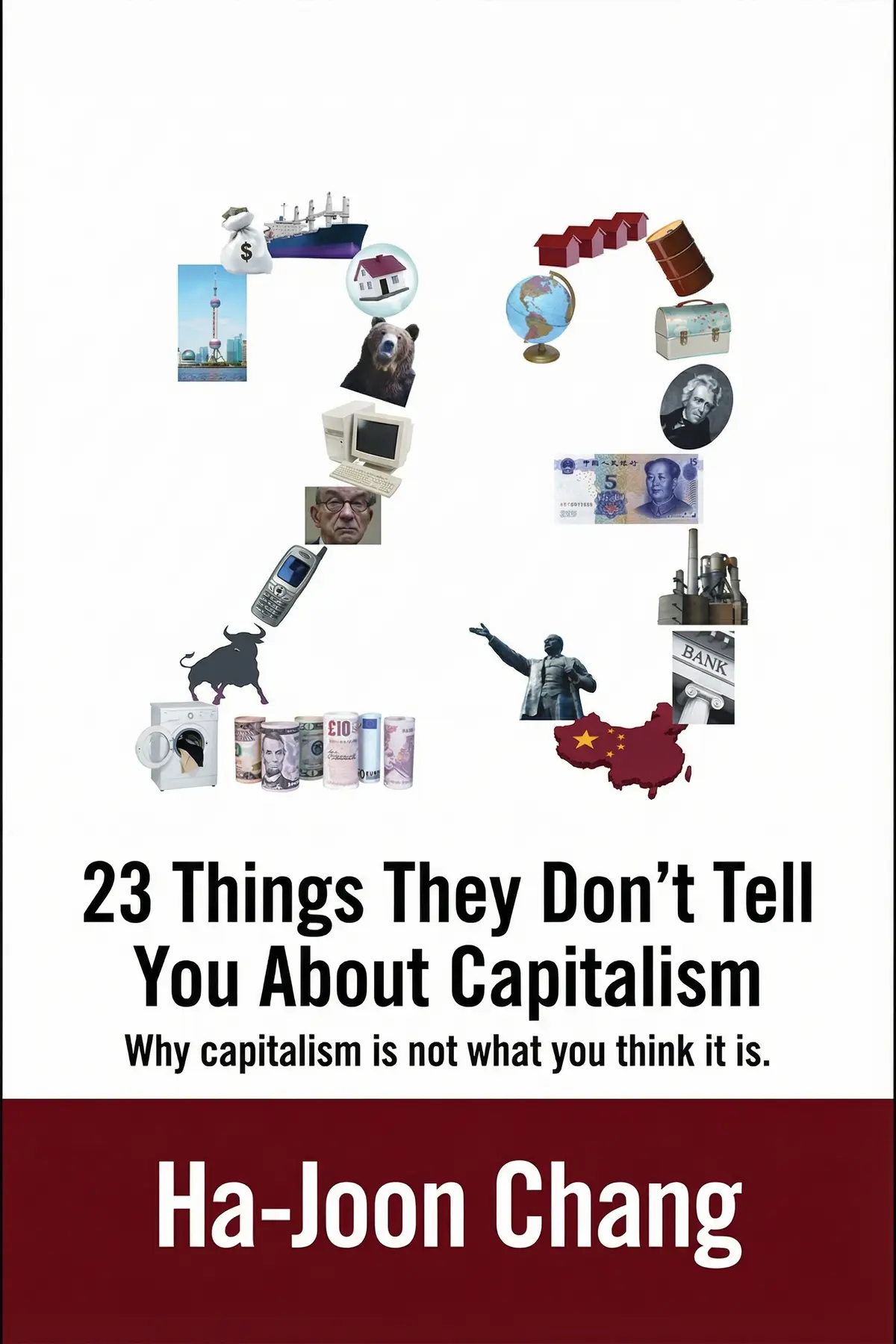
Ha-Joon Chang

Niall Kishtainy
William J. Bernstein
AUDIO SUMMARY AVAILABLE
Get the key ideas from The Technology Trap by Carl Benedikt Frey, plus 5,000+ more titles in English and Thai.







