

15 min
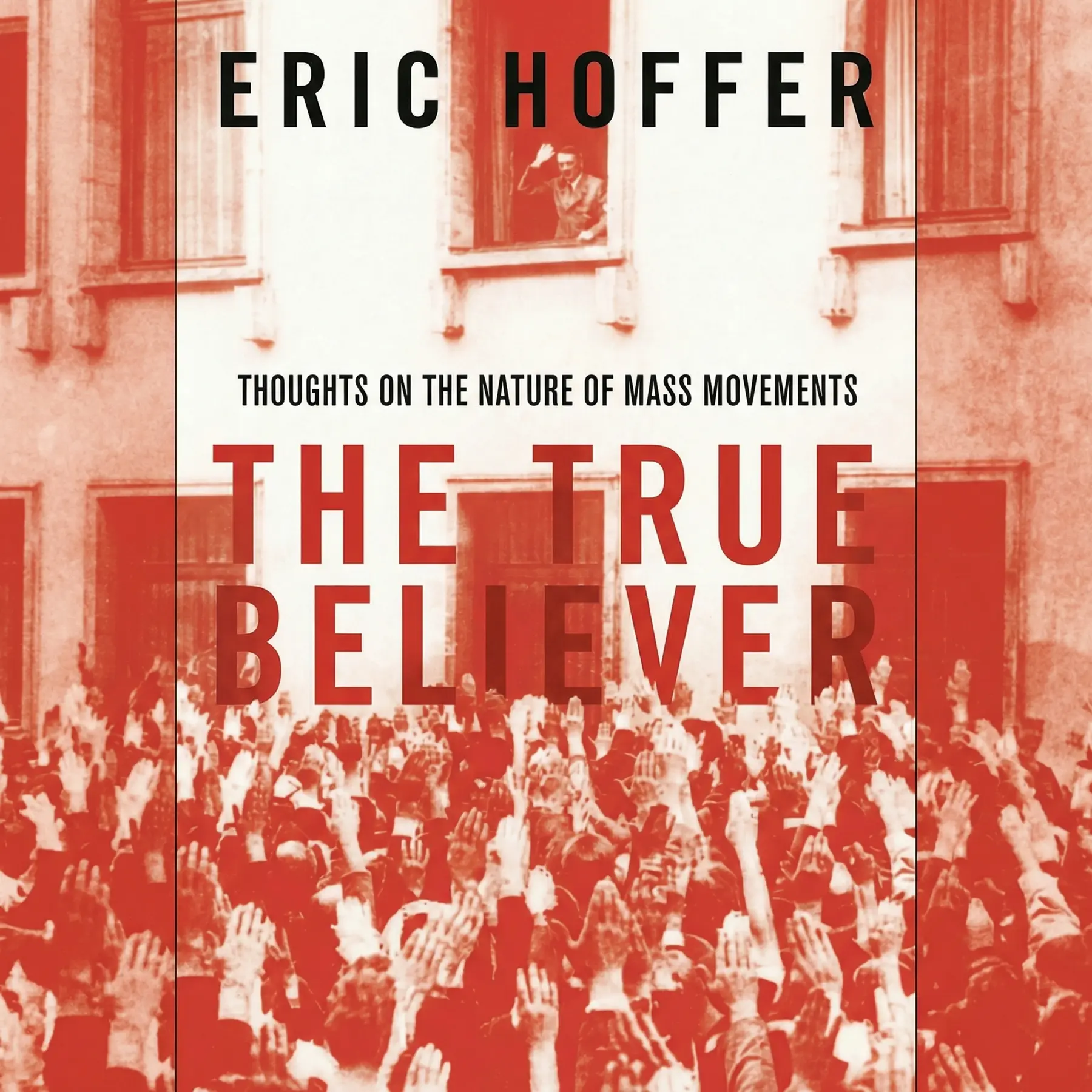
The True Believer: Thoughts on the Nature of Mass Movements
By Eric Hoffer
A deep psychological profile of the individuals who join mass movements, exploring how hope, shared identity, and powerful leadership transform frustrated individuals into committed, and often fanatical, true believers.
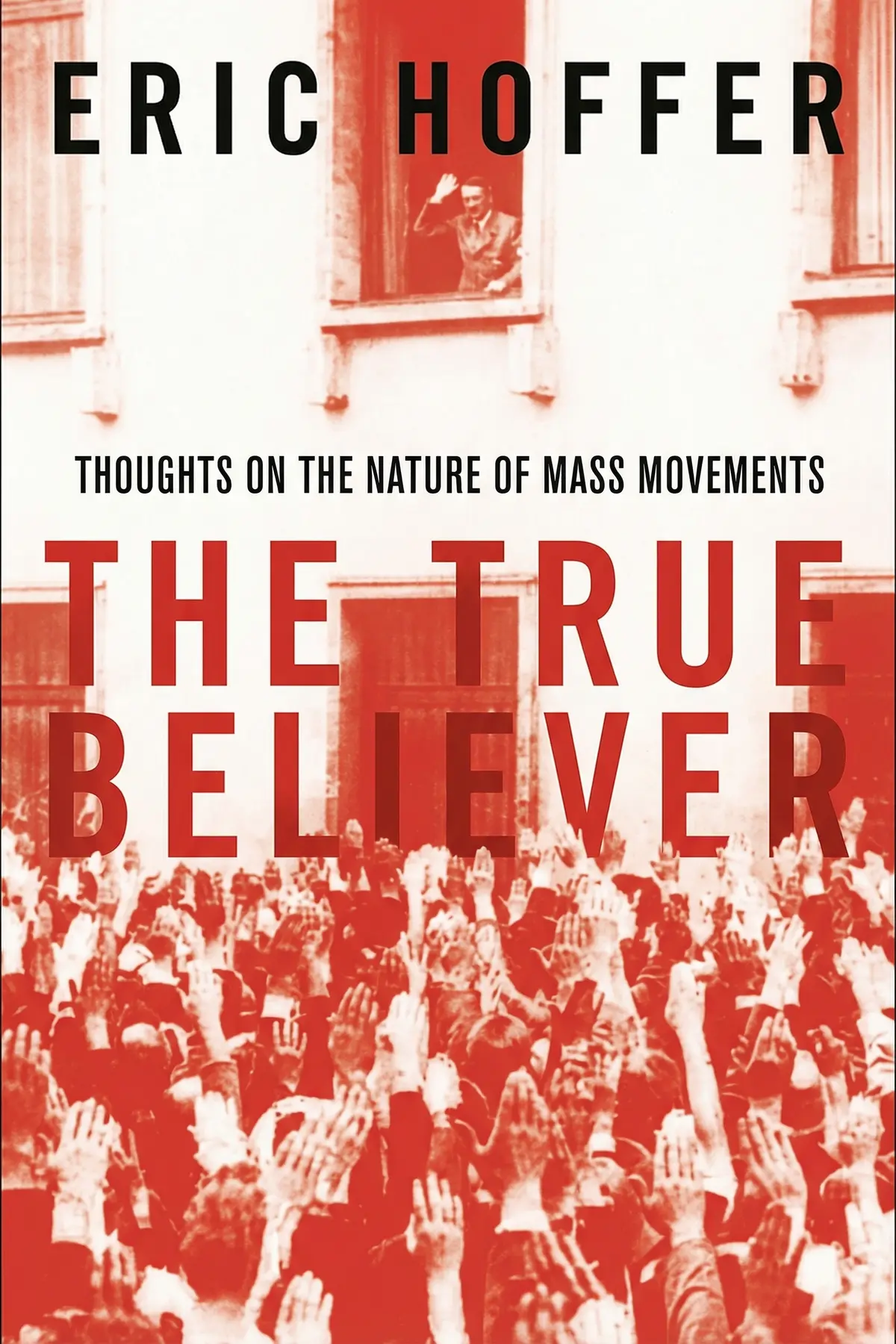
Table of Content
1. Introduction
1 min 42 sec
When we look back at the twentieth century, it’s impossible to ignore the massive waves of humanity that marched under various banners. From the rigid lines of Nazi Germany to the red flags of the Soviet Union, millions of individuals surrendered their personal lives to follow powerful doctrines. On the surface, these movements—Communism, Fascism, or even religious crusades—seem to have nothing in common. They preach different gospels and seek different ends. However, if we look beneath the surface of the ideology, we find a consistent psychological blueprint. This is the central premise of Eric Hoffer’s classic study. He suggests that all mass movements, regardless of their specific goals, attract the same kind of person and operate through the same basic mechanisms.
In this exploration, we are not looking at the ‘what’ of these movements, but the ‘why’ and the ‘how.’ We want to understand what makes a person willing to sacrifice everything for a cause. Is it greed? Is it a sudden burst of wisdom? As it turns out, the answer is often found in a mixture of deep discontent and a sudden, blinding flash of hope. Hoffer invites us to see the ‘true believer’ not as a specific political actor, but as a recurring human type. By the end of this journey, we’ll see how leaders channel frustration, why an enemy is more important than a friend, and why some revolutions lead to progress while others only lead to a long, dark night of stagnation. We are setting out to understand the very nature of mass movements and the throughline that connects the French Revolution to the modern political upheavals of today.
2. The Role of Hope and Discontent in Sparking Change
2 min 16 sec
Discover why mass movements thrive on hope rather than just money, and why those who have recently lost their status are the most likely to revolt.
3. The Erasure of the Individual in the Collective Whole
2 min 25 sec
Learn how movements build power by stripping away personal identity, turning individuals into a single, unified, and often irrational force.
4. The Necessity of a Common Enemy and a Fanatical Leader
2 min 26 sec
Explore why every successful movement needs a ‘devil’ to hate and a leader who can transform that hatred into action.
5. The Intellectual Architect vs. The Man of Action
2 min 06 sec
Understand the two-stage process of any movement: the scholars who pave the legal and moral ground, and the fanatics who build the empire.
6. The Longevity and Interchangeability of Movements
2 min 22 sec
Discover why some movements are easily swapped for others and why the quickest revolutions often produce the best long-term results.
7. Conclusion
1 min 43 sec
As we conclude our look into the mechanics of mass movements, the throughline becomes clear: the ‘true believer’ is not driven by the logic of a doctrine, but by a psychological need to belong and to hope. Whether a movement is religious, nationalist, or social, it thrives by offering an escape from the burdens of individual failure and the vacuum of an empty life. We have seen how the ‘new poor’ provide the energy, how the ‘men of words’ provide the ideas, and how ‘fanatical leaders’ provide the direction by pointing toward a common enemy.
The most important takeaway is that these movements are a recurring part of the human experience. They aren’t just artifacts of the past; the potential for a new mass movement exists whenever there is a widespread sense of frustration combined with the promise of a glorious transformation. However, we also learned that the most positive results come from movements that know when to end. A movement that successfully transitions from a fanatical crusade to a stable society allows for the return of individuality and progress.
So, the next time you see a crowd marching or a leader calling for total devotion to a cause, look beyond the slogans. Look at the hope in their eyes and the hatred for their perceived enemies. Remember that we are all, under the right circumstances, susceptible to the call of the group. The challenge for any society is to provide people with enough hope and purpose in their personal lives that they don’t feel the need to lose themselves in the anonymity of a mass movement. By understanding the nature of the true believer, we are better equipped to navigate the complex social currents of our own time and to recognize the signs of a movement before it carries us away.
About this book
What is this book about?
The True Believer examines the underlying mechanics of mass movements, regardless of whether they are religious, social, or political. Eric Hoffer argues that these movements are fueled not by a specific ideology, but by the psychological needs of the people who join them. By analyzing the characteristics of the frustrated and the hopeful, Hoffer reveals how movements provide a sense of purpose and belonging to those who feel discarded by society. The book promises to uncover the common threads that link diverse historical events, explaining why certain leaders succeed in channeling collective hatred and how the duration of a movement dictates its final impact on civilization.
Book Information
About the Author
Eric Hoffer
Eric Hoffer was a working-class American autodidact who authored a variety of treatises on moral and social philosophy. After writing his first book, The True Believer, he went on to publish over ten others. He received the Presidential Medal of Freedom, in February, 1983.
Ratings & Reviews
Ratings at a glance
What people think
Listeners find this work deeply perceptive and meticulously documented, noting that its clear prose makes for a smooth reading experience. Furthermore, the volume grants a more thorough grasp of the mechanics behind mass movements and continues to be very applicable, specifically concerning the 2016 election. They also value its impartial look at human nature and its reputation as a definitive classic within the field of social psychology.
Top reviews
Kwame
It’s rare to find a book written in 1951 that feels like it was ripped from today’s headlines. Hoffer manages to dissect the anatomy of the fanatic without getting bogged down in the specific politics of his era. He focuses on the psychological profile of the 'true believer,' arguing that the actual doctrine of a movement is almost secondary to the sense of belonging it provides. To be fair, his assertion that people join movements to escape an 'unwanted self' is a harsh pill to swallow, but it explains so much of the current polarization. The writing is incredibly dense yet punchy, lacking the academic jargon you’d expect from a social psychology landmark. It's a sobering look at how frustration and a lack of creative outlet can drive anyone toward extremism.
Show moreNoah
Eric Hoffer was a longshoreman with no formal education beyond high school, yet he produced one of the most incisive works of political psychology I’ve ever encountered. This book completely changed how I view modern political rallies and social media 'tribes.' Hoffer’s central thesis—that mass movements attract those who feel their lives are a failure—is devastatingly simple. He explains that for the frustrated individual, a holy cause offers a 'fact-proof screen' against a reality they can't bear. My only complaint is that the book is so cynical it might leave you feeling a bit hopeless about human nature. Still, his observations on the necessity of a 'devil' or common enemy are chillingly accurate. It’s a landmark study that everyone should read before the next election cycle.
Show moreKatya
Wow, this was a punch to the gut. I’ve been trying to understand the 2016 election and the rise of populist movements for years, and this 70-year-old book gave me more answers than a decade of cable news. Hoffer identifies 'boredom' as a primary driver for mass movements, which sounds trivial until you see how he connects it to a desperate search for meaning. The way he describes the 'True Believer' as someone seeking a 'rebirth' to shed an unwanted self is just brilliant. It’s a short book, but I found myself re-reading paragraphs multiple times just to let the weight of the insight sink in. It’s balanced, deeply researched in its own way, and terrifyingly relevant. Every citizen needs this on their shelf.
Show moreDavid
The chapter on 'the bored' alone is worth the price of admission. Hoffer identifies that those who live lives of 'unrelieved boredom' are often the most fertile ground for radicalization, even more so than the oppressed. This was a total 'mind-blown' moment for me. He explains that when people have no creative outlet or individual purpose, they crave the 'high-definition drama' of a mass movement. The book is incredibly well-researched, drawing parallels between the rise of Islam, the Reformation, and the French Revolution. I loved his take on how a 'fact-proof screen' allows believers to ignore glaring contradictions. It’s a slim volume but incredibly dense with wisdom. If you want to understand the 'why' behind the headlines, start here.
Show moreSamroeng
As someone who spends too much time worrying about the state of the world, this book provided a much-needed framework for understanding the chaos. Hoffer’s perspective as a 'layman' intellectual gives the book a grit and honesty that academic texts usually lack. He understands that humans aren't always rational actors; instead, we are driven by a need for hope, even if that hope is built on a 'specious' past. His points about how a movement must foster 'unity and cohesion' through symbols and spectacles feel like they were written about today's political climate. It’s a straightforward read that offers a balanced yet chilling view of our capacity for fanaticism. Not gonna lie, it's a bit of a downer, but knowledge is power.
Show moreEthan
Why do otherwise rational people suddenly start championing absurd ideas? Hoffer answers this by focusing on the 'interchangeability' of mass movements, suggesting a person can jump from one extreme to another because the underlying need for unity is the same. I appreciated the distinction he makes between the 'man of words' who starts the movement and the 'fanatic' who takes it into the streets. While some of his generalizations about 'the poor' felt a bit dated and perhaps overly broad, the core logic holds up remarkably well. The prose is lean and mean, avoiding the fluff found in modern non-fiction. It’s an essential read for anyone trying to make sense of the 1930s or the 2020s. Just don't expect a light, uplifting afternoon read.
Show moreSirichai
Picked this up after seeing it referenced in a dozen different articles about modern political polarization. Frankly, I was surprised by how accessible the writing style is; it’s straightforward and completely lacks the 'ivory tower' vibe. Hoffer’s breakdown of how a movement requires an 'indispensable devil' to maintain cohesion is perhaps his most relevant point for our current social media landscape. We see this daily—the constant need for an enemy to keep the ranks unified. I did find the middle section a bit repetitive, as he hammers home the same points about self-sacrifice and the 'unwanted self' over and over. However, as a study of the 'active phase' of a movement, it’s practically peerless. A solid four stars for the sheer volume of 'aha!' moments.
Show moreApichat
Truth is, I found the prose surprisingly accessible for a book that tackles such heavy psychological themes. Hoffer doesn't waste time with flowery language; he gets straight to the point about why people surrender their individuality to a group. I found his discussion on 'men of action' versus 'men of words' particularly insightful when looking at how movements transition from ideas to reality. My minor gripe is that he occasionally treats all mass movements as inherently dangerous or pathological, which ignores those that have brought about positive social change. Nonetheless, his observations on the 'unbounded brazenness' of leaders are spot-on. It’s a fascinating, if somewhat dark, exploration of the human psyche.
Show moreLucas
I have mixed feelings about this one, even though I recognize its importance. On one hand, Hoffer’s insights into the psychological needs of the 'frustrated' are undeniably sharp and provide a unique lens for viewing history. On the other hand, the book feels like a collection of aphorisms rather than a rigorous scientific study. He makes bold, sweeping declarations about human behavior without providing much empirical evidence beyond historical anecdotes. Look, I get that he was a self-taught intellectual, and that’s impressive, but some of his conclusions feel a bit too convenient and pessimistic. It’s a great conversation starter, but I wouldn’t treat it as the absolute gospel on social psychology. Worth a read, but keep your critical thinking cap on.
Show moreFang
Maybe I’m missing something, but this felt like a series of pessimistic rants rather than a cohesive analysis. The author seems to have a very low opinion of humanity, essentially arguing that anyone who cares deeply about a cause is just a 'frustrated failure' trying to hide from themselves. It feels incredibly reductive to claim that the actual goals of a movement don't matter and that people are just looking for a 'fact-proof screen.' What about movements for genuine civil rights or justice? Hoffer lumps everything together—Nazism, Christianity, Communism—as if they all stem from the same pathology. To be honest, it felt like he was just trying to be provocative. It’s too cynical for me and lacks the nuance required for such a complex topic.
Show moreReaders also enjoyed



Abolish Rent: How Tenants Can End the Housing Crisis
Tracy Rosenthal

Abortion: Our Bodies, Their Lies, and the Truths We Use to
Jessica Valenti

Adults in The Room: My Battle With Europe’s Deep Establishment
Yanis Varoufakis
21 Lessons for the 21st Century
Yuval Noah Harari



A Different Kind of Power: A Memoir
Jacinda Ardern
AUDIO SUMMARY AVAILABLE
Listen to The True Believer in 15 minutes
Get the key ideas from The True Believer by Eric Hoffer, plus 5,000+ more titles in English and Thai.
- 5,000+ titles
- Listen as much as you want
- 7-day free trial
- Cancel anytime







