
14 min 40 sec
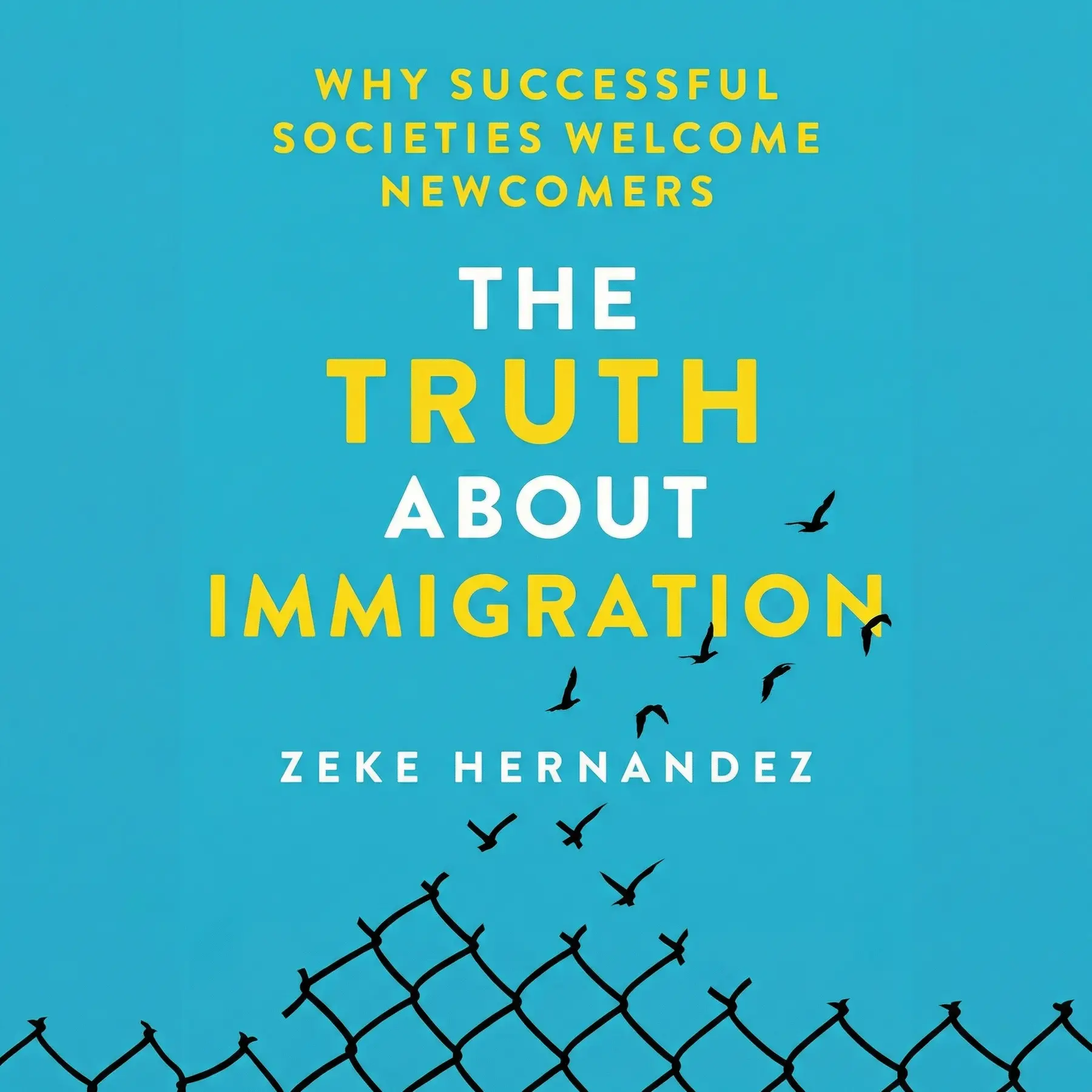
The Truth About Immigration: Why Successful Societies Welcome Newcomers
The Truth About Immigration challenges common misconceptions by analyzing the economic and social impacts of newcomers. It demonstrates how welcoming policies foster innovation, job creation, and long-term societal prosperity through data-driven insights.
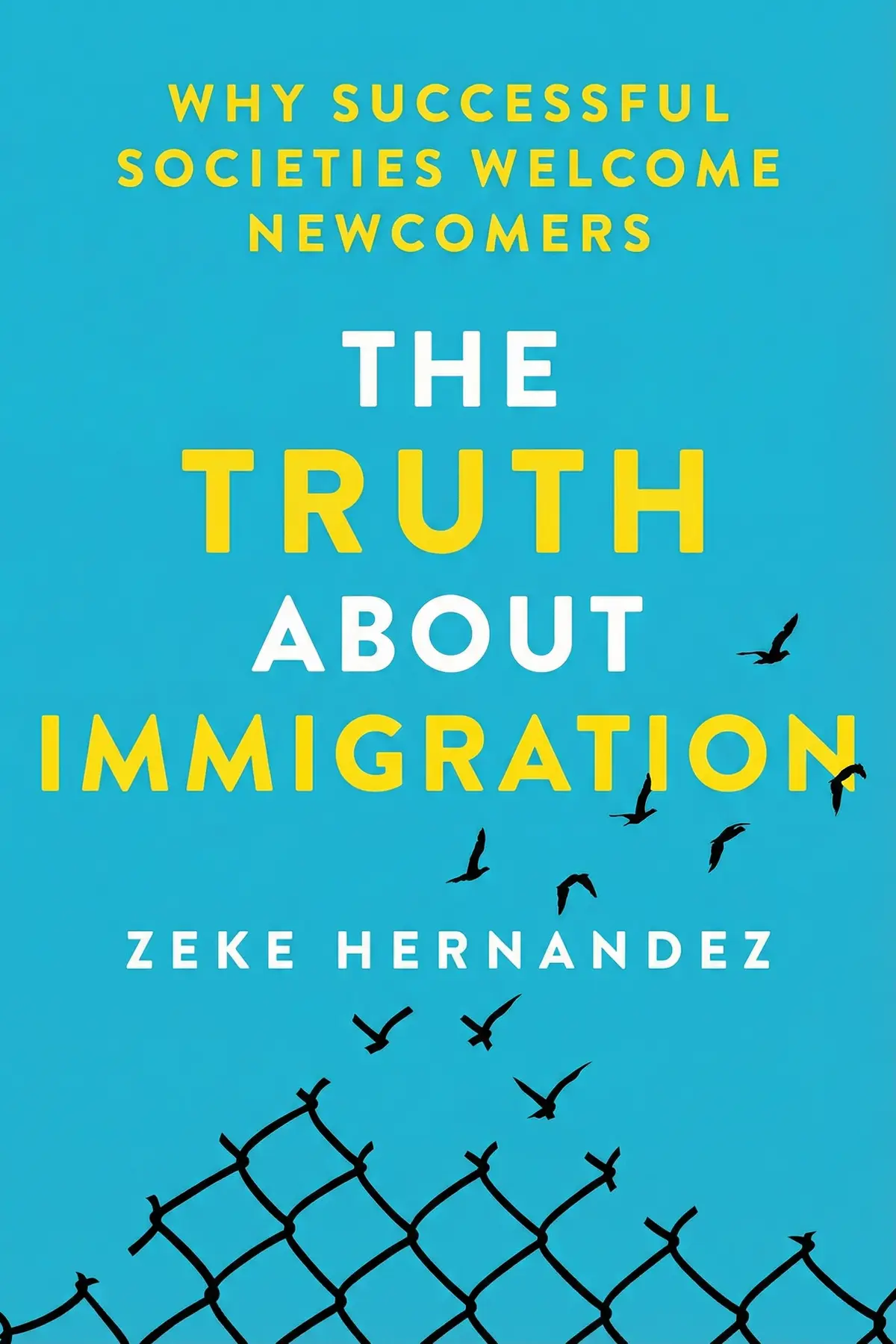
Table of Content
1. Introduction
1 min 33 sec
Picture a young student in Uruguay standing at a crossroads. He has just been offered a full scholarship to a prestigious university in the United States—a dream come true by any standard. Yet, instead of pure excitement, he feels a heavy sense of guilt. He wonders if by taking this opportunity, he is somehow robbing a local American student of a spot. He worries if his presence in a new country will eventually displace a worker or if he is abandoning his responsibility to help his homeland. This student was Zeke Hernandez, and his personal struggle reflects the very questions that dominate our modern global conversation about migration.
We often hear immigration discussed in extremes. On one side, immigrants are painted as threats to our jobs and safety; on the other, they are seen as victims in need of rescue. But both of these views miss a much more complex and inspiring reality. The truth is that immigration is not just a humanitarian issue or a political debate—it is a vital engine for economic and social prosperity. Societies that learn to welcome newcomers don’t just survive; they thrive in ways that isolated societies cannot.
In the following sections, we are going to look past the headlines and examine the hard data. We will explore how immigrant networks serve as a hidden infrastructure for investment, why the presence of newcomers is a primary driver of innovation, and how the actual fiscal impact of migration is far more positive than many realize. By the end, you’ll see why the throughline of a successful society is its ability to integrate new talent and how we can rethink our policies to ensure a brighter future for everyone.
2. The Power of Immigrant Investment Networks
2 min 08 sec
Discover how cultural connections and trust-based networks drive economic growth more effectively than massive government subsidies or corporate tax breaks.
3. Innovation and the Fiscal Life Cycle
1 min 55 sec
Uncover the hidden role of newcomers in fueling technological breakthroughs and sustaining the long-term health of national social programs.
4. How Newcomers Complement the Local Workforce
1 min 45 sec
Learn why the narrative of job displacement is a myth and how immigrant labor actually creates upward mobility for native-born workers.
5. Integration, Safety, and National Security
1 min 58 sec
Examine the data that debunks myths about crime and discover why a welcoming culture is a vital component of a nation’s defense.
6. The Untapped Potential of Undocumented Communities
1 min 55 sec
Go beyond the labels to understand the human and economic cost of keeping millions of residents in the shadows.
7. A Blueprint for Modern Immigration Reform
1 min 56 sec
Identify the flaws in our current legal framework and explore how a data-driven approach could solve the worker shortage.
8. Conclusion
1 min 30 sec
We’ve traveled a long way from the personal doubts of a young Uruguayan student to the complex mechanics of global investment and labor markets. Along the way, the evidence has consistently pointed to one truth: immigration is a profound net positive for successful societies. Newcomers don’t just take part in the economy; they expand it. They don’t just fill jobs; they create them by bringing investment and innovation. They don’t just live in our communities; they revitalize them, keeping our schools full and our social programs funded.
The throughline of Zeke Hernandez’s work is that we have a choice in how we view the stranger at our door. We can view them through a lens of scarcity and fear, seeing every new arrival as a threat to a finite pile of resources. Or, we can view them through a lens of abundance and potential, recognizing that every person brings a unique set of skills, a new perspective, and a drive to contribute.
The most important takeaway is that our prosperity is not a zero-sum game. When an immigrant moves into a declining neighborhood and starts a business, or when an international student discovers a new medical treatment, we all win. As you think about the future of your community and your country, remember the data we’ve discussed. Support policies that reflect these economic realities, and strive to replace common myths with informed conversations. By welcoming the world’s talent, we don’t just help them—we ensure our own continued growth and vibrancy. Thank you for listening to this exploration of the truth about immigration.
About this book
What is this book about?
What does it mean for a society to truly thrive? In The Truth About Immigration, the focus shifts away from heated political rhetoric and toward the tangible data that defines the immigrant experience. The book promises to reveal how newcomers act as a catalyst for economic vitality, rather than a drain on resources. By examining real-world examples—from the expansion of global restaurant chains to the breakthrough discoveries of immigrant scientists—it illustrates the deep connection between migration and investment. The narrative explores how immigrants fill crucial labor gaps, drive innovation, and contribute more to public coffers than they take. Ultimately, the book provides a roadmap for reform, arguing that successful nations are those that move past fear to embrace the immense potential of global talent.
Book Information
About the Author
Zeke Hernandez
Zeke Hernandez is the Max and Bernice Garchik Family Presidential Associate Professor at The Wharton School of the University of Pennsylvania. A thought leader in global and corporate strategy, Hernandez has won three consecutive emerging scholar awards and was named one of Poets & Quants’ Best 40 Under 40 business professors in the world. His research on the economic impact of immigration has been featured in prominent media outlets such as NPR, Forbes, and the Wall Street Journal.
Ratings & Reviews
Ratings at a glance
What people think
Listeners find the book highly worthwhile and appreciate how easy it is to follow, with one individual noting that the inclusion of humor and stories makes it particularly engaging. Furthermore, the content delivers significant value and evidence-grounded insights, as one listener points out the author’s talent for explaining complex data in an understandable way. They also praise the work's optimistic take on immigration and its constructive economic effects, while valuing the extensive research and polished writing. Listeners respect the objective tone and the clear presentation of data.
Top reviews
Num
Ever wonder how taco trucks and soccer stars actually build an economy? Hernandez moves past the shouting matches to show how immigrants are literal engines of investment. I was fascinated by the story of Pollo Campero and how ethnic networks drive capital better than government tax breaks ever could. It’s a dense read at times, but the prose is surprisingly light and often funny. He destroys the ‘job stealer’ myth by explaining how newcomers complement the native workforce, allowing us to specialize in better-paying roles. If you want a data-driven look at why our system is failing both the people and the economy, this is it. It’s not just about being nice; it’s about being smart and looking at the evidence.
Show moreNina
As someone who came to this country with nothing but a suitcase, I found this deeply moving and intellectually validating. Hernandez manages to articulate what many of us feel: we aren't here to take; we are here to build. The section on the US men's soccer team was a brilliant way to illustrate how diverse strategies and skills elevate a whole group's performance. It’s rare to find an economist who writes with this much heart and humor. He doesn't shy away from the 'trillion-dollar question' of who will pay for the retiring Boomers, and the answer involves more people, not fewer. Frankly, it changed how I explain my own story to my native-born friends. This is the top recommendation for anyone wanting to learn more.
Show moreDivya
Zeke Hernandez manages to do the impossible: make a book about immigration policy funny and readable. I loved the ‘bottom line’ approach—that the average immigrant contributes $259,000 more in taxes than they ever consume in services. That’s a massive net positive that gets lost in the toxic news cycle. The book is packed with these kinds of ‘aha’ moments, like how Korean banks thrived in China by leveraging trusted local networks. It’s not just a moral argument; it’s a business case for the future of the country. If we want to solve Social Security and keep innovation alive, we need to stop the restrictionist nonsense that’s hurting our own workers. A must-read for 2024 and beyond.
Show moreMaksim
The chapter on innovation alone is worth the price of the book. It’s incredible to see the stats on how many startups and patents are driven by those who weren't even born here. Hernandez argues that 'human infrastructure' is what makes a community attractive to investment, not just corporate subsidies. I’d never thought about how immigrant networks act like a 'conveyor belt' for global capital. My only gripe is that it leans heavily on the economic side, sometimes skimming over the real cultural frictions that people feel on the ground. Still, the evidence is overwhelming. We are literally leaving money and progress on the table by keeping people out. This book provides the tools to have better discussions about it.
Show morePing
Look, I’m usually bored to tears by books filled with 'peer-reviewed studies,' but this one is different. It’s fast-paced and feels like a conversation with a very smart, very funny friend. Hernandez takes on the 'villain' and 'victim' narratives and replaces them with the 'contributor' reality. The story about Pollo Campero’s expansion was such a cool example of how this works in the real world. I’ve already recommended this to everyone in my book club. We need to stop viewing immigration through the lens of fear and start seeing the potential for excitement and growth. It’s one of the best non-fiction books I’ve read in years. Truly eye-opening and surprisingly optimistic for such a heavy subject.
Show moreSukit
This should be required reading for every voter and politician in the country. Hernandez presents a bipartisan path forward by focusing on facts over feelings. I was particularly struck by the idea that immigrants don't just change the culture—they adapt to it, often becoming more 'local' than we realize. The data on crime rates being lower for both legal and undocumented immigrants was particularly compelling and well-researched. It’s a well-written call for a more flexible system that adjusts to economic reality rather than arbitrary per-country caps. It’s rare to find a book that offers both a high-level vision and concrete steps for reform. I’m giving it 5 stars for the sheer amount of 'myth-busting' it accomplishes so effectively.
Show moreFinn
Picked this up for a grad school seminar, but stayed for the incredible storytelling. The book is essentially a two-part masterclass: first on the cold, hard math of investment, and second on the messy social reality of integration. I particularly liked the 'two-way door' metaphor for how migration benefits both countries involved. To be fair, some of the charts in my digital copy were a bit hard to read, which was frustrating given how much he relies on data. However, the logic is sound. Hernandez presents immigrants not as victims to pity or villains to fear, but as innovators filing patents and revitalizing dying towns. It's a refreshingly apolitical take on a radioactive subject that usually lacks this much nuance.
Show moreTar
Finally got around to this after seeing it on a 'best of' list, and it lives up to the hype. Hernandez is a Wharton professor, so you expect the data to be good, but the way he debunks the crime and job-loss myths is so patient and clear. He explains that immigrants fill the gaps natives won't, which actually boosts our own wages in the long run. The truth is, most of us have no idea how broken the visa caps are or how the 1965 law basically created the illegal immigration problem by ending seasonal work. It’s a measured, non-partisan wedge in a very loud room. Informative without being preachy, though I would have liked more on the Australian or European context.
Show moreAnthony
After hearing so much rhetoric about 'the border,' this was a necessary reality check. Hernandez shows that the real national security threat isn't the people coming in—it's the stagnation we face if we keep them out. He points out that if the US had these current laws in the 1930s, we might not have won the race for the atomic bomb. That’s a sobering thought. Personally, I found the breakdown of the 1986 IRCA failure really enlightening. We’ve been trying to fix a 'bad system' with more enforcement, which only makes things worse. It’s a complex topic, but the writing is accessible and the logic is airtight. It definitely flipped the script for me on several key ideas.
Show moreRapee
Not what I expected, as it's very US-centric despite the author's global background. While the research is clearly top-tier, the middle chapters on fiscal policy felt a bit repetitive if you’ve already read much on the subject. That said, the section on the 195-year wait for Indian visas was a total gut punch. It really highlights the absurdity of our current caps. I wish there was more discussion on the drug cartel aspect or regional Latin American politics, which felt like a missing piece of the puzzle. It’s a solid read with essential data, but I wanted a slightly broader international perspective beyond the American border. Good for beginners, though maybe a bit light for those already deep into policy.
Show moreReaders also enjoyed
Abolish Rent: How Tenants Can End the Housing Crisis
Tracy Rosenthal
Abortion: Our Bodies, Their Lies, and the Truths We Use to
Jessica Valenti

21 Lessons for the 21st Century
Yuval Noah Harari

Age of Anger: A History of the Present
Pankaj Mishra

A Different Kind of Power: A Memoir
Jacinda Ardern

Age of Propaganda: The Everyday Use and Abuse of Persuasion
Anthony Pratkanis
1929: Inside the Greatest Crash in Wall Street History--and How It
Andrew Ross Sorkin
AUDIO SUMMARY AVAILABLE
Listen to The Truth About Immigration in 15 minutes
Get the key ideas from The Truth About Immigration by Zeke Hernandez, plus 5,000+ more titles in English and Thai.
- 5,000+ titles
- Listen as much as you want
- 7-day free trial
- Cancel anytime







