
14 min 12 sec
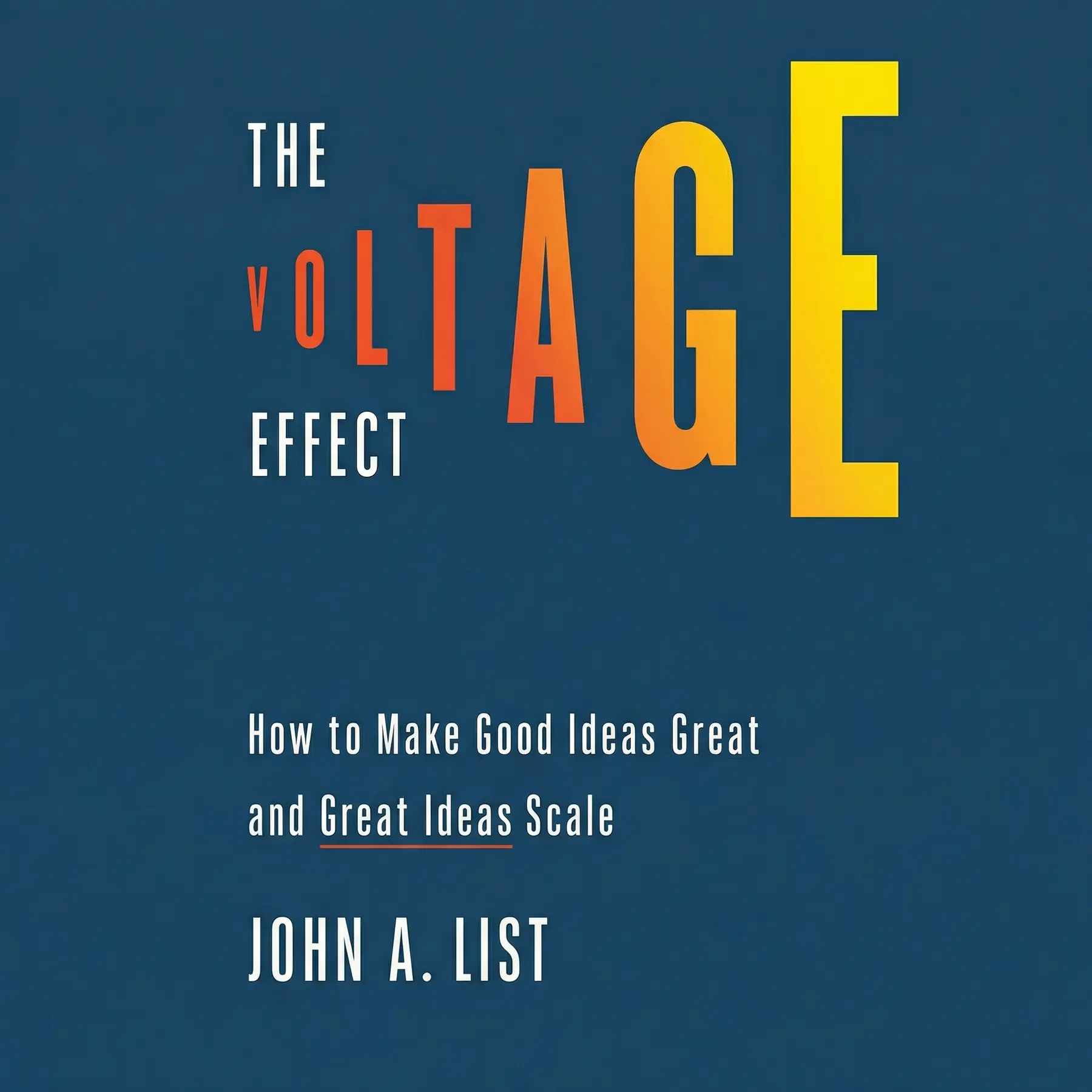
The Voltage Effect: How to Make Good Ideas Great and Great Ideas Scale
By John A. List
John A. List reveals why most ideas fail to scale and provides a data-driven framework for identifying high-voltage innovations that can grow sustainably while avoiding common pitfalls and organizational traps.
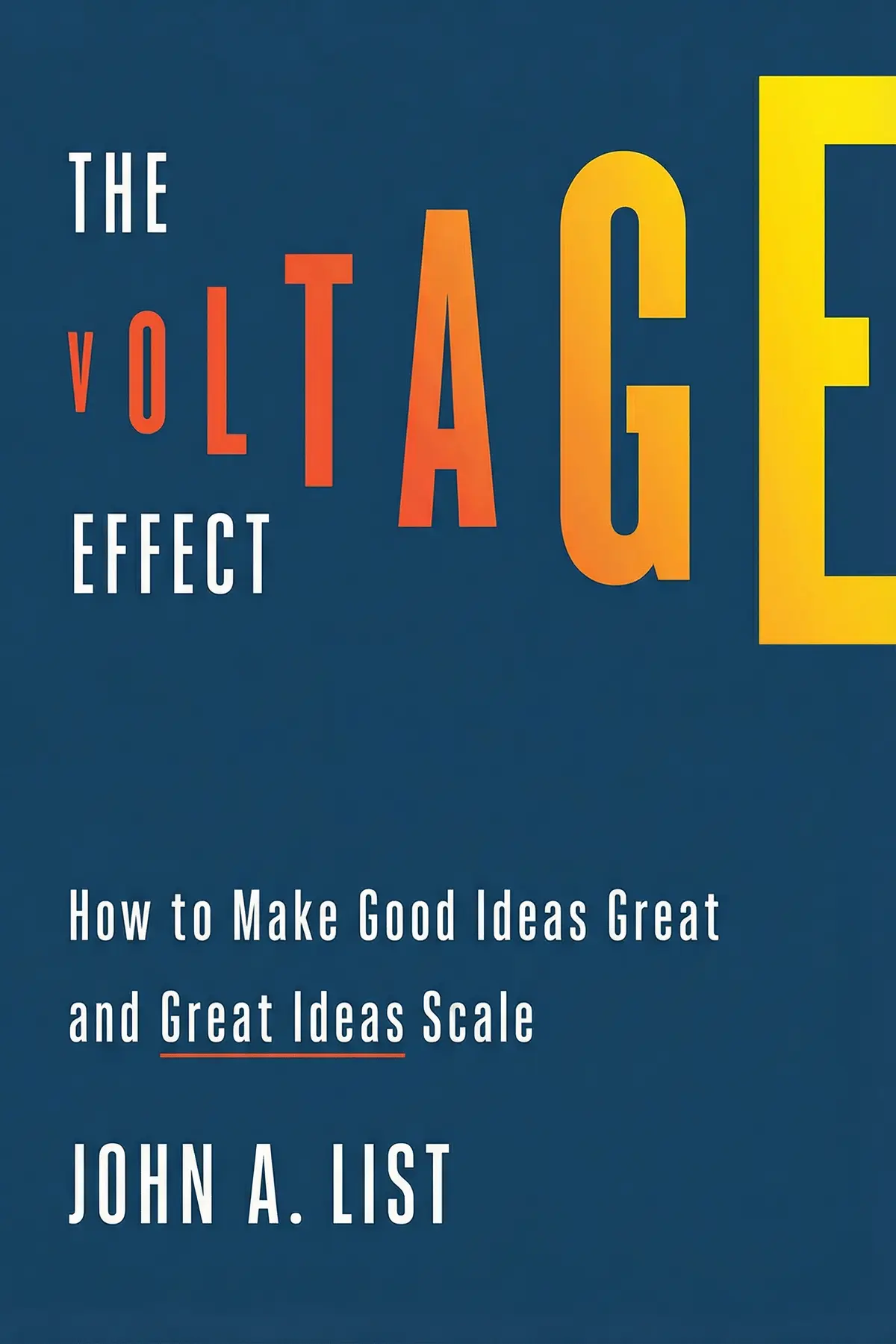
Table of Content
1. Introduction
1 min 27 sec
Imagine you have just come up with a breakthrough idea. It is innovative, it is fresh, and in your initial small-scale trials, it works perfectly. You can already see the future: your product or service reaching millions, disrupting the market, and creating a legacy. But as you prepare to expand, a haunting question looms in the background. Is this idea actually capable of growing without breaking?
This is the central challenge explored in our summary of The Voltage Effect. We often assume that if something works in a lab or a single storefront, it will naturally work everywhere if we just add more resources. However, behavioral economist John A. List argues that scaling is a unique discipline that combines rigorous science with intuitive art. It is about maintaining what he calls “voltage.” High-voltage ideas are those that retain their power and profitability as they move from a small pond to the vast ocean of the global market.
In the following sections, we are going to break down the mechanics of this phenomenon. We will look at why some ideas experience a sudden drop in power, why understanding your specific audience is more important than broad demographics, and how to avoid the hidden costs that can sink a growing enterprise. We will also dive into the behavioral secrets that drive growth, from the way we design incentives to the counterintuitive power of knowing when to walk away. By the end of this journey, you will have a new lens through which to view your own projects, ensuring that when you decide to go big, you have the voltage to back it up.
2. The Foundation of Scalability
2 min 39 sec
Explore the critical pillars that determine whether an idea will thrive or wither when it moves from a small trial to the open market.
3. Incentives as Growth Engines
2 min 09 sec
Discover how the right nudges can align everyone in your organization toward a common goal of expansion.
4. The Power of Marginal Thinking
2 min 17 sec
Learn why looking at the average performance is a trap and why the real secrets to growth lie at the edges of your data.
5. The Strategic Virtue of Quitting
1 min 56 sec
Discover why walking away from a project can sometimes be the most productive decision you will ever make for your long-term success.
6. Cultivating a Scalable Culture
2 min 28 sec
Learn how to build a human system that remains healthy and effective even as your head count grows into the thousands.
7. Conclusion
1 min 16 sec
In the end, scaling is not just a matter of doing more of what you are already doing. It is a transformation. To successfully navigate the journey from a small-scale idea to a global phenomenon, you must be vigilant about the ‘voltage’ of your innovation. This means constantly checking for the signs of a voltage drop, ensuring your audience is truly understood, and being ruthless about managing your costs.
By incorporating the secrets of incentives, marginal thinking, and strategic quitting, you can move past the common pitfalls that sink most entrepreneurs. Remember that growth is as much about what you stop doing as what you start doing. And perhaps most importantly, never lose sight of the human element. A company is only as strong as its culture and the trust it builds with its people and its customers.
The Voltage Effect provides a rigorous, scientific framework for expansion, but it also offers a very human lesson: true greatness comes from finding the ideas that don’t just work for you, but work for everyone, everywhere. As you move forward with your own ideas, keep these principles in mind. Look for the high-voltage opportunities, be brave enough to quit the low-voltage ones, and build a culture that can carry your vision into the future. With this approach, you won’t just grow—you will scale with purpose and lasting impact.
About this book
What is this book about?
Have you ever wondered why a small-scale success story often crumbles when it tries to go big? The Voltage Effect addresses the fundamental gap between a great pilot program and a successful global enterprise. Written by behavioral economist John A. List, the book introduces the concept of voltage—the vital energy that allows an idea to maintain its impact as it expands. Through a blend of economic theory and real-world case studies, the book explores the specific markers of scalability. It teaches readers how to spot the difference between a fluke and a repeatable success, how to use incentives effectively, and why marginal thinking is superior to looking at averages. Ultimately, it provides a roadmap for entrepreneurs, leaders, and policymakers to ensure their best ideas don't just start strong but actually change the world at scale.
Book Information
About the Author
John A. List
John A. List is a professor of economics at the University of Chicago and is renowned for his extensive research and contributions to the field. With over 200 peer-reviewed journal articles and published textbooks to his name, he’s solidified his expertise in behavioral economics and experimental economics. He’s also coauthor of the international best seller The Why Axis.
Ratings & Reviews
Ratings at a glance
What people think
Listeners value how the book takes a hands-on approach, linking evidence-based behavioral economics concepts with a wealth of illustrative cases. Furthermore, the content is top-tier; one listener points out the rigorous data-backed analysis, while listeners generally describe it as a highly accessible read featuring straightforward, clear guidelines. The prose is also well-received, as one listener mentions the author uses very simple, easy-to-understand language throughout. Despite these strengths, listeners have conflicting opinions regarding the book’s overall value for money.
Top reviews
Sam
Finally got around to reading List's take on scaling and I’m genuinely impressed by the empirical rigour he brings to the table. Most business books are just a collection of survivor-bias anecdotes, but List uses his background as a Chicago economist to actually test what works. The distinction between 'chefs' and 'ingredients' is a total game-changer for anyone in the non-profit sector. Truth is, we often scale a program because of one charismatic leader without realizing that person is a non-scalable resource. While some of the Uber stories felt a bit self-serving, the core data-driven analysis is hard to argue with. It’s a readable, fast-paced dive into behavioral economics that doesn't feel like a textbook. The writing style is simple enough for a casual reader but deep enough for a pro.
Show moreSawit
John List manages to make complex economic theories feel like common sense. I loved the data-driven approach he takes to explaining why some social programs fail to scale while others thrive. Picked this up for the business advice but stayed for the fascinating stories about the Chicago Heights Early Childhood Center and his time at the White House. Look, it’s not just for CEOs; anyone interested in how the world actually works will find value here. The simple language makes the 'Voltage Effect' accessible to everyone, regardless of their background in math or economics. It’s rare to see such high-level research presented so clearly. Some might find the tone a bit too optimistic, but the empirical evidence is quite grounding. A must-read for anyone in leadership.
Show moreGioia
Picked this up after hearing List on a podcast and it lived up to the hype. The way he explores the 'more is less' phenomenon through the lens of baseball card auctions was fascinating and immediately applicable to how we bundle products at my firm. I've been looking for a book that bridges the gap between 'gut feeling' and 'data-driven' decision making, and this is exactly that. Not gonna lie, the section on 'risk compensation' regarding seatbelts and bicycle helmets felt a bit controversial, but it definitely made me think. The book is relentlessly empirical, which I appreciate in a world full of 'thought leaders' who just tell stories. It’s an authentic look at the science of success. Highly recommended.
Show moreBella
As a small business owner, the concept of the 'Voltage Effect' really hit home for me. We often think that more is always better, but List proves that adding 'defective cards' to the deck can actually lower the perceived value of the whole package. In my experience, the hardest part of growing is maintaining that initial spark, and this book provides a solid roadmap for identifying 'false positives' early on. Not gonna lie, some of the sections on tax evasion and social pressure felt a little detached from my daily reality. However, the advice on focusing on marginal returns instead of just averages is worth the price of admission alone. It’s a very practical guide that avoids the usual fluff you find in this genre. Definitely a worthwhile read if you're looking to expand.
Show moreNarumon
Ever wonder why some startups explode while others just evaporate into thin air? John List provides some pretty compelling answers by looking at the behavioral incentives that drive human choices. I appreciated how he broke down complex ideas like 'spillovers' and 'representative samples' into language that anyone can understand. It’s rare to find a book that is both data-driven and genuinely easy to follow. To be fair, I did find the discussion on 'Equal Opportunity' policies a bit superficial and rushed. It felt like he dismissed important social strategies based on very narrow data sets. That said, the overall framework for checking if an idea has 'voltage' before pouring millions into it is incredibly useful. It's a solid, readable entry into the field of behavioral economics.
Show moreVipawan
The chapter on quitting is actually the standout for me in this entire volume. We are so conditioned to think that 'quitters never win,' but List argues that knowing when to fold is a high-voltage move that saves resources for better ideas. He applies economic principles to real-life decisions in a way that feels fresh and actionable. Personally, I was a bit annoyed by the constant name-dropping of various tech unicorns, which made it feel a bit like a Silicon Valley victory lap. However, the insights into why the 'Jamie’s Italian' chain failed provided a great counter-balance. The book is well-structured and the writing is punchy, making it a quick read for a busy weekend. It’s a high-quality analysis of how to move from a pilot program to a global success.
Show moreEvelyn
After hearing so much about the 'voltage effect' in tech circles, I finally dived in. List’s focus on thinking at the margin rather than looking at averages is a crucial lesson that most managers ignore. The book is filled with practical examples from his time at Chrysler and Lyft that illustrate how small tweaks to incentives can have massive impacts at scale. I did feel that he glossed over some of the complexities of international expansion, especially regarding local laws and customs. Nevertheless, the writing style is incredibly engaging and he has a knack for making data feel exciting. It’s a very readable guide that offers a unique perspective from someone who has actually been in the trenches of both academia and industry.
Show moreWatchara
Personally, I found the tone a bit too 'airport business book' for my taste, even though the author is a serious academic. List is clearly a brilliant guy, but the way he dumbs down certain concepts—like referring to every success or failure as 'voltage'—got a bit repetitive by the halfway mark. The discussion about Arivale, for instance, lacked the solid experimental evidence I was expecting. He frames it as a failure of scale due to cost, but never really proves it actually worked to extend lives in the first place. Truth is, the book oscillates between brilliant insights and surface-level anecdotes that don't always hold up to scrutiny. It’s an enjoyable enough guide for a flight, but don't expect a deep academic treatise. It’s decent, just not the revolution it claims to be.
Show moreOscar
To be fair, the 'voltage' analogy is clever, but the execution of the book is hit or miss for me. I really enjoyed the sections on how to distinguish between a 'chef' (a unique human who doesn't scale) and an 'ingredient' (a process that does). That is a vital lesson for any non-profit looking to expand. However, I was really put off by his description of the culture at Uber and his somewhat hand-wavy attitude toward the controversies there. It felt like he was keeping the 'peons' at arm's length while taking credit for the profit-driving algorithms. Is it worth the money? Maybe if you're new to behavioral economics. If you've read Kahneman or Thaler, a lot of this will feel like a retread of familiar territory, just with different branding.
Show moreYuwadee
This book was a major letdown, especially considering the hype. Frankly, a lot of the specific content comes across as sloppy hogwash when you actually look into the citations. For example, he uses the DARE program as a primary example of a 'false positive,' but the study he cites was never a strong evaluation to begin with—it was just a weak program. It’s frustrating to see a world-renowned economist ignore basic public health principles to fit a narrative. Also, his defense of 'clawback' bonuses for teachers feels incredibly out of touch and, quite frankly, cruel. While he has a lot of experience at places like Uber and Lyft, it feels like he’s trying to sell a specific brand of corporate ideology rather than providing objective science. I expected more nuance and less propaganda.
Show moreReaders also enjoyed
1929: Inside the Greatest Crash in Wall Street History--and How It
Andrew Ross Sorkin
23 Things They Don’t Tell You About Capitalism
Ha-Joon Chang

A Little History of Economics
Niall Kishtainy
A Splendid Exchange: How Trade Shaped the World
William J. Bernstein
AUDIO SUMMARY AVAILABLE
Listen to The Voltage Effect in 15 minutes
Get the key ideas from The Voltage Effect by John A. List, plus 5,000+ more titles in English and Thai.
- 5,000+ titles
- Listen as much as you want
- 7-day free trial
- Cancel anytime







