

The Theory of Moral Sentiments
Adam Smith
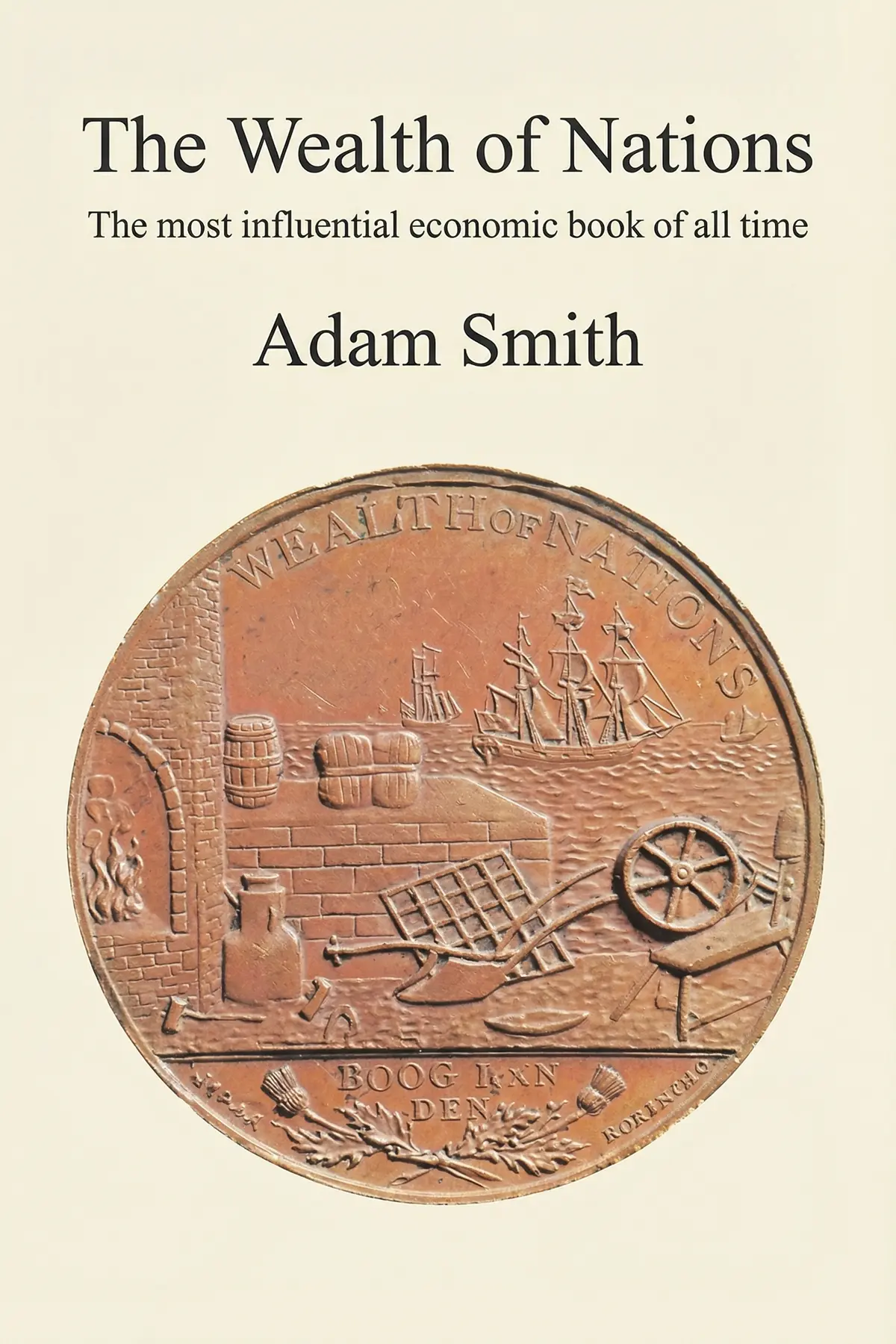
A profound examination of how nations build prosperity. This classic text explores the mechanics of free markets, the division of labor, and why individual self-interest often leads to the greatest benefit for society as a whole.
1 min 33 sec
In the year 1776, the world was on the cusp of a massive transformation. While revolutions were breaking out on the political stage, a quiet Scottish philosopher was sparking an intellectual revolution that would change the way humanity understands money, power, and survival. Adam Smith, often hailed as the primary architect of modern economic thought, looked at the world around him and saw a system that was far more complex—and potentially more prosperous—than anyone had previously realized.
At the time, the prevailing wisdom suggested that a nation’s strength was measured by the amount of precious metal locked in its king’s vaults. Smith, however, saw something different. He saw that wealth wasn’t just about gold; it was about the productivity of the people. This insight led him to write his most influential work, The Wealth of Nations. In this landmark text, he sought to answer a fundamental question: Why do some countries thrive while others stagnate?
As we dive into these concepts, we will explore the mechanics of the marketplace and the surprising power of human nature. We will look at how simple shifts in the way we work can lead to massive gains in efficiency, and why the “invisible hand” of the market might be a better guide for prosperity than any government planner. This is the story of how freedom and self-interest, when combined with the right structures, can create a world of abundance. Let’s explore the foundational ideas that still drive our global economy today.
2 min 23 sec
Discover how a simple shift in how we organize work can lead to massive jumps in output. By focusing on single tasks, we unlock a level of productivity that seems almost impossible.
2 min 15 sec
Is a country’s worth found in its vaults of gold or the hands of its workers? We explore why the old obsession with hoarding metal actually held nations back from true growth.
2 min 07 sec
Most people think of greed as a negative trait, but here we see how wanting the best for ourselves can actually provide the best results for everyone in the community.
2 min 27 sec
What should a government actually do? Learn why keeping the state’s hands off the marketplace allows for a more natural and successful flow of goods and services.
1 min 17 sec
In the end, the path to a wealthy nation isn’t found in a vault of gold or a complex web of government regulations. It is found in the freedom of the individual to create, to specialize, and to trade. By embracing the division of labor, we turn our collective efforts into an engine of incredible productivity. By trusting in the invisible hand, we see how the simple human desire to improve one’s own life can lead to the betterment of the entire community.
The throughline of these insights is a powerful call for liberty. When people are allowed to trade freely across borders, when they are encouraged to innovate in their specific fields, and when they are protected by a fair and limited government, prosperity follows as a natural result. The lessons from centuries ago still serve as a guide for how we think about our modern world. Whether we are looking at global trade deals or the way we organize our own businesses, the principles of efficiency, self-interest, and freedom remain the keys to unlocking a future of abundance. As you move forward, consider how these fundamental forces are at work in your own life and the economy around you.
This book provides a comprehensive look at the birth of modern economic theory. It challenges the traditional 18th-century view that a nation’s wealth is defined by its reserves of gold and silver. Instead, it proposes that true prosperity is generated through labor, specialization, and the free exchange of goods. By examining the way a simple factory operates, the text illustrates how a society can transform its output and lift its standard of living through collective effort and individual ingenuity. Listeners will gain a deep understanding of the promise of a free market system and the mechanics of international trade. The work explains how the invisible hand guides the economy toward efficiency and why government interference often does more harm than good. It covers everything from the basics of taxation and the value of labor to the dangers of protectionism. Ultimately, it lays out a blueprint for a thriving, wealthy society based on productivity and limited state intervention, offering insights that are just as relevant today as they were centuries ago.
Adam Smith was a Scottish philosopher and economist. He is frequently referred to as the father of modern economics because he was the first prominent thinker to argue that a free market is the primary path to national wealth. His magnum opus, The Wealth of Nations, remains a cornerstone of economic thought and continues to influence global policy today.
Adam Smith
Listeners consider this an accessible and essential foundational text for economics, with one individual emphasizing its pertinence to contemporary economic dialogue. They value its budget-friendly used format and pleasing design, viewing it as a helpful reference; one listener specifically notes that it effectively distills every core idea from the original work. The content is described as both thorough and revelatory, while one listener points out that it provides fascinating viewpoints. Regarding build quality, feedback is divided, as one listener noted problems with the spine breaking apart.
This tome serves as the absolute cornerstone of modern economic thought, though it requires a significant time investment to truly appreciate. Smith’s insights into the division of labor are remarkably relevant today, explaining how specialized production drives the output of an entire nation. While some sections on 18th-century banking feel dated, the core philosophy remains unshakable and provides a perspective-shifting view of how global markets function. Frankly, you cannot understand the mechanics of industrial society without grappling with this text. It is an exhaustive scope that captures virtually every major idea that has defined our world for two centuries.
Show moreEver wonder why a crisis in one country ripples across the entire globe? The answer is buried in these pages, providing the most truthful look at geopolitical finance ever written. Smith captures the essence of how self-interest can, under the right conditions, lead to a greater standard of living for the population at large. I found the comparisons between the economies of England and France particularly eye-opening, as they highlight the importance of open trade and infrastructure. This is not just a book for economists; it is a guide to understanding the very fabric of our global society. It is comprehensive, brilliant, and still deeply relevant to every modern economic discussion.
Show moreIt is a revelation to discover that the father of capitalism was actually deeply concerned with morality and social equality. Smith isn't just a cold analyst; he’s a philosopher who understands that human action is driven by a complex mix of self-interest and a desire for social acceptance. Truth is, modern capitalism has distorted many of his views to justify greed, but Smith himself warns against the vile maxims of the masters of mankind. This book is a brilliant mixture of economic theory and moral philosophy that every citizen should read. It provides a much-needed historical context for the inequality we see in our current market conditions.
Show morePicked this up because I wanted an affordable way to dive into the roots of capitalism, and this budget-friendly edition didn't disappoint in its presentation. The cover has a surprisingly nice design that looks great on the shelf, even if the content is a bit dense for casual bedtime reading. Gotta say, the sections on banking in Book 2 were the highlight for me, as they offer a really clear perspective on how stock accumulation actually functions. While it is certainly a massive time commitment, having it as a reference is invaluable for anyone working in finance or business. You can see the seeds of everything we deal with in modern markets right here.
Show moreFinally got around to finishing this behemoth, and frankly, it's more accessible than most people lead you to believe. Smith is extremely systematic and organized, building his arguments one by one so that even a layman can grasp the dynamics of trade. The truth is that while some of the specific examples about corn prices are repetitive, the underlying logic regarding human nature is fascinating. He recognizes the limitations of the system while still advocating for its potential to grow a nation's infrastructure. It is a must-read for anyone who wants a truthful look at how industrial wealth is actually generated and distributed.
Show moreThe physical quality of this edition is impressive for the price, though I did notice some minor issues with the spine after a few weeks of heavy use. Look, it's a sturdy enough volume for a student on a budget, and the layout makes the complex theories on market competition somewhat easier to navigate. I've been using it as a reference guide while studying for my finance finals because it captures all the main ideas without too much fluff, despite its overall length. It’s a nice design that feels substantial in your hands. Just be prepared for a few sections that drag on longer than necessary, especially in the later books.
Show moreLook, if you want to participate in any serious discussion about how our world works, you have to tackle Smith at some point. Not gonna lie, it is an exhaustive scope that captures virtually every major idea that has defined industrial society for two centuries. The viewpoints on trade and infrastructure are incredibly eye-opening, even if the prose is thick and requires your full attention to decode. It functions less like a narrative and more like a comprehensive manual for how a nation builds its wealth from the ground up. A must-read foundational economics text that remains relevant to every modern debate we have about capitalism.
Show moreAfter hearing my colleagues discuss market efficiency, I felt compelled to see what Smith actually said about the human element behind the numbers. Honestly, it’s a heavy read that paints a stark picture of how the ruling class maintains authority through the control of food supplies and education. I found myself getting quite emotional during the parts where he describes how the working class is essentially manipulated to control population growth. It sheds a lot of light on why workplace dynamics still feel so toxic today, where charismatic managers often cull competent teams just to assert power. It’s a foundational text, but one that left me feeling more cynical about the 'invisible hand' than when I started.
Show moreAs someone who enjoys history more than math, I found the third book on the progress of opulence far more engaging than the first two. The sections on the division of labor are classic for a reason, but I suppose the sheer volume of data on historical commodity prices makes it a difficult start. It is a collection of three books that vary wildly in tone and usefulness for a modern reader. I would recommend reading the first few chapters and then skimming the parts about silver and mercury coins unless you have a direct academic interest. It’s a foundational work, certainly, but far from a page-turner.
Show moreNot what I expected after hearing all the hype about invisible hands and free markets, because most of this is just excruciatingly dull. I struggled through a hundred pages regarding the historical price of silver and the rent of land, which felt totally irrelevant to any modern reader. To be fair, there is some interesting history in Book 3, but the writing style is just so long-winded and dry that it becomes a chore. Unless you are a dedicated student of the Scottish Enlightenment, you’re better off reading a summary of the main points. It is a historic work, but tedious beyond belief.
Show more
Ha-Joon Chang
Niall Kishtainy
William J. Bernstein

Yanis Varoufakis
AUDIO SUMMARY AVAILABLE
Get the key ideas from The Wealth of Nations by Adam Smith, plus 5,000+ more titles in English and Thai.







