
25 min 51 sec
The Willpower Instinct: How Self-Control Works, Why it Matters and What You Can Do to Get More of It
Explore the science of self-control and learn how to manage the biological and psychological forces that dictate our ability to resist temptation, overcome procrastination, and achieve meaningful long-term goals.
Table of Content
1. Introduction
1 min 50 sec
We often think of willpower as a mysterious, elusive quality—something that some people are simply born with while others are destined to struggle. We see the person who hits the gym at 5:00 a.m. or the colleague who never touches the office donuts, and we assume they possess a superhuman level of grit. But science tells a very different story. Research into human behavior shows that willpower is not a magical gift; it is a biological instinct and a measurable psychological resource that impacts nearly every facet of our existence. Those who manage to harness their self-control effectively tend to lead longer, healthier lives, enjoy more stable relationships, and find greater professional success.
In this exploration of The Willpower Instinct, we are going to dive deep into the mechanics of the mind to understand why we so often fail our own expectations. We’ll look at the neurological battle between the primitive parts of our brain that crave instant gratification and the more recently evolved regions that plan for the future. This isn’t just about learning how to say ‘no’ to a cookie; it’s about understanding the ‘I will,’ ‘I won’t,’ and ‘I want’ powers that define our choices.
Throughout this summary, we will uncover how stress, nutrition, and even our social circles dictate our level of self-control. We will see why traditional methods of self-denial often backfire and why being too hard on yourself might actually be the very thing that leads you to fail. By the end, you’ll have a toolkit of science-backed strategies—from simple breathing exercises to shifts in your mental perspective—that can help you bridge the gap between who you are and who you want to become. Let’s begin by breaking down the three distinct forces that make up what we call willpower.
2. The Triple Framework of Willpower
2 min 15 sec
Willpower is more than just saying no; it is a dynamic interplay between three distinct mental capacities that direct our actions toward a better future.
3. Willpower as a Biological Instinct
2 min 15 sec
Self-control isn’t just a mental choice; it’s a physical state driven by an evolutionary response designed to protect us from internal threats.
4. The Finite Battery of the Mind
2 min 15 sec
Treat your willpower like a muscle; it can be strengthened through regular exercise, but it also becomes exhausted with too much use.
5. The Meditation Connection
2 min 08 sec
Rewire your brain for better focus and self-awareness by practicing the simple, physical art of mindfulness meditation.
6. The Dopamine Delusion
2 min 27 sec
Understand how your brain’s reward system can trick you into chasing pleasures that never actually deliver the satisfaction they promise.
7. The Trap of Moral Licensing
2 min 06 sec
Be careful when you feel like a ‘good person,’ as your brain might use your virtuous behavior as an excuse to indulge in bad habits.
8. Bridging the Gap to Your Future Self
2 min 10 sec
We often fail at self-control because our brains perceive our future selves as total strangers, making it easy to sacrifice their well-being for our present pleasure.
9. The Danger of Guilt and the 'What the Hell' Effect
2 min 12 sec
Self-criticism is not the path to self-control; in fact, forgiving yourself for your mistakes is the most effective way to get back on track.
10. The Paradox of Thought Suppression
2 min 13 sec
Trying to push away unwanted thoughts or cravings only makes them more powerful; the secret to control is acceptance, not resistance.
11. Willpower is Contagious
2 min 16 sec
Your social circle acts as a mirror for your self-control; surround yourself with people who share your goals to amplify your own resolve.
12. Conclusion
1 min 44 sec
As we wrap up our journey through the science of self-control, the most important takeaway is that willpower is not a fixed trait, but a dynamic and trainable skill. It is a biological resource that is deeply connected to your physical health, your mental awareness, and your social surroundings. We’ve seen that true mastery doesn’t come from a place of harsh self-criticism or endless denial, but from understanding how your brain works and learning to work with it rather than against it.
By balancing your ‘I will,’ ‘I won’t,’ and ‘I want’ powers, you create a stable foundation for change. By taking care of your body through sleep, nutrition, and stress management, you ensure that your ‘pause-and-plan’ response is ready when you need it most. And perhaps most importantly, by practicing self-forgiveness and bridging the gap to your future self, you remove the emotional barriers that so often lead us to give up.
Your first step toward a stronger willpower instinct is simple: start observing. For the next twenty-four hours, pay close attention to your choices. Don’t judge them; just notice them. When do you feel the strongest? When do you feel most impulsive? By bringing these moments into the light of awareness, you are already beginning to change the structure of your brain. Remember that every small victory—every time you choose to take a deep breath instead of reacting, or every time you choose a long-term goal over a short-term impulse—is a rep for your willpower muscle. Over time, these small choices will accumulate, transforming not just your habits, but your entire life. You have the instinct within you; now you have the tools to use it.
About this book
What is this book about?
The Willpower Instinct delves into the fascinating world of health psychology to explain why self-control is often so difficult to maintain and how we can practically improve it. Rather than viewing willpower as a fixed personality trait or a simple matter of 'trying harder,' this exploration reveals that self-discipline is a complex biological instinct shaped by our evolution, our brain chemistry, and even our social environments. By understanding the internal conflicts between our impulsive and rational selves, listeners can learn to navigate the pitfalls of modern life. The book offers a blueprint for strengthening your resolve through small, manageable changes in lifestyle—ranging from better sleep and nutrition to mindfulness and strategic self-forgiveness. It promises a roadmap to a more fulfilling life by aligning your daily actions with your deepest long-term aspirations, helping you transform from a victim of your impulses into a master of your own destiny.
Book Information
About the Author
Kelly McGonigal
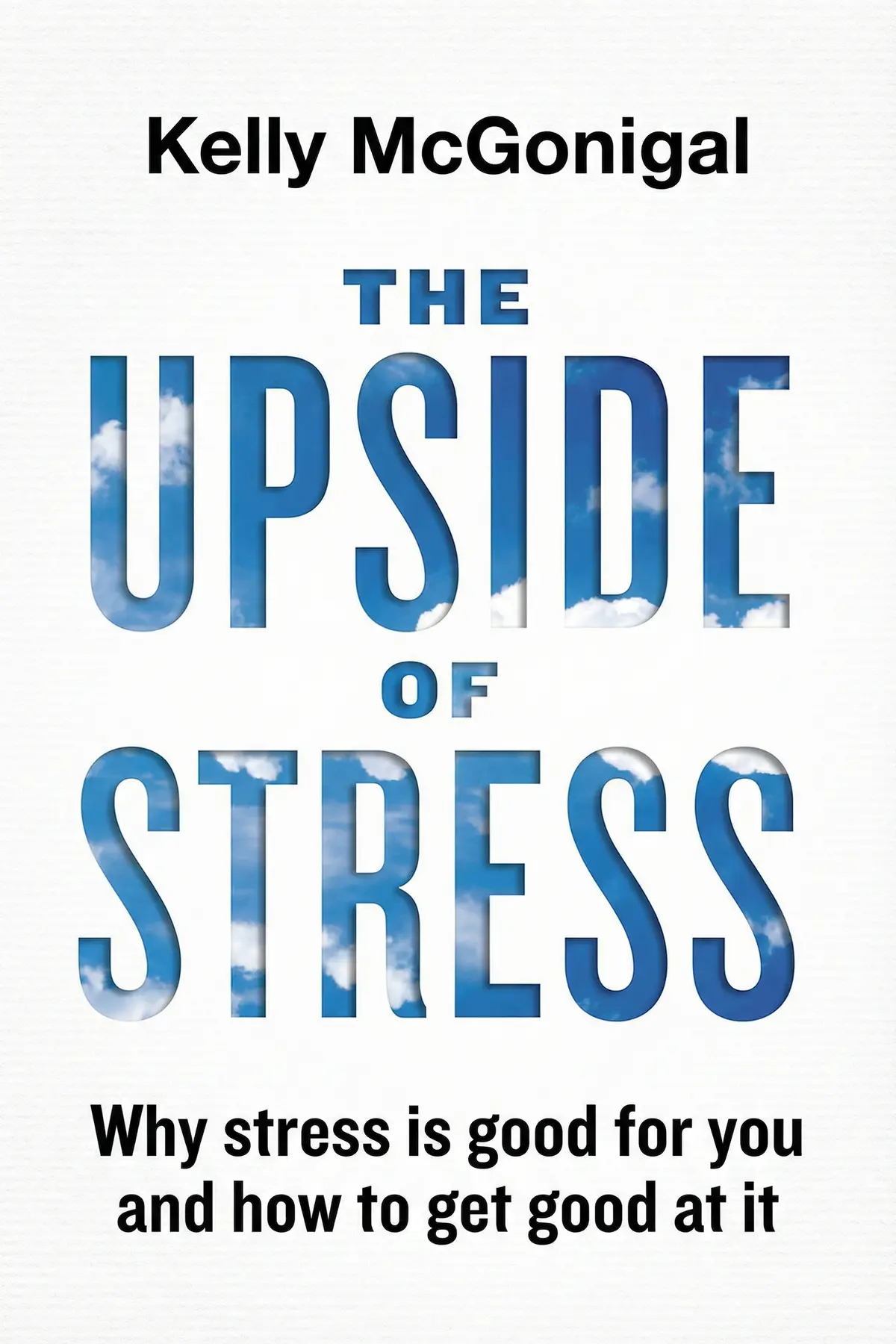
Kelly McGonigal, PhD, is a health psychologist and lecturer at Stanford University. She has received several awards including Stanford University’s highest teaching honor, the Walter J. Gores award. She is also the author of The Upside of Stress, which deals with the ways in which stress can be beneficial for us and how we can better manage it.
Ratings & Reviews
Ratings at a glance
What people think
Listeners find this work well-researched and easy to understand, providing actionable guidance and techniques for enhancing self-discipline and self-control. They appreciate the motivational content, with one listener noting how it helped them develop their willpower to live better. The organization of the book makes it enjoyable to consume; one listener mentions it is best to take a chapter per week, while another describes the text as a thought-provoking exploration of human behavior.
Top reviews
Sara
After hearing so many productivity gurus mention this, I finally committed to the 10-week program. McGonigal really hits the sweet spot between academic rigor and practical, everyday application. The distinction between the "I will," "I won't," and "I want" powers was a massive paradigm shift for my morning routine. I especially appreciated the deep dive into how stress sabotages our prefrontal cortex. It turns out that beating yourself up after a failure actually makes you more likely to fail again. That lesson on self-compassion was probably the most valuable part for me. It’s not just a "feel-good" sentiment; it’s backed by neuroscience. The writing is accessible, though the humor can be a bit cheesy at times. Still, the exercises like the five-minute "greenery" walk or slow breathing are low-effort but high-impact. It’s a solid resource for anyone tired of "just try harder" advice.
Show moreYuki
Ever wonder why you reach for a cookie the second you feel stressed at work? This book has the answer, and it’s not because you’re "weak." I loved the biological explanation of the "pause-and-plan" response versus "fight-or-flight." Understanding that willpower is a biological instinct rather than just a character trait helped me stop the cycle of guilt. The chapter on the "what-the-hell effect" was a total game-changer for my diet. Now, when I slip up, I practice the self-forgiveness techniques McGonigal suggests instead of spiraling into a binge. It sounds counterintuitive, but it works. The prose is clean and engaging, making complex neuroscience feel like a conversation with a smart friend. I’ve already recommended this to three people who feel stuck in their habits. It’s easily one of the best books on human behavior I’ve read in years.
Show moreScarlett
Wow. I didn't think a book about self-control could be this engrossing. The "white bear" experiment—the idea that suppressing a thought makes it more likely to haunt you—was a revelation for me. It completely changed my approach to quitting smoking. Instead of trying to ignore the cravings, I’ve learned to "surf" them as McGonigal describes. It’s much more effective than pure suppression. The writing is incredibly encouraging, and the emphasis on the "willpower muscle" getting tired explains why I make my worst decisions late at night. The structure of one chapter per week is perfect for people who actually want to change their lives rather than just consume information. This isn't just a book; it's a 10-week workshop that actually delivers on its promises. Truly life-changing stuff.
Show moreSuthida
Finally got around to reading this Stanford favorite, and it’s much more than your standard self-help fluff. The author treats willpower like a physical muscle that can be strengthened, which is an incredibly empowering metaphor for someone like me. I found the section on dopamine particularly enlightening because I never realized how our brains confuse the "promise of reward" with actual happiness. It explains exactly why I keep scrolling on social media long after it stops being fun. My only gripe is that some of the cited studies felt a bit small in scope to draw such massive conclusions. However, the actionable tips—like the ten-minute delay for cravings—are working wonders for my snacking habits. It’s a dense read if you rush it, so I’d recommend taking it one chapter at a time to really let the concepts sink in.
Show morePhu
This book changed how I view my "future self." McGonigal points out that we often treat our future selves like strangers, assuming that person will magically have more energy and discipline than we do right now. That hit me hard. I’ve started using her "pre-commitment" strategies to lock my future self into better decisions, and the results are actually visible. The book is structured like a class, which makes it very easy to follow and implement. I did think some of the "moral licensing" examples were a bit repetitive, but the core message is vital. You can't just rely on grit; you have to outsmart your own biology. It’s a well-researched guide that offers a toolkit instead of just a lecture. Definitely worth a spot on your shelf if you struggle with procrastination.
Show morePang
Picked this up to help with my productivity, and I was pleasantly surprised by how much focus is placed on physical health. We often forget that sleep deprivation and poor diet literally starve the prefrontal cortex of the energy it needs to say "no." McGonigal makes a compelling case for exercise and meditation as primary willpower boosters. I’ve started doing five-minute meditation sessions, and I actually feel more in control of my impulses during the afternoon slump. The concept of "willpower contagion" was also fascinating—realizing that the people we spend time with can subconsciously influence our self-control was a wake-up call. The book is a bit long-winded in the middle, but the summary of strategies at the end of each chapter helps keep you on track. It’s a very practical manual for self-improvement.
Show moreCarlos
As someone who enjoys the intersection of economics and psychology, I found the "delay discounting" section brilliant. It explains so clearly why we choose a small immediate reward over a much larger future one. McGonigal’s background teaching this at Stanford really shows in the way she anticipates common pitfalls and excuses. I appreciated that she didn't promise any "easy tricks." Instead, she offers a realistic look at how the brain works. The "I won't" power is harder to master than I thought, but the book provides enough variety in its strategies that something is bound to stick. I did find the constant references to her students a little distracting, but it adds to the "course-like" feel of the book. It’s a solid 4-star read that I’ll likely revisit.
Show moreSukit
The chapter on "moral licensing" alone was worth the price of the book. I never realized that feeling "good" about a small virtuous act (like ordering a salad) often gives us a subconscious green light to do something "bad" (like eating a giant dessert). It’s a subtle trap that explains so many of my past failures. Look, the book isn't perfect—some of the anthropology bits feel a little dated and the puns are hit-or-miss. However, the core strategies are incredibly robust. I’ve started using the "10-minute rule" for everything from checking email to buying things online, and it’s significantly reduced my impulsivity. It’s a thought-provoking exploration of why we do the things we do, and more importantly, how we can stop doing them. I’d recommend it to anyone looking for a nudge in the right direction.
Show moreNim
To be fair, the advice here is practical, but the "science" behind it feels a bit thin in places. I struggled with how the author interprets certain studies to fit her narrative, especially regarding the breathing exercises. Slowing your breath to four to six breaths per minute supposedly boosts your "willpower reserve," but the evidence cited felt more like a personal testimonial than a peer-reviewed certainty. I also found the "multiple selves" concept a bit oversimplified. That said, I can't deny that the "surf the urge" technique has helped me manage my phone addiction. It’s a weird mix of great tactical advice and questionable theoretical framework. If you can ignore the occasionally "try-hard" jokes and focus on the exercises, you'll get something out of it. Just don't expect a rigorous academic textbook.
Show moreKru
Not what I expected from a Stanford professor. While there are a few decent nuggets of advice scattered throughout, the tone felt surprisingly unscientific and even borderline "anti-science" in its delivery. McGonigal relies heavily on anecdotes and very small studies that don't always justify her sweeping claims about human evolution. Also, the humor was quite cringeworthy; I didn't need a joke about 100,000-year-old loincloths to understand basic psychology. The book spends way too much time on the Phineas Gage story and the marshmallow test, which felt like filler if you've read any other psych book in the last decade. Frankly, it felt more like a transcript of a lighthearted lecture series than a serious deep dive into neuroscience. If you want rigorous data, you might be disappointed. It’s okay for a casual reader, but it lacked the academic depth I was hoping for.
Show more
Readers also enjoyed
Age of Propaganda: The Everyday Use and Abuse of Persuasion
Anthony Pratkanis
A Guide to the Good Life: The Ancient Art of Stoic Joy
William B. Irvine
A High-Performing Mind: Strengthen Your Mind and Live Your Best Life
Andrew D. Thompson
AUDIO SUMMARY AVAILABLE
Listen to The Willpower Instinct in 15 minutes
Get the key ideas from The Willpower Instinct by Kelly McGonigal, plus 5,000+ more titles in English and Thai.
- 5,000+ titles
- Listen as much as you want
- 7-day free trial
- Cancel anytime







