
21 min 48 sec
The World’s Worst Bet: How the Globalization Gamble Went Wrong (and What Would Make It Right)
David J. Lynch explores the failed promises of globalization, tracing how the quest for integrated markets led to economic inequality, the rise of populism, and a fragile global supply chain.
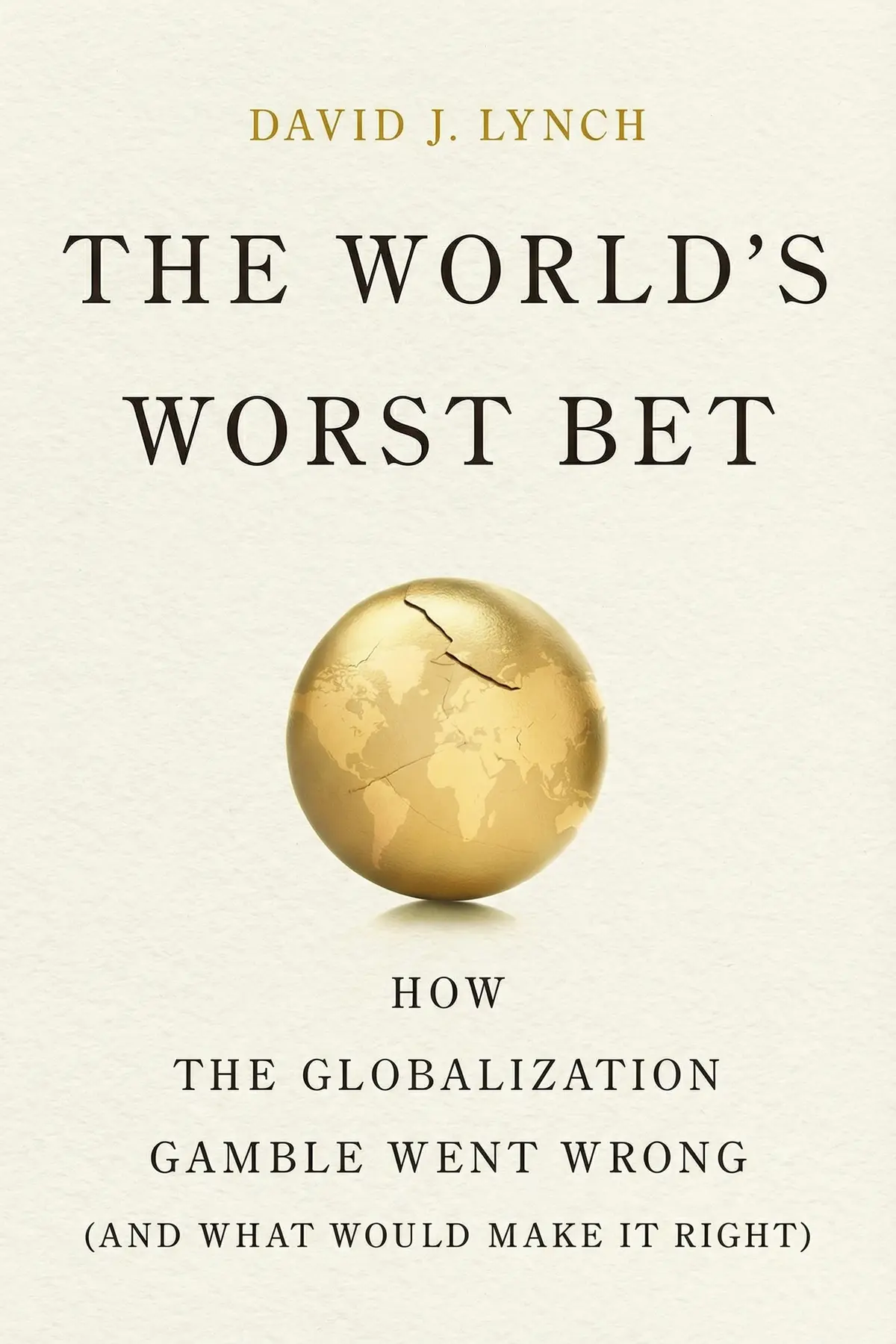
Table of Content
1. Introduction
1 min 45 sec
In the closing years of the twentieth century, the atmosphere in the corridors of power was one of unbridled triumph. The Cold War had ended, the Berlin Wall had fallen, and a new era of ‘hyper-globalization’ was being heralded as the ultimate solution to the world’s problems. The ‘bet’ at the heart of this movement was straightforward: if we could connect every nation through a seamless web of trade and finance, we wouldn’t just be creating wealth; we would be exporting democracy and ensuring permanent peace.
Leaders across the political spectrum believed that economic liberalization was an unstoppable force. They thought that once people in authoritarian regimes got a taste of consumer choice and market freedom, they would naturally demand political freedom. This was the grand gamble of our time. But as we look around today, at the fractured political landscapes of the West and the rising tensions between global powers, it is clear that the bet did not pay off as expected. Instead of a unified global village, we find ourselves in a world defined by deep inequality, fragile supply chains, and a resurgence of protectionist walls.
In this exploration of David J. Lynch’s The World’s Worst Bet, we are going to look at the specific moments where this vision went off the rails. We will see how the obsession with efficiency over resilience left us vulnerable, how manufacturing centers became ghost towns while the stock market soared, and why the political backlash we are experiencing today was almost inevitable. This isn’t just a story about numbers and trade deficits; it’s a story about the human cost of a dream that ignored the realities of the people it was supposed to serve.
2. The Democratic Promise of Trade
2 min 49 sec
In the late 1990s, Western leaders believed that open markets would inevitably lead to open societies, transforming former rivals into democratic partners.
3. The Impact of the China Shock
2 min 32 sec
The entry of China into the World Trade Organization triggered a massive shift in global manufacturing that devastated local American economies.
4. A Precarious Financial Interdependence
2 min 44 sec
The 2008 financial crisis revealed how the trade relationship between the U.S. and China had created a dangerous cycle of debt and instability.
5. The Political Rejection of Globalization
2 min 35 sec
Decades of ignored economic grievances eventually boiled over, leading to a dramatic political realignment and the rise of protectionist sentiment.
6. Fragility in the Name of Efficiency
2 min 30 sec
The drive for ‘just-in-time’ logistics created a highly efficient global machine that proved to be dangerously brittle when faced with a crisis.
7. The Complicated Reality of the Tariff Game
2 min 37 sec
Tariffs have become the go-to tool for modern trade policy, but they are often a blunt instrument with unintended consequences and high costs.
8. Designing a Better Social Contract
2 min 29 sec
The path forward requires more than just trade barriers; it demands a fundamental reinvestment in workers and local communities to build true resilience.
9. Conclusion
1 min 47 sec
In the end, David J. Lynch’s The World’s Worst Bet is a sobering reminder that economic policy is never just about numbers on a spreadsheet; it is about the lives and dignity of real people. The grand experiment of the late twentieth century—the belief that unfettered global trade would inevitably bring about a democratic and peaceful world—was a wager that ignored the complexities of human nature and the necessity of domestic stability. We have seen how the ‘China shock’ hollowed out communities and how the drive for efficiency left us vulnerable to global crises.
But the lesson here isn’t that we should completely withdraw from the world. We live in a deeply interconnected age where isolation is impossible. Instead, the takeaway is that globalization requires a much stronger social contract. We must invest in our own people and our own communities with the same fervor that we once used to pursue new markets. This means building resilient supply chains, strengthening labor standards, and ensuring that those who lose out in the process of economic change are not simply discarded.
As we move into a future shaped by artificial intelligence and shifting geopolitics, we have a chance to get the bet right this time. We can choose to build an economy that prioritizes the stability of the middle class and the health of our local communities. By acknowledging the mistakes of the past, we can move toward a more balanced form of global engagement—one that values resilience over mere efficiency and people over pure profit. The era of the ‘blind gamble’ is over; it is time for a strategy rooted in reality and responsibility.
About this book
What is this book about?
The World's Worst Bet takes a critical look at the geopolitical and economic wager made by Western leaders at the end of the twentieth century. The premise was simple: by inviting nations like Russia and China into the global trading system, the world would not only become more prosperous but also more democratic and stable. This book examines how that vision collided with a much harsher reality. Through investigative reporting and economic analysis, David J. Lynch details the 'China shock' that hollowed out American manufacturing towns, the financial imbalances that fueled the 2008 crisis, and the recent supply chain collapses that exposed the dangers of 'just-in-time' logistics. It explores why the promised safety nets for displaced workers never materialized and how this neglect fueled the fire of modern populism. Ultimately, the book serves as both a post-mortem of a failed era and a guide for building a more resilient, labor-focused economic future.
Book Information
About the Author
David J. Lynch
David J. Lynch is the global economics correspondent for The Washington Post, where he covers trade, globalization, and their impacts on economies and workers. Before joining the Post, he reported for the Financial Times, Bloomberg News, and USA Today, and has worked from more than sixty countries. In 2021, he received the National Press Foundation’s Hinrich Award for distinguished reporting on trade.
Ratings & Reviews
Ratings at a glance
What people think
Listeners find that perspectives differ on whether the author incorrectly treats trade as a catch-all excuse for internal problems like housing and education; however, they generally praise the work for being a captivating and deeply informed study of globalization’s consequences. Furthermore, they value the thorough look at the "China shock" and its devastation of American manufacturing hubs, with one listener observing that the narrative "removes any excuse" for officials to repeat previous errors. They also highlight the pertinent warnings about how artificial intelligence will affect the future and the author's compelling case for establishing more robust supply chains. Additionally, listeners appreciate the sophisticated analysis of the political pushback and "economic nationalism" that have redefined the contemporary world.
Top reviews
Tee
Lynch delivers a chilling autopsy of the American dream’s outsourcing. His exploration of the 'China shock' isn't just dry statistics; it's a visceral look at how factory towns in places like North Carolina were essentially sacrificed for cheaper consumer goods. I was particularly struck by the detailed timeline of the 1990s, where leaders like Clinton assumed economic ties would force political liberalization in Beijing. It turns out that bet was a massive miscalculation. The prose is fast-paced and authoritative, making a complex subject like global macroeconomics feel like a high-stakes thriller. It removes any excuse for modern policymakers to claim they didn’t see the fallout coming. Truly a mandatory read for 2025.
Show moreJonathan
Walking through a ghost town in the Rust Belt makes a lot more sense after reading Lynch’s brilliant breakdown of the last thirty years. This isn't just about jobs leaving; it’s about a total breakdown in trust between the people and the elites who promised that everyone would win. The author does a fantastic job explaining why 'efficiency' became a trap that left us vulnerable during the pandemic. Seeing how fragile our supply chains became was a wake-up call, and this book connects those dots perfectly. I loved the emphasis on resilience over raw profit. It’s a sobering, emotional, and ultimately necessary look at why America feels so divided right now. Best book I've read on the subject so far.
Show moreRome
The transition from the blind optimism of the late 90s to our current era of 'economic nationalism' is mapped out with impressive clarity here. David Lynch manages to weave together the collapse of manufacturing with the rise of modern populism without sounding like a partisan hack. Personally, the most terrifying section was the final third regarding artificial intelligence. If we thought the shift to global markets was a shock to the system, the upcoming AI wave looks set to be an absolute tsunami for both blue-collar and white-collar workers. My only minor gripe is that the middle sections on Treasury debt felt a bit repetitive, but the overall message about building more resilient supply chains is impossible to ignore.
Show moreOksana
It’s rare to find an economics book that reads this smoothly. David J. Lynch traces the arc of globalization from its triumphant peak at the end of the Cold War to the fractured, protectionist world we inhabit today. The book highlights how the 'bet' wasn't just on trade, but on the idea that commerce would naturally lead to democracy—a theory that Xi Jinping’s reign has thoroughly dismantled. I appreciated the specific focus on how the lack of strong safety nets led to the political backlash of 2016. Lynch makes a persuasive case that if we don’t fix our retraining programs now, the next technological shift will be even more devastating. The analysis of 'FLOW' and Biden-era industrial policy was also quite enlightening.
Show moreNiramai
The history presented here is a masterclass in how good intentions can lead to disastrous outcomes. Lynch revisits the 1997 G7 summit and the push for WTO entry with the benefit of hindsight, showing how dogma replaced data in Washington. The writing style is punchy and direct, avoiding the dry academic tone usually associated with these topics. I was especially impressed by the section on how Chinese imports flooded the market while American exports remained stagnant—the 'one-way street' of globalization. My only criticism is that I wish there was more discussion on how European countries handled these same shocks differently. Still, it’s a very persuasive call for a more humane economic order and better wage insurance for displaced workers.
Show morePlernpiriya
If the pandemic taught us anything, it’s that being 'lean' is dangerous when the world stops turning. Lynch uses the COVID-19 crisis as a perfect proof of concept for his thesis that our faith in open markets went too far. The way he describes the clogging of ports and the microchip shortage makes the abstract concept of globalization feel very real and very local. It's a gripping story, even if you don't agree with all of his solutions regarding higher corporate taxes. The book successfully argues that the 'World's Worst Bet' wasn't just about trade—it was about neglecting the human element of the economy. A very timely warning as we head into the era of AI-driven automation.
Show moreIsabella
The central thesis is that we traded our long-term stability for short-term cheap goods, and the bill has finally come due. David Lynch’s analysis of the political fallout—the way both the Tea Party and Occupy Wall Street grew from the same root of unfairness—is particularly insightful. He doesn't just blame one party; he shows how the consensus for free trade was a bipartisan project that ignored the warning signs for decades. The book is well-researched and provides a great look at the 'China shock' without getting bogged down in too much jargon. I appreciated the specific examples of how tariffs often fail to bring back the exact same jobs they try to protect. A nuanced, necessary read.
Show moreNikolai
While the writing is undeniably gripping and well-researched, I have to be fair and mention that Lynch occasionally uses trade agreements as a convenient scapegoat. He spends a lot of time on the hollowing out of industrial hubs, but glosses over domestic failures in education and housing that contributed just as much to the current malaise. To be honest, blaming the WTO for everything feels like an oversimplification of a much larger rot in our governing institutions. That said, the chapter on the 2008 financial crisis and how China effectively became America's landlord was eye-opening. It’s a solid 3-star read that offers a lot of history but maybe not the full picture of why inequality is soaring.
Show moreChee
Finally got around to finishing this, and I have mixed feelings. On one hand, the stories of towns like Greenville, South Carolina, are fascinating and offer a glimmer of hope for how communities can reinvent themselves after an industry dies. On the other hand, the book is incredibly dense and focused almost exclusively on the US-China dynamic, which makes it feel a bit narrow at times. Not gonna lie, I found myself skimming the technical bits about supply chain logistics and port congestion. It’s a deeply researched analysis, but it lacks the human-interest angles that might make it accessible to a casual reader. Good for policy wonks, maybe a bit much for the average person looking for a quick summary.
Show moreStella
I found this book to be a bit of a letdown because it focuses so heavily on the negative disruptions without acknowledging the massive drop in global poverty that trade facilitated. To be fair, the 'China shock' was real for many Americans, but Lynch treats it like an avoidable tragedy rather than a complex trade-off. He also seems quite pessimistic about the future of AI, painting it as a looming monster rather than a tool for growth. Frankly, the narrative feels designed to cater to the current trend of protectionism rather than offering a truly balanced economic perspective. If you're looking for an objective look at comparative advantage, you won't find it here; this is more of a political autopsy than an economic study.
Show moreReaders also enjoyed
Abolish Rent: How Tenants Can End the Housing Crisis
Tracy Rosenthal
Abortion: Our Bodies, Their Lies, and the Truths We Use to
Jessica Valenti
21 Lessons for the 21st Century
Yuval Noah Harari
Age of Anger: A History of the Present
Pankaj Mishra
A Different Kind of Power: A Memoir
Jacinda Ardern
Age of Propaganda: The Everyday Use and Abuse of Persuasion
Anthony Pratkanis
1929: Inside the Greatest Crash in Wall Street History--and How It
Andrew Ross Sorkin
AUDIO SUMMARY AVAILABLE
Listen to The World’s Worst Bet in 15 minutes
Get the key ideas from The World’s Worst Bet by David J. Lynch, plus 5,000+ more titles in English and Thai.
- 5,000+ titles
- Listen as much as you want
- 7-day free trial
- Cancel anytime







