

18 min 59 sec
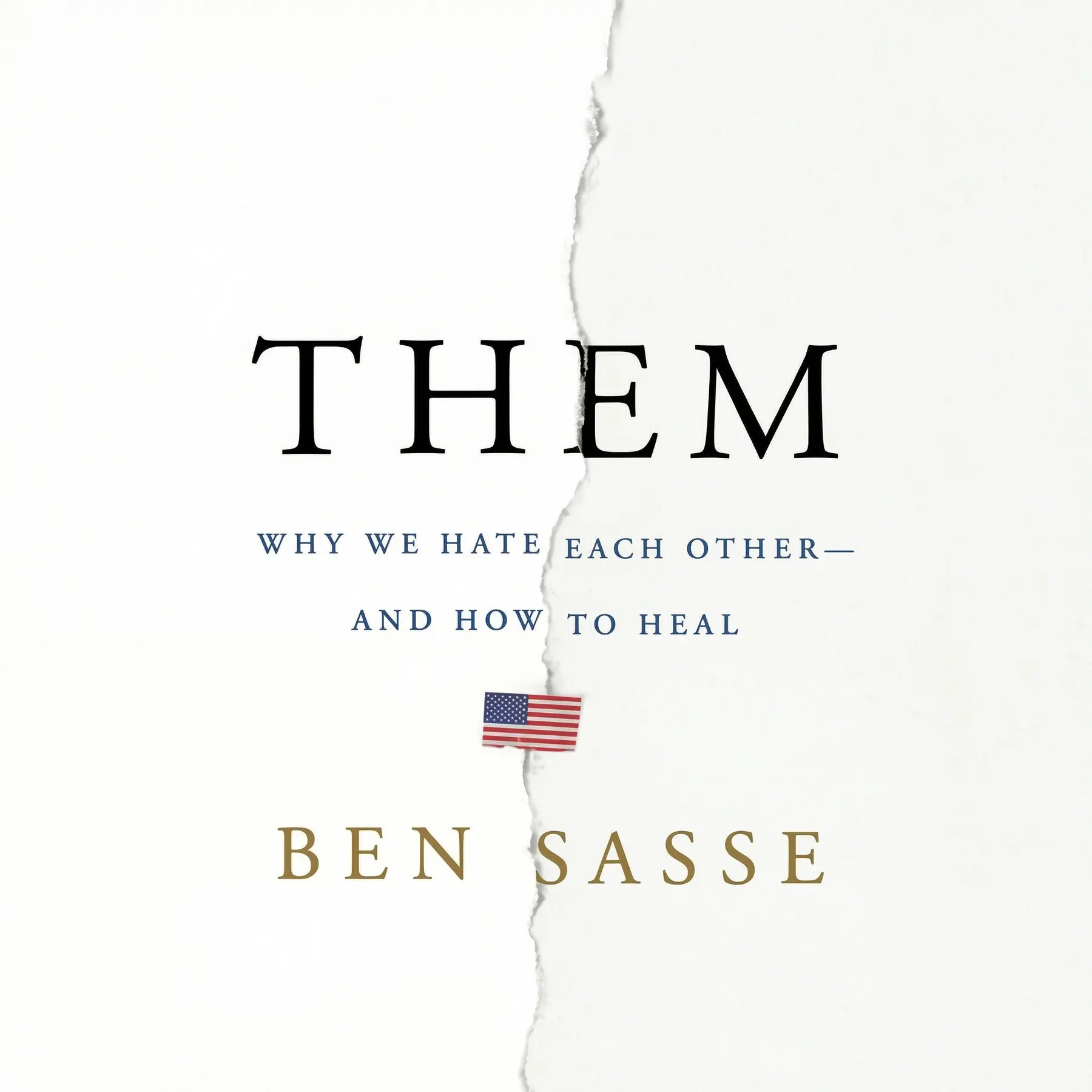
Them: Why We Hate Each Other – and How to Heal
By Ben Sasse
Ben Sasse explores the decline of American community and the rise of tribalism. He offers a roadmap for moving past political polarization by rebuilding local bonds and practicing civic virtue.
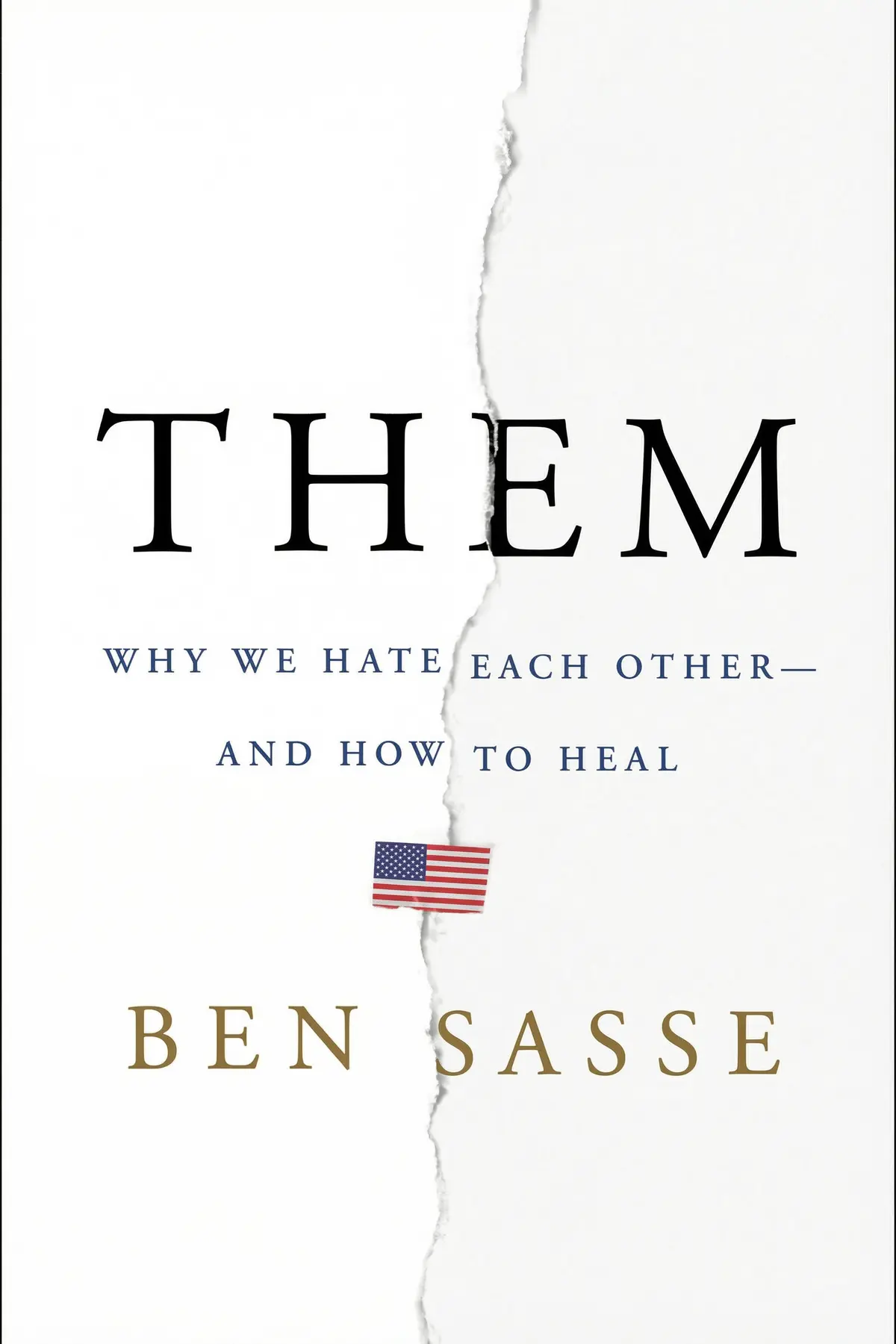
Table of Content
1. Introduction
1 min 47 sec
In our current era, it often feels like the United States is less of a unified nation and more of a collection of warring factions. We see it on our screens, hear it in our news cycles, and feel it in the tense silence at family dinner tables. The prevailing sentiment is a stark “us versus them,” where those across the political aisle aren’t just seen as neighbors with different ideas, but as existential threats to the American way of life. We are living in a time of profound polarization, yet if we look beneath the surface of our political rage, we find something much quieter and more haunting: a deep, pervasive sense of loneliness.
This disconnection isn’t just a political problem; it’s a social and biological crisis. As the institutions that once held us together—stable workplaces, local civic groups, and tight-knit neighborhoods—begin to fray, we are left searching for a sense of belonging. Too often, we find a hollow substitute for that belonging in the adrenaline of partisan conflict. We trade real-world community for digital tribes, and in the process, we lose our ability to see each other as human beings.
In the following discussion, we are going to explore why this breakdown of community occurred and how it has left us vulnerable to the lure of tribalism. We will examine how the modern media landscape thrives on our anger, how the changing nature of work is isolating us, and why the institutions of higher learning are often failing to teach the very skills of civil debate that a democracy requires. Most importantly, we will look at how we can begin to heal. The path forward isn’t about winning a political argument; it’s about rebuilding the social fabric of our lives, one relationship at a time. Let’s dive into the core shifts that have brought us to this point and what it will take to move toward a more tolerant, truthful, and connected society.
2. The Lethality of Loneliness
2 min 31 sec
Loneliness is far more than a fleeting emotion; it is a profound health risk that can physically damage the brain and body, especially for those lacking social anchors.
3. The Eroding Social Fabric of Work
2 min 21 sec
The shift from long-term careers to a high-churn freelance economy is dissolving the shared identity that once defined the American workforce.
4. Automation and the Threat to Local Stability
2 min 04 sec
Emerging technologies like self-driving vehicles could dismantle the primary employment source for millions, potentially triggering a wider social collapse.
5. The Trap of 24-Hour Polititainment
2 min 18 sec
Modern media prioritizes entertainment over depth, creating a shallow information environment that fuels confusion and polarization instead of civic understanding.
6. Nutpicking and the Construction of Enemies
2 min 10 sec
Media pundits often exploit the psychological need for order by highlighting extreme outliers to paint entire groups as dangerous enemies.
7. The Crisis of Intolerance in Higher Education
2 min 10 sec
Universities, once bastions of open debate, are increasingly fostering environments of self-segregation and the suppression of challenging viewpoints.
8. Rebuilding the National Team
2 min 06 sec
Healing the national divide requires a return to personal civility, a commitment to truth, and the prioritization of local relationships over political tribalism.
9. Conclusion
1 min 32 sec
As we have seen, the tribalism that currently plagues American life is not just a political phenomenon; it is a symptom of a deeper social isolation. We are a nation of people who are lonelier and more disconnected than ever before. This lack of community makes us vulnerable to the siren song of partisan rage, which offers a false sense of belonging through the hatred of a common enemy. The media, the changing economy, and even our educational institutions have all played a role in pushing us toward this polarized state.
But the story doesn’t have to end here. The way out of this “us versus them” trap is a return to the human scale. It begins with the recognition that our neighbors are not our enemies, but fellow travelers in a complex world. We can choose to turn off the “polititainment” that thrives on our anger. We can choose to seek out in-depth information rather than shallow slogans. And we can choose to do the hard, rewarding work of building real-world communities—investing in our families, our neighborhoods, and our local civic organizations.
Healing the divide requires us to develop the muscles of civility and empathy once again. It means being brave enough to listen to someone we disagree with and honest enough to hold our own leaders accountable. By shifting our focus from the national screen to the local scene, we can start to repair the social fabric that has been torn. We are all on the same team, and it is only by reclaiming our sense of shared identity and mutual respect that we can ensure a prosperous and unified future for everyone.
About this book
What is this book about?
Them: Why We Hate Each Other – and How to Heal examines the current state of American society, where deep-seated loneliness and the collapse of local institutions have led to extreme political division. Senator Ben Sasse argues that as our traditional social anchors—like stable jobs, neighborhood ties, and shared religious or civic spaces—disappear, we are increasingly turning to toxic tribalism and "polititainment" to fill the void. The book promises to explain why we feel so disconnected and how the media and technology exploit our insecurities to make us view our neighbors as enemies. Sasse doesn't just diagnose the problem; he provides a vision for restoration. By focusing on the "middle layers" of society, such as family and local community, and by returning to a culture of civil disagreement, he suggests that Americans can move toward a more unified and empathetic future. It is a call to prioritize human relationships over digital outrage and to find common ground in a fractured age.
Book Information
About the Author
Ben Sasse
Ben Sasse is a former United States senator from Nebraska and a member of the Republican party. He holds a Ph.D. in American history from Yale University.
Ratings & Reviews
Ratings at a glance
What people think
Listeners find the text accessible and thoroughly researched, appreciating the way it fosters an understanding of diverse perspectives and emphasizes community bonds over political policy. Additionally, the writing is considered stimulating and polished, with one listener noting that it is liberally infused with thought-provoking quotations. Listeners also characterize the work as significant and absorbing, with one review labeling it an "Oasis of Sanity Inside Political Craziness." However, reactions to the pacing are divided, as some find the flow reasonably well-executed while others express disappointment.
Top reviews
Sin
Finally got around to reading Sasse's take on the national divide, and it’s a breath of fresh air. While he’s clearly a conservative, his main beef isn’t with the left; it’s with how we’ve replaced real community with 'politatainment' and digital echo chambers. He argues that our obsession with national politics is actually a symptom of our deep-seated loneliness. I found his prose easy to read and peppered with insightful historical context. Frankly, it’s refreshing to hear a politician admit that the government isn’t the solution to our fractured social lives. We need to turn off the screens and actually talk to our neighbors again. If you're tired of the constant outrage on Twitter, this book offers a much-needed perspective on how to be 'rooted' in a world that feels increasingly unmoored. Highly recommended for anyone looking to escape the cycle of anger.
Show moreDuangjai
As someone who feels politically homeless, I found Sasse's 'Them' to be an oasis of sanity amidst the usual partisan noise. He shifts the focus from policy debates to the fundamental human need for connection. The truth is, we are more isolated than ever, and Sasse correctly identifies how tech has exacerbated this. He doesn't offer a ten-point legislative plan, which might frustrate some, but that’s exactly the point. The healing has to happen at the dinner table, not the ballot box. I loved the emphasis on 'tribes' versus 'anti-tribes.' It made me realize how much of my own identity was built on what I hate rather than what I love. This is an important, engaging book for anyone worried about the future of the American soul.
Show moreLaor
Wow. Not what I expected from a politician. This isn't a stump speech; it's a deep, emotional dive into why we're all so miserable. Sasse identifies the opioid crisis and rising suicide rates as symptoms of a 'rootlessness' that technology only makes worse. We’ve traded real-life interaction for digital outrage, and it’s killing us. The prose is beautiful and the sentiment is sincere. I finished this feeling like I needed to go outside and apologize to my mailman for not knowing his name. It's a call to action that starts in your own backyard. Truly a convicting read.
Show moreGame
The chapter on the 'loneliness epidemic' alone is worth the price of admission. Sasse connects the dots between our digital lives and our declining mental health in a way that feels urgent. He isn't just complaining about 'kids these days' and their phones; he’s looking at how the very fabric of our society is tearing. His writing style is accessible yet sophisticated. I appreciated how he balanced data with personal anecdotes from his time in Nebraska. It’s an engaging read that doesn't feel like a typical political memoir. It made me rethink my own social media habits and the way I spend my free time. If you want to understand the 'why' behind the headlines, start here.
Show moreJack
Sasse manages to be irenic and hopeful without being naive. As a Calvinist, he understands that we are all 'fallen,' and his solutions reflect that reality. He doesn't expect a utopia; he just wants us to be more human. The focus on people and place rather than screens is a message we all need to hear. It’s a short, punchy book that packs a heavy punch. Parents, especially, will find his insights on raising children in a tech-addled world very useful. He isn't just a politician; he’s a thinker. This is his best work yet.
Show moreRatchada
This book acts as a mirror for our current social landscape, reflecting the 'pillow forts' of information we’ve built around ourselves. Sasse is a talented writer, and his research on the breakdown of local institutions is genuinely compelling. He makes a strong case that our anger toward the 'other side' is just a mask for the fact that we don't know our own neighbors anymore. However, the pacing is a bit uneven, and some chapters feel like they repeat the same point about technology a few too many times. To be fair, he offers a level-headedness that is rare in D.C. these days. It is a thought-provoking read that challenged me to put down my phone and engage with my community. Even if you don't agree with his policy stances, his cultural observations are hard to ignore.
Show moreSukit
To be fair, Sasse is a Republican, so expect some conservative framing, but the core message transcends party lines. He nails the description of 'anti-tribes'—groups defined solely by who they hate. Personally, I found his critique of both Fox and MSNBC to be spot on, as both sides profit from keeping us perpetually angry and fearful. The book is liberally infused with thought-provoking quotations that keep you turning pages. It’s a reasonably well-executed look at sociology through a political lens. My only gripe is that he occasionally overlooks how historical structures have intentionally dismantled community for certain groups. Still, his plea for us to rediscover our 'common tribe' as Americans is incredibly timely. This should be required reading.
Show moreArthit
Picked this up for a book club and was surprised by how much I agreed with, despite my liberal leanings. Sasse is clearly 'right of center,' but his sincerity is undeniable. He’s one of the few national figures trying to bridge the gap without being a total pushover. I found his discussion of 'politatainment' particularly stinging—we really do treat politics like a team sport for entertainment. Not gonna lie, some of his views on religious freedom felt a bit one-sided, but I appreciated his willingness to engage with the 'other' side. The book is well-researched and avoids the typical mud-flinging you see on cable news. It’s a rare moment of sanity in a very loud world.
Show moreSamart
Ever wonder why a sitting Senator would write a book that basically says politics can't save us? Sasse’s premise is fascinating, but his 'college president' background occasionally makes the tone feel a bit detached from the struggles of everyday working people. He talks about mobility as a choice, but for many in rural America, moving every four years isn't a luxury—it’s a desperate necessity for work. While he defines the 'loneliness epidemic' well, his solutions can feel a bit like preaching from an ivory tower. Look, he’s a brilliant guy and the book is well-written, but I’m not sure his 'middle-place' approach accounts for the raw vitriol many people face daily. It’s a good intellectual exercise, but it lacks the grit of lived experience. Worth a read for the historical analysis, though.
Show moreEmily
I wanted to like this, but it felt like a lecture from an elite who doesn't understand why people are actually angry. Sasse spends a lot of time redefining abstracts to fit his own pre-boxed interpretations of reality. He claims nobody watches the 'other side’s' media, but that’s just not true for those of us in rural areas where CNN is the only thing on in every waiting room. His 'nice-nice' approach to compromise feels like a retreat from core principles. Honestly, it’s short, which is the best thing I can say about it. He avoids the real policy lies that have hurt people for the last decade. It’s a lot of sociology and very little substance for someone living in the trenches of the current economy. Very disappointing.
Show moreReaders also enjoyed
A Promised Land
Barack Obama
A River in Darkness: One Man’s Escape from North Korea
Masaji Ishikawa
A Theory of Justice
John Rawls


A Warning
Miles Taylor

A Biography of Loneliness: The History of an Emotion
Fay Bound Alberti
AUDIO SUMMARY AVAILABLE
Listen to Them in 15 minutes
Get the key ideas from Them by Ben Sasse, plus 5,000+ more titles in English and Thai.
- 5,000+ titles
- Listen as much as you want
- 7-day free trial
- Cancel anytime







