
20 min 21 sec
Then I Am Myself the World: What Consciousness Is and How to Expand It
Explore the scientific and philosophical depths of human awareness. This guide examines how our brains construct reality and how we can transcend individual limitations through transformative experiences and mental shifts.
Table of Content
1. Introduction
1 min 45 sec
Have you ever stopped to consider the sheer miracle of your own awareness? Every morning, when you transition from the nothingness of sleep to the vibrant world of your waking life, something incredible happens. Lights, sounds, and thoughts flood back into your mind. This is the mystery of consciousness—the internal theater where your life is staged. But here is the catch: the theater you inhabit is entirely unique to you.
In this exploration of Christof Koch’s work, Then I Am Myself the World, we dive into the scientific and philosophical quest to understand what consciousness actually is. We often take for granted that the world we see is the ‘real’ world, but as we will see, our brains are not passive cameras recording reality. They are active creators, weaving a tapestry of experience that belongs to us alone.
Throughout this journey, we will explore the different facets of our conscious lives, from the basic signals sent by our bodies to the profound heights of spiritual and chemical transformation. We will look at why two people can look at the same object and see something fundamentally different, and how our internal expectations can actually change our physical health.
Most importantly, we are going to look at the boundaries of what Koch calls our ‘Perception Box.’ We are all, in a sense, trapped within the limits of our own neurobiology. However, these limits are not set in stone. By understanding the mechanisms of the mind, we can find ways to stretch those walls, inviting in a broader, more compassionate, and more profound experience of existence. This isn’t just a lesson in neuroscience; it is a guide to expanding your own world.
2. Defining the Conscious Experience
3 min 03 sec
What does it actually feel like to be alive? Explore the many layers of awareness, from sensory input to the deep emotional states that define our existence.
3. The Subjective Nature of Reality
2 min 55 sec
Discover why the world you see is not necessarily the world as it exists, and how our brains construct unique realities for each of us.
4. The Power of Perspective and Neuroplasticity
2 min 50 sec
Your mind isn’t just a passive observer; it has the power to shape your physical health and your response to the world around you.
5. Escaping the Self Through Flow and Awe
2 min 48 sec
The ‘I’ in your head can be a heavy burden. Learn how moments of total absorption and profound awe can provide a necessary escape from the ego.
6. The Science and Mystery of Peak States
2 min 47 sec
From near-death encounters to psychedelic journeys, look at the extreme experiences that can permanently alter our understanding of life and death.
7. A Path Toward Expansion
2 min 41 sec
You don’t need a radical event to grow. Explore how curiosity, compassion, and small daily practices can help you stretch the limits of your world.
8. Conclusion
1 min 32 sec
As we reach the end of this journey through the landscape of the mind, it becomes clear that consciousness is both our most intimate possession and our greatest mystery. We have seen how our brains construct a unique reality for each of us—a ‘Perception Box’ that defines everything we see, hear, and feel. We’ve learned that this box is not a prison, but a flexible structure that we have the power to influence through our attitudes, our focus, and our willingness to seek out transformative experiences.
From the simple realization that our senses are subjective to the profound peace found in states of ego-dissolution, the throughline is one of potential. We are not merely passive observers of a fixed world; we are active participants in the creation of our own experience. Whether through the awe of nature, the focus of a flow state, or the clinical application of psychedelics, the tools for expansion are within our reach.
The ultimate takeaway is an invitation to curiosity. By acknowledging that our own perspective is just one of billions, we can cultivate a deeper sense of compassion for others and a greater sense of wonder for the world. You don’t need a peak experience to start this process. You can start today by simply noticing the richness of your own awareness and challenging the assumptions of your own mind. Expand your box, look beyond the self, and discover that you are not just in the world—in many ways, you are the world.
About this book
What is this book about?
Have you ever wondered if the colors you see are the same ones others perceive? This exploration into the mystery of consciousness reveals that our reality is far more subjective than we realize. Drawing on the insights of neurophysiologist Christof Koch, the text delves into the biological foundations of experience, from the simple data of our five senses to the complex layers of self-awareness and emotion. The narrative moves beyond mere biology to explore the concept of the Perception Box—the invisible boundaries created by our brains that dictate our personal reality. It offers a hopeful look at how we can expand these boundaries through intentionality, neuroplasticity, and peak experiences. Whether through the lens of spiritual awe, the clinical potential of psychedelics, or the resilience of the human spirit in the face of adversity, the promise of this work is a deeper understanding of what it means to be alive and how to enrich our subjective journey through the world.
Book Information
About the Author
Christof Koch
Christof Koch is a distinguished neurophysiologist who has dedicated his career to the study of consciousness. He previously served as a professor at the California Institute of Technology and held leadership roles as the president and chief scientist of the Allen Institute for Brain Science. He has authored several influential books on the mind.
Ratings & Reviews
Ratings at a glance
What people think
Listeners find the book to be a marvelous experience and value the objective way it defines consciousness. Perspectives on the level of detail are divided; one listener praises the work for being thorough while another feels it is vague. The quality of the writing and overall clarity also draw varied reactions, as one listener describes chapters 4 and 5 as exceptionally clear, but another suggests the style makes for an awkward listen.
Top reviews
Araya
This book provides a panoramic view of what it means to be a sentient being in a rapidly changing world. Koch moves effortlessly from the cold mechanics of neurobiology to the transcendental heights of mystical experiences, all while keeping a firm grip on his Integrated Information Theory. I particularly enjoyed the chapters on how AI might—or likely won’t—achieve true consciousness based on current hardware architectures. While he does get a bit technical when explaining 'causal power,' the payoff is a much deeper understanding of the gap between simulation and reality. To be fair, some sections feel a bit speculative, especially regarding near-death experiences, but the intellectual ride is worth the price of admission. It's rare to find a scientist who is willing to be this vulnerable about their own personal experiments with altered states while maintaining a rigorous framework.
Show moreBo
Ever wonder if your laptop could actually feel something? Koch tackles this question head-on, arguing that consciousness isn't just about clever software but about the actual physical architecture of the system. His explanation of why modern computers can't be conscious was the highlight of the book for me. He makes a strong case for neuromorphic or quantum computing being the only path forward for artificial sentience. The blend of personal anecdotes and rigorous theory creates a unique reading experience that feels more like a journey than a textbook. Look, it’s a difficult subject, and you might have to read some paragraphs twice, but the insights into the nature of the self are profound.
Show morePete
Picked this up on a whim and was blown away by the section on psychedelics and how they interact with the brain's 'default mode network.' Koch manages to be both a rigorous scientist and a curious explorer of the human condition. Unlike many other books on this topic, he doesn't shy away from the 'mystical' side of things, even if he remains grounded in biology. The way he describes the feeling of the self dissolving into the world is beautiful and fits perfectly with the title. Even the difficult Chapter 5 eventually makes sense if you take it slow. This is a must-read for anyone interested in the future of AI or the hidden depths of their own mind.
Show moreGrace
Finally, a book that tackles consciousness without drowning in purely academic jargon or falling into 'woo-woo' territory. Koch has a gift for making neurobiology feel accessible, even when discussing things as complex as the neural correlates of perception. I found his arguments against the possibility of conscious AI on current hardware to be incredibly timely and well-reasoned. The book feels deeply personal, especially when he discusses the concept of 'myself the world' and the blurring of boundaries during deep meditation or psychedelic states. It’s a dense read at times, but it leaves the reader feeling enlightened rather than just informed. This is easily one of the most significant books on the mind to come out in years.
Show moreThanit
After hearing Koch speak on a podcast, I was curious to see how he’d bridge the gap between hard science and subjective experience. He mostly succeeds, offering a compelling look at the neural correlates of consciousness and the potential of hallucinogens to expand our mental horizons. The writing style is energetic, almost breathless at times, which makes the pages fly by even when the subject matter is heavy. I did find the repetitive mentions of his new employer's 'visionary' status a bit odd and distracting from the actual science. However, his take on free will—standing in stark contrast to other recent neuroscientific publications—was a breath of fresh air. It’s a provocative read that isn’t afraid to ruffle some feathers in the academic community.
Show moreDavid
As a long-time follower of IIT, I found this update both refreshing and slightly frustrating. Koch has matured his views on the 'internet consciousness' idea, now leaning more toward a materialist view that prioritizes biological brains. The book is light on actual trip reports, which I actually preferred, focusing instead on the neuroplasticity and molecular changes induced by LSD. I did notice a strange error regarding the plot of the novel 'Siddhartha,' which made me wonder what else might have been glossed over in the editing process. Still, the core argument regarding causal power and the irreducible nature of experience remains the most compelling theory we have. It’s a solid addition to the literature on the 'hard problem' of consciousness.
Show moreTun
To be fair, Koch warns you that things are going to get dense before you hit the middle of the book. He isn't lying; the technical details of Integrated Information Theory are a massive hurdle for the casual reader. However, if you push through, the surrounding chapters offer a wonderful perspective on everything from the pandemic's effect on our collective psyche to the limits of generative AI. I appreciated how he balanced his own strong adherence to IIT with a fair airing of competing theories like Global Neuronal Workspace. The tone is mostly unbiased, though his enthusiasm for certain 'visionary' figures in his life felt a bit out of place. Overall, a very informative and thought-provoking read that challenges your assumptions.
Show moreAkira
Why does Chapter 5 feel like it was written in a different language compared to the rest of the book? I went from enjoying a fascinating discussion on the history of neurobiology to staring at pages of Integrated Information Theory that left me feeling completely out of my depth. Koch is clearly a genius, but he struggles to translate the most complex parts of his theory for a general audience. Frankly, the book feels a bit disjointed, jumping from heavy math to legal disclaimers about his pandemic-era psychedelic use. I appreciated the critiques of Global Neuronal Workspace Theory, but I wish the tone remained consistent throughout. It’s an informative read if you’re willing to skim the dense parts, but expect some frustration along the way.
Show moreAir
The core ideas here are brilliant, but the execution is a bit messy and lacks the robustness I was hoping for. Koch is a fantastic thinker, but this volume feels more like a collection of essays written during a very strange time in his life. One moment you're learning about the 'The Dress' optical illusion, and the next you're being told that free will is a necessary component of conscious entities. It felt like he was trying to cover too much ground—AI, death, drugs, and philosophy—all in under 300 pages. To be fair, the information on the clinical uses of psilocybin is excellent and well-referenced. I just wish the book had a more cohesive structure rather than feeling like a series of excited updates from the front lines of neuroscience.
Show moreGor
Not what I expected from a leading neuroscientist, to be honest. I found the narrative to be quite scatterbrained, bouncing from COVID-19 reflections to AI doomerism without a clear connective thread. The author spends way too much time justifying his interest in psychedelics, only to follow it up with a dry legal warning that kills the momentum. Then there’s the chapter on IIT, which was essentially unintelligible to anyone without a PhD in mathematics or physics. I felt like I was being lectured by a brilliant friend who had forgotten how to speak to normal people. There are some interesting nuggets about how brain function differs from computer processing, but you have to dig through a lot of fluff to find them.
Show moreReaders also enjoyed
A Liberated Mind: How to Pivot Toward What Matters
Steven C. Hayes

Acting with Power: Why We Are More Powerful Than We Believe
Deborah Gruenfeld
Alien Earths: The New Science of Planet Hunting in the Cosmos
Lisa Kaltenegger
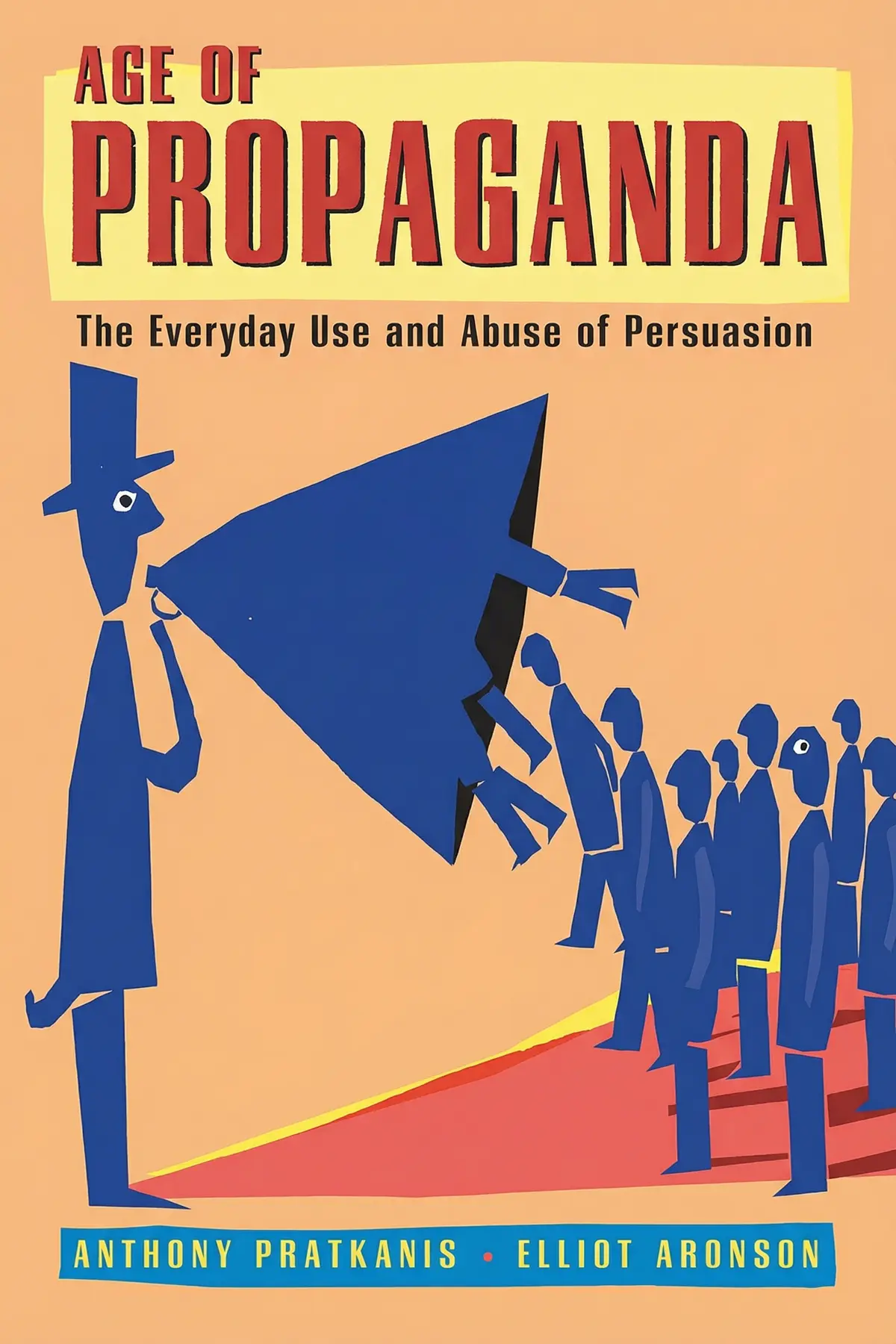
Age of Propaganda: The Everyday Use and Abuse of Persuasion
Anthony Pratkanis
AUDIO SUMMARY AVAILABLE
Listen to Then I Am Myself the World in 15 minutes
Get the key ideas from Then I Am Myself the World by Christof Koch, plus 5,000+ more titles in English and Thai.
- 5,000+ titles
- Listen as much as you want
- 7-day free trial
- Cancel anytime







