
19 min 59 sec
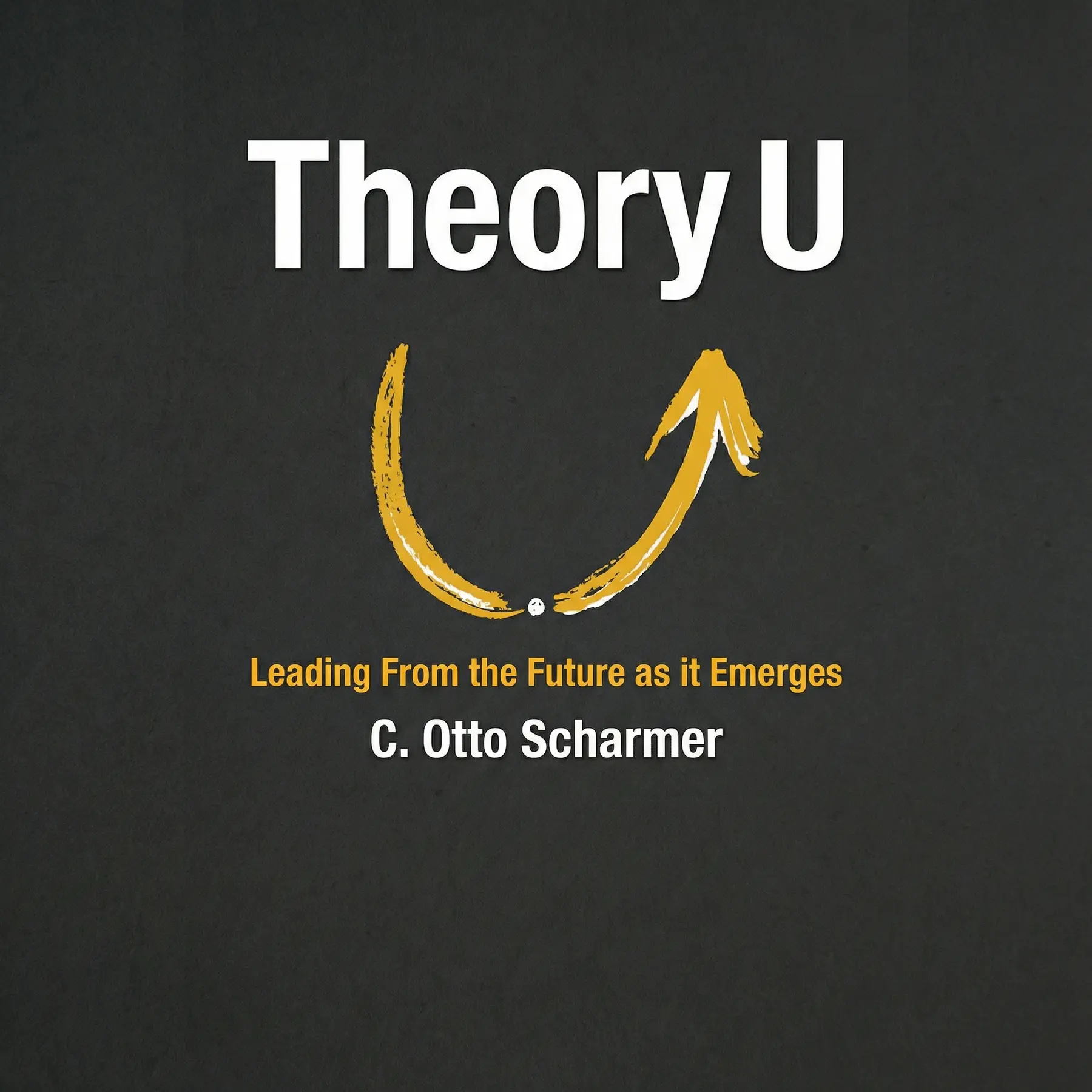
Theory U: Leading From the Future as it Emerges
Theory U offers a revolutionary framework for leadership and innovation. By exploring the deep source of our creativity, we can move beyond past patterns and lead from the future as it emerges.
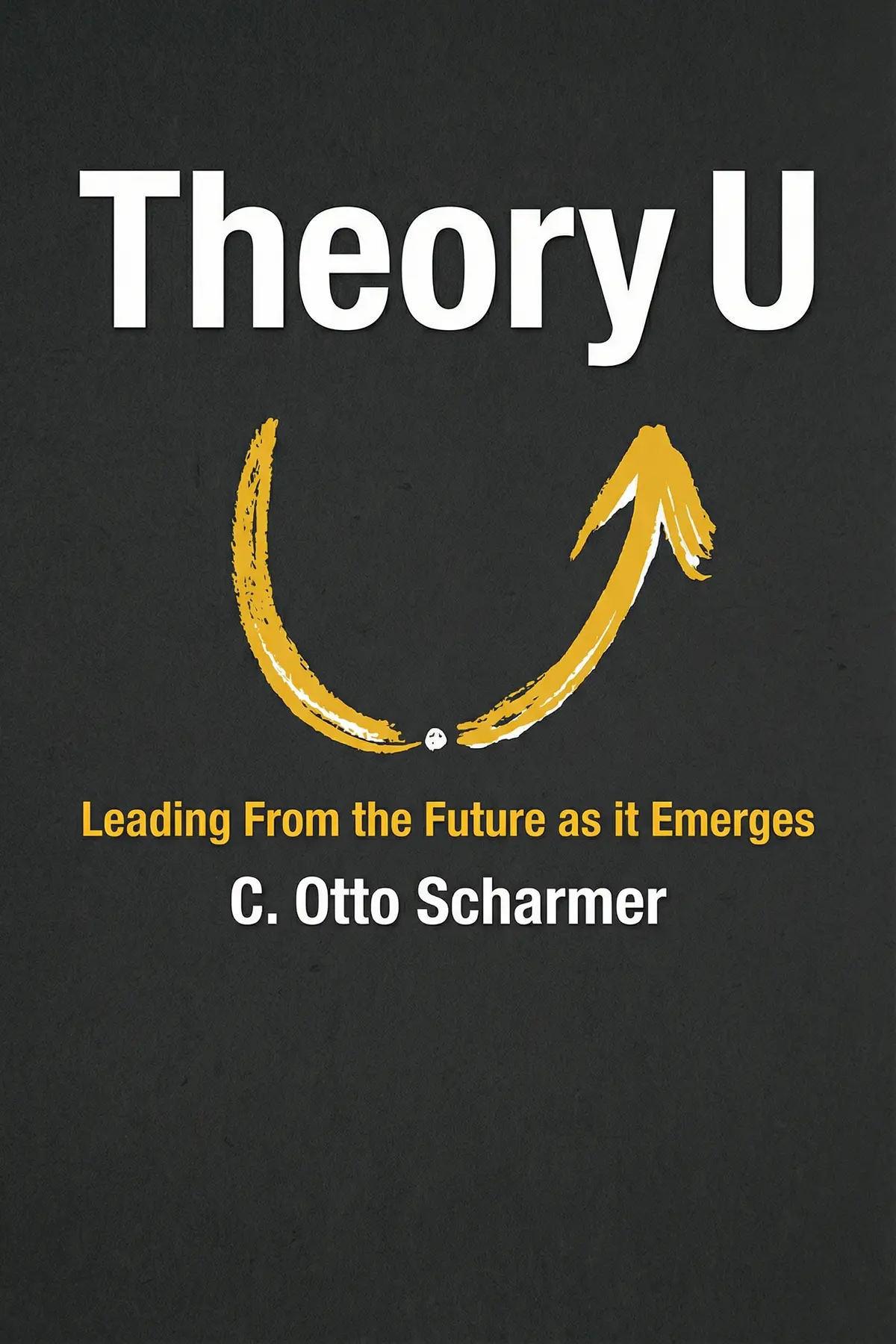
Table of Content
1. Introduction
1 min 41 sec
We live in an era where the old ways of doing things are increasingly proving inadequate. Whether we look at the growing divide between the wealthy and the poor, the environmental toll of industrial agriculture, or the sense of paralysis felt in many global institutions, it is clear that our traditional methods of problem-solving are reaching their limits. Many leaders find themselves in a state of constant reaction, trying to fix the present by looking in the rearview mirror of the past. But what if the solutions to our most pressing issues aren’t found in history? What if they lie in the future—specifically, in our ability to sense and respond to the future that is trying to happen right now?
This is the core premise of Theory U. It’s not just a management theory; it’s a shift in how we inhabit the world and how we process information. It suggests that to meet the challenges of our time, we must learn to lead from the future as it emerges. This requires us to go on a journey, one that takes us beneath the surface of our habitual thoughts and behaviors. We must descend into what the author calls our ‘blind spot’—the deep, often-ignored source of our creativity and intention—and then rise back up with the clarity and energy needed to bring new ideas into being.
In this summary, we will explore the three major societal shifts that have brought us to this turning point. We’ll look at the mechanics of the ‘U-process’ and how it allows us to bridge the gap between our current selves and our highest future potential. We’ll also see how these abstract concepts apply in the real world, from transforming healthcare systems to improving daily productivity. By the end, you’ll have a new framework for understanding change and a set of tools to help you navigate your own professional and personal evolution. Let’s begin the descent.
2. Navigating the Three Great Societal Shifts
2 min 56 sec
Modern society is being reshaped by massive economic, political, and spiritual transformations. Understanding these shifts is the first step toward finding a new way to lead.
3. Identifying the Blind Spot of Leadership
2 min 16 sec
Most leaders focus on what they do or how they do it, but they often ignore the internal source from which their actions spring.
4. The Architecture of the U-Process
2 min 21 sec
The journey to deep innovation follows a specific U-shaped path: moving from the surface of daily life down to the source, and back up to action.
5. The Art of Listening and Empathy
2 min 12 sec
Descending the U requires a radical shift in how we gather information and interact with the world around us.
6. Finding Clarity in Intentional Silence
2 min 04 sec
At the base of the U, silence becomes a tool for connecting with your deepest goals and evaluating what truly matters.
7. Turning Visions into Tangible Realities
2 min 13 sec
Ascending the U is about taking the insights from your source and testing them through clear vision and incremental prototyping.
8. Transformation in Action: A Case Study
2 min 21 sec
The U-process isn’t just for individuals; it can be used to solve complex, systemic problems in large organizations and communities.
9. Conclusion
1 min 55 sec
The journey through the U-process is a journey of transformation. It challenges us to stop running away from the problems of the present and instead to dive deep into them, searching for the source of a better future. As we have seen, this requires more than just new strategies; it requires a new kind of awareness. It asks us to open our minds, hearts, and wills so that we can sense the possibilities that are waiting to be born.
The throughline of Theory U is that our ability to create meaningful change is directly tied to the internal place from which we operate. If we operate from fear, greed, or the patterns of the past, we will simply recreate the same problems in a different form. But if we can learn to access our ‘blind spot’—that deep source of inspiration and intention—we can become the vessels through which a more equitable and sustainable future emerges.
As you move forward, keep two pieces of actionable advice in mind. First, protect your mornings. Before you check your phone or dive into your inbox, find at least ten minutes of silence. Use this time to connect with your source and remember your larger purpose. Let that silence be the foundation for everything that follows. Second, practice ruthless prioritization. Every day, identify the one or two tasks that actually move your highest vision forward, and do those first. Don’t let the ‘urgent’ crowd out the ‘important.’
Leadership is not about having all the answers. It is about having the courage to facilitate a process where the answers can emerge. By following the path of the U, you can lead your life and your organization toward a future that is not just a repeat of the past, but a realization of our highest human potential. The future is not something that happens to us; it is something we can learn to lead from, one conscious moment at a time.
About this book
What is this book about?
In a world characterized by rapid technological change, political instability, and ecological fragility, traditional leadership models often fall short. They tend to rely on historical data and past successes to solve unprecedented problems. Theory U proposes a different path. It suggests that true innovation requires us to access our 'blind spot'—the inner source from which our intentions and actions arise. This book provides a roadmap for shifting our consciousness from a reactive state to one of deep awareness. Through a process called 'presencing,' leaders can learn to sense and actualize the future possibilities that are trying to manifest. By moving through the U-process—descending into deep listening and reflection, then ascending to prototype and implement new ideas—organizations and individuals can create more human-centric, effective, and sustainable solutions for the complex challenges of the twenty-first century. It is a guide for anyone looking to transform their approach to work, life, and collective problem-solving.
Book Information
About the Author
C. Otto Scharmer
C. Otto Scharmer is a highly respected academic and organizational consultant. He serves as a senior lecturer at the Massachusetts Institute of Technology (MIT) and is the chairman of the IDEAS program. Throughout his career, Scharmer has applied his theories in practical settings, collaborating with major global corporations such as Google and Fujitsu, as well as various government institutions, to develop innovative leadership and social transformation programs.
Ratings & Reviews
Ratings at a glance
What people think
Listeners find the work life-changing, with one person highlighting how it facilitates a shift from an ego- to an eco-prospective. Its overall value is praised, as one listener remarks that the book is well worth the time spent.
Top reviews
Pongpan
Wow. This isn't just another leadership manual; it’s a profound shift in how we perceive the world and our role within it. Scharmer challenges the "ego-system" mindset that dominates modern business, guiding us toward a more holistic "eco-system" perspective. The "U" process—moving from downloading past habits to sensing future possibilities—felt deeply intuitive yet revolutionary. While the text is dense and occasionally leans into the esoteric, the core message about our "blind spot" as leaders is indispensable. It took me weeks to process, but I feel my internal operating system has been permanently upgraded. To be fair, you have to be in the right headspace for this kind of work, but the payoff is immense.
Show moreEthan
The concept of 'presencing' alone makes this worth the slog, even for those who usually find systems thinking dry. Scharmer manages to articulate that weird, silent space where innovation actually happens—the moment we stop reacting and start truly listening. It’s rare to find a book that addresses the "inner place" from which a leader operates, rather than just listing external traits or habits. Personally, I found the "four fields of conversation" model to be an immediate game-changer for my facilitation work. Yes, the book is long, and yes, it’s repetitive, but that repetition serves to embed a very difficult, counter-intuitive way of thinking into the reader's mind. It is a masterpiece of modern organizational philosophy that demands to be studied, not just read once.
Show moreLandon
Finally got around to reading this, and it’s a game-changer for anyone working in social impact or complex systems. Scharmer captures the essence of what it means to lead through uncertainty by focusing on our "blind spot"—the quality of our attention. The case studies he shares are genuinely moving and illustrate how these abstract concepts look when applied to real-world crises. I’ll admit, the middle sections on "presencing" can get quite dense and abstract, which might turn off more pragmatically minded readers. But if you stick with it, the "U" process offers a profound way to align your individual purpose with a larger collective need. It’s easily one of the most transformative books on my shelf.
Show moreTee
Scharmer provides a roadmap for our current global crisis by identifying the disconnect between our current systems and our deeper humanity. This book is a massive undertaking that blends philosophy, sociology, and leadership theory into a singular, albeit complex, framework. I was particularly struck by the idea that we are often "victims" of the systems we help create because we operate from an unconscious place. By using the U-process, we can finally start to shape the future rather than just reacting to the chaos of the present. I won't lie, it's a difficult read that feels more like a spiritual journey than a business text. But for those willing to do the work, it offers a vision of hope and practical transformation.
Show moreRay
Picked this up during a career transition, and I must say it helped me re-evaluate my entire sense of agency. The transition from an ego-driven career to an eco-prospective approach is the most valuable takeaway for me. Scharmer’s writing is definitely more "intellectual" than your average business book, but it provides a necessary depth for complex systemic problems. My only real gripe is the length; he could have easily conveyed the same message in half the word count. Look, the sections on "downloading" versus "dialogue" are fantastic for anyone leading a team, even if the "presencing" stuff feels a bit "woo-woo" at first. It’s a dense read that demands patience, but it’s worth the time if you're serious about long-term institutional change.
Show moreSaovapa
As someone who has studied systems thinking for years, I found Scharmer’s expansion of Peter Senge’s work both ambitious and necessary. He takes the concept of "learning from the past" and turns it on its head, suggesting we must learn from the "emerging future" instead. The methodology of "letting go" before "letting come" is a powerful tool for any leader stuck in a rut. However, I agree with other reviewers that the lack of integration with existing mindfulness literature is a bit of a missed opportunity. He creates his own taxonomy for things that already have well-established names in psychology. Despite this, the book provides a unique roadmap for navigating the massive disruptions we are seeing in the 21st century.
Show moreSupaporn
Ever wonder why collective change feels so impossible even when everyone agrees on the problem? Scharmer’s answer lies in our collective "blind spot" and our inability to move past "downloading" our old habits. I found his description of "sensing" and "prototyping" to be a very helpful bridge between deep reflection and concrete action. While the book is definitely "over-intellectualized" at times, it provides a much-needed language for the subtle shifts in awareness required for true innovation. To be fair, I had to read several chapters twice to really grasp the distinctions he was making. It’s a slow-burn book that requires a lot of mental heavy lifting, but the insights on "generative flow" are absolutely worth the effort.
Show moreSarawut
After hearing several colleagues rave about Scharmer, I dove in with high expectations, but I found the experience incredibly uneven. The core idea—that we need to listen to the future instead of repeating the past—is brilliant and arguably necessary for our times. However, the book is plagued by repetitive diagrams and a tendency to over-intellectualize concepts that have existed in Eastern philosophy for centuries. Frankly, he spends too much time trying to fit every anecdote into the "U" shape, which feels forced after the first hundred pages. There are definitely diamonds in the rough here, especially regarding the four types of conversation. Still, you’ll have to sift through a lot of dense, academic filler to find the practical tools you can actually use in a Monday morning meeting.
Show moreOscar
Truth is, Scharmer desperately needed an editor who wasn't afraid to cut the "fluff" and get to the point. I appreciate the "U" model as a framework for innovation, but the author gets lost in his own terminology far too often. I found myself skimming through the parts where he tries to connect the U-process to everything from nuclear power to global politics. While his intentions are noble, the bridge between the high-level spiritual concepts and daily application feels flimsy at best. I'm glad I read it because the vocabulary is now standard in many circles, but I wouldn't call it a fun or easy experience. It’s more like a textbook that you study because you have to, rather than because it’s engaging.
Show moreUraiwan
Not what I expected from a leadership book, and not in a good way. While I appreciate the attempt to bridge mindfulness and organizational change, the "Theory U" framework lacks any real academic rigor. It feels like a rebranding of basic Buddhist tenets, wrapped in complex jargon like "presencing" and "sensing," without giving enough credit to those original traditions. Scharmer stays trapped in his own linguistic bubble, rarely connecting his theories to established research in cognitive science or psychology. Not gonna lie, the "Source" he keeps referring to remained vague and almost mystical throughout the entire 500-page journey. If you enjoy abstract, high-level philosophy that ignores the gritty realities of corporate politics, you might like this. For everyone else, it’s a lot of fluff for very little actionable substance.
Show moreReaders also enjoyed
7 Powers: The Foundations of Business Strategy
Hamilton Helmer

A Bigger Prize: How We Can Do Better Than the Competition
Margaret Heffernan
A Year with Peter Drucker: 52 Weeks of Coaching for Leadership Effectiveness
Joseph A. Maciariello
AUDIO SUMMARY AVAILABLE
Listen to Theory U in 15 minutes
Get the key ideas from Theory U by C. Otto Scharmer, plus 5,000+ more titles in English and Thai.
- 5,000+ titles
- Listen as much as you want
- 7-day free trial
- Cancel anytime







