
16 min 01 sec
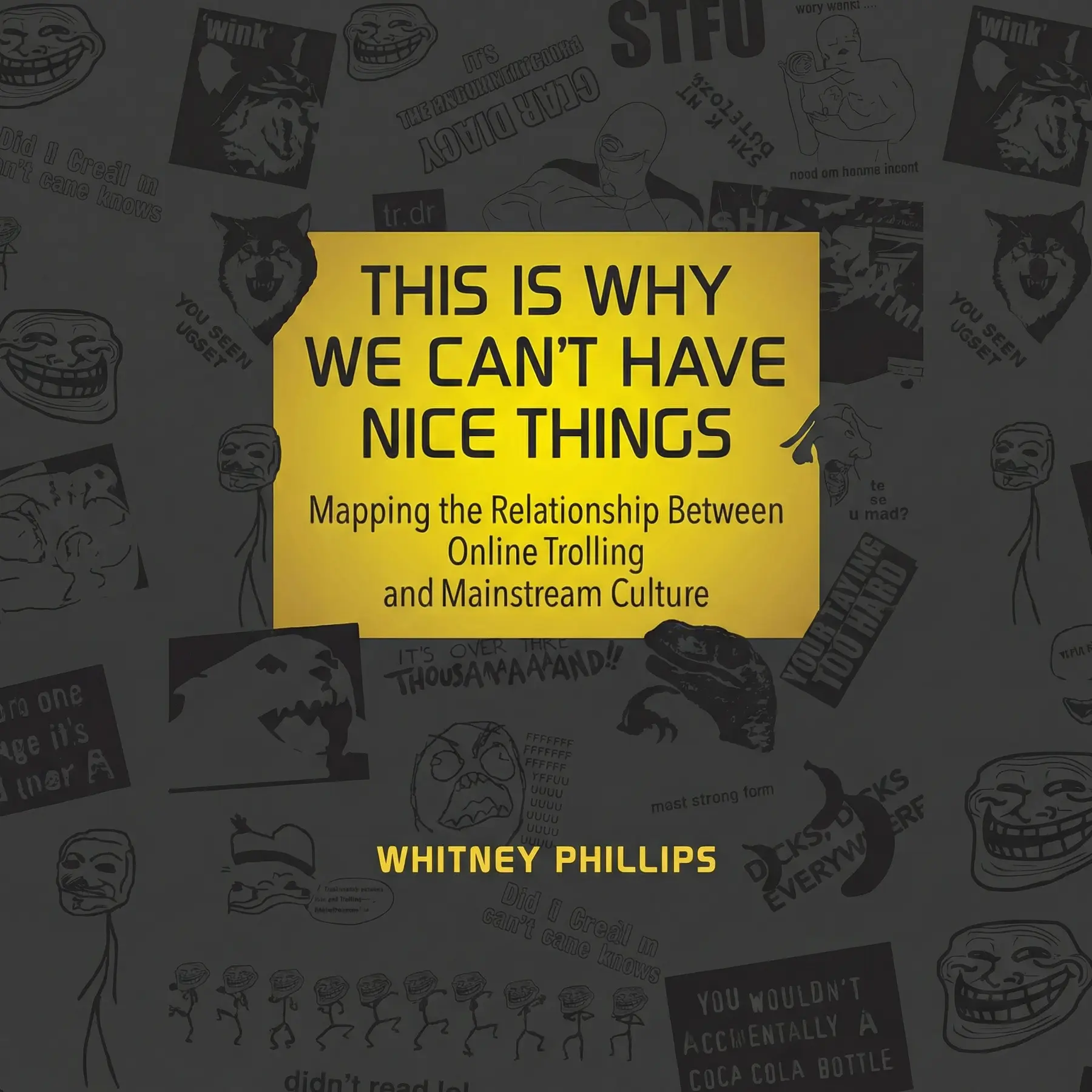
This is Why We Can’t Have Nice Things: Mapping the Relationship Between Online Trolling and Mainstream Culture
Whitney Phillips examines the subculture of internet trolling, revealing how these digital provocateurs reflect and influence mainstream media and society. It explores the complex motivations behind the quest for lulz and its cultural impact.
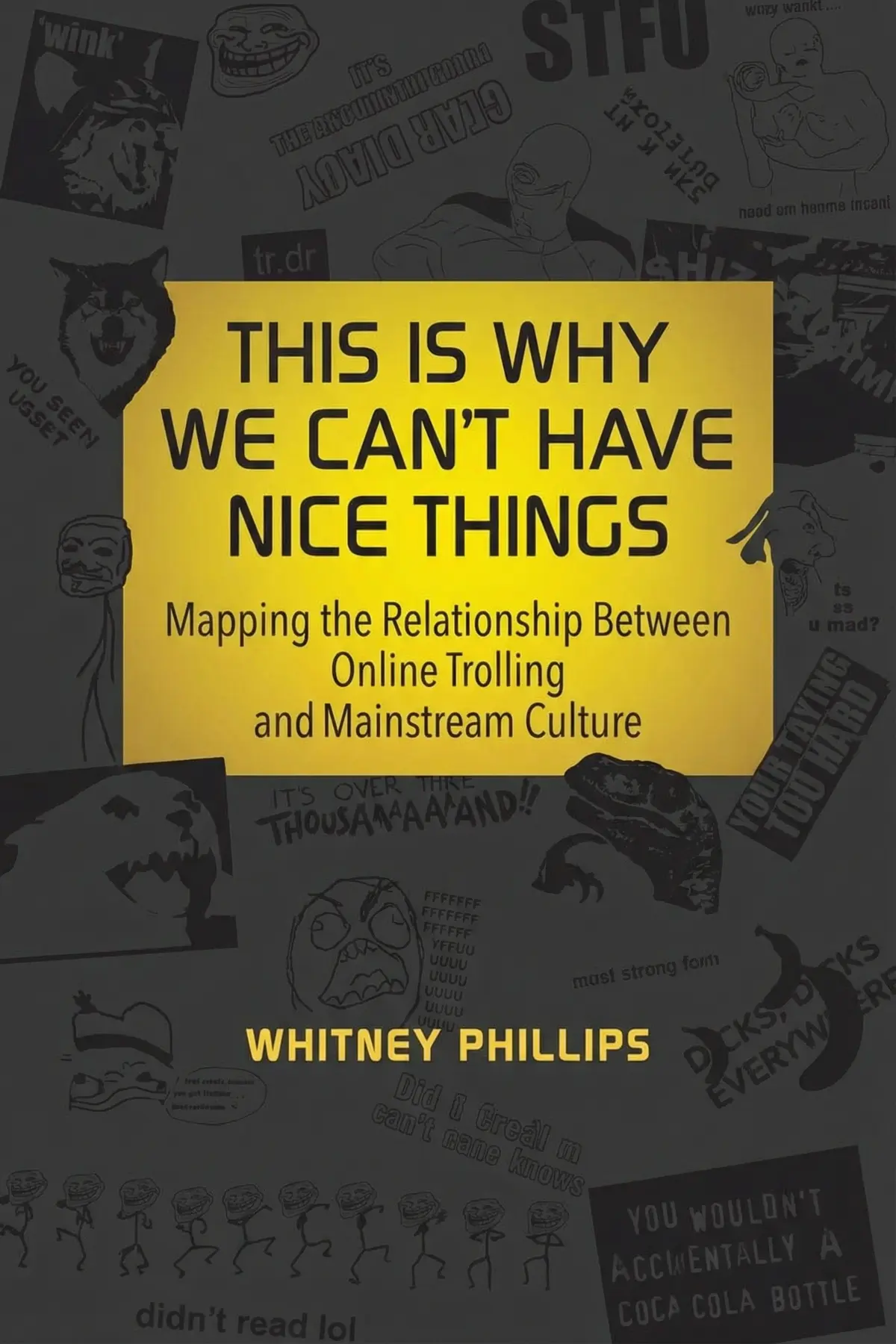
Table of Content
1. Introduction
1 min 31 sec
Have you ever paused while scrolling through a comment section, staring at a post that seemed designed solely to make people angry? If so, you’ve witnessed the work of an internet troll. For a long time, we’ve dismissed these individuals as mere nuisances or digital bullies. However, there is a much deeper story to be told. Trolling isn’t just about being mean; it’s a sophisticated subculture that has spent decades evolving alongside the mainstream internet.
In this exploration of Whitney Phillips’ work, we are going to pull back the curtain on this often-hidden world. We will move past the surface-level frustration and look at what drives these provocateurs, where they came from, and why their behavior is actually a mirror reflecting our own media-saturated society.
Throughout this journey, we’ll establish a throughline: the idea that trolling and mainstream culture are not two separate worlds. Instead, they are deeply intertwined, feeding off the same hunger for spectacle and attention. We’ll look at the specific language of trolls, the birth of the internet meme, and how tactics once used for simple pranks have been adopted by activists and even governments. By the end, you’ll see that the reason we can’t have nice things isn’t just because of a few bad actors, but because of the very structure of our digital world. Let’s dive into the origins and mechanics of the internet’s most infamous disruptors.
2. Defining the Subculture and the Pursuit of Lulz
2 min 05 sec
Explore the specific motivations that drive trolls, moving beyond simple aggression to understand the unique, aggressive form of humor that fuels their actions and identities.
3. The Evolution from Nuisance to Subculture
2 min 12 sec
Trace the history of trolling from its early days as a threat to digital community-building to its emergence as a proud, self-identified subculture in the mid-2000s.
4. Memes as the Bridge to the Mainstream
2 min 08 sec
Discover how internet memes, now a universal language, actually originated as inside jokes within troll communities and eventually became multi-million dollar industries.
5. RIPtrolls and the Mirror of Social Critique
2 min 13 sec
Analyze the controversial practice of trolling memorial pages and how it serves as a disturbing critique of media sensationalism and public mourning habits.
6. The Symbiotic Relationship Between Trolls and Media
2 min 00 sec
Examine how mainstream news organizations and internet trolls often use the same sensationalist tactics to gain attention, profit, and influence.
7. Trolling as a Tool for Political and Social Action
2 min 06 sec
See how trolling tactics have moved beyond the internet to influence real-world protests, public policy, and even government counter-terrorism strategies.
8. Conclusion
1 min 46 sec
As we’ve seen, the world of internet trolling is far more than just a collection of mean-spirited comments. It is a complex, evolving subculture that has fundamentally reshaped how we communicate online. From the early days of Usenet to the global reach of Anonymous and the ubiquity of cat memes, the influence of the troll is everywhere.
The central throughline of Whitney Phillips’ work is that trolls are not outsiders; they are a mirror. They take the sensationalism, the lack of empathy, and the obsession with spectacle found in our mainstream media and they reflect it back at us in its most extreme form. When we ask why we can’t have nice things, we have to look at the entire digital ecosystem that rewards conflict over conversation.
So, what can we take away from this? The next time you see a provocative post or a viral meme, take a moment to look past the immediate reaction. Consider the origins of that communication style. Understand that the “lulz” are a symptom of a larger cultural trend toward detachment and irony.
The actionable lesson here is to become a more conscious consumer of digital media. By recognizing the tactics of the troll, we can avoid falling into the trap of the emotional reaction they crave. We can choose to engage with nuance rather than spectacle. Trolling may have been born in the dark corners of the web, but its lessons are essential for anyone navigating the modern world. It’s up to us to decide if we will continue to feed the machine of sensationalism or if we will start to build digital communities based on something more than the pursuit of the next shock.
About this book
What is this book about?
This exploration dives deep into the often-misunderstood world of online trolls, moving beyond simple labels of cyberbullying to uncover a complex subculture with its own language and logic. The book traces the journey of trolling from an early-internet nuisance to a significant cultural force that birthed the modern meme and influenced political activism. It asks why we find certain provocations so impactful and how the behavior of trolls mirrors the sensationalism of mainstream media. By examining specific case studies—from the controversial mocking of memorial pages to organized protests against the Church of Scientology—this summary highlights the thin line between harassment and social commentary. It promises a nuanced understanding of digital communication, suggesting that instead of being an outlier, trolling is a reflection of the media landscape we all inhabit. It provides readers with a lens to view online behavior not just as random acts of malice, but as a deliberate response to societal norms and a product of the digital age's obsession with spectacle and attention.
Book Information
About the Author
Whitney Phillips
Whitney Phillips earned her PhD in English, with an emphasis in folklore, at the University of Oregon. This is Why We Can’t Have Nice Things is a revised version of her dissertation. Her findings on trolling have appeared in numerous publications, including Scientific American, NYMag, The Atlantic, VICE, and The New York Times.
Ratings & Reviews
Ratings at a glance
What people think
Listeners find the book educational and enlightening, as one listener characterizes it as a comprehensive examination that offers deep perspectives on the culture and mindsets of trolls.
Top reviews
Sukit
Finally got around to reading this and it’s easily the most comprehensive look at troll culture I've encountered. Whitney Phillips doesn't just list bad behaviors; she dives into the folklore and sociology of why these subcultures exist in the first place. I loved the deep dive into the "for the lulz" mentality. It explains so much about the detached, ironic cruelty we see daily. The writing is sharp, though it occasionally veers into dense scholarly territory that might slow down casual readers. Seeing how the media and trolls have this weird, parasitic relationship was eye-opening. It’s not just about "bad people" doing "bad things" online. It's about a systemic failure of our digital spaces. This book helped me realize that trolls aren't just an anomaly; they are an inevitable product of our current cultural structures. If you can handle some of the NSFW examples and the academic tone, it’s a total 5-star experience.
Show moreSara
This is an exhaustive study that provides great insights into troll culture and the attitudes that drive online disruption. Phillips has clearly done the legwork, spending years embedded in these communities to understand the "how" and "why" behind their actions. It’s an insightful look at how anonymity allows for a specific kind of "trickster" role that can be both devastating and, in weird ways, culturally critical. I found her analysis of "lulz" as a form of emotional detachment to be spot on. Even though some of the references feel a bit old now—think 2008-era memes—the underlying sociology remains incredibly relevant. The book challenges the reader to look inward at our own consumption of media. Are we any better than the trolls when we click on the same sensationalized headlines they exploit? It's a deep, challenging, and ultimately rewarding read for anyone interested in digital folklore and the darker side of connectivity.
Show moreBam
Phillips manages to peel back the layers of the early internet's most toxic corners without descending into mere pearl-clutching. It’s fascinating how she frames trolling as a mirror of mainstream media’s own sensationalism rather than some isolated, freakish occurrence. The truth is that "lulz" often rely on the same outrage cycles that keep cable news afloat. While the book is clearly an adapted dissertation—you can definitely feel that academic weight in the prose—the insights into 4chan’s /b/ board are still surprisingly relevant today. I found the section on the "9000 penises" prank on Oprah particularly illustrative of how trolls exploit media gullibility. My only gripe is that because it was published in 2015, it feels like a time capsule of a bygone era. We’ve moved so far past simple imageboards into the world of algorithmic radicalization that some of this feels quaint. Still, if you want to understand the DNA of modern internet conflict, this is essential reading.
Show moreThitima
The chapter on memorial page trolling was absolutely haunting and brilliant at the same time. Phillips explores how these "RIPtrolls" target the "grief tourists" who flock to the pages of dead teenagers. It’s a disturbing look at how even our most sacred moments of mourning are weaponized for lulz. The book is dense, appearing to be an expansion of the author’s PhD work, so don't go into this expecting a light beach read. It requires focus. I appreciated how she didn't just label everyone a "cyberbully" but distinguished between different types of online antagonism. She defines trolls as a specific subculture with their own rituals and language. My only real issue was the pacing in the middle chapters, which felt a bit repetitive. However, the overarching point about trolls being "born of and fueled by the mainstream" is a powerful takeaway that I’m still chewing on days later. Great for fans of internet sociology.
Show morePaisley
Why do we act like this online? This book attempts to answer that "why" with a level of depth that most news articles completely miss. Phillips avoids the usual "trolls are basement-dwelling losers" trope and actually looks at their techniques and motivations. I was particularly interested in the "media fuckery" sections. The way trolls and news outlets feed off each other is a toxic cycle that has only gotten worse since this was written. The prose is definitely academic, which might be a turn-off for some, but the insights are worth the effort. Frankly, the book serves as a chilling reminder that we’ve been building this digital house of cards for a long time. It’s informative and provides a necessary historical context for the memes we see today. It isn't a "how-to" for fixing the internet, but it's a great start for understanding the mess we're in.
Show moreAkosua
After hearing about Whitney Phillips on a podcast, I had to see if her book lived up to the hype. It mostly does. The anecdotes are the best part, especially the breakdown of how trolls tricked Oprah Winfrey into talking about "9000 penises" on live television. It perfectly captures the "gotcha" spirit of the early 2010s. The writing varies between being really engaging and being a bit of a slog through academic theory. Personally, I think the strongest parts are when she stops theorizing and just shows us the data from her ethnographic work. It’s a bit weird reading about 4chan from such a formal perspective, but it works. It's a solid 4-star book that gives you the vocabulary to talk about what’s happening on our screens every day. Just be prepared for some pretty offensive examples, as she doesn't sugarcoat the "shit-stirring" nature of her subjects.
Show moreNum
Truth is, I didn't realize how much the mainstream feeds the trolls until I read this. Phillips does a masterful job of showing the symbiotic relationship between "outrage" media and the people who live for the lulz. It's a sobering look at how our corporate institutions and political leaders actually provide the fuel for the fire. The book is well-structured, moving chronologically through the evolution of trolling, though it obviously stops right as things were getting really intense in 2015. I found the discussion of "causefags" and the split in the Anonymous collective to be particularly illuminating. While I do think she's a bit too soft on the trolls at times, her point is more about the system than the individuals. It’s a dense but rewarding study that makes you rethink your own online behavior and the way you engage with sensationalist news.
Show moreZoe
As someone who spent too much time on /b/ back in the day, I found this to be a mixed bag. On one hand, Phillips really nails the "oldfag" mentality and the transition from pure nihilism to political action like Anonymous. On the other hand, the book feels like it’s protecting the trolls a bit too much by "contextualizing" their racism and misogyny. To be fair, she tries to be an objective ethnographer, but some of the behavior she describes is so vile that the academic detachment feels cold. The link between mainstream "disaster porn" and RIPtrolling was the most compelling argument for me. It’s a solid 3-star read because it provides a good foundation, but it’s definitely showing its age. I would love to see an updated edition that tackles the post-2016 world, as the landscape has shifted dramatically since this was published. It’s an okay historical document but lacks current bite.
Show moreSoontorn
Look, the academic jargon gets a bit heavy in this one, and you can definitely tell it started life as a dissertation. There are moments where Phillips spends pages defining terms that feel a bit like navel-gazing. That said, the actual research into 4chan and the birth of Anonymous is genuinely interesting. I had no idea about the specifics of the "Operation Payback" shift or how the community fractured over whether to have actual morals. The book's core thesis—that trolls are just an amplified version of mainstream culture—is provocative, though I’m not sure I entirely buy her defense of some of the more hateful rhetoric. It’s a 3-star for me because while the information is valuable, the presentation is a bit dry and the content is starting to feel like ancient history. If you're a student of sociology, you'll love it; if you're a casual reader, you might struggle to finish.
Show moreRungtip
Not what I expected, frankly, and I found several glaring errors that pulled me out of the narrative. For instance, the author describes a scene where "heroes Vegeta and Nappa prepare to fight a villain named Goku." Anyone with even a passing knowledge of that series knows that is completely backward! It makes me question the rigor of the rest of the research. Beyond the factual slips, the book feels very dated. It’s based on a 2012 dissertation and covers the internet from a decade ago. The world of 2003-2015 is barely recognizable compared to the landscape we face now. I was looking for insights into current online aggression, but this felt more like a history lesson on a very specific, small subculture. The academic jargon is also quite thick, making it a slog to get through. Not recommended unless you are specifically studying the deep history of 4chan.
Show moreReaders also enjoyed

A Biography of Loneliness: The History of an Emotion
Fay Bound Alberti
A Force for Good: The Dalai Lama's Vision for Our World
Daniel Goleman
A Room of One’s Own
Virginia Woolf
Abolish Rent: How Tenants Can End the Housing Crisis
Tracy Rosenthal
Abortion: Our Bodies, Their Lies, and the Truths We Use to
Jessica Valenti
AUDIO SUMMARY AVAILABLE
Listen to This is Why We Can’t Have Nice Things in 15 minutes
Get the key ideas from This is Why We Can’t Have Nice Things by Whitney Phillips, plus 5,000+ more titles in English and Thai.
- 5,000+ titles
- Listen as much as you want
- 7-day free trial
- Cancel anytime







