
A Splendid Exchange: How Trade Shaped the World
William J. Bernstein
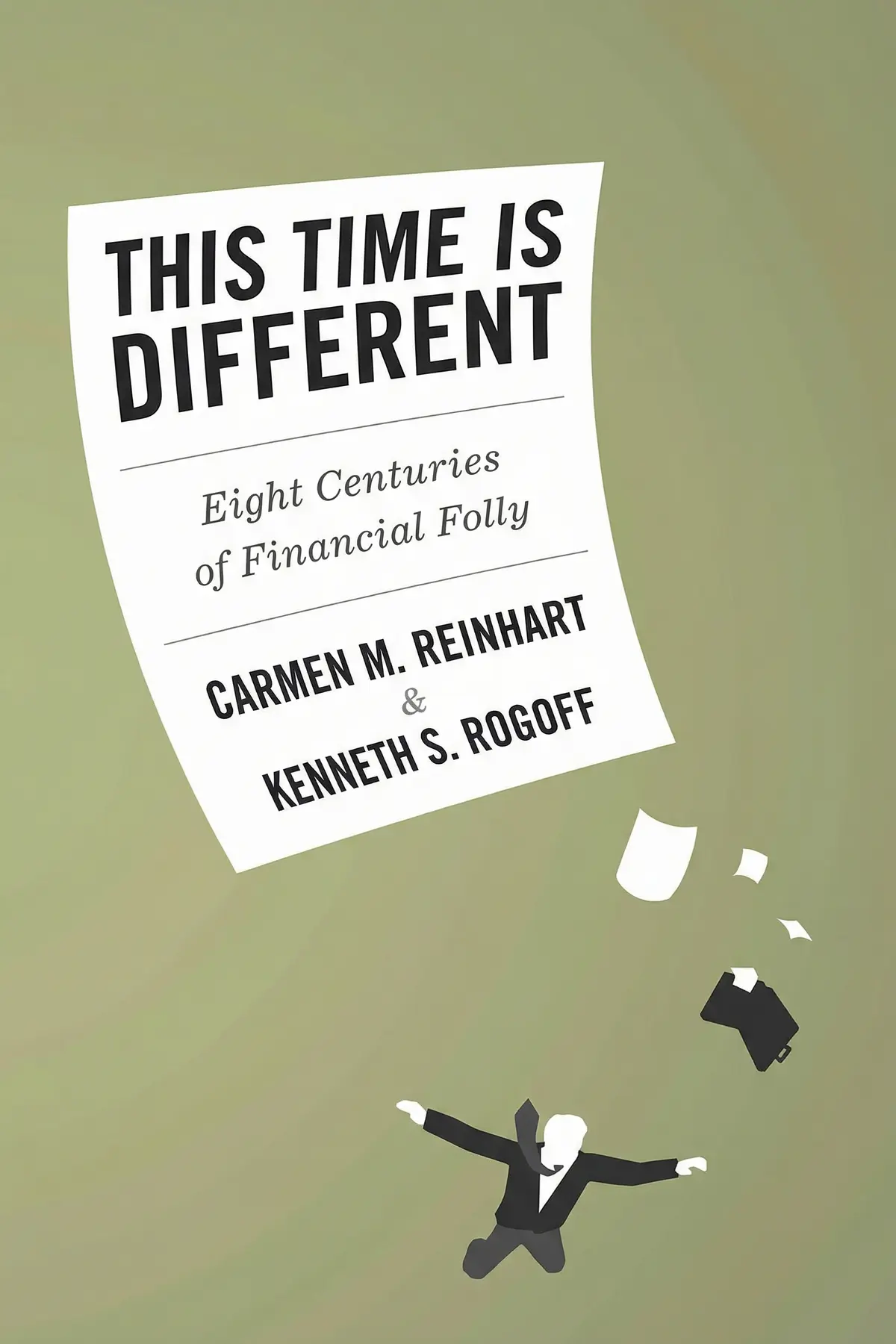
A deep dive into eight centuries of financial history, revealing the cyclical nature of economic collapses and the dangerous, recurring myth that modern markets have finally outgrown the risk of crisis.
2 min 07 sec
Think about the last time you heard a financial expert or a politician claim that the economy had entered a ‘new era.’ Perhaps they argued that because of technological innovation, better central banking, or global integration, the old rules of boom and bust no longer applied. It is a seductive idea, one that suggests we have finally mastered the chaotic forces of the market. But as we look back over the last eight hundred years, we see that this exact sentiment is often the loudest just before the floor drops out.
The history of finance is not a straight line of progress; rather, it is a series of recurring loops. Whether we are looking at a medieval monarch struggling to fund a war or a modern homeowner caught in a subprime mortgage trap, the underlying mechanics of financial ruin remain shockingly similar. The players change, and the financial instruments become more complex, but the human tendency toward overextension and the subsequent shock of reality are constants.
In this summary, we are going to walk through eight centuries of what can only be described as financial folly. We will explore the common threads that link the default of a 14th-century king to the collapse of Wall Street giants in 2008. We will see how countries trick themselves into believing that domestic debt is safe, how banking systems are built on a fundamental fragility that makes them prone to panic, and how governments have used everything from literal coin shaving to the printing press to escape their obligations.
Ultimately, the throughline here is a warning against hubris. By understanding that these crises are part of a long historical pattern, we can begin to see the warning signs that others choose to ignore. The most dangerous phrase in the world of finance is ‘this time is different.’ As we dive into the data and the stories of the past, we’ll see exactly why that is the case and how the same mistakes continue to be rebranded for every new generation.
3 min 08 sec
From medieval kings to modern nations, the struggle to repay foreign creditors is a story as old as money itself, often leading to total economic restructuring.
2 min 51 sec
Governments often turn to their own citizens for funding, but this ‘safe’ domestic debt can trigger inflation and economic chaos if mismanaged.
2 min 32 sec
Banking systems are built on a delicate balance of trust and timing, making them vulnerable to panics that can turn a recession into a catastrophe.
2 min 40 sec
When governments cannot pay their debts, they often resort to ‘cheating’ by debasing their currency, a tactic that has evolved from coin clipping to hyperinflation.
2 min 48 sec
The global financial crisis of 2008 proved that even the most advanced economies are subject to the same historical patterns of bubble and bust.
1 min 51 sec
As we look back at the wide expanse of financial history, the most striking takeaway is not how much things have changed, but how much they have remained the same. From the silver-clipping kings of the past to the high-frequency traders of today, the cycle of over-borrowing and inevitable collapse is a constant rhythm in human civilization. We have seen that sovereign debt is a powerful but dangerous tool, that domestic debt can be a hidden trap for a nation’s own citizens, and that banking systems are inherently fragile structures built on the volatile foundation of public trust.
The ‘This Time Is Different’ syndrome is perhaps the most persistent and costly psychological bias in history. It is the belief that our current circumstances are so unique—because of our technology, our institutions, or our intelligence—that the historical laws of economics no longer apply to us. But as we have explored, whether it’s the housing market in 2007 or the Florentine banks in 1340, the patterns of boom, bubble, and bust are remarkably consistent.
The actionable lesson for all of us, whether we are policymakers, investors, or simply citizens trying to navigate the economy, is to remain deeply skeptical whenever someone claims the old rules are dead. Financial history is not a dusty collection of irrelevant facts; it is a map of the pitfalls that lie ahead. By recognizing that these crises are recurring events rather than once-in-a-lifetime accidents, we can better prepare for the volatility that is an inherent part of the financial world. The next time you hear that a new era of risk-free growth has arrived, remember the eight centuries of folly that came before. It is the best defense we have against the next inevitable turn of the cycle.
This exploration of financial history uncovers the patterns behind eight hundred years of economic disasters. By analyzing data from medieval defaults to the 2008 subprime mortgage collapse, the narrative demonstrates that financial crises are not isolated accidents but predictable consequences of human behavior and institutional fragility. The core promise of this work is to dismantle the 'this time is different' mindset. It illustrates how various forms of debt—whether foreign, domestic, or banking-related—and the mechanics of inflation serve as recurring characters in a story of boom and bust. Readers will gain a perspective on why even the most advanced economies remain susceptible to the same follies that plagued ancient kingdoms and emerging markets alike.
Carmen Reinhart is a Professor of International Financial Systems at Harvard Kennedy School and previously served as Chief Economist at the World Bank. Kenneth Rogoff is a Professor of Economics and Public Policy at Harvard University and former Chief Economist at the International Monetary Fund.
Listeners find the work extensively researched with significant historical information, making it a superb resource for making sense of financial volatility. Furthermore, the material is comprehensive and reliable, although some feel it is excessively fragmented by data. Perceptions of its accessibility and complexity are varied—while some deem it easy to follow, others view it as dense, and while some value the exhaustive detail, others perceive it as unnecessarily complex.
This book is a definitive guide to understanding how human hubris leads to financial catastrophe over and over again. Reinhart and Rogoff have compiled a staggering 800 years of data that proves we are never as smart as we think. The central theme—that we constantly believe "this time is different" because of new technology or better policy—is effectively dismantled across hundreds of pages of rigorous analysis. While the prose is certainly academic and dense, the insights into sovereign defaults and currency crashes are absolutely essential for any serious student of history. You really start to see the patterns of deregulation and ballooning debt that precede every major burst. It provides a sobering perspective on the 'Great Second Contraction' that we are still feeling the effects of today.
Show moreThe depth of the data compiled here is unparalleled and provides a much-needed reality check for policymakers. Reinhart and Rogoff show that whether it's 14th-century France or 21st-century America, the signs of an impending crash are remarkably consistent. I was particularly struck by the data showing that government debt typically increases by 86% following a banking crisis. This isn't just about bailouts; it's about the systemic collapse of tax revenue and the inevitable rise in social spending. The book is heavy, yes, but it’s a necessary weight. It challenges the dangerous idea that modern financial instruments have somehow made us immune to the laws of economics. This is a monument to empirical research that should be required reading in every Econ 101 classroom.
Show moreAs a history buff, I found the timeline of sovereign defaults since the Middle Ages to be absolutely fascinating. Most people think of financial crises as a modern phenomenon, but this book proves that governments have been failing to pay their bills for centuries. The authors have done a massive service by bringing all this arcane data into one place. Even with the controversy surrounding some of their Excel formulas, the broader trends they identify regarding currency crashes and hyperinflation remain largely intact. It’s a dense, solid, and authoritative guide to the recurring madness of global finance. If you want to understand the 'why' behind the 'what' of economic collapses, this is the book you need to own. Just be prepared for a lot of tables.
Show moreEver wonder why history keeps repeating itself in the most painful ways possible? This book explains the cycle of financial folly with more charts and tables than you’ll know what to do with. The authors do an incredible job of showing that mature markets are just as prone to default and crisis as emerging ones. I found the section on the 'Second Great Contraction' particularly enlightening, even if it was a bit depressing to realize how predictable the 2008 crash actually was. To be fair, it’s not exactly a page-turner and the writing style is about as exciting as a bowl of plain oatmeal. However, if you can push through the technical jargon, the historical context is invaluable for anyone trying to navigate today’s volatile markets.
Show moreAfter digging through the charts, I realized that the real value of this book is in its predictability metrics. The authors point out that housing prices usually drop by 35% and take six years to stabilize after a major banking crisis. Having those benchmarks makes the chaos of the current economy feel a little less random and a lot more like a known historical pattern. My only gripe is that the book offers very few solutions or policy prescriptions for how to actually break the cycle. They are great at diagnosing the disease of financial hubris but fairly quiet when it comes to the cure. Still, as a historical autopsy of global finance, it’s a solid and thoroughly researched piece of work.
Show moreIt’s hard to ignore the central message here: we are doomed to repeat the past because we refuse to learn from it. The authors illustrate how domestic debt is often just as destructive as external debt, a point that many other researchers tend to overlook. I spent a lot of time in the appendices, which are almost as long as the book itself, and the level of detail is impressive. You can see how the US was insulated by a false sense of security before 2007, thinking our 'innovative' financial systems made us special. It’s a bit of a slog to get through the academic prose, but the sheer volume of evidence is hard to argue with. It definitely changed how I view government debt reports.
Show moreLook, this isn't exactly light reading for a Sunday afternoon, but it is incredibly rewarding if you have the patience for it. I picked this up because I wanted to understand why the Great Recession felt so much worse than previous dips. The authors explain that banking crises are a special kind of hell that take years, not months, to recover from. I enjoyed the comparison between the 1929 Depression and the 2007 contraction, especially regarding the similarities in asset price bubbles. Some parts are definitely repetitive, and you could probably skip the middle sections without losing the main thread. However, the overall impact of seeing 800 years of failure laid out in black and white is quite powerful.
Show moreFrankly, this felt more like a rough draft of a graduate thesis than a finished book meant for a general audience. The authors include an overwhelming amount of raw material—graphs, boxes, and summaries—without ever really weaving them into a cohesive narrative story. I love the idea of looking at eight centuries of financial history, but the data from the earlier centuries feels incredibly thin and incomparable to modern statistics. It’s a great reference tool to keep on your shelf for specific data points on inflation or currency debasement, but reading it cover-to-cover is a chore. I appreciate the effort that went into the database, yet I left the book feeling like I had just read a very long, very dry encyclopedia entry.
Show moreFinally got around to finishing this, and I have to say, I'm a bit conflicted. On one hand, the historical scope is impressive and the 'this time is different' mantra is a great way to frame the discussion. On the other hand, the book is so dry that it’s almost unreadable for anyone without a background in statistics or macroeconomics. The audiobook version is a nightmare because the narrator keeps referring to tables and graphs that you can’t actually see. It feels more like a textbook than a popular non-fiction book, and I think the marketing was a bit misleading in that regard. It’s useful as a data source, but don't expect to be entertained or to find a clear narrative story here.
Show moreI want my money back because this entire premise was built on a lie. When other economists finally got their hands on the raw data, they found massive coding errors and selective data exclusion that completely undermined the 90% debt-to-GDP threshold claim. It turns out that countries with high debt still saw average growth of 2.2 percent, not the negative contraction the authors originally published. This isn't just a minor typo; it's a fundamental failure of academic integrity that influenced global austerity policies. For a book that prides itself on being data-driven, discovering that the data was manipulated or poorly handled is the ultimate sin. I cannot trust any of the conclusions drawn in these 400 pages of dry, wonkish garbage. Don't waste your time reading a debunked paper glorified into a hardcover book.
Show moreWilliam J. Bernstein

Yanis Varoufakis
Andrew Ross Sorkin
Ha-Joon Chang

Niall Kishtainy
AUDIO SUMMARY AVAILABLE
Get the key ideas from This Time Is Different by Carmen M. Reinhart, plus 5,000+ more titles in English and Thai.







