
Abolish Rent: How Tenants Can End the Housing Crisis
Tracy Rosenthal
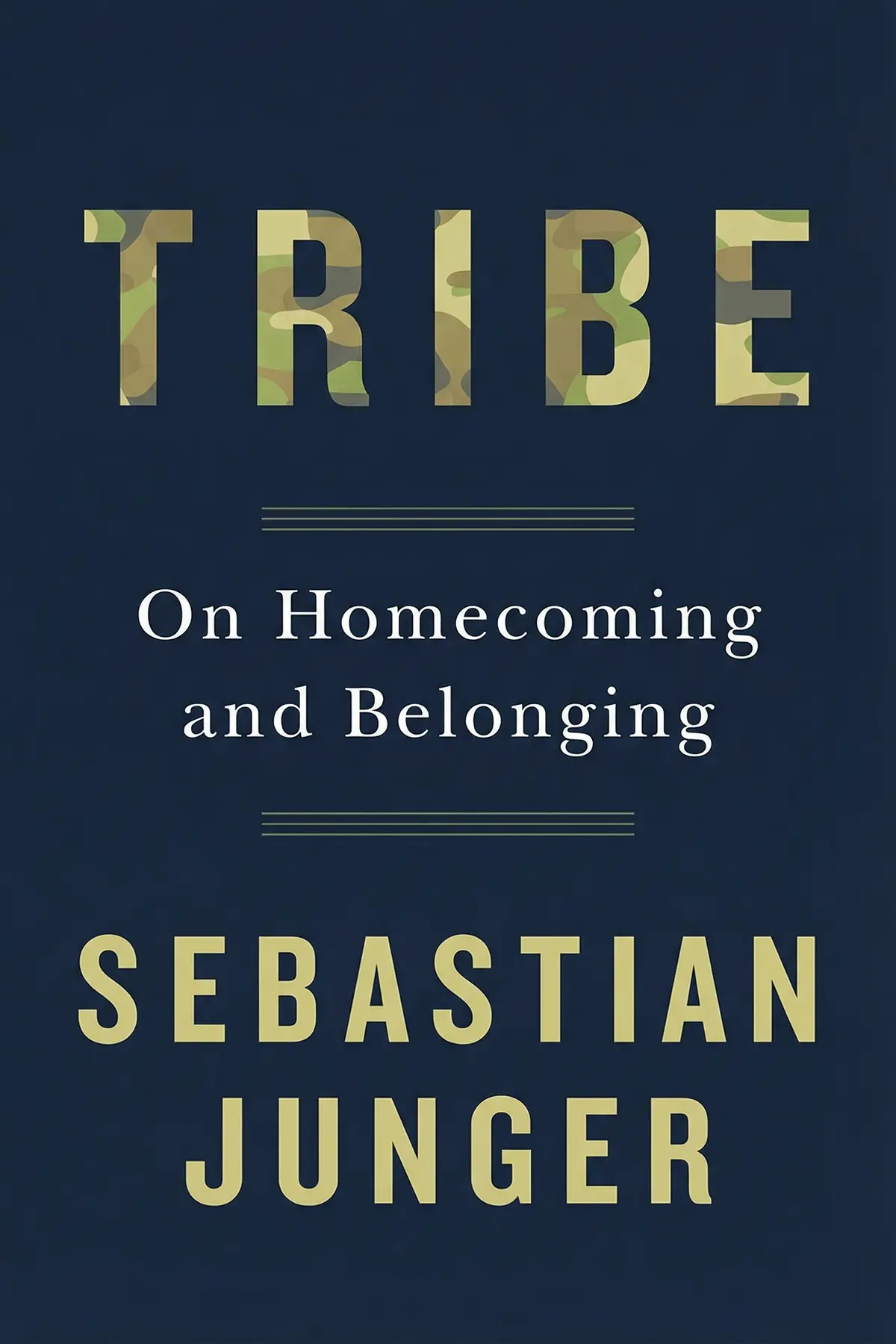
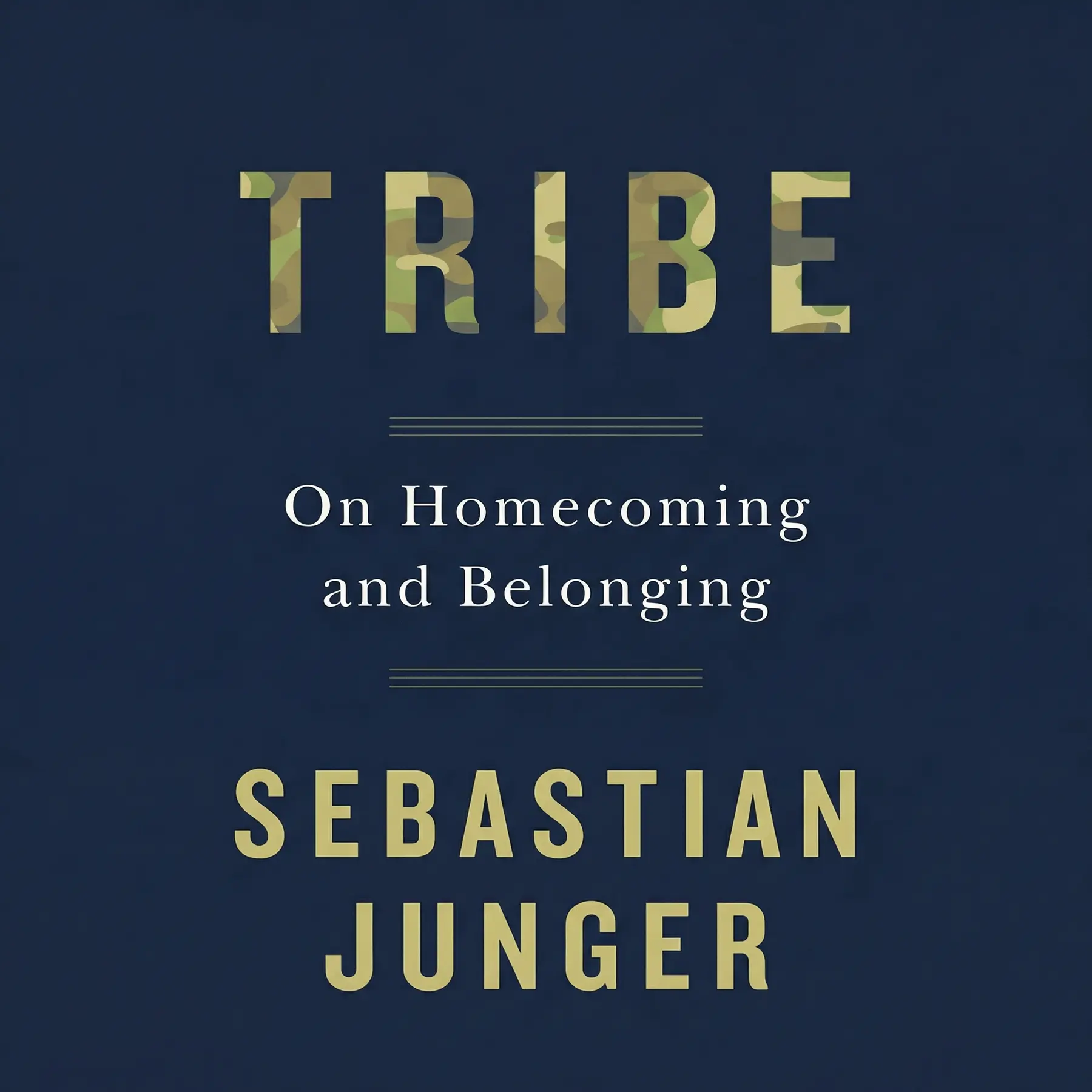
Tribe explores the fundamental human need for community and why modern independence often leads to isolation, using history and sociology to show how shared hardship can actually improve our collective mental well-being.
1 min 53 sec
In the modern West, we have achieved a level of personal freedom and material comfort that our ancestors could never have imagined. We can live in temperature-controlled rooms, order food to our doorsteps with a few taps on a screen, and pursue our individual ambitions with almost total autonomy. On the surface, it seems like the pinnacle of human achievement. Yet, beneath this veneer of progress, there is a growing sense of unease. Rates of depression and anxiety are higher than they have ever been, and many people describe a profound feeling of loneliness even in the middle of a crowded city. This raises a fundamental question: Is the very independence we prize so highly actually making us miserable?
This is the core inquiry that Sebastian Junger explores in his work, Tribe. Through his lens as a war correspondent and a social observer, Junger suggests that we have inadvertently traded our psychological well-being for a lifestyle that contradicts our biological wiring. We think we want to be left alone, but our DNA tells a different story. For hundreds of thousands of years, survival depended on the group. To be alone was to be in danger; to be part of a tribe was to be safe.
In the pages that follow, we are going to look at the fascinating ways in which our tribal instincts manifest even today. We will examine why early settlers in America were often so drawn to the Native American way of life that they refused to return to ‘civilization.’ We will look at how wars and natural disasters, despite their tragedy, can actually trigger a deep sense of communal purpose that is missing from our daily lives. Finally, we will consider how we can reintegrate this sense of belonging into a world that seems determined to keep us apart. This isn’t just a critique of modern life; it’s a throughline back to what it truly means to be human. By understanding the power of the tribe, we might just find the key to solving the isolation that defines the twenty-first century.
2 min 29 sec
Discover why early American settlers often abandoned their own ‘civilized’ colonies to join Native American communities, and why almost none of them ever wanted to come back.
2 min 22 sec
Learn how the lack of social hierarchy and the emphasis on collective sharing made tribal societies far more attractive and less stressful than the competitive Western model.
2 min 10 sec
Explore the biological reason why modern wealth and independence often lead to ‘pathological loneliness’ and a decline in our collective mental health.
2 min 10 sec
Discover the counterintuitive evidence showing that during times of war and national crisis, rates of suicide and psychiatric distress often plummet as people find new meaning in solidarity.
2 min 22 sec
Examine how natural catastrophes strip away social status and race, forcing humans back into a more natural, cooperative state where everyone works for the common good.
2 min 18 sec
Explore why many soldiers find the return to civilian life more traumatic than the war itself, and how the loss of the ‘combat tribe’ contributes to PTSD.
2 min 03 sec
Learn from Native American traditions how the entire community can take responsibility for the psychological wounds of war, helping warriors find a path back to peace.
1 min 46 sec
The journey through the history and sociology of the tribe brings us to a stark realization: we have built a world that is fundamentally at odds with who we are as a species. We have traded the warmth of the communal fire for the cold convenience of individual independence, and we are paying for it with our collective mental health. Sebastian Junger doesn’t argue that we should all go back to living in tents or hunting for our food, but he does insist that we must find a way to reclaim the essence of the tribe in our modern lives.
The throughline here is clear: humans need to be needed. We thrive when we are part of a group that shares resources, faces challenges together, and recognizes each other’s value. Whether it’s the settlers who fled to the wilderness or the Londoners who found meaning in the Blitz, the lesson is the same—we are at our best when we are looking out for one another. The isolation of modern life is not a necessary price of progress; it is a mistake that we have the power to correct.
To move forward, we must look for ways to decrease our independence and increase our interdependence. This means building stronger local communities, creating spaces for honest dialogue between different groups, and taking collective responsibility for the well-being of our neighbors. It means recognizing that the ‘me’ can only truly flourish when the ‘we’ is strong. As you step back into your daily life, consider where your tribe is. Who can you rely on, and who relies on you? Finding the answers to those questions might be the most important thing you ever do for your own happiness and for the health of society as a whole. We are tribal beings by nature; it’s time we started living like it.
Tribe is an exploration of the deep-seated human instinct for belonging. Sebastian Junger examines how the structure of modern society—which prioritizes individual success and personal space—might actually be at odds with our evolutionary design. By looking at historical examples of colonial settlers, the social effects of the Blitz, and the behavior of communities during natural disasters, the book illustrates that humans are often at their most resilient and psychologically healthy when they are part of a tight-knit group facing a common challenge. The promise of this work is a better understanding of why so many people feel alienated in today's world and what we can learn from ancestral tribal structures to fix it. It challenges the idea that wealth and technology automatically lead to happiness, suggesting instead that the 'we' is far more vital to our survival than the 'me.' Junger provides a compelling argument for re-evaluating how we treat veterans, how we build our cities, and how we care for one another in the modern age.
Sebastian Junger is a highly acclaimed journalist and author who has spent his career reporting from some of the world's most dangerous locations. He is well-known for his deep dives into human nature under extreme pressure, having authored bestsellers like The Perfect Storm, Fire, and War. Junger currently resides in New York and serves as a contributing editor for Vanity Fair, bringing a veteran reporter's eye to the complex social issues of our time.
Listeners find this work remarkably insightful and evocative, causing them to reevaluate their perspectives on life and society. The prose is expertly crafted with detailed explanations, and one listener notes how it touches on psychological and sociological hot points. Furthermore, the book features a compelling premise and well-received, thorough research. Regarding length, while some find it short but deep, others wish it were longer.
Sebastian Junger manages to distill a massive societal problem into a lean, punchy narrative that stays with you long after the final page. He argues that our modern obsession with individualism has actually crippled our mental health, creating a culture where we are physically safe but emotionally adrift. While his research on the Blitz and various Native American cultures is fascinating, the core strength lies in how he reframes PTSD not just as a reaction to violence, but as a crisis of belonging. We’ve built a world where no one feels necessary anymore, and that’s a terrifying thought. Some might find his lack of formal academic footnotes frustrating, but the prose is so evocative that the logic feels almost intuitive. It’s a slim volume, yet it packs more intellectual weight than books three times its size.
Show morePicked this up because I’ve been feeling a general sense of burnout and disconnection, and man, did this hit the nail on the head. Junger explains so clearly why we feel so lonely despite being more "connected" via technology than ever before. We aren't designed to live in little boxes by ourselves; we are designed to share food, wood, and danger. The stories about white settlers refusing to leave Native American tribes were a total eye-opener for me. It’s a quick read, but it’s dense with ideas that make you question every luxury you think you need. Truly, this book changed how I look at my neighborhood and my workplace. We don't need more stuff; we need more people who actually count on us.
Show moreWow. This is a tiny book with a massive soul. Junger doesn’t waste a single word as he dissects the rot at the heart of modern civilization—the fact that we’ve traded belonging for comfort. He argues that we are evolved to survive together, and when we take away the "together," the "survive" part becomes a psychological nightmare. The chapter on the Balkan war was particularly haunting, showing how people actually felt better when they were huddling in basements sharing bread than when they were safe and alone later. It’s a total shift in perspective that makes you realize why our "thank you for your service" culture is so hollow. If you want a book that will make you rethink your entire lifestyle in under two hours, this is it.
Show moreThis book is a vital call to action for anyone who feels like something is fundamentally "off" about the way we live today. Junger explores the idea that we aren't just suffering from individual chemical imbalances, but from a "disorder of integration" where we’ve lost our place in the group. By looking at how soldiers and indigenous peoples find meaning through sacrifice, he highlights the emptiness of our self-centered, affluent lives. The writing is beautiful, balancing raw reporting with deep philosophical inquiry. It’s a short, intense read that challenges the idea that progress is always better. It reminded me that building community isn't just a nice thing to do—it’s a biological necessity for our survival. Absolutely brilliant.
Show moreEver wonder why people sometimes remember disasters or war with a strange kind of fondness? Junger dives deep into this paradox, suggesting that the "tribal" connection formed during crises is what humans are actually evolved for. Frankly, it’s a jarring perspective because it implies that our peaceful, affluent society is actually making us miserable by stripping away our need for each other. I found the sections on the psychological integration of returning veterans particularly enlightening, as he moves away from clinical definitions toward a more sociological explanation for their struggle. However, I do wish he had expanded more on how these tribal dynamics could exist in modern, non-catastrophic settings without the need for a war. Still, it’s a highly insightful look at the cost of our current independence.
Show moreAs someone who has always been fascinated by the military experience, I found Junger’s analysis of PTSD to be the most compelling part of this work. He suggests that the "disorder" isn't just about what happened "over there," but about the isolation veterans face when they come home to a society that doesn't need them to survive. This shift from a high-stakes, communal environment to a lonely cubicle is a trauma in its own right. The writing is crisp and professional, which is what you’d expect from the author of The Perfect Storm. My only gripe is that it’s almost too brief; I wanted more data to support his claims about the rising rates of depression in affluent nations. Nevertheless, it makes a very strong case for why we need to rethink how we support our troops and each other.
Show moreFinally got around to reading this after hearing so much buzz, and I have to say, it’s a fascinating, if slightly flawed, piece of work. Junger is at his best when describing the intense bonds formed in the military—the "tribe" that makes the individual feel both protected and essential. He draws a sharp contrast between that and the "greed" of modern capitalism, which he blames for our current epidemic of loneliness. While I agree with the sentiment, his portrayal of indigenous tribes feels a bit like a "noble savage" trope, glossing over the darker aspects of those cultures to make a point. It’s a very male-centric book, focusing almost entirely on the brotherhood of soldiers and laborers. Still, the prose is well-crafted and the central message about our need for community is undeniable.
Show moreThe truth is, this feels more like a long-form magazine article than a fully fleshed-out book, though the ideas are undeniably provocative. Junger makes some bold claims about how human-made disasters actually improve social cohesion and mental health, citing the Blitz in London as a primary example. While the anecdotes are powerful, I kept waiting for more empirical evidence or perhaps a deeper dive into the neurobiology he hints at. He mentions hyperarousal and brain chemistry but then moves on before really explaining the "why" behind it. It’s a bit of a "hand-waving" approach to science that left me feeling slightly skeptical. However, his critique of how we over-pathologize veterans instead of giving them a purpose is a conversation we absolutely need to have.
Show moreJunger writes with incredible authority, but I found myself constantly questioning his logic during the more "evolutionary" arguments. He tries to use biology to explain altruism, yet he seems to pick and choose examples that fit his narrative while ignoring solitary mammals or the complexities of group selection. Look, the guy is a world-class storyteller, and his experiences as a war correspondent give him a unique perspective that is truly valuable. I just wish he hadn't tried to dress up his personal philosophy as hard science. It’s a great bar conversation—rugged, insightful, and a bit rowdy—but it lacks the footnotes needed to be a definitive text on human behavior. It’s worth the read for the questions it asks, even if the answers are a bit too simplistic.
Show moreNot what I expected at all, and to be fair, I found the book’s premise deeply problematic in its narrowness. Junger’s "tribe" seems to be an exclusively male club where bonding only happens through shared trauma, manual labor, or combat. Where are the women in this narrative? Even when discussing the Bosnian war or indigenous cultures, the female experience is either sidelined or framed entirely through a male lens. His romanticization of "Stone-Age" living feels like a New Age fantasy that ignores the brutal realities of those societies, including the lack of individual agency. The book is short enough to finish in an afternoon, but the sweeping generalizations and lack of scientific rigor make it hard to take as a serious sociological study. It feels more like a nostalgic manifesto for a masculinity that never really existed.
Show moreTracy Rosenthal
Jessica Valenti

Johny Pitts
bell hooks
Fay Bound Alberti
Daniel Goleman
AUDIO SUMMARY AVAILABLE
Get the key ideas from Tribe by Sebastian Junger, plus 5,000+ more titles in English and Thai.







