
26 min 43 sec
Trick Mirror: Reflections on Self-Delusion
A sharp analysis of the digital age, self-perception, and the contradictions inherent in modern womanhood, exploring how we navigate a world designed to distort our sense of self.
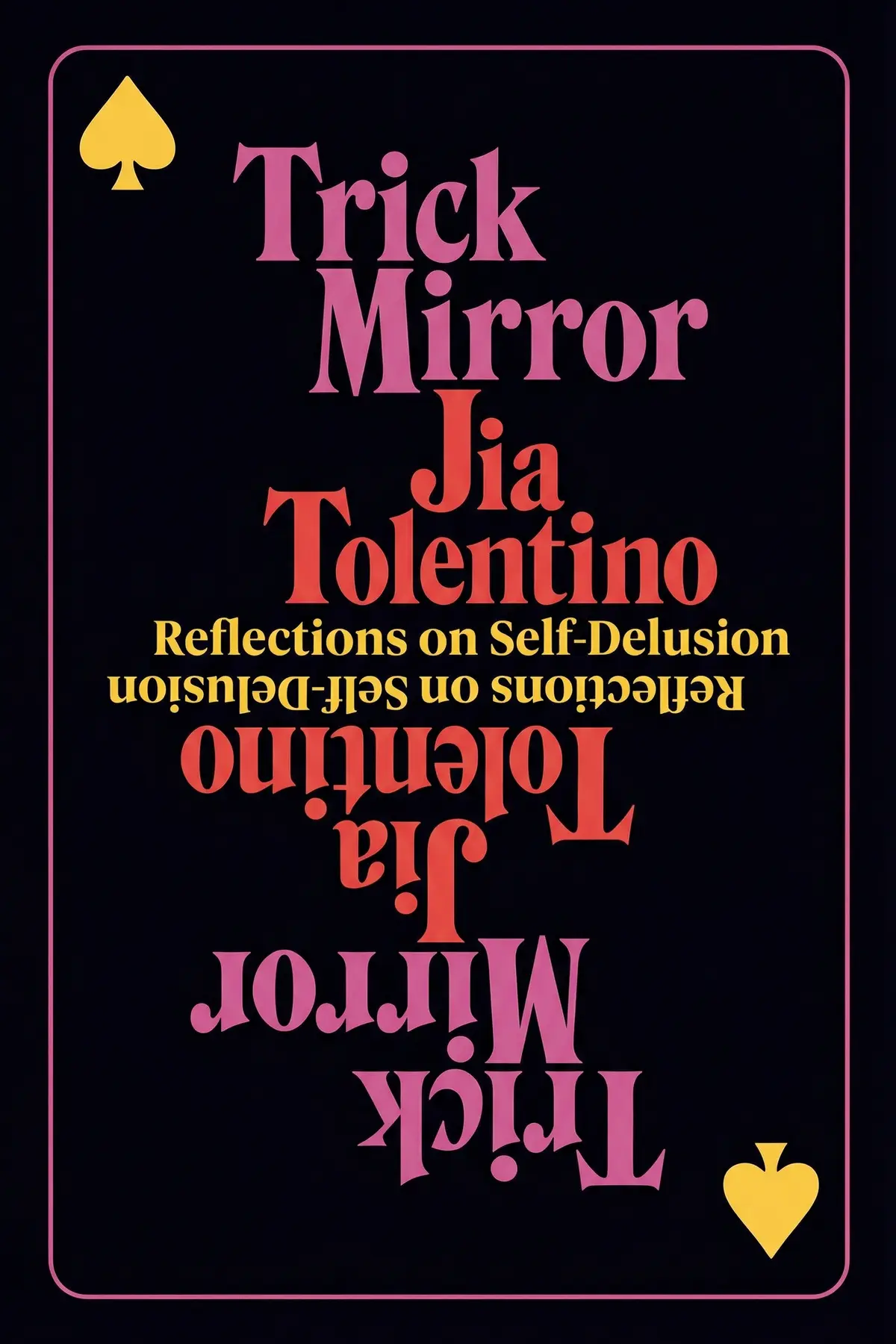
Table of Content
1. Introduction
1 min 47 sec
We live in an era defined by a strange kind of hyper-visibility. Every day, we look into the digital glass of our smartphones and computers, seeing versions of ourselves reflected back in high definition. But as Jia Tolentino suggests, these reflections aren’t always honest. They function more like a trick mirror—the kind you might find in a carnival funhouse that elongates your limbs or shrinks your torso. These distortions aren’t accidental; they are the result of powerful cultural, social, and political forces that have been gaining momentum for decades.
Writing in the wake of the 2016 American election, Tolentino attempts to make sense of a world that feels increasingly fragmented and contradictory. This was a moment when the optimism of the early internet had curdled into something more predatory, and when the progress of social movements seemed to be clashing with a resurgence of older, more regressive structures. Through a series of deep dives into our collective obsessions, we begin to see how the narratives we’ve been told about success, beauty, and even virtue have been subtly bent to serve interests that are often at odds with our own well-being.
In this exploration, we aren’t just looking at the world ‘out there.’ We are looking at how these external forces have shaped our internal lives. We will trace the throughline from the early, chaotic days of the web to the polished, monetized platforms of today. We will look at how the pressures of modern womanhood have been rebranded as ’empowerment’ and ‘self-care,’ and how the very idea of truth has become a casualty of a culture that rewards the best-looking lie. By the end of this journey, the goal is to see through the distortion and understand the mechanisms of our own self-delusion. It’s a reckoning with the modern condition that asks us to look closer at the reflections we usually take for granted.
2. The Evolution of Digital Narcissism
2 min 33 sec
From private hobbies to public performance, explore how the internet shifted from a space of exploration to a relentless engine of self-commodification and data-driven identity.
3. The Delusion of Reality Television
2 min 33 sec
A personal journey into the world of early reality TV reveals how we are cast into archetypes and how these constructed roles follow us into the digital age.
4. The Shifting Standards of Beauty
2 min 26 sec
Observe how feminism’s rise coincided with increasingly demanding beauty ideals, transforming traditional aesthetic labor into a modern pursuit of ‘self-care’ and ‘optimization.’
5. The Narrative Traps of Literary Women
2 min 20 sec
Analyze the recurring patterns in literature that define womanhood through the lens of childhood curiosity, adolescent tragedy, and adult resignation.
6. The Intersection of Religion and Ecstasy
2 min 35 sec
Discover the surprising parallels between the spiritual fervor of megachurches and the chemical transcendence of party drugs, and what they reveal about our search for connection.
7. The Era of the Grift
2 min 31 sec
Analyze the rise of the modern scammer, from the disaster of Fyre Festival to the systemic grifts of big tech, and why our culture seems to reward self-delusion.
8. The Complexity of Campus Culture and Truth
2 min 36 sec
Examine the difficult legacy of sexual violence at the University of Virginia and the fallout of the Rolling Stone ‘Jackie’ story to understand the fragility of truth in institutional reform.
9. The Pitfalls of Celebrity Feminism
2 min 31 sec
Question the modern tendency to hail successful women as feminist icons, exploring how individual wealth and fame often distract from the collective goals of the movement.
10. The Business of the Modern Wedding
2 min 41 sec
Deconstruct the history and economics of the wedding industry, revealing how a once-private ritual became a multibillion-dollar engine for tradition and consumerism.
11. Conclusion
2 min 10 sec
As we pull back from these various reflections—from the digital ego and the celebrity icon to the high-stakes world of campus politics and the commercialized altar—we begin to see the common thread. Each of these phenomena acts as a trick mirror, offering us a view of ourselves that is slightly off, slightly distorted, but incredibly compelling. These mirrors don’t just happen; they are constructed by the dual engines of capitalism and patriarchy to keep us performing, consuming, and looking at our own reflections rather than at the systems that are shaping us.
The throughline of our modern crisis is the loss of a genuine sense of self in the face of constant visibility. We have been trained to treat our lives as content, our beauty as an asset, and our virtues as a brand. This constant state of performance is exhausting, and it often leaves us feeling hollowed out, even when we are ‘succeeding’ by the world’s standards. We find ourselves trapped in a cycle of self-optimization, trying to fix the reflection in the mirror without realizing that the mirror itself is the problem.
So, what is the way out? There is no simple solution, no single app we can delete or book we can read to escape the era of self-delusion. Instead, the answer lies in the slow, difficult work of recognition. We must learn to see the distortions for what they are. We have to start asking who benefits when we feel insecure, who profits when we spend our time curating our digital avatars, and what we are losing when we trade collective action for individual ’empowerment.’
Ultimately, the goal is to find a way to exist that isn’t defined by the gaze of an audience. It’s about reclaiming the ‘backstage’ of our lives—the parts that aren’t for sale, aren’t for show, and don’t need to be documented to be real. By understanding the mechanisms of the trick mirror, we can begin to step away from the reflection and back into the actual world, with all its messiness, its contradictions, and its unmarketable truths. It is only by refusing the distorted image that we can start to see ourselves, and each other, as we truly are.
About this book
What is this book about?
Trick Mirror is an exploration of the various ways modern life encourages us to deceive ourselves. Author Jia Tolentino examines a series of cultural phenomena—ranging from the rise of social media and the ubiquity of reality television to the commercialization of feminism and the predatory nature of the wedding industry. The book serves as a critique of how the systems of capitalism and patriarchy have moved into our digital and private lives, forcing us into a state of constant, exhausting performance. By weaving together personal memoir with cultural criticism, the narrative promises to pull back the curtain on the 'trick mirrors' that surround us. It asks why we continue to participate in systems that we know are flawed or even harmful. The promise of the work is a clearer understanding of the forces that shape our identities in the twenty-first century, offering a roadmap for recognizing the distortions of the modern world and finding a more honest way to exist within them.
Book Information
About the Author
Jia Tolentino
Jia Tolentino is a writer and editor. After studying at the University of Virginia, she served with the Peace Corps in Kyrgyzstan and received her MFA in fiction from the University of Michigan. She has previously worked as an editor for feminist media outlets Jezebel and Hairpin, and is now a staff writer at the New Yorker.
Ratings & Reviews
Ratings at a glance
What people think
Listeners find the book incredibly perceptive and meticulously researched, with one listener highlighting its excellent insights into cultural shifts. The prose is captivating, and listeners appreciate the wit and challenging themes, specifically noting the essay regarding social media’s impact on society. The work also receives praise for its intellectual depth and value. However, there is a split of opinion regarding readability; while some enjoy it immensely, others find it difficult to get through after the opening chapter.
Top reviews
Suthinee
Jia Tolentino has a way of pinning down those slippery, modern anxieties that I haven’t been able to put into words myself. This collection felt like a masterclass in cultural criticism, blending personal narrative with sharp, rigorous research into how our digital lives distort our sense of self. Personally, the essay about the "beauty industrial complex" and the relentless pressure to optimize every second of our existence hit way too close to home. While some might find the deep dives into things like the Fyre Festival a bit redundant if they've seen the documentaries, Tolentino’s prose adds a layer of intellectual depth that moves beyond mere summary. Her voice is intelligent, witty, and surprisingly warm even when she’s dissecting the more depressing aspects of late-stage capitalism. It’s the kind of book that makes you want to delete all your social media apps while simultaneously feeling grateful for the clarity she provides. Definitely a highlight of my reading year.
Show morePraepimon
Wow, I haven't felt this seen by a book in a very long time. Tolentino’s dissection of "scam culture" and the way feminism has been co-opted by capitalism is absolutely brilliant. In my experience, it’s rare to find a writer who can navigate the nuances of the "Girlboss" era with such precision and wit. The way she links the founding of Facebook to our current state of narcissism is both terrifying and deeply illuminating. I loved the mix of analytical deep dives and more casual, emotional reflections on her time in the Peace Corps. Look, some might say these topics are well-tread, but Tolentino’s specific angle provides a fresh perspective that I haven't found elsewhere. The prose is dense but rewarding, demanding that you slow down and actually think about the systems we inhabit. It’s an outstanding collection that manages to be both thought-provoking and incredibly fun to read. Highly recommended for anyone trying to make sense of our current era.
Show morePranee
Finally got around to reading this and I’m genuinely blown away by how articulate and observant Tolentino is. I actually listened to the audiobook version narrated by the author, and her delivery adds a whole other layer of sass and warmth to the text. She has this incredible ability to take a seemingly trivial topic—like a reality TV show—and use it to expose the deep-seated contradictions of modern life. The essay about her upbringing in a mega-church and her experiences with ecstasy was particularly moving and insightful. Truth is, I haven't laughed this hard at a book of serious criticism in years; the story about the hot mayonnaise on TV was a highlight. Even when she’s being bluntly critical of the wedding industry or the beauty myth, there’s a sense of curiosity rather than preachiness. It’s a magnificent achievement that manages to be both intellectually rigorous and immensely readable. I’ll be thinking about these essays for a long time.
Show moreSing
This book is a masterclass in how to observe the world around us without falling into the trap of easy cynicism. Tolentino’s voice is remarkably intelligent and she has a way of making complex sociological concepts feel accessible and urgent. I was particularly fascinated by the chapter on the "seven scams" of our generation; it perfectly captured the sense of disillusionment that many millennials feel toward the institutions we were told to trust. Look, I know some people think she’s just recapping things we already know, but the way she synthesizes those events into a larger narrative about self-delusion is genuinely inventive. The writing style is beautiful and often humorous, providing a much-needed relief from the heavy subject matter. I found it to be an incredibly thought-provoking read that challenged my own assumptions about feminism and social media. It’s a rare book that manages to be both an intellectual powerhouse and a total page-turner. Definitely worth every penny.
Show moreSupaporn
Ever wonder why everything online feels like a performance? Tolentino explores this through a series of essays that range from the history of the internet to the bizarre, expensive world of modern weddings. Truth is, her writing style is incredibly engaging and fast-paced, though some sections feel a little more like high-functioning book reports than original philosophy. I particularly enjoyed the chapter on reality television; she manages to make the act of watching people perform for the camera feel like a profound metaphor for our everyday lives. Not gonna lie, I found the chapter on the UVA rape case a bit heavy and long-winded compared to the rest, but the rigor of her research is undeniable. It’s an insightful look at the "trick mirror" of our culture—how we see ourselves and how we want to be seen. Even if you don’t agree with every conclusion, the humor and sharp observations make it a very worthwhile read for any millennial.
Show moreEllie
After hearing so many people rave about Trick Mirror, I finally dove in and found it mostly lived up to the reputation. The writing is sharp, sassy, and clearly backed by an immense amount of research. My favorite piece was definitely the one on "optimization"—it changed how I look at my barre classes and my skincare routine forever. To be fair, the book does get a bit repetitive in the middle, especially when she starts summarizing the plot of The Big Short to explain the housing crisis. I think some of these essays could have been tightened up to keep the momentum going. However, the intelligence on display is staggering, and her ability to connect disparate cultural threads is impressive. It’s not always an easy read, and some of the more academic jargon can be a bit much, but the value for money here is excellent. You’re getting a high-level education in modern sociology for the price of a paperback.
Show moreLucas
As someone who spends way too much time on the internet, I found these essays to be an uncomfortable but necessary reality check. Tolentino’s analysis of how digital spaces distort our identity is brilliantly formulated and deeply researched. I especially appreciated the essay on the UVA rape case, as it handled a complex and sensitive topic with a lot of nuance and care. Not gonna lie, some of the sections felt a bit like they were trying to hit a word count with excessive summaries of pop culture events. However, her prose is so engaging that I didn't mind too much. She strikes a great balance between personal anecdote and broader cultural theory, making it feel more grounded than your average academic text. It’s a smart, funny, and frequently eye-opening collection that captures the specific weirdness of living in the 21st century. I'd definitely recommend it to anyone who likes their feminism with a side of sharp wit.
Show moreNatalie
Picked this up because of the massive hype surrounding Tolentino’s New Yorker work, but I ended up feeling a bit conflicted. On one hand, she is an incredibly gifted prose stylist who can turn a phrase like nobody else. On the other hand, many of the topics she chooses to tackle—like the downfall of Nasty Gal or the scam of the Fyre Festival—have been covered to death in other media. Frankly, if you’ve been online at all in the last decade, a lot of this will feel like a recap of things you already know. I was hoping for more of her personal reflections, like the ones in the "Ecstasy" essay, which was easily the standout for me. Instead, we get a lot of summaries of Wikipedia pages and movie plots to support her broader points about the patriarchy. It’s smart, sure, but it’s not always as revolutionary as the blurbs suggest. A decent primer for cultural studies, but perhaps a bit lukewarm for those already in the loop.
Show moreSamroeng
Not what I expected given the glowing reviews, though I can see why Tolentino has such a dedicated following. She’s clearly a talented writer with a sharp eye for detail, but many of the essays felt like they were treading very well-worn ground. Frankly, did we really need another 30 pages on the 2008 housing crisis or the founding of Amazon? In my experience, the best essays were the ones where she let her own life take center stage, like the piece on her time in Kyrgyzstan. When she’s just summarizing movies or TV shows to prove a point about capitalism, it feels a bit redundant. The "Always Be Optimizing" chapter had some good insights into the beauty industrial complex, but it also felt like a rehash of older feminist theories. It’s a decent collection, but it lacks a cohesive thread to tie everything together. It feels more like a series of separate New Yorker articles than a unified book.
Show moreSupatra
The chapter on the history of the internet started strong, but the rest of the book felt like a series of long-winded summaries. Honestly, what is this book even about? It seems to be a collection of lukewarm takes on patriarchy and capitalism that we’ve all heard a thousand times before. I was frustrated by how much space was dedicated to rehashing the Fyre Festival and the founding of Facebook—events that have already been dissected by every major publication and documentary filmmaker on the planet. Personally, I found her tone a bit pretentious, as if she’s the first person to realize that social media encourages narcissism. Where is the original thesis? It felt more like a "high-functioning book report" than a groundbreaking piece of cultural criticism. I struggled to finish the later chapters because the lack of a strong point of view made it all feel very timid. If you've been conscious for the last fifteen years, you probably won't find anything new here.
Show moreReaders also enjoyed

A Biography of Loneliness: The History of an Emotion
Fay Bound Alberti
A Force for Good: The Dalai Lama's Vision for Our World
Daniel Goleman
A Room of One’s Own
Virginia Woolf
Abolish Rent: How Tenants Can End the Housing Crisis
Tracy Rosenthal
Abortion: Our Bodies, Their Lies, and the Truths We Use to
Jessica Valenti
Afropean: Notes From Black Europe
Johny Pitts
AUDIO SUMMARY AVAILABLE
Listen to Trick Mirror in 15 minutes
Get the key ideas from Trick Mirror by Jia Tolentino, plus 5,000+ more titles in English and Thai.
- 5,000+ titles
- Listen as much as you want
- 7-day free trial
- Cancel anytime







