
18 min 41 sec
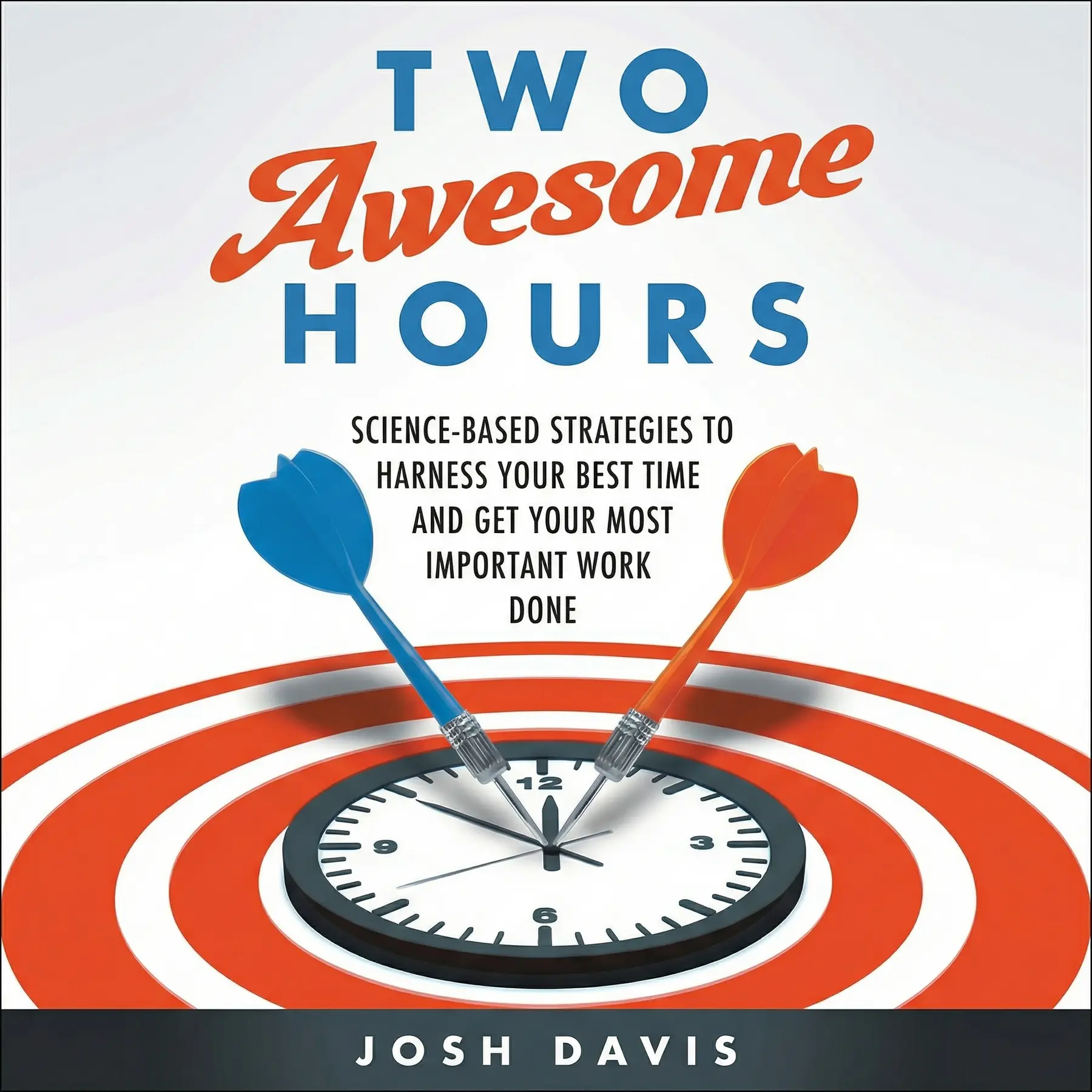
Two Awesome Hours: Science-Based Strategies to Harness Your Best Time and Get Your Most Important Work Done
By Josh Davis
Stop trying to work more and start working smarter. This guide leverages neuroscience to help you create the perfect conditions for two hours of peak mental performance every single day.
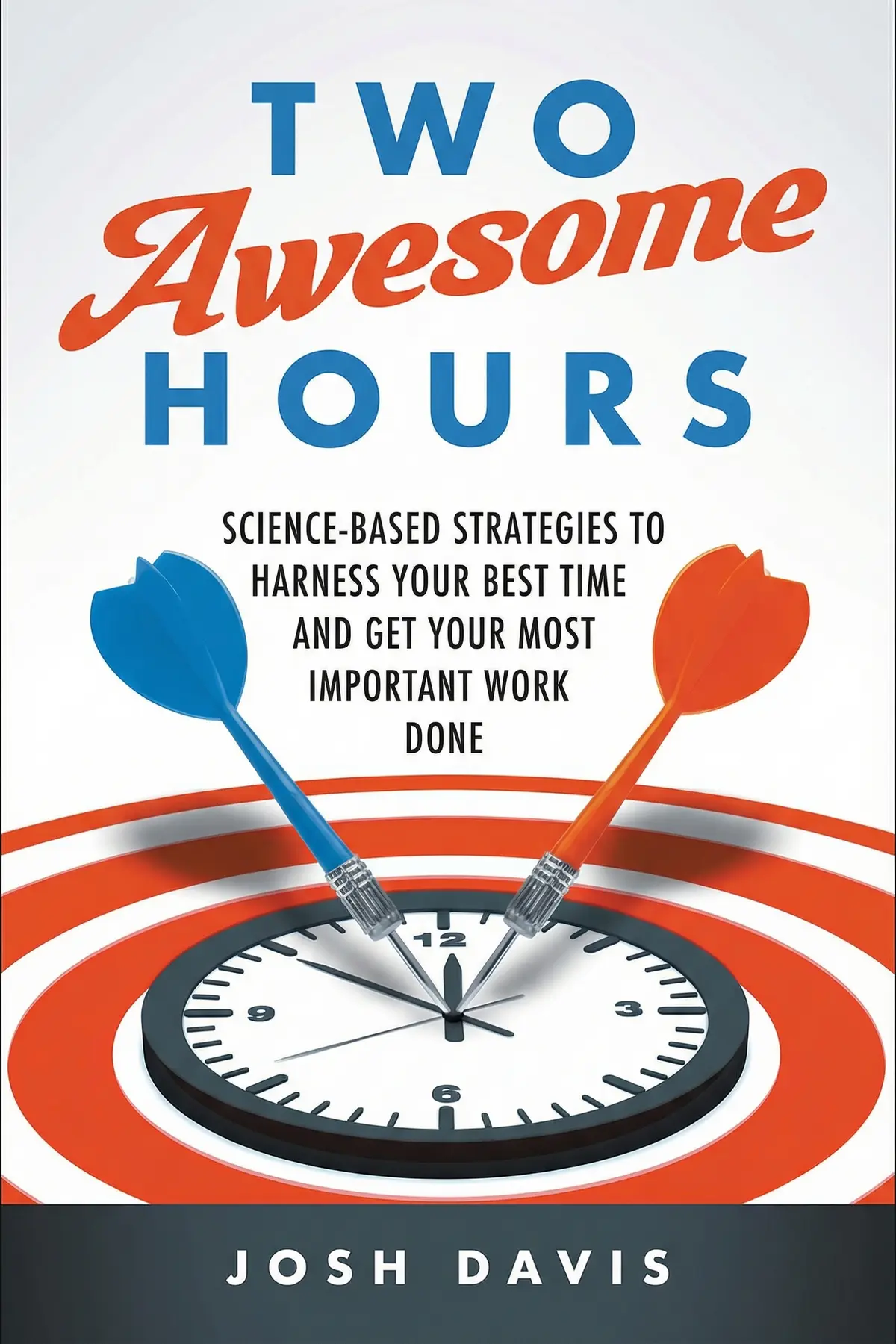
Table of Content
1. Introduction
1 min 43 sec
Have you ever reached the end of a grueling workday, feeling absolutely exhausted, only to realize you haven’t actually accomplished anything of substance? You spent hours responding to messages, sitting through meetings, and putting out small fires, but the big, meaningful projects are exactly where they were when you started. It is a frustratingly common experience, and it often stems from a fundamental misunderstanding of how our brains work. We try to force ourselves to be productive for eight or nine hours straight, ignoring the fact that our mental energy is a limited resource that fluctuates throughout the day.
The throughline of our exploration today is that peak performance isn’t about working harder or longer; it’s about creating the right biological and psychological conditions to be truly effective. If you can stop the cycle of endless, shallow busyness and instead focus on mastering just two hours of high-quality work, you will find that your output improves dramatically. We are going to dive into five specific strategies that will help you move away from a reactive state of mind and into a proactive one. We will look at how to spot the hidden choices in your day, how to fuel your brain for deep focus, and even why some of the things we consider ‘bad habits’—like letting our minds wander—can actually be our greatest assets when used correctly. By the end of this summary, you’ll have a roadmap for reclaiming your time and making those two awesome hours a daily reality.
2. Identifying Choice Points
2 min 04 sec
Discover how the small gaps between tasks hold the secret to productivity and why falling into autopilot is the biggest threat to your goals.
3. The Economy of Mental Energy
2 min 01 sec
Learn why your brain’s processing power is a finite resource and how small, seemingly easy decisions can leave you feeling drained.
4. Working with Distractions
2 min 01 sec
Explore the evolutionary reasons behind our short attention spans and why fighting your brain’s natural tendencies is a losing battle.
5. The Benefits of Strategic Daydreaming
1 min 51 sec
Find out how letting your mind drift can actually enhance your problem-solving skills and lead to creative breakthroughs.
6. Physical Activity as a Cognitive Primer
1 min 45 sec
See how even brief periods of exercise can sharpen your focus and improve your ability to ignore irrelevant information.
7. Eating for Sustained Focus
1 min 41 sec
Discover why the types of food you choose can either give you a short burst of energy or support hours of deep work.
8. The Architecture of the Workspace
1 min 58 sec
Uncover how environmental factors like light, noise, and clutter are silently influencing your ability to stay on task.
9. Movement as a Mental Reset
1 min 46 sec
Why the simple act of standing up and walking around is a vital strategy for maintaining high-level productivity throughout the day.
10. Conclusion
1 min 51 sec
In a world that prizes constant busyness, the strategies in Two Awesome Hours offer a refreshing and science-backed alternative. We have seen that peak productivity isn’t about mastering every minute of the day; it’s about mastering the conditions that lead to your best work. By identifying decision points, you reclaim the power of choice. By managing your mental energy and nourishing your body, you ensure you have the fuel necessary for deep focus. And by optimizing your environment and embracing the natural wandering of your mind, you remove the friction that often holds you back.
The throughline of this journey is simple but profound: you are a biological being, not a machine. When you stop fighting your nature and start working with it, you don’t need eight hours of perfection to be successful. Just two awesome hours of truly effective work can be more valuable than an entire week of distracted, autopilot activity.
Your actionable takeaway for today is to start small. Look for your next decision point. When you finish your current task, don’t immediately click on something else. Stop. Take a deep breath. Stand up and stretch. Then, ask yourself what the most impactful use of your time would be for the next hour. If you’re feeling foggy, go for a quick walk or have a snack with healthy fats. By intentionally setting the stage for success, you’ll find that those two hours of peak performance aren’t just possible—they’re inevitable. Go ahead, step away from the desk for a moment, and come back ready to do your best work.
About this book
What is this book about?
Many of us feel overwhelmed by an endless stream of emails, meetings, and minor tasks, leaving our most important work untouched. We often measure productivity by how many hours we sit at a desk, but this approach ignores how our brains actually function. Two Awesome Hours shifts the focus from time management to energy and condition management. It provides a science-backed framework for recognizing the critical moments in our day when we can choose our path rather than drifting into autopilot. By understanding the biological and psychological factors that influence focus, you can stop fighting against your natural tendencies and start working with them. The book promises that you don't need to be productive for eight hours straight to be successful. Instead, by implementing five core strategies—ranging from managing mental fatigue to optimizing your physical environment—you can ensure that you have at least two hours of high-impact, high-quality work every day. This approach is designed to help you achieve your most significant goals without the burnout that comes from constant, low-value busyness.
Book Information
About the Author
Josh Davis
Josh Davis is the lead professor and director of research at the NeuroLeadership Institute. He earned his doctorate in psychology from Columbia University. His professional work focuses on diverse research areas, including the study of embodied cognition and the regulation of human emotions, which he applies to help individuals improve their performance and leadership capabilities.
Ratings & Reviews
Ratings at a glance
What people think
Listeners find the work exceptionally written and accessible, valuing the useful guidance and solid perspectives shared. The book also receives acclaim for its clear, actionable strategies, with one listener pointing out how it uses the mind-body connection to achieve a calmer lifestyle. Furthermore, listeners believe the content is highly valuable, with one review noting its effectiveness in helping grasp how to make deliberate task selections.
Top reviews
Thitima
This book completely reframed my approach to a heavy workload by focusing on just two high-quality hours of performance. We often feel pressured to be 'on' for eight hours, but Davis proves that is biologically impossible and counterproductive. By following the five simple strategies—especially the one about leveraging the mind–body connection—I have found myself much more capable of handling competing priorities. The writing is straightforward and the tips are easy to digest during a busy week. Personally, I think this is one of the few productivity books that actually understands how the human brain functions. It’s a short read that delivers a massive amount of value for your time.
Show moreAna
After hearing so much about the toxic 'hustle' culture, it was incredibly refreshing to read something that prioritizes biological needs over raw efficiency. Josh Davis explains that we only need two awesome hours to be at our most productive, which takes a huge weight off my shoulders. The strategy regarding 'decision points' is worth the price of the book alone because it helps you reclaim your day from autopilot mode. Even for someone like me, who has read every self-help book under the sun, there were new gems here. The mind-body connection insights were particularly enlightening. Highly recommended for anyone who wants to achieve their goals without losing their sanity in the process.
Show moreSumalee
Finally, a productivity guide that doesn't treat humans like cold, unfeeling machines designed only for the relentless pursuit of commerce. By recognizing that our consciousness is essentially a thin layer of awareness floating on a complex bag of biological processes, we can finally stop punishing ourselves for not being perfect robots. Davis offers five strategies that are quite powerful because they leverage our natural neuropsychology rather than fighting against it. I particularly loved the insight that effectiveness is not the same thing as efficiency. My only gripe is that the tone can occasionally veer into the typical 'hustle' tropes I usually try to avoid. Still, it is a very practical and insightful read.
Show moreAva
The chapter on workspace environment changed how I look at my desk clutter and the lighting in my office. Davis makes a compelling case for how our physical surroundings influence our thought processes in ways we rarely acknowledge. It’s a well-written book with practical advice that is worth every penny if you actually implement the suggestions. I started managing my mental energy rather than just my time, and I’ve noticed a significant shift in my output. While some of the science is a bit dense for a casual read, the easy-to-implement ideas at the end of each chapter make it accessible. It is a solid addition to any professional's library.
Show moreJeeranan
What struck me most was the emphasis on conscious task choices and the power of managing your energy peak. Instead of trying to do more, faster, and better, Davis suggests we simply find the right block of time for our most important work. This subtle shift in perspective helped me stop fighting distractions and start working with my natural rhythms. The book is well-backed by research, but it doesn't read like a dry academic paper. I did find a few sections to be a bit obvious, particularly the parts about workspace setup. Regardless, the core message is vital for anyone struggling with the modern culture of constant busyness. It’s a very smart, helpful little book.
Show moreSam
As a freelancer working from a home office, I am always on the hunt for productivity hacks that actually stick to my ribs. The concept of 'decision points'—those moments where we transition between tasks—was the most interesting takeaway for me. It is a straightforward idea, yet we so often miss the opportunity to consciously choose our next move. However, I must say that much of the content felt like a retread of ideas I have seen in dozens of other self-help books over the years. It is well-written and easy to read, but if you have a lot of control over your environment already, the impact might be minimal. It’s a decent primer but not a game-changer.
Show moreZanya
Is it possible to optimize your brain by just changing how you view your lunch break or your morning commute? Josh Davis argues that it is, focusing heavily on the mind-body connection to facilitate a less stressful work life. I appreciated the sections on why daydreaming and letting your attention wander isn't necessarily a failure of willpower. It is refreshing to see a productivity expert embrace the natural human propensity for distraction rather than just telling us to fight it harder. To be fair, though, the middle chapters felt a bit redundant. I found myself skimming the endnotes more than the actual text because the core arguments were repeated so frequently.
Show moreSara
To be fair, the science presented here is well-documented, even if the delivery feels a little thin at times. I read this for my work literary circle and we had a great discussion about the 'witch’s brew' of chemicals that dictate our daily moods. The advice on using food and exercise at specific times to support cognitive goals was a highlight for many of us. However, for those of us with strictly managed corporate schedules, some of these tips are easier said than done. It is a good book to read if you are feeling burnt out, but don't expect it to solve every systemic issue in your workplace. It’s a helpful, if somewhat familiar, guide.
Show moreSau
Look, the core message is great, but the book itself could have been a long-form article. It drags in parts, even though it is relatively short. Davis provides several strategies that are quite powerful if you actually apply them, yet the narrative surrounding these tips feels a bit bloated for such a slim volume. I did find the similarities to Charlotte Mason’s writings on education and atmosphere to be quite fascinating. The focus on providing the right psychological and biological conditions for performance is a strong point. It is a decent, well-written book with good insights, but it lacks that 'wow' factor that makes a 5-star read for me. It’s just okay.
Show moreWei
Maybe I expected too much from the title, but this took me much longer than two hours to get through and it certainly wasn't awesome. While the science-backed explanations regarding our mental energy are clearly researched, the actual advice felt like common sense repackaged for a corporate audience. Frankly, the book managed to drag in several sections despite its relatively short page count. I was hoping for revolutionary tactics, but instead, I found oft-repeated suggestions about avoiding distractions and managing workspace clutter. If you are already a fan of literary fiction or deep-dive psychology, you might find this a bit too simplistic and dry for your taste. It just didn't click for me.
Show more
Readers also enjoyed
AUDIO SUMMARY AVAILABLE
Listen to Two Awesome Hours in 15 minutes
Get the key ideas from Two Awesome Hours by Josh Davis, plus 5,000+ more titles in English and Thai.
- 5,000+ titles
- Listen as much as you want
- 7-day free trial
- Cancel anytime







