

18 min 26 sec
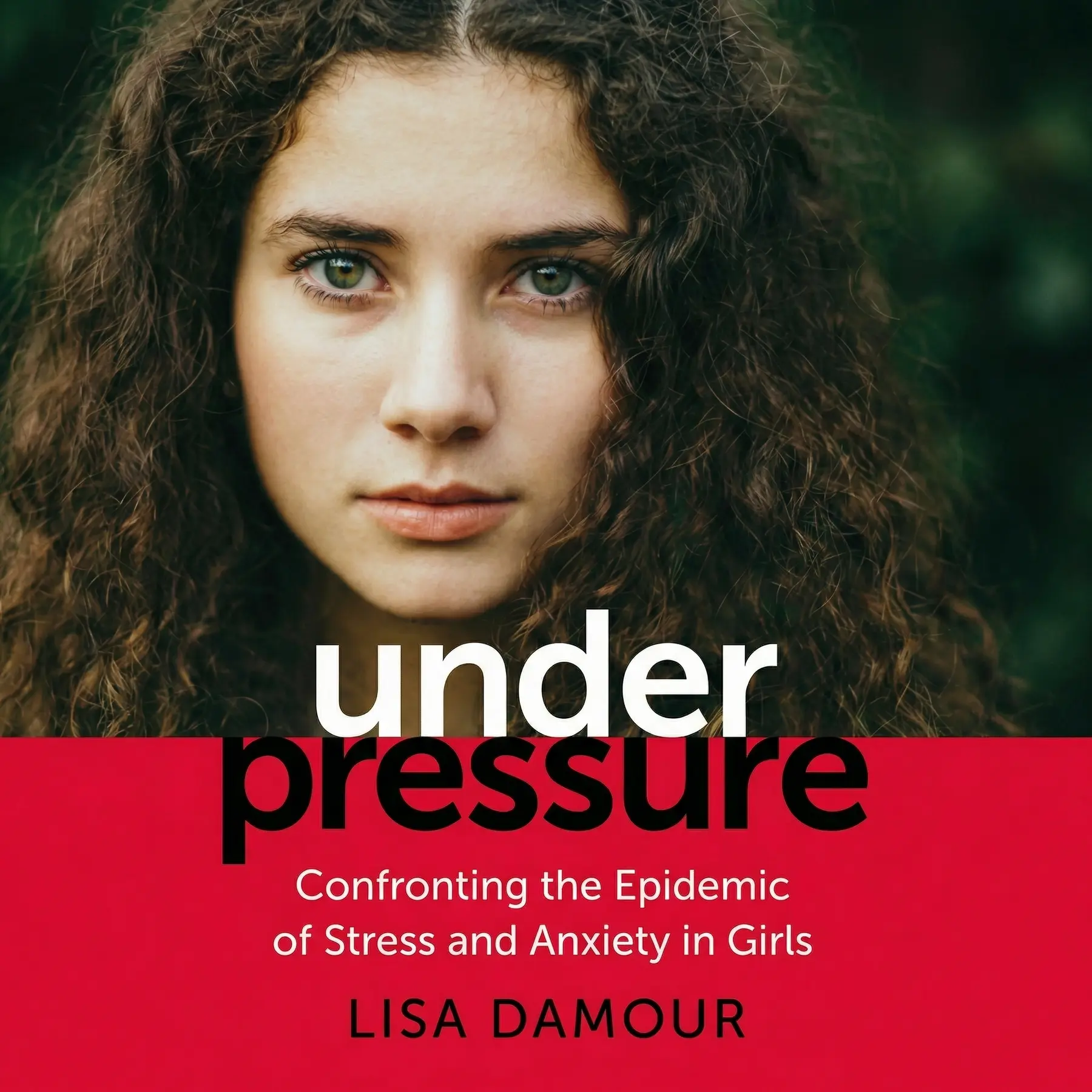
Under Pressure: Confronting the Epidemic of Stress and Anxiety in Girls
By Lisa Damour
Under Pressure explores the unique stressors affecting modern girls, offering psychological insights and practical strategies to help parents and educators foster resilience, confidence, and emotional well-being in a high-stakes world.

Table of Content
1. Introduction
1 min 48 sec
In the modern era, the landscape of girlhood has shifted into something that often feels like a high-stakes obstacle course. Everywhere we look, from the classroom to the locker room and the digital spaces of social media, girls are navigating a complex web of expectations that their male peers often don’t encounter in the same way. Whether it’s the drive for perfect grades, the pressure to maintain a specific social image, or the subtle cultural cues about how a girl should behave, the weight can be immense. This has led to a noticeable rise in stress and anxiety among young women, leaving parents, teachers, and mentors searching for a way to help them stay afloat.
But here is the central throughline we need to grasp: while the pressures are real and rising, the goal isn’t necessarily to remove every stressor from a girl’s life. Instead, the focus should be on building resilience and helping girls distinguish between the stress that helps them grow and the anxiety that starts to take a toll on their mental health. By understanding the psychological underpinnings of why girls react the way they do to their environment, we can provide the specific kinds of support they need to become confident, self-assured adults.
In this exploration of the girl world, we aren’t just looking at the problems. We are looking at a framework for engagement. We’ll examine why girls often internalize academic feedback differently than boys, how to handle the very real threat of harassment, and why the cultural expectation of being ‘agreeable’ is often the silent culprit behind a girl’s burnout. This isn’t just about managing a crisis; it’s about empowering the next generation of women to navigate a demanding world with strength and clarity. Let’s look at how we can bridge the gap between the pressure they feel and the resilience they are capable of building.
2. The Function of Stress and Anxiety
2 min 53 sec
Stress is often seen as the enemy, but what if certain levels of tension are actually vital for growth? Learn how to differentiate between healthy challenges and toxic overload.
3. The Trap of Avoidance
2 min 36 sec
Discover why the most natural reaction to anxiety—running away—is actually the one thing that ensures the fear grows stronger, and how to encourage a more helpful approach.
4. Respecting the Slow-to-Warm-up Temperament
2 min 33 sec
Not every girl who hangs back in social settings has an anxiety disorder. We explore the vital difference between a shy personality and a clinical problem.
5. The Academic Achievement Gap and Mindset
2 min 18 sec
Girls are outperforming boys in school, yet they are more stressed by it. Uncover the psychological reasons why grades feel like a judgment on their identity.
6. Confronting the Reality of Harassment
2 min 09 sec
The statistics on harassment in schools are startling, but the real danger lies in the silence and self-blame that often follows. Learn how to open the door to these difficult conversations.
7. The Cost of Being a 'Good Girl'
2 min 16 sec
Societal expectations often pressure girls to be agreeable at all costs. Discover why learning to say ‘no’ is a vital skill for protecting their mental health.
8. Conclusion
1 min 53 sec
As we look at the complex world of modern girlhood, it’s easy to feel overwhelmed by the challenges. Between the internal pressures of academic perfection and the external pressures of cultural expectations, it can seem like a daunting time to be growing up. However, the overarching message here is one of hope and empowerment. While the rates of stress and anxiety are high, they are not insurmountable. By understanding the psychological mechanics at play—the difference between growth-oriented stress and toxic anxiety, the trap of avoidance, and the weight of societal expectations—we can provide the targeted support that girls need to thrive.
It’s also helpful to maintain a bit of perspective. Despite the alarming headlines we often see in the media, today’s teenagers are, in many ways, safer and more responsible than previous generations. They are taking fewer risks with their physical health and are often more thoughtful about their futures. The ‘crisis’ we hear about is real, but it’s a crisis of internal pressure, not necessarily a decline in behavior. Our role as the adults in their lives is to be the steady anchor in their storm. We don’t need to have all the answers, but we do need to be present, observant, and willing to have the difficult conversations.
As an actionable final step, take a moment to evaluate the ‘agreeability’ pressure in your own household or classroom. The next time a girl in your life sets a firm boundary or says no to a request that’s overwhelming her, celebrate that choice. Instead of seeing it as a lack of cooperation, see it as a sign of growing strength and self-awareness. By validating her right to protect her own energy, you are helping her build the resilience she will need for the rest of her life. The world will always be full of pressure, but with our support, the girls in our lives can learn to stand under it without being broken by it.
About this book
What is this book about?
Modern culture has created a unique pressure cooker for young women, resulting in unprecedented levels of stress and anxiety. Under Pressure dives deep into the specific challenges girls face today, from the intense academic expectations and the complexities of social media to the pervasive reality of sexual harassment and the societal demand for girls to be perpetually agreeable. This guide promises to demystify the internal world of adolescent girls by distinguishing between healthy, growth-oriented stress and the toxic anxiety that can paralyze them. By moving beyond the headlines and focusing on clinical insights, the book provides a roadmap for adults to support the girls in their lives, teaching them how to face fears instead of avoiding them and how to set firm boundaries in a culture that often discourages female assertiveness.
Book Information
About the Author
Lisa Damour
Lisa Damour, PhD, is a distinguished clinical psychologist with a focus on education and child development. She serves as the Director of the Laurel School’s Center for Research on Girls and is widely recognized as a New York Times best-selling author, notably for her work Untangled.

Ratings & Reviews
Ratings at a glance
What people think
Listeners find the material very informative, as one listener points out how it successfully bridges the gap between practical advice and research support. The book also receives praise for its readability, particularly among parents of girls and teenagers. Listeners also value how the text helps them frame stress and anxiety healthily, while one listener notes that it offers an authentic window into a girl's world.
Top reviews
Selin
This book is essentially the manual I wish I had five years ago. Damour does an incredible job of reframing stress not as a monster to be avoided, but as a functional tool for growth and resilience. I particularly loved the 'glitter jar' analogy for calming a frantic teenage brain; it's a simple, visual tactic that actually works during a meltdown. While the book definitely leans toward a specific demographic of high-achieving girls, the core psychological principles regarding anxiety are universal. The way she explains how girls often trade confidence for a 'slavish' work ethic hit home for both me and my daughter. It’s readable, backed by solid research, and offers actionable strategies rather than just vague platitudes about 'being there' for your kid. If you’re raising a girl in this high-pressure culture, this is mandatory reading.
Show moreGabriel
Finally, a parenting guide that doesn't treat teenage girls like they're made of glass. Damour’s perspective on anxiety is a breath of fresh air; she argues that trying to protect our daughters from all stress actually makes them more fragile in the long run. The book provides a clear roadmap for helping them manage the 'clutch moments' of life without crumbling. I found the advice on female sexuality particularly modern and empowering, focusing on joyful agreement rather than just fear-based 'no' messages. The writing style is accessible and doesn't get bogged down in overly clinical jargon, making it easy to digest after a long day of parenting. It helped me realize that my daughter’s occasional meltdowns aren't necessarily signs of a disorder, but often just a 'brain-full-of-glitter' that needs time to settle. Truly indispensable.
Show moreThitiwan
Ever wonder why your daughter is a total wreck after a 'minor' chemistry quiz? This book explains the biology and psychology behind those reactions in a way that actually makes sense. I loved the data showing that team sports help girls appreciate what their bodies can do rather than just how they look. It’s such a simple shift in focus, but it’s so powerful for building self-esteem. The author’s voice is calm and reassuring, which is exactly what a stressed-out parent needs. Not gonna lie, I was skeptical about another 'teen expert' book, but the practical strategies for handling digital drama and late-night texting marathons are gold. It’s a quick read that provides an accurate glimpse into the modern girl’s world. Highly recommend for any parent navigating the high school years.
Show moreOrathai
Picked this up on a whim because my 14-year-old was struggling with the jump to high school, and it was exactly what we needed. Dr. Damour has this way of making you feel like you're having a cup of coffee with a very smart friend who just happens to be a world-class psychologist. The 'glitter jar' metaphor is now a staple in our house. I appreciated that she doesn't just blame phones for everything, but looks at the underlying need for connection and the pressure to be 'on' 24/7. The writing is snappy and the chapters are organized by 'relational contexts,' which makes it easy to jump to the section you need most. It’s a fresh, relatable take on the age-old problems of growing up. My daughter even read a few sections and felt seen, which is the highest praise a teen can give.
Show moreLandon
As a middle school educator in a private setting, I found many of Damour’s observations to be hauntingly accurate. She perfectly captures the 'slavish overpreparedness' that leads to burnout in bright young women. The sections on how girls communicate—specifically the 'pillar' versus 'bulldozer' archetypes—provide a fantastic framework for resolving peer conflicts that I’ve already started using in my classroom. To be fair, the book is very much aimed at the upper-middle-class experience, and it misses the mark when it comes to the stressors faced by students from lower-income backgrounds. The brief mention of racial minorities felt a bit tacked on at the end. However, her advice on encouraging team sports over aesthetic-focused activities like dance was a total 'aha' moment for me. It’s a solid resource, even if it has a bit of a blind spot regarding socioeconomic diversity.
Show moreMan
After finishing Untangled last year, I wasn't sure if this would offer anything new, but I was pleasantly surprised by the depth here. Damour moves beyond the developmental stages and dives deep into the specific cultural pressures of today—especially the toxic impact of social media and the drive for 'perfection' in every arena. Truth is, some parts felt a bit repetitive if you’ve followed her work before, but the specific focus on school-related anxiety is worth the price alone. She offers a very realistic glimpse into a girl's world, including the way they often prioritize others' feelings over their own needs. I do wish she had addressed non-hetero teens with more than just a passing glance, as their stressors are often unique. Still, as a college counselor, I’ll be recommending several chapters to the parents I work with.
Show moreTakeshi
The chapter on communication styles was easily the highlight of this book for me. Learning the difference between a 'doormat,' a 'bulldozer,' and a 'pillar' gave my daughter and me a shared language to talk about her friend drama without it turning into a fight between us. Personally, I found the advice on how to handle 'emotional dumping'—where they text you their worst feelings and then move on while you're left worrying—to be a total lifesaver. However, I agree with other reviewers that the book is quite centered on a white, straight, affluent demographic. It would have been a 5-star read if it had more inclusivity. Regardless, the core advice on 'expanding capacity' through managed stress is something every parent can apply, regardless of their background.
Show morePete
Dr. Damour has a real knack for taking complex psychological concepts and making them feel like common sense. I found the 'slavish overpreparedness' section particularly eye-opening; it explains why so many girls work twice as hard as boys but still feel less confident. To be fair, her advice on sexuality felt a little thin—I’m not sure 'doing what you want' is enough of a compass for a sixteen-year-old—but her overall approach to girlhood is incredibly respectful. The book is very much a product of her work in elite private schools, so there’s a certain level of privilege baked into every chapter. If you can look past that, the strategies for building resilience and managing the 'daily grind' of school are excellent. It's a solid 4-star read that offers a lot of peace of mind.
Show moreHugo
While I appreciated the central thesis that we shouldn't 'pathologize' normal teenage stress, I struggled with how narrow this book's focus is. It feels specifically written for wealthy, white families aiming for the Ivy League. If your daughter is dealing with real-world financial stressors or doesn't fit the 'high-powered elite' mold, you might find large chunks of this irrelevant. Frankly, the section on diversity felt like a token gesture rather than a deep dive into how different backgrounds affect anxiety. That said, the distinction between healthy stress that builds 'muscle' and toxic anxiety that paralyzes is a vital one. I also liked the practical tips for managing digital lives, even if I found her 'transactional' approach to grades a bit disappointing. It’s a useful tool for a very specific subset of parents, but it's far from a universal guide.
Show moreDavid
Look, if you aren't part of the top 1% or obsessing over Harvard admissions, this book might leave you feeling invisible. My biggest gripe is the frankly transactional way Damour suggests parents talk about grades—calculating the bare minimum for an A rather than fostering a genuine love of learning. It feels like she’s just coaching girls on how to win a rigged game rather than questioning the game itself. The lack of attention to socioeconomic stressors is glaring; there is zero mention of kids who can't afford the 'ski trips' or the latest tech that she assumes all girls are using. The section on racial minorities is a lame addendum that lacks any real insight. It’s a very 'private school' perspective that ignores the reality of most families. While there are a few nuggets about 'settling the glitter,' they don't outweigh the elitist tone of the rest of the book.
Show moreReaders also enjoyed

A Liberated Mind: How to Pivot Toward What Matters
Steven C. Hayes
ADHD an A-Z: Figuring It Out Step by Step
Leanne Maskell

AUDIO SUMMARY AVAILABLE
Listen to Under Pressure in 15 minutes
Get the key ideas from Under Pressure by Lisa Damour, plus 5,000+ more titles in English and Thai.
- 5,000+ titles
- Listen as much as you want
- 7-day free trial
- Cancel anytime







