

A Life Decoded: My Genome: My Life
J. Craig Venter
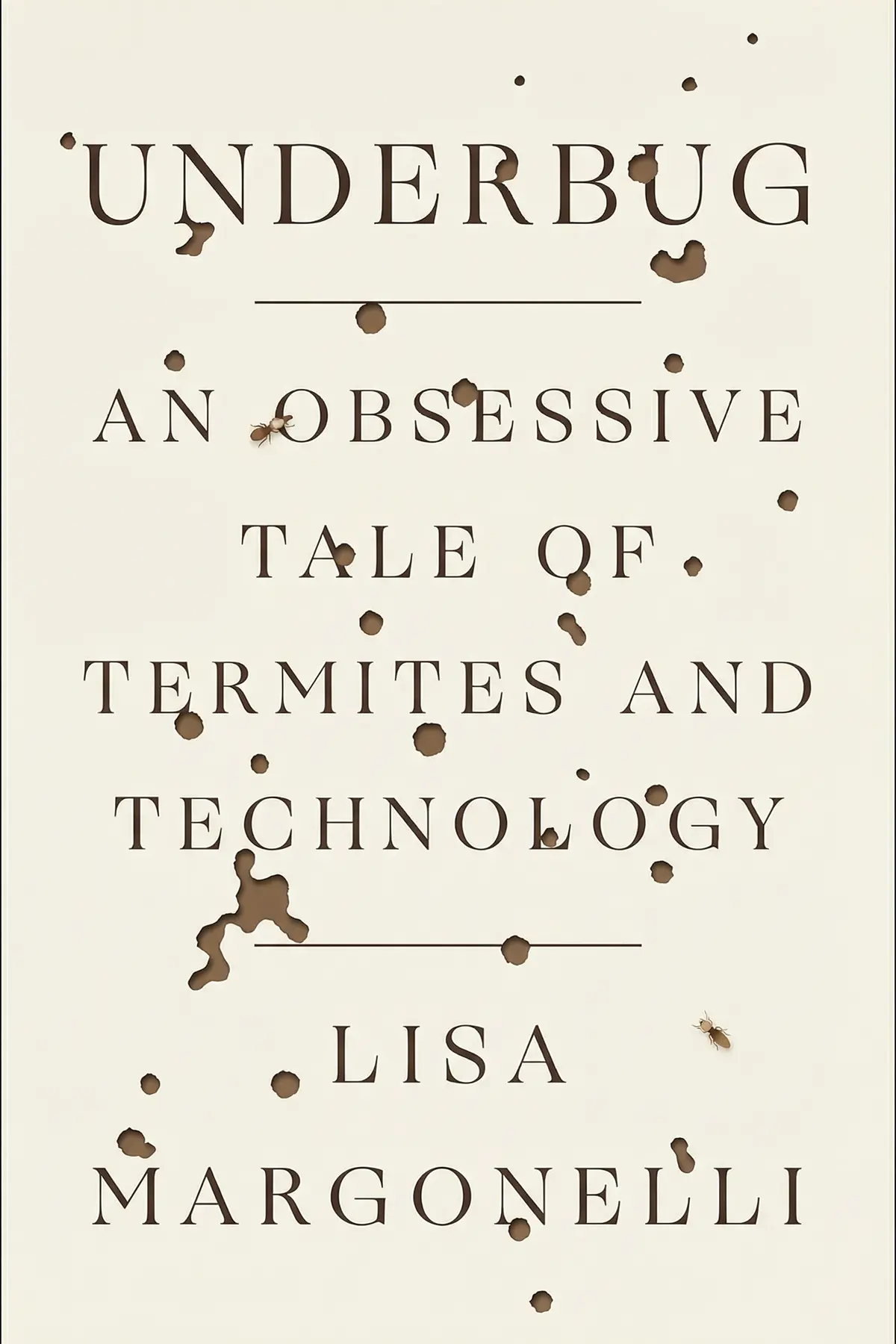
Underbug explores the hidden world of termites, from their evolutionary origins as social cockroaches to their potential role in revolutionizing biofuels and robotics through their complex collective intelligence and unique biology.
1 min 58 sec
When we think of the great architects and social engineers of the natural world, our minds often drift to the honeybee or the industrious ant. We admire their complex hives and their tireless labor. But there is another creature, often relegated to the status of a household pest, that has been building skyscrapers and managing complex societies for millions of years before humans even walked the earth. This is the story of the termite—a creature that author Lisa Margonelli calls the true “underbug.”
In 2008, Margonelli found herself at a crossroads in her writing career. An unexpected invitation to a termite safari in Namibia sparked what would become a ten-year obsession. What was initially meant to be a brief diversion turned into a global quest across three continents to understand these bizarre insects. Along the way, she encountered researchers who are looking to the termite mound for answers to some of our most pressing modern problems.
Can these insects show us how to create a truly sustainable biofuel? Could their collective behavior serve as a blueprint for the next generation of autonomous robots? Are they individual animals, or should we view a colony as a single, massive superorganism? Through this exploration, we begin to see that the termite is far more than a wood-eating nuisance. It is a master of chemistry, a pioneer of architecture, and perhaps, a mirror for our own societal structures.
In this journey, we will unravel how these creatures evolved from solitary scavengers into the highly social beings they are today. We will look inside their gut—a microbial universe that functions like a sophisticated bioreactor. We will explore mounds that function as living lungs and robots that think without a brain. By the end, the way you look at the ground beneath your feet, and the tiny lives scuttling within it, will be forever changed.
1 min 58 sec
Discover how a simple change in diet forced the ancestors of the termite to abandon their solitary lives and embrace a radical new form of social connection.
2 min 06 sec
For centuries, humans have looked at termite colonies and seen reflections of their own political systems, often missing the true nature of the insect in the process.
1 min 59 sec
Explore the biological mystery that puzzled Darwin himself: why would an insect evolve to spend its life working for a colony instead of having its own offspring?
1 min 55 sec
Termite mounds are far more than just dirt piles; they are sophisticated respiratory systems that regulate the life of the entire colony.
1 min 51 sec
Discover how certain African termites have mastered the art of agriculture, maintaining massive fungal gardens to do their heaviest digestive work.
1 min 52 sec
Scientists are peering into the microscopic world of the termite gut to find a way to turn common grass into affordable, sustainable fuel.
1 min 51 sec
Learn how the simple, uncoordinated movements of termites are inspiring a revolution in how we build and program autonomous robots.
1 min 51 sec
From devouring life savings to shaping global ecosystems, the sheer scale of the termite population makes them a force of nature we cannot ignore.
1 min 52 sec
As we have seen, the termite is far more than the simple pest it is often portrayed to be. Over the course of millions of years, these creatures have solved problems that we are only just beginning to tackle. From the transition from solitary survival to the complex interdependency of the colony, they have shown us a different way for life to organize itself. They have turned their own bodies and their massive homes into sophisticated machines for breathing, farming, and processing energy.
The journey of understanding the termite is also a journey of understanding ourselves. By looking at how we have historically projected our own politics and biases onto these insects, we learn to be more cautious about the stories we tell about nature. We see that intelligence doesn’t always require a large brain or a central leader; sometimes, it can emerge from the simple, coordinated actions of a thousand small parts.
As we look to the future, the lessons of the underbug remain more relevant than ever. The secrets hidden in their gut microbes may one day power our cars and planes, while the logic of their swarm intelligence could drive the robots that explore our oceans and space. The next time you see a termite mound or encounter a tiny, translucent bug in the soil, remember that you are looking at a master of the natural world—a creature that has survived through cooperation, innovation, and an unwavering commitment to the collective.
To truly embrace the lessons of Underbug, we must be willing to look closer and think smaller. We must be open to the idea that the answers to our biggest technological and environmental questions might be found in the most unexpected places. The termite reminds us that in the grand tapestry of life, even the smallest thread is essential to the whole.
This exploration takes readers deep into the mound and the laboratory, revealing how one of the world’s most misunderstood insects could hold the key to our technological future. It chronicles a decade-long journey to understand how tiny, sightless creatures manage to build massive, self-ventilating structures and digest complex materials that baffle human chemists. By examining the intersection of biology, engineering, and sociology, the narrative promises to shift your perspective on what intelligence looks like. You will discover the secrets of the termite gut, the mystery of swarm behavior, and the possibility of a new energy economy driven by microbial breakthroughs. It is a story of how looking closely at the smallest among us can solve some of humanity's biggest challenges.
Lisa Margonelli is an award-winning journalist and the author of Oil on the Brain, a bestselling study of the fossil fuel industry. She is a senior editor at the global news outlet Zócalo Public Square. She has written about science, politics, and technology for the Atlantic, Wired, Scientific American, and the New York Times, among others. She is currently based in the United States.
Listeners find the book both intriguing and meticulously documented, calling it a compelling narrative about termites and the scientific world. Furthermore, the quality of the writing is lauded as an elegantly crafted work of literary journalism, and listeners enjoy its humor. Nevertheless, the depiction of the subject matter gets a divided reception; some listeners note it's about termites while others mention it covers only about 25% of the content.
Picked this up on a whim after a recommendation and ended up staying awake until 2 AM finishing it. Margonelli has this incredible knack for taking a subject most of us ignore—the literal bugs under our floorboards—and turning it into a sprawling epic of modern science. It’s essentially a piece of literary journalism that reads like a travelogue, taking us from the red dirt of Namibia to high-tech labs. I found myself laughing out loud at the descriptions of the 'slacker' termites who don't seem to do much of anything. While some might find the tangents into drone warfare or biofuel a bit much, I think they’re what makes the book special. It’s not just a biology textbook; it’s a meditation on how we project our own human politics onto the natural world. This is top-tier science writing.
Show moreFew books manage to make the disassembly and decay of the natural world feel so urgent and exciting. Margonelli has crafted a masterpiece of literary journalism that uses the humble termite as a lens to examine our entire technological future. I was completely gripped by the accounts of her 'termite safaris' and the bizarre, pulsing minds of the geneticists she shadowed. The book is accurate and dense with information, yet it never loses its sense of human warmth or wry humor. I especially loved the black ink drawings that separate the chapters; they add a lovely aesthetic touch to a book that is already beautifully written. It’s a quest that spans centuries and continents, proving that even the smallest creatures have massive stories to tell. Highly recommended for fans of Ed Yong.
Show moreThis book is a fascinating, if occasionally dizzying, dive into the world of social insects and the humans obsessed with them. Margonelli’s writing style reminds me of Mary Roach or Ed Yong, blending hard science with a healthy dose of wit and personal anecdote. I particularly enjoyed the sections on swarm intelligence and how termite mounds might inspire future architecture. Truth be told, there were moments where the philosophical musings felt a bit self-indulgent and slowed the narrative pace. The focus shifts frequently from the biology of the bugs to the idiosyncratic personalities of the researchers she encounters in the field. Despite the 'oddness' of the structure, I learned more about 'grassoline' and genetic engineering than I ever expected. It’s a solid read for anyone who likes their science with a side of human eccentricity.
Show moreAs someone who follows green tech, I had to see what the hype was about regarding termite-inspired biofuel. Margonelli delivers a deeply reported look at how these tiny 'underlords' might just save the planet or change how we think about intelligence. The way she describes 'grassoline' and the internal chemistry of a termite's gut is nothing short of poetic. I appreciated the nuance she brought to the discussion of swarm behavior, debunking the idea that these insects are just mindless robots. However, I’ll admit that the middle section dragged slightly when the focus stayed too long on the technicalities of DNA extraction. The prose is beautiful, and the humor is dry and sharp, which helps carry the reader through the denser bits of biology. It's a journey that stretches from the 16th century to drone warfare.
Show moreWhat I loved most about Underbug was how it exposed the ways we shamelessly impose our own social hierarchies onto the animal kingdom. We want to see termites as a socialist utopia or a rigid military machine, but the reality is far more chaotic and interesting. Margonelli does a great job showing how scientists often miss what’s right in front of them because of these preconceptions. The stuff about roboticists trying to mimic termite behavior was genuinely surprising and far more straightforward than the biology sections. My only real gripe is that the book can be 'tough sledding' if you don't have a background in science, as some of the technical descriptions are quite dense. Still, the author’s voice is so engaging that it's worth sticking with it through the more difficult chapters.
Show moreIf you enjoy the works of Mary Roach, you’ll find a lot to like in this obsessive tale of termites and technology. It’s a funny, thought-provoking, and occasionally frustrating journey that refuses to stay in one lane. Margonelli takes us inside the mounds and the strange minds of those trying to decode them, from Namibia to the American Southwest. The book is at its best when it explores the intersection of biology and human ambition, like the dream of turning wood into cheap energy. Some of the philosophical musings on the future of the planet felt a bit 'doom and gloom' for my liking, but the overall quality of the writing kept me hooked. It’s a deep, well-researched look at our 'underappreciated underlords' that will leave you looking at the ground a lot more closely next time you're outside.
Show moreEver wonder what’s actually going on inside a termite mound? You’ll get some of that here, but be prepared for a whole lot of other stuff as well. I went in expecting a straightforward nature book, but it felt more like a memoir about the author's ten-year journey through various scientific subcultures. Some of the chapters, like the one where she discusses her own home being eaten by termites, were absolutely riveting and full of humor. Other sections involving complex robotics and genetic mapping were frankly a bit of a slog to get through for a non-scientist. The organization feels somewhat scattered, hopping from Namibia to Nevada without much warning. It’s a deeply researched piece of work, but the ratio of 'termite facts' to 'author’s feelings' might frustrate those looking for a traditional entomology book.
Show moreThe chapter on the 'slacker' termites was definitely the highlight for me because it challenged every stereotype I had about industrious social insects. It turns out that termites have highly idiosyncratic behaviors, much like the humans studying them in this book. While the writing is undeniably high-quality and often funny, the narrative path is extremely winding. One moment you're in a mound in Australia, and the next you're pondering the ethics of drone warfare or the nature of consciousness. This 'swirling' style is clearly intentional, but it made it difficult for me to stay engaged over long reading sessions. I think a bit more focus on the bugs themselves and a bit less on the 'pop-philosophy' would have made this a better experience. It’s interesting, but frequently exasperating.
Show moreI really wanted to love this, but I ended up putting it down about halfway through because I just couldn't stay focused on the diversions. There is a great book hidden inside here about the esoterics of termite civilization, but it’s buried under a lot of travelogue and biographical sketches. Margonelli's prose is top-notch—she has a way with a sentence that is truly enviable—but the organization is just too scattered for my taste. I enjoyed learning about the history of termite research and the potential for new technologies, but the constant slogging into and out of labs became repetitive. I suspect readers who enjoy long-form magazine features will appreciate the style more than I did. It’s definitely an 'odd book,' as some other reviewers have noted, and requires a lot of patience.
Show moreNot what I expected at all, and unfortunately, not in a good way. I was looking for a deep dive into the natural history of termites, but this book is about 25% bug science and 75% profiles of scientists and the author's travel logistics. I found the descriptions of the various labs and field sites in the American Southwest to be incredibly tedious after a while. Margonelli is a talented writer, but she seems much more interested in the 'weirdness' of the researchers than the fascinating biology of the actual insects. By the time we got into the abstract philosophy and speculative futures of the planet, I found myself skimming just to get to the end. If you want a book about insects, look elsewhere; this is a book about the people who look at insects.
Show moreJ. Craig Venter
Carl Zimmer

Bill Bryson
Jeff Hawkins

Lisa Kaltenegger


AUDIO SUMMARY AVAILABLE
Get the key ideas from Underbug by Lisa Margonelli, plus 5,000+ more titles in English and Thai.







