
21 min 05 sec
Vaxxers: A Pioneering Moment in Scientific History
Discover the high-stakes journey of the scientists behind the Oxford AstraZeneca vaccine. This summary reveals how years of prior research enabled a record-breaking response to the global pandemic and what it means for future health.

Table of Content
1. Introduction
1 min 56 sec
In late 2019, the world was on the brink of a transformation no one could have predicted. While most people were celebrating the holidays, a handful of scientists were watching a series of reports coming out of China. A new virus was emerging, and for those who had dedicated their lives to studying pathogens, it was the moment they had been preparing for—and the moment they dreaded. This was the start of the COVID-19 pandemic, caused by the SARS-CoV-2 virus, a global health emergency that would soon rival the devastating impact of the 1918 flu.
But the story of how we fought back didn’t start in 2020. It started years earlier in the laboratories of the University of Oxford. In this summary of Vaxxers, we are going to look inside the race to create the Oxford-AstraZeneca vaccine. You’ll hear from the perspective of Professor Sarah Gilbert and Dr. Catherine Green, two of the leading scientists who were in the room where it happened.
There is a common myth that these vaccines were ‘rushed’ or that safety was ignored in favor of speed. What you are about to discover is that the speed was actually the result of decades of meticulous preparation and a revolutionary approach to vaccine technology. We will explore how previous outbreaks of SARS, MERS, and Ebola served as a dress rehearsal for the main event. You’ll learn how the team at Oxford managed to collapse a timeline that usually spans a decade into just a few months, all while maintaining the highest safety standards.
This isn’t just a story about science; it’s a story about human perseverance, the bridge between laboratory research and global manufacturing, and the lessons we must learn to be ready for the next threat. By the time we’re done, you’ll have a new appreciation for the ‘invisible’ work of scientists and a clearer understanding of how the world truly fought its way back from the brink.
2. Decades of Preparation Before the Crisis
2 min 44 sec
Vaccines don’t appear out of thin air. Discover how years of research into past outbreaks like SARS and MERS provided the head start scientists needed when COVID-19 emerged.
3. The Power of Platform Technology
2 min 41 sec
Imagine a vaccine like a pre-baked cake waiting for its final decoration. Learn how ‘plug-and-play’ technology revolutionized the speed of medical development.
4. Taking Financial Risks for Human Gain
2 min 14 sec
In a pandemic, time is more than money—it’s lives. Learn how ‘at-risk’ development allowed scientists to move faster without compromising safety.
5. The Herculean Task of Scaling Up
2 min 25 sec
Having a vaccine in a lab is one thing; having it in every pharmacy is another. Discover the logistical leap from a 10-liter flask to a 1000-liter bioreactor.
6. The Rigor of the Human Trial Process
2 min 18 sec
No medicine reaches the public without passing through the fire of clinical trials. Explore the stages of testing that proved the vaccine was both safe and effective.
7. Confronting the Reality of Vaccine Hesitancy
2 min 25 sec
Science can create a cure, but it can’t force people to take it. Learn about the human challenges of trust and misinformation that follow a breakthrough.
8. Preparing for the Next 'Disease Y'
2 min 31 sec
COVID-19 was a warning shot. Discover what the world must do now to prepare for the inevitable arrival of the next great viral threat.
9. Conclusion
1 min 51 sec
The story of Vaxxers is ultimately a story of what humanity can achieve when we combine foresight with urgent action. Sarah Gilbert, Cath Green, and their team at Oxford didn’t just stumble upon a vaccine in 2020; they spent years laying a foundation that the rest of us didn’t even know existed. They showed that the divide between ‘them’—the scientists—and ‘us’—the public—is a dangerous illusion. We are all in this together, and our safety depends on the quiet, rigorous work that happens in labs every single day.
As we’ve seen, the creation of the Oxford-AstraZeneca vaccine was a masterpiece of planning. It utilized revolutionary platform technology, navigated the high-stakes world of ‘at-risk’ manufacturing, and successfully scaled up to reach billions of people. But it also revealed the cracks in our global systems—the fragility of supply chains, the persistence of vaccine hesitancy, and the dangers of underfunding public health.
The throughline of this journey is that science is a shield, but it’s a shield we have to maintain. We cannot afford to be complacent now that the immediate crisis has faded. The next pathogen is already out there, mutating and waiting for its chance. The lessons of the COVID-19 pandemic must be codified into how we run our governments, our farms, and our international organizations. If we take anything away from the work of Gilbert and Green, it should be that preparation is not a luxury; it is a necessity. By valuing scientific expertise and building robust global networks of cooperation today, we can face the challenges of tomorrow with confidence rather than fear. The race against the next virus has already begun—and the time to prepare is now.
About this book
What is this book about?
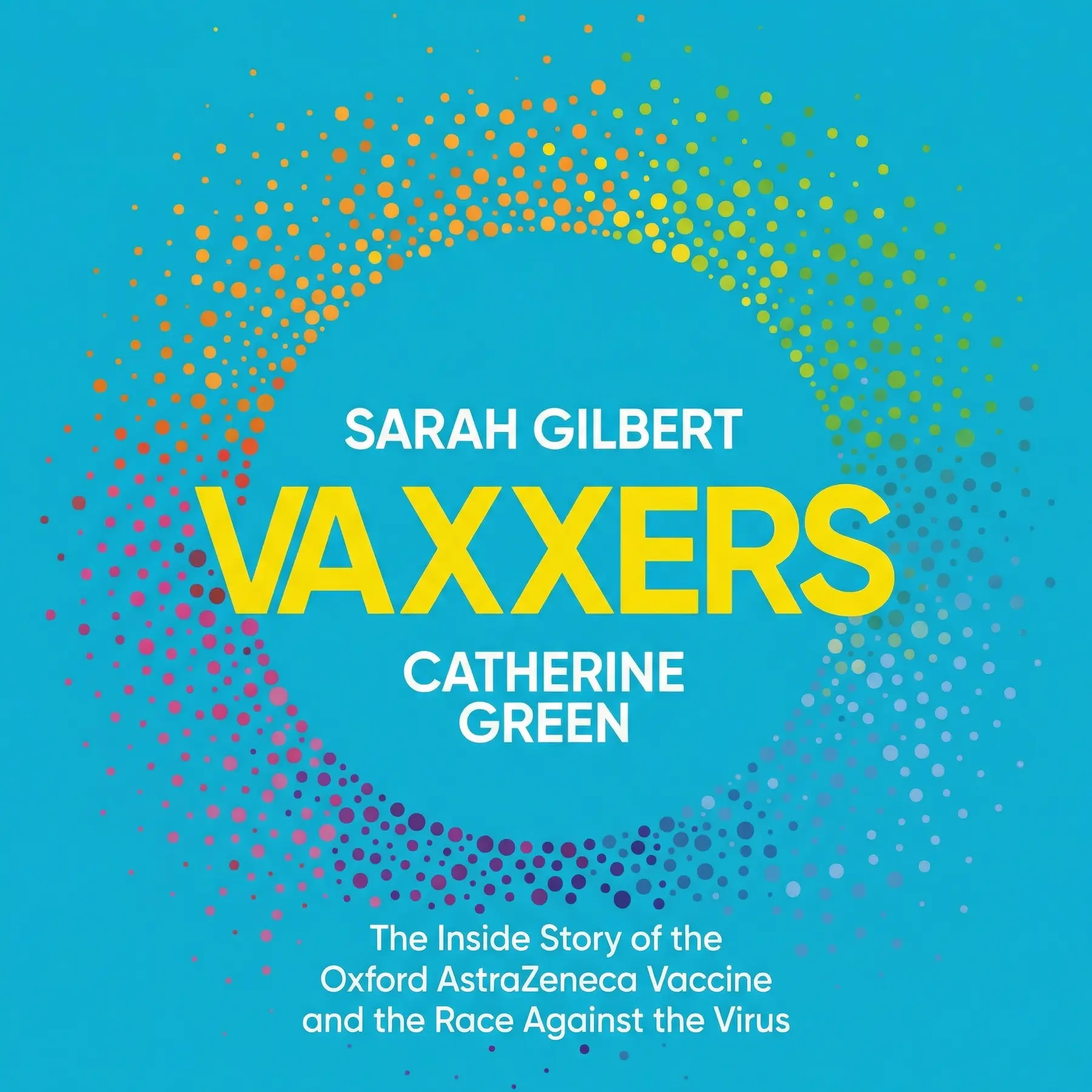
Vaxxers provides an intimate, behind-the-scenes look at the development of the Oxford-AstraZeneca vaccine, authored by the lead scientists who lived through the crisis. It dismantles the common misconception that the vaccine was produced with dangerous haste, showing instead how decades of prior research on related pathogens like SARS and MERS laid an essential foundation. The authors, Sarah Gilbert and Catherine Green, were at the very heart of the project, and they offer a detailed account of the logistical hurdles, the financial risks, and the immense pressure of working during a global crisis. The narrative follows the journey from the first whispers of an outbreak in late 2019 to the distribution of billions of doses worldwide. It explains the complex science behind viral vectors in accessible language, revealing how existing platform technology allowed scientists to move with unprecedented speed. This isn't just a story of a single success; it is a call to action for better global health infrastructure. By the end, listeners will understand the sheer scale of human effort required to fight a pandemic and the critical importance of being ready for the next unknown threat, often referred to as Disease Y.
Book Information
About the Author
Sarah Gilbert
Professor Sarah Gilbert is Saïd Professor of Vaccinology at the University of Oxford and the co-founder of Vaccitech, a biotechnology company which develops vaccines and immunotherapies. She specializes in developing vaccines for various viruses, including influenza, and co-developed the Oxford-AstraZeneca COVID-19 vaccine. This is her first book. Dr. Catherine Green is Associate Professor in Chromosome Dynamics at the University of Oxford’s Wellcome Centre for Human Genetics. Along with Professor Gilbert, Dr. Green also worked on developing the Oxford-AstraZeneca COVID-19 vaccine. Though she is the author of numerous research studies, this is her first book.
Ratings & Reviews
Ratings at a glance
What people think
Listeners find the book highly educational, with one review highlighting its clear descriptions of intricate science. Furthermore, they view it as essential material for learning, and one listener points out that it remains very accessible for those without a science background. Additionally, listeners value the book’s eye-opening nature, with one review explaining how it offers a deep look into the dedicated efforts of these researchers.
Top reviews
Samira
Ever wonder how a vaccine that normally takes a decade was finished in under a year? This account by Gilbert and Green is a masterclass in making high-level science accessible to the average person on the street. I was particularly struck by the description of the ChAdOx1 platform technology, which they had ready to go long before the pandemic even started. It completely dismantles the 'rushed' narrative by showing the years of preparation that preceded the crisis. The narrative structure alternates between the two scientists, giving a dual perspective on the frantic race against time. Some might find the logistical hurdles boring, but I think it highlights the grit required to save lives under pressure. Truly a definitive record of our times that everyone should own.
Show moreConnor
This book is an absolute triumph of science communication that should be required reading in schools. The authors take the reader through the entire journey, from identifying the genetic code of the virus to the first person receiving the jab. I loved the inclusion of the appendices; having the full ingredient list explained so simply is such a brilliant move for transparency. It really puts into perspective the massive scale of the operation and the hurdles—both scientific and political—that had to be overcome. Even the parts about the struggle for funding felt necessary to show why we were almost caught unprepared. If you want to understand how the world was saved, this is the book you need to read.
Show moreBae
Wow. I didn't expect to be moved to tears by a book about vaccine manufacturing, but here we are. The authors manage to weave their personal lives into the clinical timeline in a way that feels incredibly authentic and grounded. You really feel the weight of their exhaustion, working until 3 AM in labs while trying to manage mundane household chores. It is the human side of the pandemic that often gets lost in the headlines and political posturing. The appendices are also surprisingly useful, offering a clear breakdown of every single ingredient in the jab. It is hard to imagine a more important book for anyone looking to understand the massive effort behind our return to normalcy.
Show moreYongyut
Picked this up because I wanted to understand the AstraZeneca vaccine better, and I was blown away by the clarity. The way they explain the use of the chimpanzee adenovirus vector is so logical that it removes any fear of the unknown. I particularly enjoyed the sections on 'codon optimisation,' which sounds like science fiction but is explained with such common sense. There is a real sense of urgency in the prose that keeps you turning pages even when the subject matter gets technical. While they do complain a lot about the lack of funding, it helps you realize how much they achieved with limited resources. These women are icons and their story is incredibly inspiring for future researchers.
Show moreKanchana
As someone who actually received the Oxford jab, reading the 'origin story' of what went into my arm was a unique experience. Gilbert and Green explain the science with such precision that even a non-scientist like me could follow along without getting lost. I liked the modest and self-deprecating tone—it is very British, making these world-class scientists feel like people you could actually have a pint with. My only minor gripe is that the explanation for why the half-dose trial was more effective felt a little glossed over. Despite that, the book is a fantastic resource for debunking common myths without ever sounding like a lecture. It is absolutely worth your time and shelf space.
Show moreRome
Finally got around to reading this, and it is easily one of the best science books of the decade. The way they describe the 24/7 lab rotations and the donations of meals from the community really highlights the collective spirit of the time. It isn't just a book about biology; it is about the logistics of global health and the sheer willpower of a dedicated team. The explanation of the HEK293 cells was particularly enlightening and handled with a lot of nuance. It is a shame this wasn't mandatory reading for everyone during the height of the rollout. These women are absolute heroes, and their writing style is as sharp as their scientific minds. Essential reading for every household.
Show moreKamol
The detail provided here regarding the Oxford-AstraZeneca development process is absolutely unparalleled for a popular science book. I particularly enjoyed the 'baking bread' analogy used to explain complex biological concepts, as it made the dense terminology much easier to swallow. However, the book does start to feel a bit repetitive in the second half when the authors repeatedly circle back to their frustrations with funding. While those struggles are obviously valid and shaped their experience, it occasionally slowed the momentum of an otherwise thrilling scientific journey. Still, it is an enlightening read that provides a necessary defense of the scientific method during a period of massive misinformation. A solid four stars for the sheer transparency alone.
Show moreJonathan
To be fair, I went into this with very high expectations, and for the most part, they were met. The book provides a clear, defensible account of how the Oxford team managed to bypass bureaucratic red tape without once sacrificing safety. I appreciated the deep dive into the blood clotting controversy, even if I wanted a bit more technical depth on the biological mechanism behind it. The dual-author approach works well most of the time, though there is some overlap in their stories that feels slightly unnecessary. It is a very sensible and transparent book that serves as a powerful antidote to the vaccine hesitancy prevalent today. Definitely a must-read for the curious.
Show moreTippawan
Not what I expected, truth be told, even after reading the glowing blurbs. While I have nothing but respect for Professor Gilbert and Dr. Green, the writing style felt a bit 'dumbed down' in several places. I was hoping for a more rigorous scientific deep-dive, but the book spends too much time on personal anecdotes and the daily grumbles of lab life. The constant pleas for better funding mechanisms are understandable but became a bit of a broken record by chapter ten. It is definitely a good introductory text for someone who knows nothing about vaccines, but for those of us with a science background, it lacks a bit of meat. It is an okay read, just not the definitive technical account I was actually looking for.
Show moreSangduan
Frankly, this could have been about fifty pages shorter and still delivered the same impact. While the first few chapters regarding the genetic sequencing of the spike protein were fascinating, the narrative begins to drag significantly once they reach the trial phases. There is a massive amount of redundancy throughout the second half of the volume. I appreciate the extreme importance of their work, but as a reading experience, it felt more like expanded diary entries than a cohesive narrative. If you are already well-versed in the pandemic timeline, you might find yourself skimming the later sections. To be honest, an important document like this deserves a much tighter edit to keep the audience's attention.
Show moreReaders also enjoyed
A Life Decoded: My Genome: My Life
J. Craig Venter
A Planet of Viruses
Carl Zimmer
A Short History of Nearly Everything
Bill Bryson
A Thousand Brains: A New Theory of Intelligence
Jeff Hawkins

Alien Earths: The New Science of Planet Hunting in the Cosmos
Lisa Kaltenegger
AUDIO SUMMARY AVAILABLE
Listen to Vaxxers in 15 minutes
Get the key ideas from Vaxxers by Sarah Gilbert, plus 5,000+ more titles in English and Thai.
- 5,000+ titles
- Listen as much as you want
- 7-day free trial
- Cancel anytime







