
15 min 56 sec
Waking the Tiger: Healing Trauma
Discover a body-centered approach to healing trauma by observing the natural survival instincts of animals. Learn to release stored stress and restore your nervous system through somatic awareness and gentle exercises.
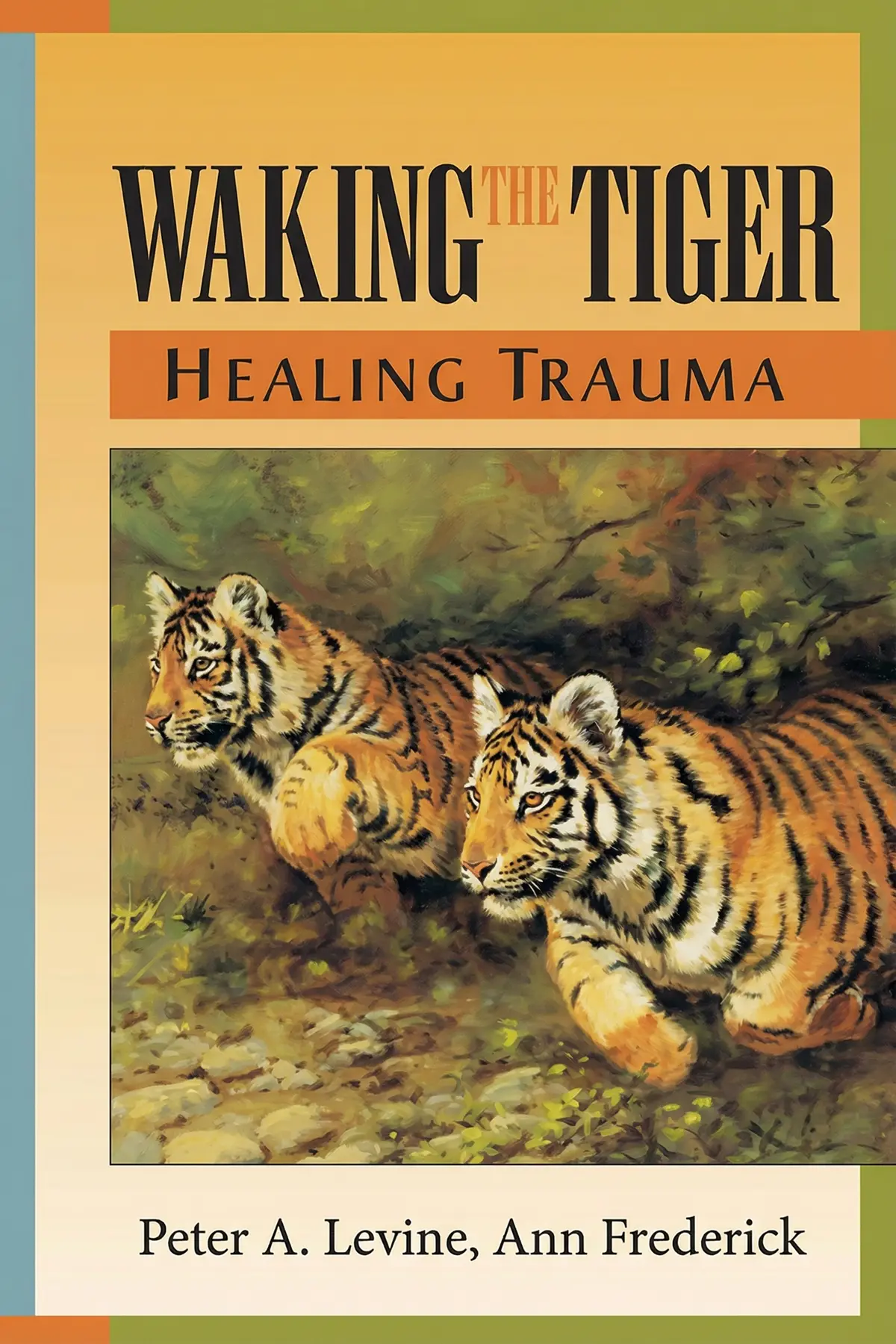
Table of Content
1. Introduction
1 min 43 sec
Trauma is a word we often associate with extreme, life-shattering events—a violent encounter, a devastating natural disaster, or a major accident. However, the reality of trauma is much more pervasive and subtle than we might think. It is not just about what happened in the past; it is about the lingering imprint that those events leave on our bodies and nervous systems today. Many of us carry the weight of past stressors without even realizing it, manifesting as chronic fatigue, unexplained anxiety, or a persistent feeling of being ‘shut down’ from the world.
The core insight we are going to explore is that trauma is not a life sentence, nor is it a sign of psychological weakness. Instead, it is a biological process that got ‘stuck.’ There is an incredible, untapped wisdom within our own physiology that knows exactly how to heal, if only we can learn how to listen to it. Interestingly, the key to unlocking this healing doesn’t come from complex intellectual analysis, but from observing the natural world—specifically, the behavior of wild animals.
In this exploration, we will dive into the bridge between our primitive survival instincts and our modern human experience. We’ll look at why we often fail to recover from stress as effectively as animals do and how we can use somatic, or body-based, techniques to discharge the energy that has been trapped inside us for years. By the end of this journey, the goal is to shift your perspective from seeing yourself as a victim of your past to seeing yourself as a resilient being with the innate capacity for profound restoration and vibrant health. We are through the looking glass here, moving away from just ‘talking’ about our problems and toward actually ‘feeling’ our way into a state of freedom.
2. The Biological Blueprint of Survival
2 min 41 sec
Have you ever wondered why a deer can escape a predator and then calmly return to grazing? Explore the fascinating biological reasons why animals in the wild avoid the long-term effects of trauma.
3. The High Cost of Unreleased Energy
2 min 42 sec
Trapped survival energy doesn’t just disappear; it transforms into a host of physical and emotional symptoms. Learn how our modern lifestyle keeps us in a state of perpetual imbalance.
4. Somatic Experiencing: A New Map for Healing
2 min 29 sec
Moving beyond talk therapy, Somatic Experiencing focuses on the body’s internal sensations to resolve trauma. Discover the gentle techniques that help the nervous system find its way back to balance.
5. Cultivating the Felt Sense
2 min 23 sec
Unlock the ‘felt sense,’ a powerful internal awareness that acts as a bridge between your mind and body. Learn a simple exercise to begin tuning into this vital source of information.
6. Reclaiming Your Vibrant Aliveness
2 min 21 sec
Healing trauma isn’t just about removing symptoms; it’s about returning to a state of flow and joy. Discover how to safely navigate challenging sensations to find your way back to yourself.
7. Conclusion
1 min 37 sec
We have traveled from the high-stakes survival of the savanna to the intricate workings of the human nervous system. The overarching message is clear: trauma is a biological event that requires a biological solution. It is the result of survival energy that was mobilized but never fully spent, leaving us in a state of perpetual internal conflict. By looking to the animal kingdom, we see that the body has an inherent ability to ‘shake off’ even the most terrifying experiences if we allow it the space and the safety to do so.
Through concepts like the felt sense, titration, and pendulation, we’ve explored how to gently re-engage with our physical selves. This isn’t a process that can be rushed; it requires patience, curiosity, and a deep sense of compassion for our own internal struggles. As you move forward, remember that your body is your greatest ally in this process. Every sensation, no matter how uncomfortable, is a piece of communication. By learning to listen to those signals without being overwhelmed by them, you are slowly but surely rewriting your internal script.
Ultimately, the path of healing described in Waking the Tiger is about returning to a state of natural flow. It’s about moving from a life of contraction and fear to a life of expansion and presence. You have the tools within you to resolve the imprints of the past and step into a future marked by resilience and joy. Your nervous system knows the way home; your task is simply to provide the presence and the permission for it to complete the journey.
About this book
What is this book about?
This summary explores the profound connection between physical sensations and psychological trauma. It challenges the conventional view that trauma is purely a mental or emotional affliction, arguing instead that it is a biological phenomenon rooted in the body’s survival instincts. By examining why wild animals rarely suffer from lasting trauma despite constant threats, the text reveals how humans often suppress the natural discharge of survival energy, leading to chronic symptoms like anxiety and dissociation. Listeners are introduced to Somatic Experiencing, a therapeutic framework designed to help individuals move through the 'freeze' response. The summary outlines key concepts such as the felt sense, titration, and pendulation, providing a roadmap for safely re-engaging with the body’s internal wisdom. Ultimately, it promises a path toward reclaiming vitality and resilience by completing the physiological cycles that were interrupted during overwhelming life events.
Book Information
About the Author
Peter A. Levine
Peter Levine is the originator of Somatic Experiencing, an approach to healing trauma. He holds doctorates in Medical Biophysics and Psychology and has published extensively on stress and trauma over his 30-year career. Peter Levine has consulted for NASA and taught trauma healing techniques at hospitals and pain clinics, and in indigenous communities in Europe and the United States.
Ratings & Reviews
Ratings at a glance
What people think
Listeners find this book to be an engaging listen that provides immense help in grasping trauma and offers actionable tools for recovery, featuring useful exercises throughout. They value the educational depth, with one listener mentioning how it expands on many ideas, and consider it practical for both specialists and laypeople. The writing quality is highly regarded, and listeners view the material as revelatory. Responses to the pacing are varied; while some appreciate the foundation of Somatic Experiencing, others find it rambling.
Top reviews
Krisada
This book fundamentally changed how I view my own anxiety and the physical tension I’ve carried for years. Peter Levine introduces the concept of the 'felt sense'—that internal, bodily awareness that we often ignore in our fast-paced, rational world. While some might find the idea of 'discharging energy' a bit abstract, the exercises provided are incredibly grounding and practical. I particularly appreciated the focus on how the reptilian brain governs our survival instincts. It was a revelation to learn that trauma isn't just in the head; it’s a biological lock that needs a biological key. The pacing felt right to me, allowing the heavy concepts to sink in before moving to the next phase of healing. If you’ve felt stuck in talk therapy, this somatic approach might be the missing piece of your recovery puzzle.
Show moreLeah
After hearing about Somatic Experiencing for years, I decided to dive into the source material after a car accident left me constantly on edge. The instructions on 'emotional first aid' provided in the later chapters were a godsend for my recovery. Levine explains why we feel immobilized by fear and, more importantly, how to slowly thaw that frozen state without becoming overwhelmed. I loved the metaphor of the tiger waking up—it represents the return of our vitality and strength. In my experience, focusing on the physical sensations rather than just the 'story' of the accident allowed me to move past the hyper-vigilance much faster than I expected. Not gonna lie, some of the mythology sections about Medusa were a bit dense, but the actual tools for healing are top-notch and easy to implement.
Show moreNong
Ever wonder why animals in the wild don't seem to get PTSD after a narrow escape from a predator? That is the question that drives this entire book, and the answer is absolutely life-changing. Levine shows us that we’ve lost touch with our animal instincts, and that disconnection is exactly what keeps us traumatized. I found the section on the 'three brain levels' very easy to understand, even though I have no background in science. The book isn't just a dry lecture; it’s a guide to becoming whole again. Personally, I found the emphasis on 'felt sense' to be the most helpful part of the entire program. It teaches you how to be in your body without being afraid of the sensations you find there. This is essential reading for anyone who has ever felt 'stuck' in their past.
Show moreOwen
Finally got around to reading this classic on trauma, and I have mixed feelings about the execution even though the core idea is brilliant. Levine’s central premise—that humans get 'stuck' in a freeze response while animals naturally shake it off—is fascinating and intuitive. However, the heavy reliance on observations from National Geographic documentaries felt a bit under-researched for a clinical text. To be fair, the book was written for a general audience, but I occasionally craved more scientific citations to back up the 'trapped energy' theories. Despite these minor gripes, the 'renegotiation' concept is a much more gentle way to approach past events than reliving them through exposure. It’s a solid foundational read, though I’d recommend pairing it with 'The Body Keeps the Score' for a more comprehensive scientific background.
Show moreWatcharin
Wow, the concept of the 'lizard brain' and its role in freezing energy really clicked for me during a very stressful transition in my life. The book argues that our higher rational mind often mucks up our natural ability to recover from shocks. While I found the writing a bit rambling in the middle sections, the overall message is empowering because it suggests we already have the tools to heal within our biology. It’s not just about 'thinking positive' or analyzing your childhood until you’re blue in the face. Instead, it’s about listening to the body’s instinctual need to complete the fight-or-flight cycle. Some of the case studies felt a bit 'easy' or simplified, but as an introductory text to body-based therapy, it’s incredibly eye-opening. Definitely worth a read if you feel physically disconnected from your emotions.
Show moreEye
As a clinician, I find Levine’s work to be a necessary, albeit slightly dated, pillar in the field of trauma recovery. The book is written to be accessible for non-experts, which makes it a great recommendation for clients who are just starting to explore the mind-body connection. The distinction between 'renegotiation' and 'reenactment' is a vital one that helps people avoid retraumatization. My only real criticism is the lack of formal citations for some of the more provocative biological claims. Truth is, the 'energy discharge' model is more of a helpful metaphor than a proven neurological fact, but it works wonders in a therapeutic setting. It’s a fascinating read that challenges the traditional 'talk therapy' status quo. I’ve seen these exercises help people who were previously unresponsive to standard treatments, so the results speak for themselves.
Show moreSarawut
Picked this up during a particularly dark period of grief and found the exercises to be surprisingly grounding and effective. The truth is, I didn't expect a book about 'shaking off trauma' to help with the sudden loss of a spouse, but it really did. It helped me understand why I was having physical symptoms like chest tightness and tremors months after the event. Levine’s approach is gentle and doesn't force you to stare directly into the 'Medusa' of your pain. Instead, you work with the reflections and the small physical cues. My only complaint is that the author can be a bit repetitive, and the formatting of the exercises could be clearer for quick reference. Still, it’s a very helpful tool for anyone navigating the physical aftermath of a major life shock.
Show moreWatcharaporn
Not what I expected from a psychology book, but in a good way, as it avoids the usual clinical jargon. Levine uses myths and animal behavior to explain why we feel the way we do after a crisis. I’ll be honest, I was skeptical about the 'shaking' and 'trembling' stuff at first—it sounded a bit 'woo-woo'—but when I tried the exercises, I actually felt a shift in my stress levels. The pacing of the book is a bit hit-or-miss; some chapters fly by while others feel like they're circling the same point. However, the core takeaway that trauma is a functional physical issue rather than a permanent 'disorder' is incredibly hopeful. It shifts the focus from 'what is wrong with me?' to 'how can I help my body finish what it started?'
Show moreLayla
The chapter on emotional first aid for children is worth the price of admission alone, especially for parents or teachers. Levine provides clear, actionable steps to help a child process a frightening event before it becomes a long-term trauma. Regarding the rest of the book, I appreciated the connection between ancient shamanic rituals and modern biological needs. It’s an interesting blend of anthropology and psychology. To be fair, some of the critiques about his dismissal of memory are valid, and readers should take his views on sexual abuse with a grain of salt. If you can move past those problematic sections, the underlying theory of Somatic Experiencing is a powerful tool. It’s an educational journey that asks you to stop overthinking and start feeling, which is harder than it sounds but totally worth the effort.
Show moreApichat
To be fair, I went into this with high expectations, but I found the author's tone remarkably condescending and dismissive of survivors' actual memories. The way Levine handles the case of 'Gladys' was particularly hard to stomach; he seemed more interested in proving his theory of 'denial' than listening to her lived experience. Frankly, his suggestion that a traumatic memory might just be a 'message from the organism' rather than a real event feels like a dangerous step backward for victims of abuse. He diminishes the importance of trauma narratives and survivor communities, labeling them as 'dwelling' rather than healing. While the idea that the body holds onto stress is undoubtedly true, the way he frames it often feels insulting to those who have suffered severe violations. Look elsewhere for trauma support—Judith Herman’s work is far more respectful.
Show moreFeatured in

Readers also enjoyed
A Liberated Mind: How to Pivot Toward What Matters
Steven C. Hayes


ADHD an A-Z: Figuring It Out Step by Step
Leanne Maskell


AUDIO SUMMARY AVAILABLE
Listen to Waking the Tiger in 15 minutes
Get the key ideas from Waking the Tiger by Peter A. Levine, plus 5,000+ more titles in English and Thai.
- 5,000+ titles
- Listen as much as you want
- 7-day free trial
- Cancel anytime







