Waking the Tiger: Healing Trauma
Peter A. Levine
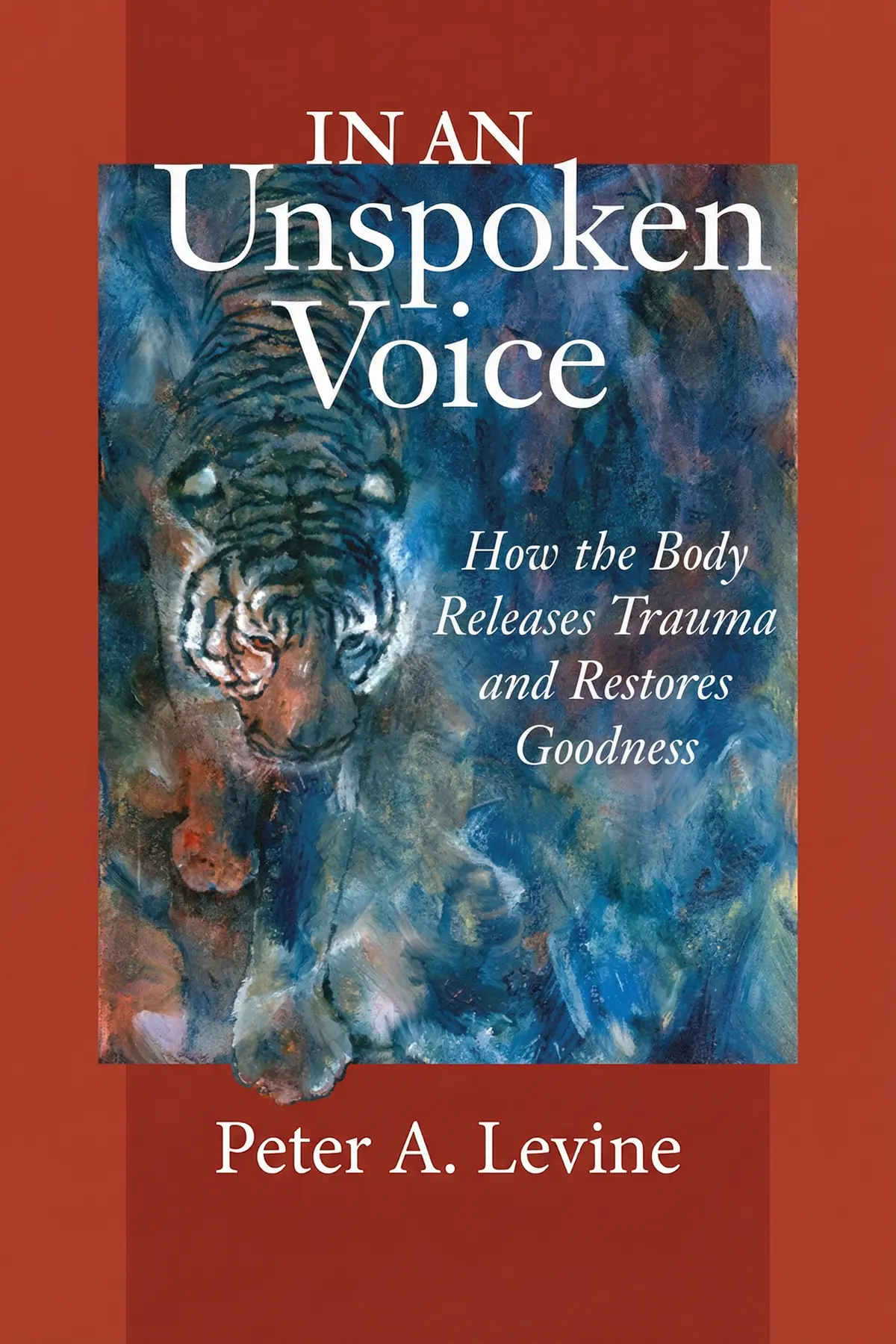
In an Unspoken Voice explores how trauma resides in the body’s nervous system. Peter A. Levine demonstrates how we can release stored stress and restore emotional health by listening to physical sensations.
1 min 54 sec
Imagine your body as a high-performance engine. In moments of extreme danger, that engine revs to its maximum capacity to help you survive. But what happens when the danger disappears, yet the engine stays stuck at ten thousand RPMs? This is the core of what we call trauma. It isn’t just a memory of a bad event; it is a physical state where the nervous system is perpetually locked in a survival loop. In the following pages, we will explore the profound insights of Peter Levine, who suggests that the way out of this cycle isn’t through our thoughts alone, but through the ‘unspoken voice’ of the body.
Most of us have been taught to treat emotional wounds by talking about them, analyzing our past, and trying to think our way into a better state of mind. While these methods have value, they often fail to reach the deep, primitive parts of the brain where the survival response is actually housed. You might understand perfectly well why you feel anxious or shut down, yet your heart still races, and your muscles still feel like they are bracing for impact. This disconnect occurs because trauma is fundamentally a biological phenomenon, not just a psychological one.
Throughout this journey, we will look at how the nervous system functions beneath our conscious awareness. We will see how animals in the wild manage to escape life-threatening situations without being traumatized, and why humans often struggle to do the same. More importantly, we will uncover specific, gentle techniques designed to help the body finish the survival actions it started long ago. By learning to communicate with our physical selves, we can begin to release the grip of the past and step back into a life characterized by flow, resilience, and genuine goodness. Let’s begin by looking at the biological machinery that governs our response to the world.
2 min 36 sec
Explore why traditional talk therapy often fails to address the deep-seated physical bracing that occurs when our survival instincts take over during overwhelming events.
2 min 49 sec
Discover how observing animals in nature reveals the body’s natural mechanism for discharging stress and why humans often suppress these vital healing cycles.
2 min 40 sec
Learn the precise techniques used to safely navigate overwhelming sensations without becoming retraumatized by the process.
2 min 48 sec
Explore how listening to the ‘internal weather’ of your body and engaging in slow, conscious motions can bridge the gap between numbness and vitality.
2 min 34 sec
Understand that healing is not a linear path, but a gradual unfolding that requires self-compassion, patience, and often the support of a guided community.
1 min 47 sec
As we reach the end of this exploration into the unspoken voice of the body, the most important takeaway is a message of profound hope. Trauma is a deeply distressing experience that can leave us feeling broken or disconnected, but it is fundamentally a biological state that can be transformed. We have seen that the body possesses an incredible, innate wisdom—a set of survival instincts and healing mechanisms that have been honed over millions of years. When we learn to stop fighting these instincts and start working with them, we open the door to true recovery.
By moving away from the purely mental exercise of analyzing our trauma and moving toward the somatic experience of feeling it, we address the root of the issue. Through the careful application of pendulation and titration, we can gently discharge the energy that has been held captive in our muscles and nerves. We can learn to use our breath, our voices, and our movements to signal safety to our ancient brains. This process doesn’t just reduce symptoms; it restores our very sense of being alive and capable in the world.
Remember that your body is your most loyal ally. Even when it is stuck in a state of anxiety or shutdown, it is doing so out of a primitive desire to keep you safe. By turning toward these sensations with compassion instead of fear, you begin the sacred work of restoration. Healing is not about returning to the person you were before the trauma; it is about becoming a more resilient, more aware, and more integrated version of yourself. As you move forward, continue to listen to that quiet, physical voice within. Trust in your body’s ability to find its way back to balance, and know that the goodness you seek is already within you, waiting to be spoken.
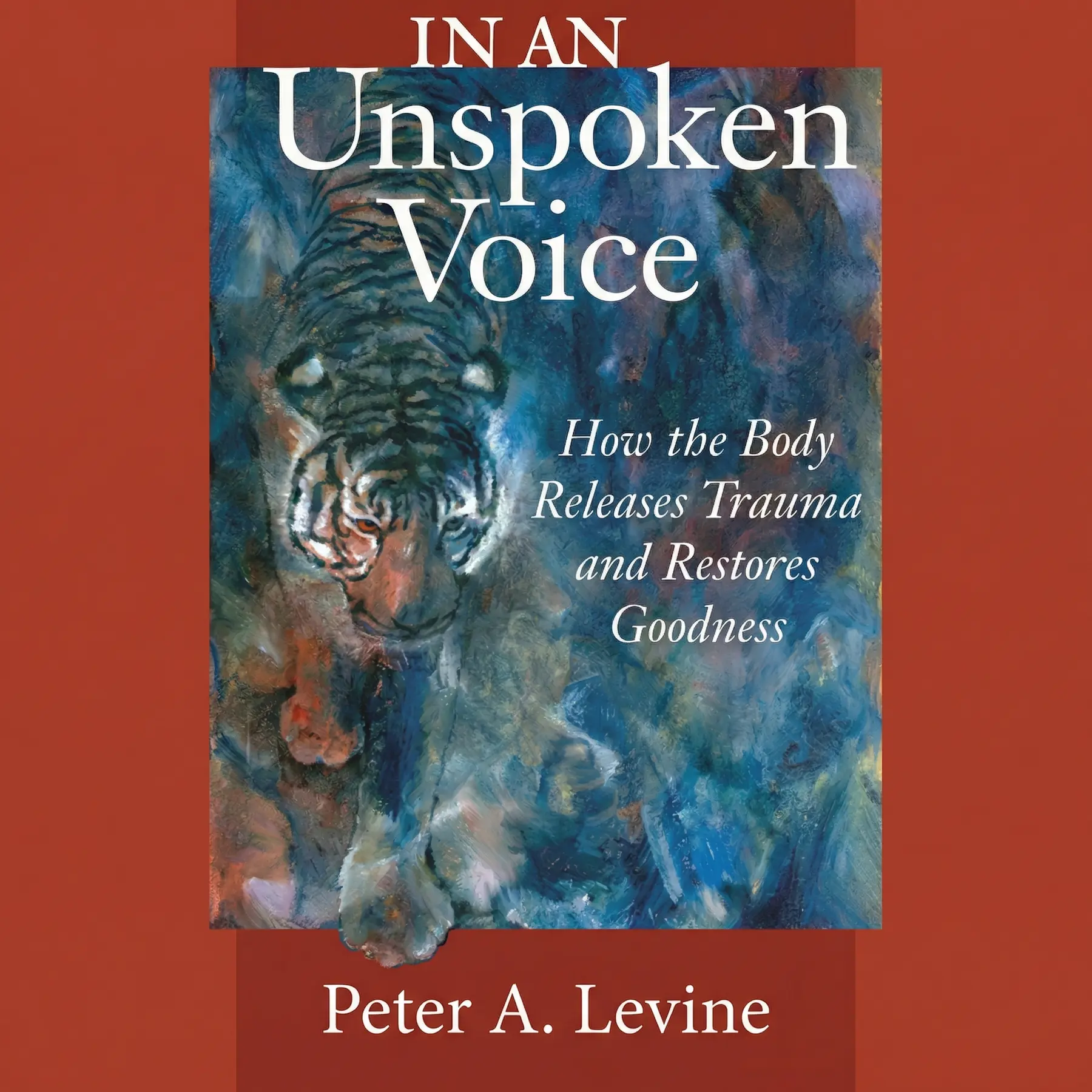
In an Unspoken Voice offers a deep exploration of the physiological roots of trauma and the path to recovery through bodily awareness. It moves beyond traditional talk therapy to show how the most primitive parts of our brain and nervous system govern our survival instincts. When we experience an overwhelming event, our bodies may remain stuck in a state of high alert long after the danger has passed. This book provides a roadmap for returning to a state of balance and peace. The promise of this work is that trauma does not have to be a life sentence. By understanding the mind-body connection and learning specific somatic techniques, individuals can discharge the stagnant energy trapped in their muscles and nerves. It bridges the gap between scientific research and intuitive healing, offering a compassionate perspective on how to reclaim vitality and wholeness after experiencing life's greatest challenges.
Peter Levine, PhD, is a leading expert in treating trauma. He is the developer of Somatic Experiencing and founder of the Somatic Experiencing Trauma Institute. Levine holds doctorates in both medical biophysics and psychology. His other titles include Waking the Tiger: Healing Trauma and Sexual Healing: Transforming the Sacred Wound.
Peter A. Levine
Listeners find this work exceptionally educational and skillfully composed, highlighting its sophisticated insights into trauma and ingenious method for working through memories. Furthermore, the text acts as a priceless resource for practitioners and laypeople alike, providing significant assistance with symptoms of Complex PTSD. They also value the book’s emotional depth, with one listener mentioning how it teaches befriending negative feelings, and they find the material accessible and clear to follow.
This book represents a paradigm shift in how we approach the aftermath of overwhelming experiences. Peter Levine offers a masterclass in the physiological roots of trauma, moving far beyond the limitations of standard talk therapy. By focusing on the "bottom-up" approach, he illustrates how the body stores memory in ways the conscious mind cannot always access. The text is highly informative and packed with complex knowledge, yet it remains accessible for those willing to put in the effort. I found the concept of befriending negative sensations particularly transformative. It’s not just about relief; it’s about a deep, biological reconciliation with oneself. While some chapters are dense with scientific theory, the practical insights into the nervous system are an invaluable tool for anyone dealing with Complex PTSD. It’s a profound, well-written guide to becoming whole again.
Show morePeter Levine has a gift for making the intricacies of the human nervous system feel deeply personal and relevant. I was struck by the way he weaves his own traumatic car accident into a broader narrative about resilience and recovery. It’s a brave choice that grounds his complex theories in real-world stakes. The book explores the unspoken voice of the body, teaching us that our physical sensations are often the most honest parts of ourselves. For those of us who have spent years in therapy trying to 'think' our way out of anxiety, this approach is a revelation. The focus on embodiment and the subtle shifts in our inner state provides a roadmap for healing that feels both scientific and spiritual. It’s a must-read for anyone serious about trauma research.
Show moreEver wonder why you can’t just reason your way out of a panic attack? This book explains exactly why that is, focusing on the primitive parts of the brain that shut down the speech center during a crisis. Levine’s work is an invaluable tool for understanding the immobilization response. I’ve been practicing the suggested exercises daily, and the shift in my baseline anxiety has been remarkable. Befriending my negative feelings instead of running from them has changed everything. It’s not a quick fix—it’s a slow, deliberate process of returning to your own skin. The knowledge here is complex, but the delivery is compassionate. This isn't just another psychology book; it’s a manual for reclaiming your life from the grip of the past. I feel more empowered than I have in years.
Show moreFinally got around to this 'trauma bible' and I am absolutely blown away by the depth of the research. Levine manages to bridge the gap between hard science and the lived experience of being human in a way few others can. The sections on how the body mimics the 'freeze' response of animals in the wild are fascinating and helped me make sense of my own periods of numbness. It’s a well-written exploration of the unspoken ways our bodies protect us, even when that protection becomes a cage. I’ve already recommended this to my entire support group. Even if you aren't a science nerd, the emotional resonance of his case studies will stick with you. It’s a beautiful, essential piece of literature for the healing community.
Show moreWow, the way Levine breaks down the freezing response changed my entire perspective on my own history with PTSD. For years, I felt guilty for not fighting back during my trauma, but this book taught me that my body’s decision to shut down was a brilliant survival mechanism. Learning to listen to that 'unspoken voice' has been a slow but beautiful journey. The exercises for releasing tension are simple yet incredibly powerful. I’ve noticed a real difference in my chronic fatigue and my ability to stay present during stressful moments. It’s heavy on the science, but the emotional payoff is worth every minute of reading. This book gave me the permission I needed to stop judging my body and start listening to it. I finally feel like I’m coming home to myself.
Show moreAfter hearing so many recommendations for Waking the Tiger, I expected this to be a slightly more refined version of Levine's earlier work. Truth is, it’s much more than that, though it certainly requires more patience. The book is undeniably verbose and hits the same notes repeatedly, especially regarding his own car accident, which he uses as a primary case study. However, the brilliance of his somatic experiencing technique shines through the repetition. To be fair, the clinical anecdotes are incredibly helpful for visualizing how this therapy actually works in practice. It isn’t a light read by any means, and some of the scientific jargon might alienate casual readers. Still, the core message about releasing stuck energy is life-changing. If you can slog through the slower sections, the rewards for your mental health are significant.
Show moreAs a clinician, I found the theoretical framework presented here to be a refreshing departure from the DSM’s tendency to pathologize every symptom. Levine views the body’s reactions not as 'wrong' but as innate self-regulating processes that simply got stuck. This perspective is revolutionary for clients who feel broken by their PTSD. The clinical case examples are vivid and provide a great blueprint for how to pace a session without overwhelming the patient. However, I do agree with other reviewers that the book is unnecessarily dense at times. The insistence on revisiting the same personal accident narrative can feel a bit self-indulgent after the third or fourth mention. Despite the heavy-handed delivery and the scientific tangents, the fundamental insights into embodiment remain essential for any modern practitioner’s library.
Show morePicked this up following a recommendation from my therapist, and while it took me nearly a month to finish, I’m glad I did. It is a very dense, science-heavy read that demands your full attention. Levine’s approach to memory as something stored in our muscles and fascia is brilliant and provides a much-needed alternative to traditional talk therapy. I particularly liked the later chapters on spirituality and the importance of feeling safe in one's own skin. My only real gripe is that the book can be quite repetitive, and the editing could have been much tighter to keep the momentum going. If you’re looking for a quick self-help fix, this isn't it. But if you want a deep dive into the mechanics of healing, it’s an incredibly informative resource that offers genuine hope.
Show moreFrankly, I struggled with the sections on animal behavior and the triune brain model. While I appreciate Levine’s attempt to ground human trauma in evolutionary biology, his descriptions of nonhuman animals often felt contradictory or overly reductive. At times, he praises the instinctual wisdom of animals, only to later treat their consciousness as a mere set of stimuli-responses. I also found the pacing a bit frustrating. The book is quite long and feels like it could have benefited from a much tighter edit, as many of the insights are buried in layers of repetitive prose. That said, the actual somatic exercises are quite helpful once you find them. There is definitely gold in here, but you have to do a lot of digging to get past the outdated scientific models and the author's occasionally anthropocentric tone.
Show moreTo be fair, I appreciate the insights into how trauma affects the body, but the 'magical' tone of the recovery stories raised some red flags for me. Levine often presents these somatic experiencing sessions as though a single chattering of the teeth or a good shake can resolve decades of severe suffering. It feels a bit too close to a 'one-size-fits-all' solution, which can be discouraging if you don't experience that instant catharsis. I also found the writing style to be quite a crawl. It’s very repetitive, and I often felt like I was reading the same three chapters over and over again. While I didn't DNF, I definitely had to force myself to finish the last third. It’s an interesting look at trauma, but it lacks the critical analysis I was hoping for in such a highly-regarded text.
Show more

Richard Wiseman


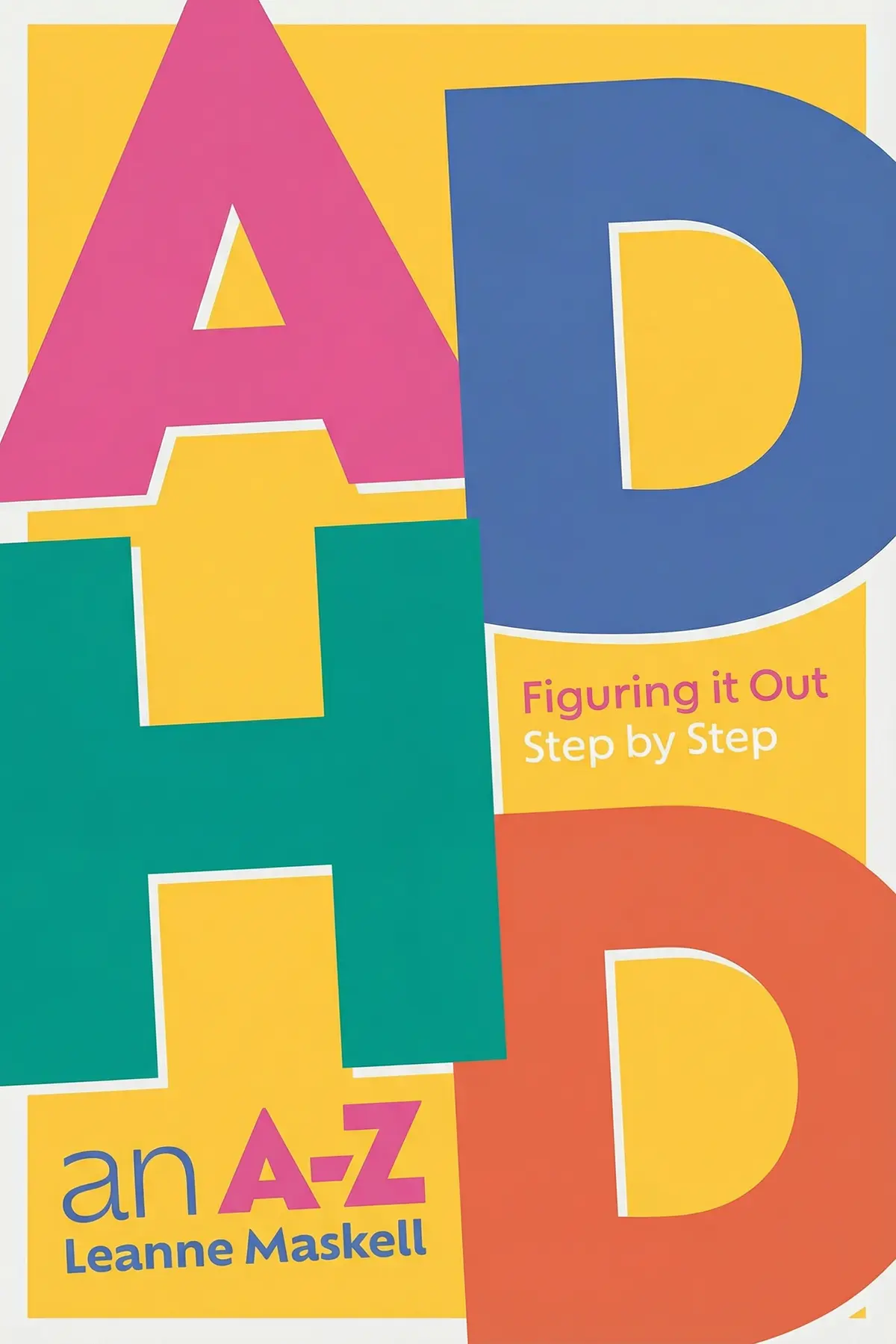
Leanne Maskell
AUDIO SUMMARY AVAILABLE
Get the key ideas from In an Unspoken Voice by Peter A. Levine, plus 5,000+ more titles in English and Thai.