
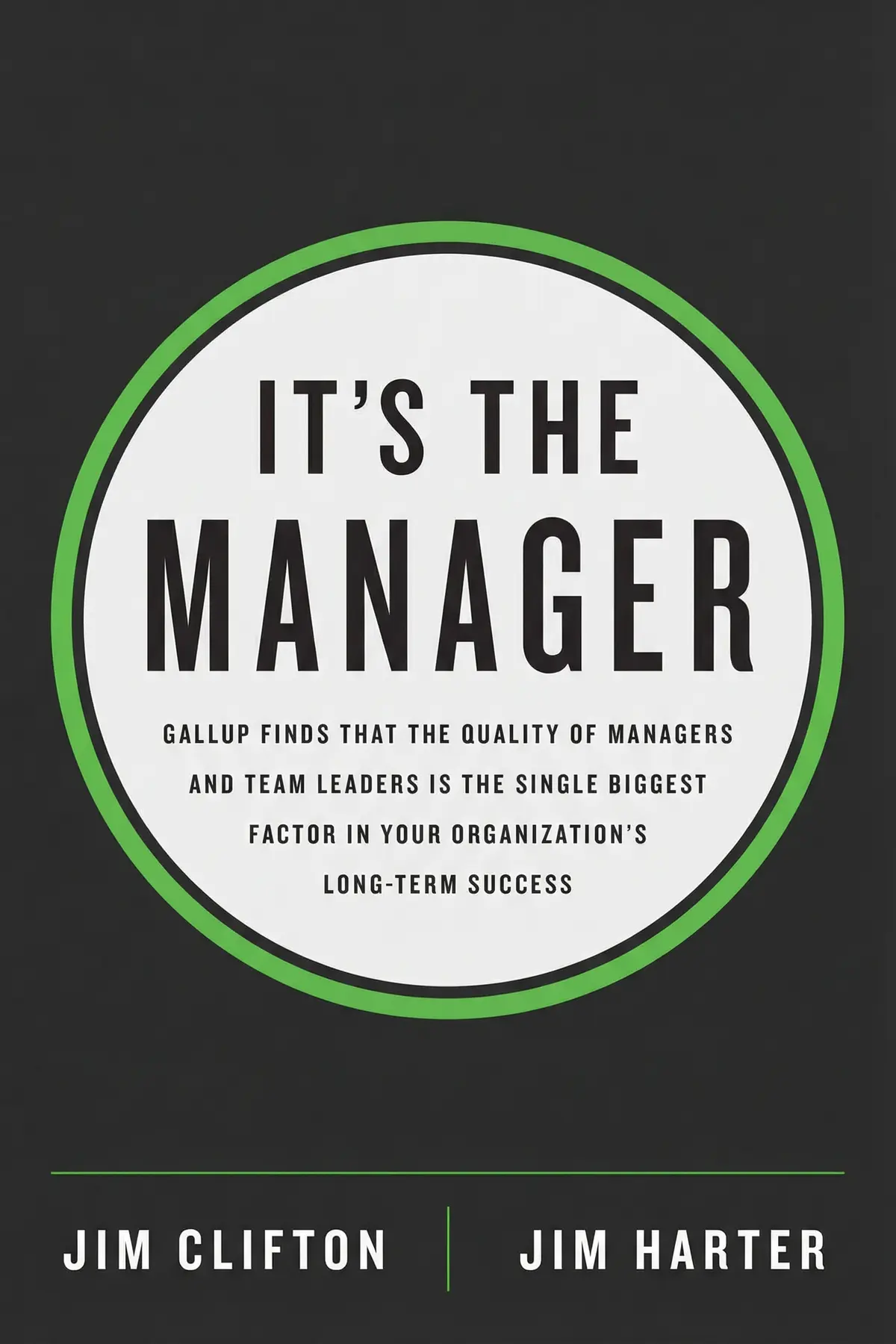
It’s the Manager: Moving From Boss to Coach
Jim Clifton
Explore how to transform workplace culture by focusing on five essential elements of wellbeing. This guide provides leaders with data-driven strategies to improve engagement, productivity, and long-term organizational resilience.
1 min 39 sec
In recent years, the world has faced a series of challenges that have tested our collective mental and physical resilience. For many, the workplace became a primary source of stress rather than a sanctuary of productivity. We have seen how global events can seep into our personal lives, creating a ripple effect that touches everything from our sleep patterns to our financial security. For leaders and managers, this shift has brought a profound realization: the old ways of managing people solely as economic units are no longer sufficient. To build a truly successful organization in this new era, we must look at the human being behind the job title.
This guide explores the essential link between individual wellbeing and organizational success. It moves away from the idea that wellness is just an HR perk, like a gym membership or a bowl of fruit in the breakroom. Instead, it argues that wellbeing is the very foundation of a thriving business. When employees are struggling in their personal lives, their professional output inevitably suffers. Conversely, when they feel supported, secure, and connected, they bring their best selves to work, leading to higher engagement and better results.
Over the course of this summary, we will break down the five pillars of wellbeing that define a life well-lived. We will explore why enjoying your daily tasks is more important for longevity than a stress-free retirement. We will look at the surprising financial impact of workplace friendships and how the role of a manager must evolve from a supervisor to a coach. By the end, you will have a comprehensive understanding of how to foster a culture where everyone has the opportunity to thrive, not just survive.
1 min 59 sec
Contrary to the dream of early retirement, research suggests that a long life is often tied to decades of meaningful, enjoyable work rather than endless leisure.
1 min 38 sec
The relationship between an employee and their supervisor is the single most influential factor in determining daily stress levels and overall job performance.
1 min 38 sec
Developing close social ties at the office is not a distraction; it is a proven driver of safety, customer satisfaction, and higher profit margins.
1 min 36 sec
True financial health is defined by a sense of security and freedom from worry, which can often be achieved through better planning rather than just higher wages.
1 min 46 sec
A healthy workforce is a resilient one, and leaders must model the behaviors—like proper sleep and movement—that they want their teams to adopt.
1 min 37 sec
Connecting an organization’s success to the thriving of its local community creates a sense of meaning that attracts and retains top-tier talent.
2 min 00 sec
During times of crisis, employees look to their leaders for four specific psychological needs that form the bedrock of a resilient culture.
1 min 34 sec
As we have seen throughout this exploration of wellbeing, the line between our personal and professional lives is not a wall, but a permeable membrane. We are the same people at home as we are at our desks, and the stressors of one area will inevitably bleed into the other. The most successful organizations of the future will be those that recognize this reality and take an active role in supporting the whole person. By focusing on the five pillars—career, social, financial, physical, and community wellbeing—leaders can create a virtuous cycle of health and high performance.
One of the most immediate and actionable steps you can take is to lean into the unique strengths of your team. Data suggests that only about a third of employees get to do what they do best every day. When people are forced to work against their natural talents, they become bored and depleted. However, when a manager identifies and nurtures an employee’s specific skills, that individual becomes a source of energy for the whole team. Strengths are remarkably stable over time, meaning that an investment in an employee’s natural abilities will pay dividends for years to come.
In the end, wellbeing is not a destination but a continuous practice. It requires consistent communication, compassionate leadership, and a willingness to see employees as more than just workers. When you build a culture that prioritizes the thriving of its people, you aren’t just improving their lives—you are building a more resilient, productive, and profitable business. Wellbeing at work is no longer an optional luxury; it is the fundamental requirement for excellence in the modern world.
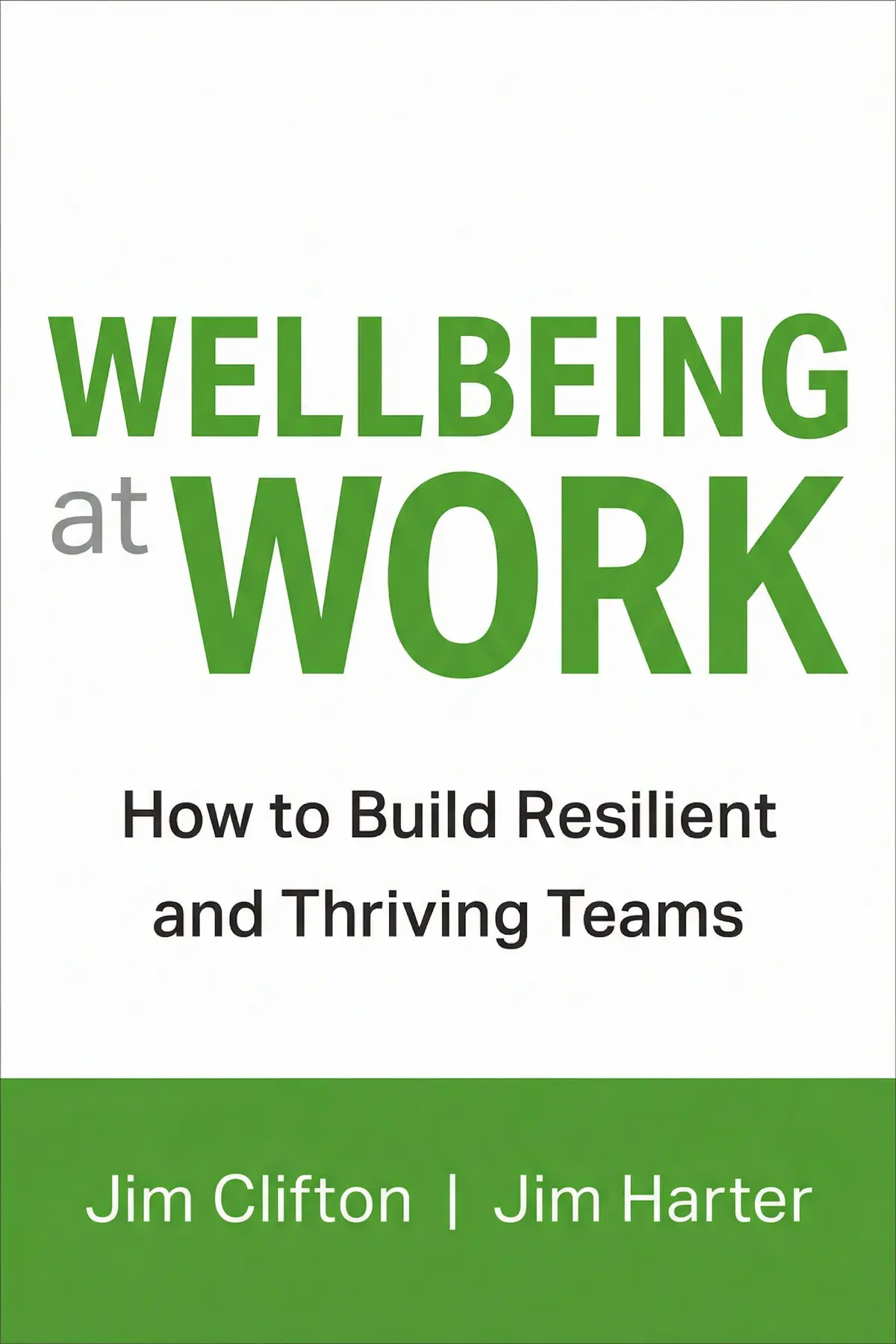
Wellbeing at Work addresses the critical intersection between personal health and professional performance. Drawing on extensive research from Gallup, the book argues that true success is not merely a product of high salaries or efficient processes, but is rooted in the holistic wellbeing of every team member. It identifies five key dimensions—career, social, financial, physical, and community—that collectively determine whether an individual is thriving or struggling. The promise of this guide is a roadmap for leaders to move beyond traditional management and become coaches who support the 'whole person.' By addressing the stressors of modern life and the fallout of global crises, organizations can build a resilient workforce. Readers will discover why fostering friendships at work, prioritizing financial security over raw income, and modeling healthy habits from the top down can lead to higher profits and a more loyal, energized team.
Jim Clifton is the chairman and CEO of Gallup, a global leader in analytics and advice. He is the author of several influential books, including the Wall Street Journal bestseller It’s the Manager. Jim Harter serves as the Chief Scientist for Gallup’s workplace management and wellbeing practices. Throughout his career at Gallup, he has spearheaded more than one thousand studies focusing on the effectiveness of workplace environments and the factors that drive employee engagement.
Jim Clifton
Listeners find the book effective, with one individual mentioning that it offers a straightforward roadmap for management to execute wellness plans. Furthermore, the writing is praised for being easy to read.
This book provides a clear blueprint for any leader trying to navigate the post-pandemic workplace. I was struck by the chapter on Resilient Cultures, which argues that during a crisis, employees don’t just need a paycheck—they need hope, stability, trust, and compassion from their superiors. It’s easy to dismiss these as "fluff," but Harter and Clifton back everything up with rigorous statistics that prove these elements directly impact the bottom line. The distinction between thriving and struggling is mapped out so clearly that you can practically use it as a diagnostic tool for your own organization. Frankly, it’s one of the most practical guides on corporate culture I’ve encountered in years. Every manager should have a copy on their desk.
Show moreBrilliant and timely, this is a must-read for anyone interested in the future of work. The concept of the "Net Thriving Score" changed how I think about my own life and my team’s performance. Gallup’s research proves that when we ignore the "whole person," productivity inevitably craters. I loved the focus on tapping into unique strengths rather than trying to fix everyone’s weaknesses, which is such a refreshing take on professional development. The prose is direct and the layout is very reader-friendly with plenty of charts to illustrate the points. It really emphasizes that wellbeing isn't a "nice to have" but a core business metric that predicts retention and engagement.
Show moreFinally got around to reading this Gallup guide, and I found the framework surprisingly grounded. Clifton and Harter break down wellbeing into five specific pillars—career, social, financial, physical, and community—which helps demystify why some employees struggle even with good pay. I particularly liked the emphasis on "career wellbeing" being the most influential factor. To be fair, some of the advice feels a bit like corporate common sense that most HR departments already know, yet seeing the hard metrics behind these "soft" concepts is eye-opening. The writing is a bit dry, almost like a long-form report, but the actionable strategies for managers are worth the slog. If you're leading a team, this provides a necessary roadmap to move beyond just superficial perks.
Show moreEver wonder why some high-paying jobs still lead to total burnout? This book dives deep into that paradox by explaining that financial security is only one small piece of the puzzle. The authors make a compelling case that career wellbeing—actually liking what you do every day—is the real foundation of a good life. I found the section on "community wellbeing" particularly interesting, as it's something many employers completely ignore. The book moves fast and uses clear language, avoiding the dense academic jargon that usually bogs down these types of studies. My only gripe is that it feels a bit light on how to implement these changes if you aren't in a senior leadership position.
Show moreAs someone who manages a small team, I found the "accelerators" of wellbeing culture to be the most useful part of this book. It’s not just about offering gym memberships or "wellness days"; it’s about how senior leaders communicate and whether managers are actually trained to be coaches. The data shows that a bad manager can negate almost any corporate wellness policy, which is a scary but necessary realization. The book is structured in a way that makes it easy to jump around to the sections that matter most to your current situation. It’s a solid, research-backed guide that helps put words to the vibes we all feel at work but can’t always explain.
Show moreTruth is, I found the statistics more compelling than the prose, but that's exactly what I wanted from a Gallup book. They take "soft" concepts like friendship and community and put actual numbers behind them, showing how social connections at work reduce stress and increase loyalty. The focus on the five elements provides a holistic view that most business books miss by focusing solely on productivity or profit. It’s a bit repetitive in the middle, but the core message—that leaders must provide hope and stability—is vital in today’s volatile market. It’s an easy read that you can probably finish in a few sittings, yet the takeaways will stick with you much longer.
Show morePicked this up because my company is going through a lot of transition, and it gave me a lot to think about regarding resilience. The authors explain that employees don't work in a vacuum; their home lives and physical health inevitably walk through the office door with them. I think the most important takeaway is that managers are the "make or break" factor in whether a culture of wellbeing actually takes root. If the person you report to doesn't trust you or show compassion, no amount of corporate perks will make you stay. It’s a convicting read for any leader who thinks their job is just about hitting targets. Very insightful, if a little focused on the corporate side of things.
Show moreWhile I appreciate the massive amount of data Gallup brings to the table, this felt more like a collection of survey results than a cohesive narrative. The authors identify important stressors, especially regarding how bad managers can dismantle a culture of health, but the solutions often felt a bit repetitive. Personally, I was hoping for more "secret" insights rather than being told that people need trust and compassion to thrive. It’s a decent reminder that employees aren’t robots, but if you’ve read any modern management books lately, you might find yourself skimming large sections. It is a quick read, though, and the focus on the "Net Thriving Score" is a clever way to quantify something as abstract as happiness.
Show moreLook, the information here is solid, but it often feels like an extended white paper rather than a book meant for casual reading. I appreciate the evidence-based approach, but I wish there were more narrative examples to bring the data to life. The five pillars are helpful, and the advice for managers to focus on compassion is great, but much of it feels like common sense dressed up in fancy metrics. It’s a good reference book to have on the shelf for when you need to justify a wellness initiative to your boss, but don't expect a page-turner. It's functional, informative, and a bit dry, serving its purpose without much flair.
Show moreNot what I expected from Gallup at all. I found this to be incredibly dry and filled with clichés that didn't offer much in terms of new perspective. The "five elements of wellbeing" are things most people figure out by their late twenties, and the book spends a lot of time regurgitating survey data that could have been summarized in a ten-page PDF. To be honest, it felt like a marketing tool for their StrengthsFinder assessments rather than a standalone piece of insightful literature. The writing lacks any real spark or storytelling, making it a chore to get through despite its relatively short length. If you're looking for deep psychological insights into workplace motivation, you might want to look elsewhere.
Show more
Margaret Heffernan
Joseph A. Maciariello


Deborah Gruenfeld
AUDIO SUMMARY AVAILABLE
Get the key ideas from Wellbeing at Work by Jim Clifton, plus 5,000+ more titles in English and Thai.







