
17 min 31 sec
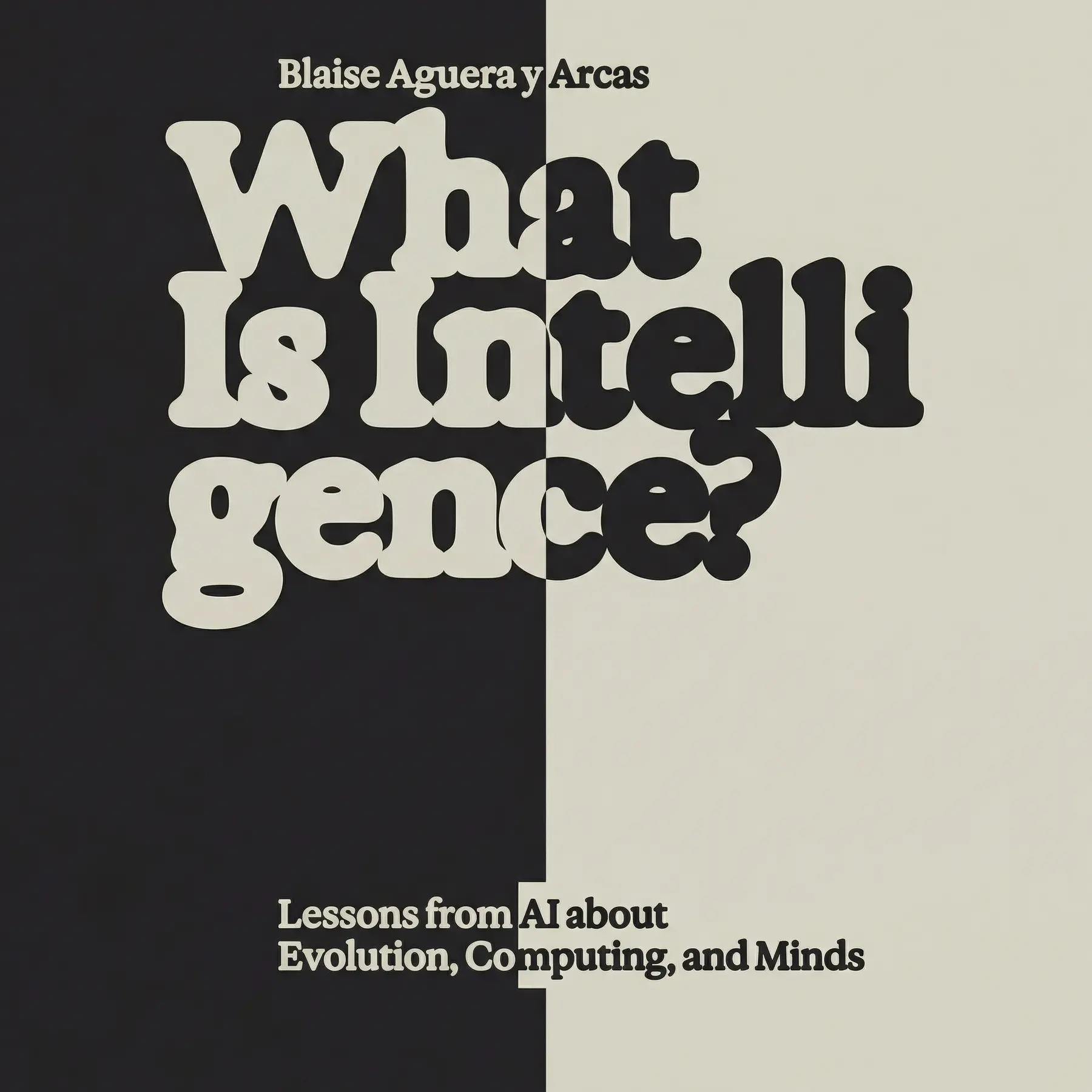
What Is Intelligence?: Lessons from AI About Evolution, Computing, and Minds
What Is Intelligence? explores the profound connection between biological evolution and artificial intelligence, arguing that both are driven by a single fundamental principle: the power of prediction to sustain life and logic.
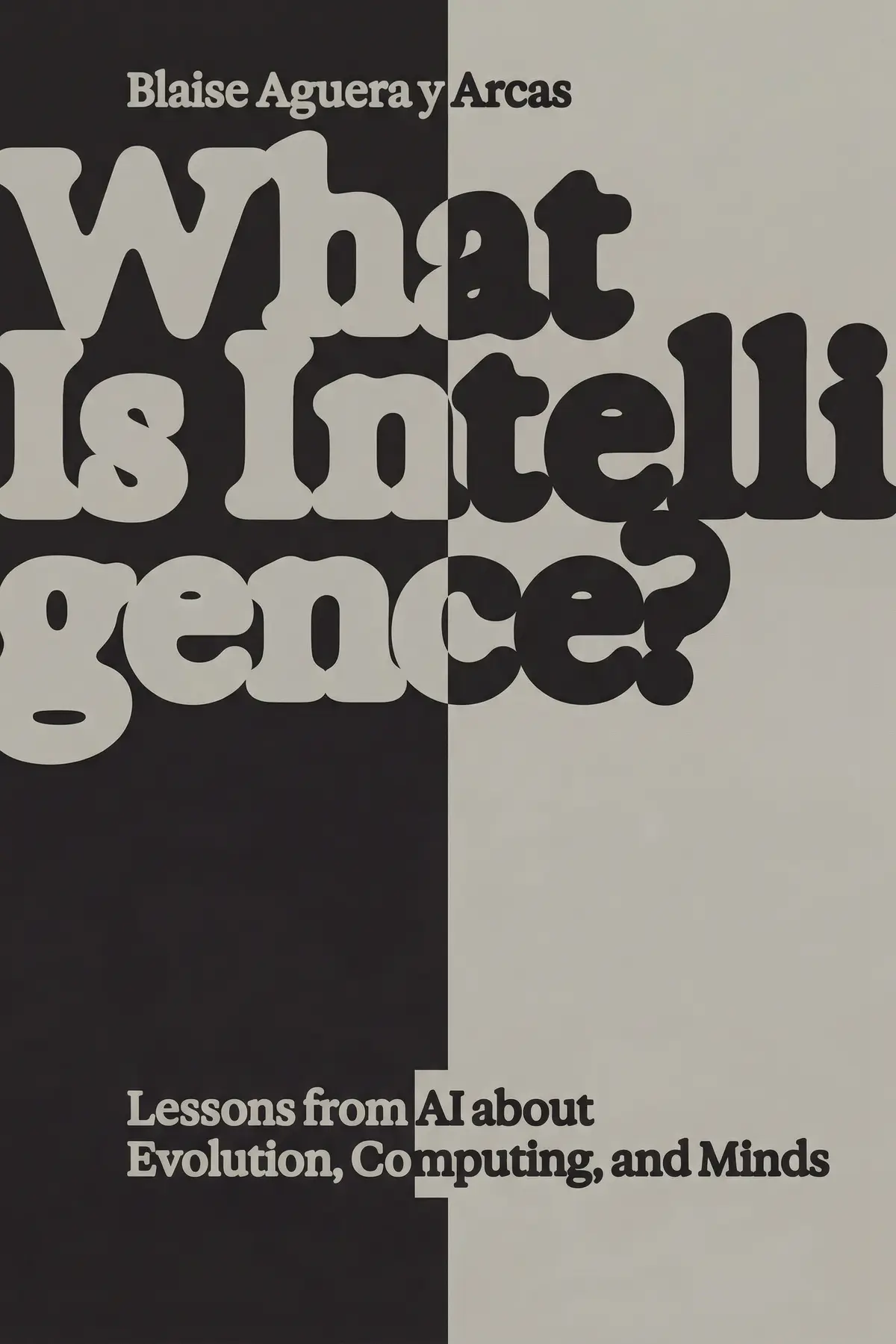
Table of Content
1. Introduction
1 min 34 sec
When we think about intelligence, we often start with ourselves. We think of poetry, complex mathematics, and the ability to ponder the nature of the universe. We tend to view artificial intelligence as a separate, newer phenomenon—a high-tech mirror reflecting our own brilliance. But what if we’ve been looking at the story from the wrong angle? What if intelligence isn’t a human invention or a biological accident, but a universal principle of computation that has been unfolding for billions of years?
In this exploration of What Is Intelligence?, we are going to look at the grand throughline that connects the first self-replicating molecules to the most advanced neural networks of today. The central argument we will uncover is that intelligence, at its heart, is the engine of prediction. Whether it’s a single-celled organism swimming toward a nutrient source or a large language model predicting the next word in a sentence, the underlying logic is the same: using information to model the future and ensure stability.
By the time we finish, you’ll see that the distinction between “real” and “artificial” intelligence might be less important than the shared computational foundations they both stand upon. We’ll move through the deep history of our planet, the philosophical dreams of the Enlightenment, and the cutting-edge labs of Silicon Valley to understand how intelligence scales, adapts, and ultimately binds us to the machines we create. This isn’t just a story about technology; it’s a story about the very nature of existence and the predictive loops that keep life—in all its forms—moving forward.
2. The Chemical Origins of Computation
2 min 30 sec
Discover how the chaotic environment of the early Earth provided the perfect conditions for the first self-sustaining cycles of life to emerge from simple chemical reactions.
3. Survival as a Predictive Problem
2 min 20 sec
Explore the minimal intelligence of bacteria to see how basic survival depends on a living system’s ability to model and predict its environment.
4. The Divergent Paths of Machine Logic
2 min 19 sec
Trace the history of computing from Leibniz’s dreams of logical certainty to the biological feedback loops that eventually paved the way for modern AI.
5. Learning Through Nonlinear Feedback
2 min 22 sec
See how artificial neurons and feedback loops allow machines to recognize patterns and build internal models of the world, much like the human brain.
6. The Power of Language and Social Compression
2 min 15 sec
Examine why language is more than just communication; it is a sophisticated system for revealing and connecting minds through predictive modeling.
7. A Future of Hybrid and Collective Intelligence
2 min 25 sec
Consider the shift from individual to collective intelligence and how our relationship with AI mirrors earlier evolutionary transitions in human history.
8. Conclusion
1 min 46 sec
As we have seen throughout this journey, intelligence is not a static gift, but a dynamic process that has been evolving since the first sparks of life in the Hadean oceans. By looking at the throughline of prediction, we can see that the bacteria navigating a chemical gradient, the philosopher dreaming of mechanical logic, and the modern AI predicting the next word are all part of the same grand narrative. Intelligence is the ultimate tool for stability in an unstable world, allowing systems to model the future and adapt to the unknown.
The transition we are currently witnessing is not the arrival of something alien, but the continuation of a symbiotic trend that defines our species. Just as we once merged with mitochondria to power our cells, and later merged with language and tools to power our societies, we are now merging with computational systems to expand our cognitive reach. This shift toward a collective, hybrid intelligence is already underway, changing the way we think, solve problems, and relate to one another.
The final lesson here is one of perspective. When we ask ‘What is intelligence?’, the answer isn’t found in a single brain or a single piece of code. It is found in the loops of feedback and prediction that link all living and thinking things. As we move forward, our task is to steward this new layer of cognition wisely, recognizing that our machines are not just our creations, but our newest partners in the ancient, ongoing project of understanding the universe. By embracing this connection, we can build a future where intelligence—in all its forms—continues to flourish and evolve.
About this book
What is this book about?
This exploration challenges the traditional divide between carbon-based minds and silicon-based machines. Blaise Agüera y Arcas takes readers on a journey through four billion years of history, starting with the very first chemical reactions in the Earth's primordial oceans and leading up to the sophisticated large language models of the modern day. The core premise is that intelligence is not a magical property of the human brain, but a computational process rooted in prediction and feedback loops. The book promises to redefine how we view the current AI revolution. Instead of seeing artificial systems as mere mimics or potential rivals, Agüera y Arcas frames them as a continuation of an ancient evolutionary story. By examining the way bacteria navigate their environments, how early mathematicians dreamed of mechanical logic, and how modern neural networks learn to understand the world, the text provides a comprehensive framework for understanding the future of cognition. It moves beyond the hype and fear to reveal a symbiotic future where human and machine intelligence are inextricably linked.
Book Information
About the Author
Blaise Aguera y Arcas
Blaise Agüera y Arcas is a computer scientist and interdisciplinary researcher known for his work in machine learning, neural networks, and computational photography. He led major projects at Microsoft and later at Google, where he helped guide research on large-scale AI systems and their social implications. Alongside his technical work, he writes and speaks widely about intelligence, cognition, and the intersections of technology, biology, and society.
Ratings & Reviews
Ratings at a glance
What people think
Listeners find this work to be an insightful and wide-ranging reimagining of intelligence that expertly links biological evolutionary history with today’s computing landscape. Additionally, they praise the author’s skill in combining varied disciplines like neuroscience and thermodynamics, with one listener specifically pointing out the "fascinating connections" made between animal survival tactics and predictive AI frameworks. Furthermore, listeners value the "grounded and updated" outlook that presents technological advancement as a logical extension of natural history instead of a jarring break. They also highlight that the writing is "didactic but deep," serving as a reflective counterpoint to both extreme AI anxiety and blind technological optimism.
Top reviews
Leah
The chapter on hydrothermal vents provides an incredible foundation for Aguera y Arcas’s central argument that intelligence isn't some magical spark but a byproduct of persistent chemical cycles. It’s a dense read, yet the prose remains remarkably clear as it connects the dots between early metabolic systems and the transformer architectures behind modern LLMs. By framing AI as a natural extension of biological evolution, the author strips away the sensationalism often found in current tech writing. I appreciated how he explains that systems surviving in hostile environments are essentially "predicting" their surroundings through adaptation. This isn't just about code; it’s about the thermodynamics of life itself. Even if you aren't a computer scientist, the connections drawn between bacterial behavior and neural networks are absolutely mind-expanding.
Show moreKoi
As someone who has spent years tracking the development of neural networks, I found this to be one of the most coherent explanations of why self-supervised learning changed everything. The author argues that moving away from rigid, label-based training was the key to unlocking general-purpose reasoning, and the logic here is ironclad. He weaves together concepts like fractals and internal models to show how "minds" are often composed of smaller "subminds" in a constant feedback loop. It is rare to find a tech leader who can write with such philosophical depth without losing the thread of the actual science. This isn't just a book about AI; it's an exploration of what it means to be a processing entity in an entropic universe.
Show morePensuda
Picked this up after seeing the online version and honestly, it’s a masterpiece of cross-disciplinary synthesis. The way the author connects the history of computing—from Leibniz and Turing—to the way modern LLMs predict the next token is nothing short of brilliant. It’s a grounded perspective that doesn’t treat AI as a sudden alien intrusion but as a continuation of a process that started billions of years ago. I particularly enjoyed the discussion on collective intelligence and how humans are becoming part of a larger hybrid system. If you want to move beyond the shallow "AI alarmism" and actually understand the underlying mechanics of intelligence, this is the definitive text for the current era.
Show moreFinn
This is exactly the kind of deep-dive we need in an era of superficial AI hot takes. Instead of focusing on the "what" of AI, Blaise explores the "why" by looking at the very origins of chemical systems on Earth. The connection between self-replication and internal modeling is explained so clearly that it feels obvious in hindsight. I was particularly fascinated by the idea that language is a compressed representation of thought that allows us to share our internal models with others. It’s a beautiful, hopeful book that suggests our future with AI will be one of shared, collective growth rather than competition. This is essential reading for anyone who wants to understand the long-term trajectory of our species and our tools.
Show morePatchara
This book is a refreshing departure from the usual "AI will save or kill us all" tropes that dominate the shelves lately. Truth is, I wasn’t expecting a Google CTO to dive so deep into the chaotic flight patterns of moths just to explain predator-prey dynamics and strategic randomness. The core idea—that intelligence is basically just a sophisticated internal model for predicting the future—is handled with a lot of nuance and historical context. My only real gripe is that some of the sections on cybernetics felt a bit like a history lecture, which might slow down readers looking for a more futuristic focus. Still, the way it bridges the gap between biology and computation is incredibly satisfying. It’s a solid 4-star read for anyone tired of the hype cycle.
Show moreNook
Ever wonder why a tiny bacterium can navigate toward nutrients while your smart home device still struggles with basic context? Blaise Aguera y Arcas tackles this by showing that even the simplest life forms are performing a version of statistical inference to survive. I loved the parts about "theory of mind" and how it underwrites our ability to make purposive decisions beyond mere autopilot. The writing style is didactic but stays engaging enough to prevent it from feeling like a dry textbook. My one complaint is that the physical book lacks some of the cool animations found in the online version, which makes certain concepts like fractals a bit harder to visualize. Definitely a book that requires a second reading to fully absorb.
Show moreSaowalak
Look, if you’re looking for a quick beach read about robots, this isn't it, but it’s probably the most important book you’ll read on technology this year. The author’s main contention is that intelligence emerges whenever a system learns to model itself and its world to overcome entropy. This "backwards causality" of anticipating the future is a fascinating way to look at everything from a moth’s flight to a chatbot's response. Personally, I found the middle chapters on symbolic logic a bit dry compared to the fascinating stuff on biological cells. However, the overarching argument that intelligence exists on a broad spectrum rather than being a human-only trait is incredibly persuasive. It’s a dense, rewarding challenge that shifts your worldview.
Show morePita
After hearing about this on a few tech podcasts, I decided to see if the hype was real. The book is a sweeping reinterpretation of what "thinking" actually is, moving away from human exceptionalism toward a more universal definition. Aguera y Arcas explains that prediction is the heartbeat of intelligence, whether it's happening in a brain or a silicon chip. The prose is sophisticated, using long, complex sentences to build a case before dropping a punchy, clarifying insight. While I struggled with some of the more intense thermodynamics sections, the payoff was a much clearer understanding of how life and computation are two sides of the same coin. It really makes you rethink your own place in the evolutionary timeline.
Show moreNoi
Not what I expected given the pedigree of the author. While Aguera y Arcas is clearly brilliant and offers a unique "insider" view from Google, the book often feels like it's trying to cover too much ground at once. We jump from the origins of life to thermodynamics to large language models, and the thread occasionally gets lost in the weeds of technical definitions. To be fair, the section on theory of mind was provocative, but I found the dismissal of the "hard problem" of consciousness a bit too hand-wavy for my taste. It’s a very academic-leaning text that requires a lot of patience. If you’re already well-versed in information theory or neurobiology, you might find about 70% of this redundant.
Show moreSebastian
Frankly, I found the author's optimism regarding the "collective intelligence" of AI-human systems to be a bit too convenient for someone in his position at Google. The book is undeniably smart and well-researched, but it often brushes over the ethical and social vulnerabilities of these complex systems in favor of grand evolutionary theories. I enjoyed the sections on split-brain patients and how they relate to internal models, but the transition into large language models felt like it was missing a few steps of critical analysis. It’s a very "insider" view that sometimes ignores the darker implications of the tech we are building. It’s worth reading for the science, but keep a skeptical eye on the final predictions for our shared future.
Show moreFeatured in
Readers also enjoyed
A Life Decoded: My Genome: My Life
J. Craig Venter
21 Lessons for the 21st Century
Yuval Noah Harari
A Planet of Viruses
Carl Zimmer
AUDIO SUMMARY AVAILABLE
Listen to What Is Intelligence? in 15 minutes
Get the key ideas from What Is Intelligence? by Blaise Aguera y Arcas, plus 5,000+ more titles in English and Thai.
- 5,000+ titles
- Listen as much as you want
- 7-day free trial
- Cancel anytime







