
A New Earth: Awakening to Your Life’s Purpose
Eckhart Tolle
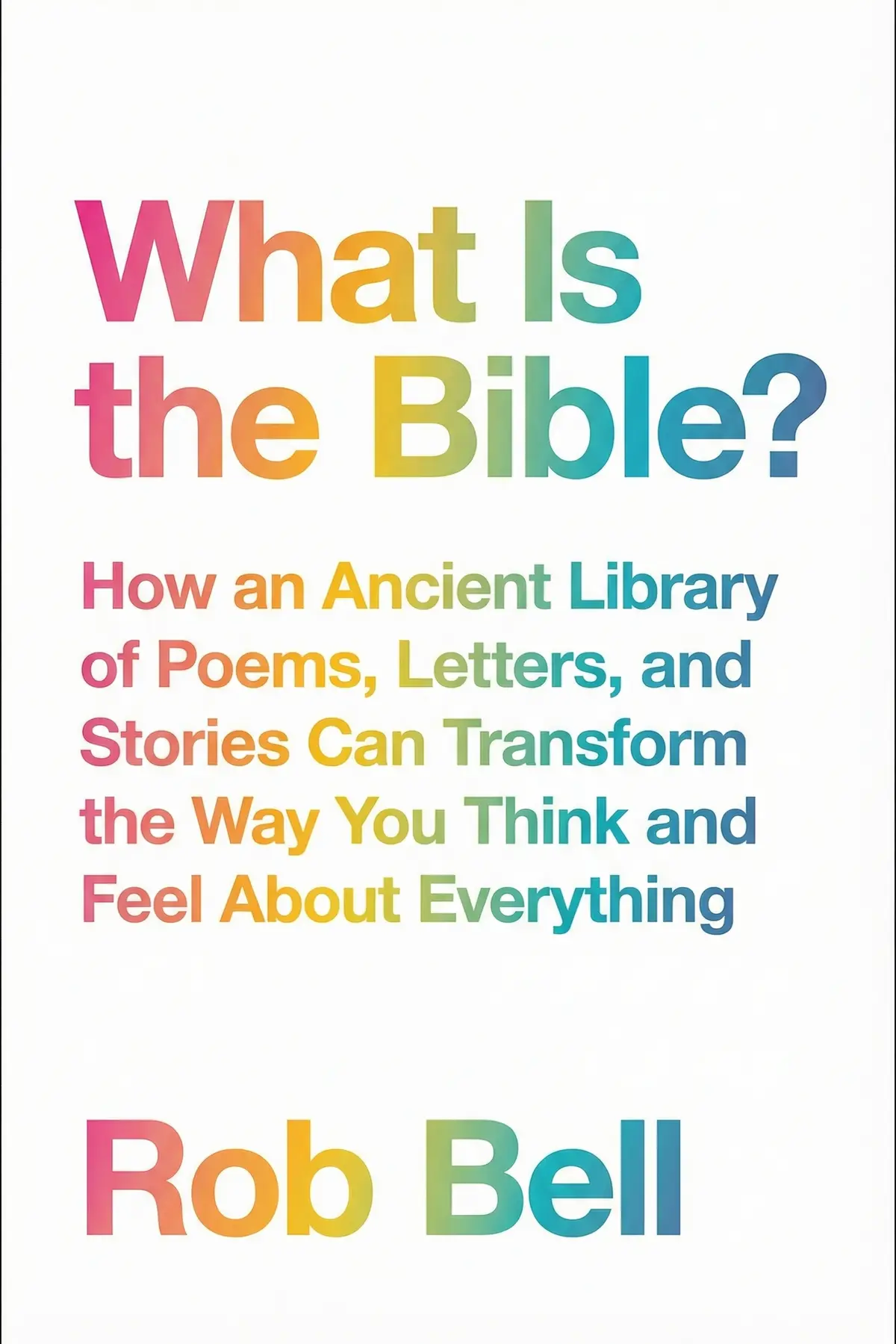
Rob Bell invites readers to look past dogma and see the Bible as a dynamic library of human experience, offering a fresh, progressive lens on history's most influential and misunderstood book.
1 min 57 sec
When we think about the most influential books in human history, one title stands far above the rest. It sits in bedside drawers in hotels, occupies prominent places on family bookshelves, and has been translated into more languages than any other piece of literature. We are, of course, talking about the Bible. Yet, despite its ubiquity, it is perhaps the most misunderstood and misinterpreted collection of writings in existence. For some, it is a rigid rulebook; for others, a source of endless controversy or a collection of outdated myths. But what if we are looking at it through the wrong lens entirely?
To truly grasp what the Bible is, we have to stop treating it like a single, modern book that fell out of the sky. Instead, we must see it for what it actually is: an ancient library, a complex anthology of poems, letters, and stories written by real people in real situations over the course of fifteen centuries. When we peel back the layers of dogma and look at the historical and human context of these writings, a different picture emerges. It’s a picture of progress, of people grappling with the divine, and of an ancient culture trying to find a better way to live.
In this exploration, we’re going to step into the world of the biblical authors. We’ll look at why their stories were so revolutionary for their time and why many of the parts we find most confusing or problematic today were actually leaps forward in human consciousness back then. We will see how the Bible isn’t just about ancient history, but about the very human experience of moving from oppression to freedom and from fear to love. By the end, you’ll see how this library can change the way you think and feel about everything, from the way we handle power to how we treat the earth. The goal isn’t just to read the Bible more, but to read it better, with an eye for the nuance and the humanity that makes it come alive.
2 min 30 sec
Discover how the Bible breaks the mold of ancient history by giving a voice to the marginalized rather than the powerful winners.
2 min 33 sec
Learn how the Bible records a gradual shift in how humanity perceives the divine, moving away from fear toward grace.
2 min 41 sec
Explore how the Bible’s inconsistencies and very human stories actually point to a deeper, more believable reality.
2 min 34 sec
See how the Bible acknowledges a dark, brutal world while constantly pulling the reader toward a vision of non-violence.
2 min 29 sec
Uncover why the Bible often disagrees with itself and how these shifts reflect a deepening understanding of the world.
2 min 19 sec
Discover why getting stuck on the ‘facts’ of a story can cause you to miss the profound wisdom it was meant to convey.
2 min 33 sec
Learn how asking the right questions about ancient texts can shed light on today’s issues of technology, power, and the environment.
1 min 41 sec
The Bible is far more than a book of ancient rules or a collection of historical facts; it is a living, breathing library that documents the long, messy, and beautiful journey of humanity discovering what it means to be alive. We have seen that by understanding the context of the authors—as an oppressed minority seeking liberation—we can unlock the radical, progressive heartbeat of the text. We have explored how the Bible moves us away from cycles of violence and tribalism toward a vision of peace and universal love, and how its very contradictions reflect the honest growth of the human spirit.
If there is one thing to take away from this journey, it is the importance of curiosity. When we stop reading the Bible literally and start reading it humanly, we find that it has a remarkable power to transform our perspective. It challenges us to look at our own uses of power, our treatment of the planet, and our willingness to forgive our enemies. The stories of Jonah, Moses, and the early disciples are not just relics of the past; they are mirrors held up to our own hearts.
As you move forward, try to approach this ancient library not with a sense of obligation or skepticism, but with an open mind. Let the poetry stir you, let the contradictions provoke your thinking, and let the message of liberation inspire you. The Bible is an invitation to see the divine in the ordinary and the hope in the midst of struggle. By embracing it for what it truly is—a profoundly human record of the divine—you can find a source of wisdom that continues to shine a light on the most important questions of our lives today. The story is still unfolding, and you are a part of it.
This exploration dismantles the traditional, often rigid ways many approach the Bible. Instead of viewing it as a static manual of rules, it presents the text as a collection of diverse voices—poems, letters, and narratives—penned by people navigating the pressures of their time. It promises a way to reconnect with these ancient stories by understanding their historical context and the revolutionary shifts in thinking they represented when they were first shared. By moving beyond a strictly literal interpretation, listeners learn to see the biblical library as a record of human spiritual progress, documenting a shift from cycles of violence toward peace and from tribalism toward a more universal sense of love. It is an invitation to engage with the scriptures with curiosity rather than fear, revealing how themes of liberation, justice, and humanity remain profoundly relevant for modern questions regarding power, technology, and our relationship with the planet.
Rob Bell is a highly acclaimed author whose work often challenges traditional religious boundaries. He wrote the New York Times bestseller Love Wins and founded the influential Mars Hill Bible Church. His impact on modern spiritual thought was recognized in 2011 when TIME magazine included him on their prestigious list of the 100 Most Influential People in the World.
Listeners find the material both accessible and thought-provoking, with one individual highlighting how it provides a fresh framework for comprehending the scriptures. Furthermore, the narrative style is highly regarded; one listener depicts it as a skillfully composed manual for Bible study. The book also presents an innovative outlook on scriptural interpretation that clarifies the deeper meaning of stories, especially those within the Old Testament. Listeners value its connection to the modern world, with one noting how it links ancient texts to current events, and they find the overall experience encouraging and life-improving.
Picked this up after years of hearing about Bell's shift in perspective, and frankly, it’s the breath of fresh air I needed. He challenges the reader to look at the Bible as a library of ancient books rather than a monolithic rulebook. By emphasizing a 'literate' reading over a strictly 'literal' one, he unlocks stories that previously felt stagnant or confusing, especially those odd narratives in the Old Testament. I found his enthusiasm for the text absolutely contagious, making me want to dust off my own Bible immediately. While his style—heavy on the line breaks and dramatic spacing—can feel a bit gimmicky on the page, the core message is deeply life-enhancing. It’s a guide that actually makes the ancient world feel relevant to our current cultural moment. This isn't just about religion; it's about the grit of being human.
Show moreFinally got around to finishing this, and I feel like I've just sat through a masterclass on how to love a difficult book. Rob Bell doesn't try to sanitize the violence in the Bible; instead, he dives into the historical context of the Babylonian exile to show how these stories were radical protests against the surrounding culture. It’s refreshing to see someone treat the Israelites as real people with evolving views of the divine rather than static figures in a stained-glass window. My only real gripe is the total lack of footnotes, which makes some of his bold claims about Hebrew word meanings hard to verify independently. Still, the way he connects these ancient struggles to our modern pursuit of human flourishing is brilliant. It’s a hopeful, uplifting read that makes the Bible feel alive and dangerous in the best possible way.
Show moreAfter hearing so many conflicting things about Rob Bell, I didn't know what to expect, but I found this incredibly moving. The book is structured around the idea that the Bible is a record of people trying to understand what it means to be human in relation to a God who is for them. It’s an emotional journey that moves away from tribal divisions and toward a more inclusive, life-enhancing vision of faith. I particularly enjoyed the FAQ section at the end, which handles 'weird' questions with a level of grace and nuance that is often missing in religious circles. The prose is sparse and punchy, which might annoy traditionalists, but it kept me engaged from start to finish. It really opened up the Old Testament for me in a way that felt both ancient and shockingly modern.
Show moreThis book is dangerous in all the right ways because it forces you to stop using the Bible as a weapon and start using it as a mirror. Bell’s thesis is simple: the Bible is a human library about human beings, and that is precisely why it’s so powerful. Not gonna lie, I was skeptical of his 'literate reading' approach at first, but his breakdown of the Book of Revelation was a total game-changer for me. He pulls the text out of the realm of scary future predictions and places it firmly back in its original context of resistance against an oppressive empire. It’s insightful, provocative, and written with a rhythmic flow that makes it impossible to put down. Even if you don't agree with every theological conclusion, you'll walk away with a deeper appreciation for the mystery of faith.
Show moreWow. This is easily Bell’s strongest work since Velvet Elvis. He manages to turn the Bible inside out, transforming it from a 'religious' book into a deeply human one that vibrates with life. The conversational tone makes it incredibly accessible, even when he’s diving into complex Greek word studies or the politics of the Roman occupation. Personally, I found his take on the animal sacrificial system to be a highlight, as it reframed the whole concept of guilt and grace in a way that felt both radical and ancient. It’s a quick read but one that stays with you, prompting you to see the 'glory of God' in the flourishing of humanity. Whether you’re a seeker or a long-time believer, this book will change the way you see the Word.
Show moreThe chapter on King Eglon was worth the price of admission alone. Bell has this uncanny ability to take a grisly, bizarre story from Judges and peel back the layers until you see the cultural satire and political subtext buried beneath the surface. Truth is, I struggled initially with his casual writing style, which often feels more like a transcript of a sermon than a formal theological work. However, once you get into the rhythm of his 'writing as speaking' approach, the insights into the sacrificial system and its human origins are fascinating. He treats the text with a profound sense of wonder, even when he’s questioning traditional interpretations of Jesus' death. It’s a book that invites you to wrestle with God rather than just nodding along to Sunday school platitudes. Highly recommended for those who feel the old way of reading has run dry.
Show moreEver wonder why the Bible is full of so much weirdness? This book tackles that head-on by treating the scriptures as an 'empowered mystery' rather than a set of clear-cut instructions. Bell is at his best when he’s explaining the 'haphazard humanity' of the authors, showing how their fallible perspectives actually make the Bible more reliable and relatable. I loved the section on Melchizedek and how the New Testament writers were essentially reinterpreting their own history on the fly. Some might find his dismissive attitude toward inerrancy a bit smug, yet it’s hard to deny that he respects the text enough to actually wrestle with its complexities. It’s a dense, layered, and ultimately insightful guide that refuses to give easy answers. It's the kind of book you'll want to discuss at a dinner party with your most skeptical friends.
Show moreNot what I expected, but exactly what I needed. Look, Bell has a very specific 'vibe' that can be polarizing, especially with all the italics and bold text for emphasis. But if you can get past the stylistic quirks, there is real substance here about how we perceive the divine. He moves through the evolution of thought in the scriptures, showing how the Israelites' view of God matured over time, which mirrors our own spiritual journeys. I found the section on the Book of Judges to be particularly insightful regarding our current global struggles with violence and peace. It’s not a perfect book—he can be a bit condescending toward more conservative viewpoints—but it’s an essential read for anyone who wants to rediscover the Bible as a source of liberation.
Show moreAs someone who grew up in a very rigid church environment, this felt like being given permission to think for myself. Bell handles the 'ancient eastern stories' with a level of humility and respect that is often lacking in modern apologetics. He doesn't just give you the answers; he teaches you how to ask better questions. The way he frames the crucifixion as a historical event that the disciples had to process through their own cultural lens was challenging, but ultimately helped me understand the New Testament on a deeper level. To be honest, I missed the presence of footnotes to track his research, but the sheer energy of his writing makes up for it. It's a refreshing perspective that bridges the gap between ancient history and our daily lives.
Show moreTo be fair, Rob Bell is a talented communicator, but this book ultimately feels like a detour into humanism disguised as biblical study. He focuses so heavily on the Bible as a 'human book' that the sense of divine revelation completely evaporates. He argues that the sacrificial system was just a human invention to manage guilt, which fundamentally undermines the orthodox understanding of the Gospel and why Jesus had to die. While his insights into the context of the Roman occupation are interesting, his conclusions feel driven more by modern progressive sensibilities than by the text itself. It’s a collection of sweeping statements with no academic citations to back them up. If you're looking for a book that affirms your own 'evolving' morality, you'll love it, but those seeking the Word of God might find it spiritually empty.
Show moreEckhart Tolle
Marianne Williamson
Deepak Chopra
Pico Iyer
Alcoholics Anonymous World Services
Daniel Goleman

Beth Moore
Paramahansa Yogananda
AUDIO SUMMARY AVAILABLE
Get the key ideas from What Is the Bible? by Rob Bell, plus 5,000+ more titles in English and Thai.







