

A Higher Loyalty: Truth, Lies and Leadership
James Comey
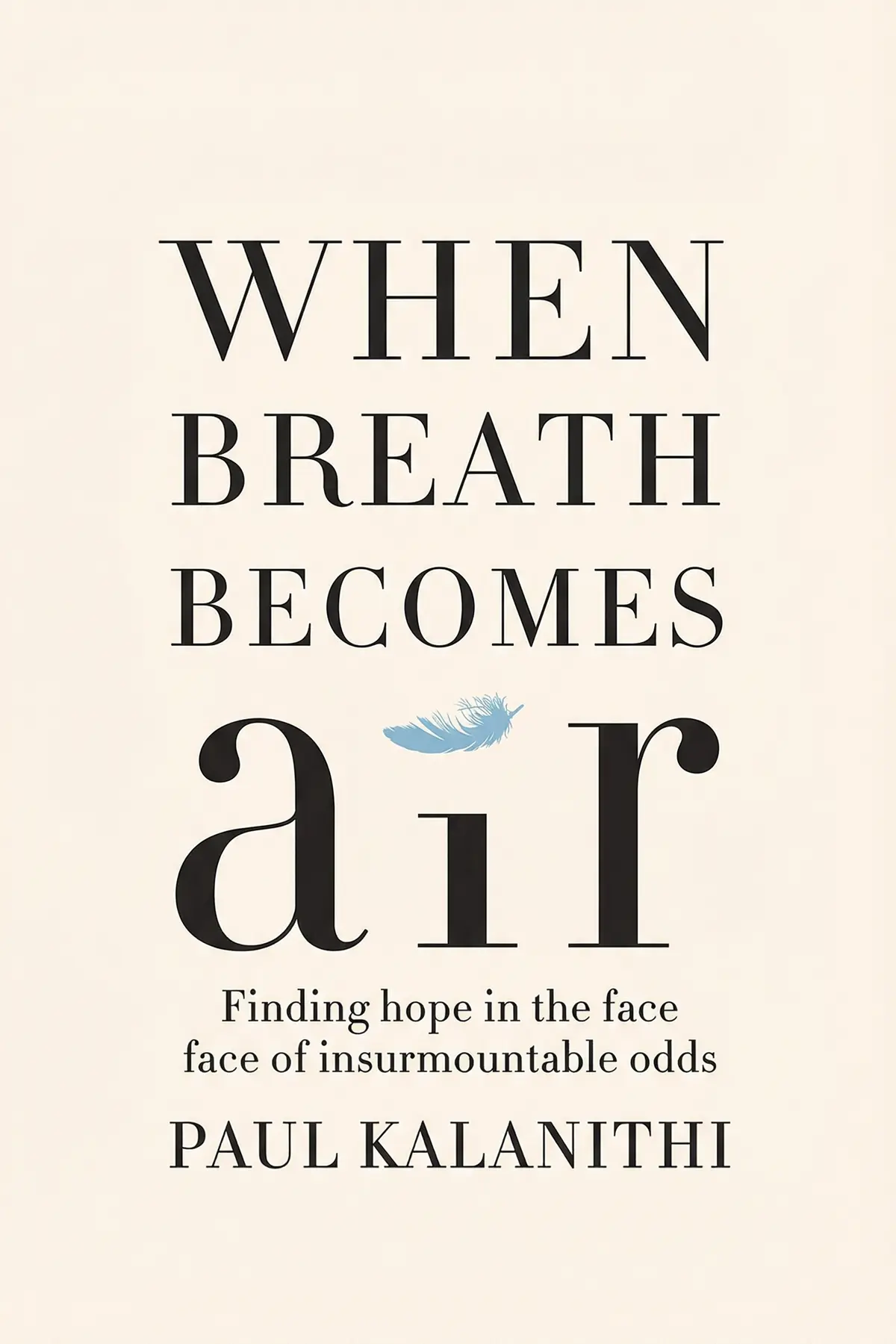
Explore a profound memoir by neurosurgeon Paul Kalanithi, who transitioned from doctor to patient after a terminal diagnosis. This summary examines his search for life's meaning through literature, science, and impending mortality.
1 min 47 sec
Imagine working for a decade to reach the very top of your profession. You have endured hundred-hour work weeks, seen the most traumatic human suffering imaginable, and finally, you are on the verge of becoming a leader in your field. This was the reality for Paul Kalanithi, a talented neurosurgeon at Stanford. But just as he was about to cross the finish line of his training, the world shifted. A series of health concerns revealed a devastating truth: he wasn’t just a doctor anymore; he was a terminal patient.
When Breath Becomes Air is more than just a medical memoir or a story about illness. It is a deep, philosophical investigation into what makes life worth living when the future is suddenly taken away. Kalanithi spent his life trying to understand the intersection of the biological brain and the human spirit. He looked for answers in the pages of classic literature and in the operating rooms where he held human lives in his hands.
As we walk through his journey, we will see how his perspective evolved. We will explore how his dual passion for literature and neuroscience shaped his understanding of meaning. We will witness the brutal honesty of medical training and the immense weight of making life-or-death decisions for others. Finally, we will see how he chose to live his final days, choosing to bring a new life into the world even as his own was fading. This is a story about the courage to face mortality without losing one’s humanity. It invites us to consider how we might spend our time if we knew exactly how little of it was left, and it reminds us that even in the face of insurmountable odds, there is beauty, relationship, and purpose to be found.
2 min 15 sec
Discover how a young student balanced the world of classic fiction with the rigid laws of neuroscience to find the source of human meaning.
2 min 05 sec
The clinical environment of medical school provides a stark and visceral introduction to the fragile boundary between the living and the dead.
1 min 48 sec
Specializing in the brain means taking responsibility for the very essence of a patient’s identity, where even the smallest error has permanent costs.
2 min 04 sec
Long hours and extreme exhaustion can lead even the most dedicated doctors to lose sight of the people behind the pathologies.
1 min 56 sec
Precision in the operating room is not just about skill; it is a moral obligation to the patients whose futures depend on every movement.
1 min 50 sec
Just as his years of training were concluding, the doctor was forced to inhabit the world of the patient, changing everything he thought he knew.
1 min 48 sec
In the face of a terminal illness, Kalanithi and his wife made the courageous decision to bring a new life into the world.
1 min 43 sec
Witness the final transition of a man who faced his end with the same intellectual and emotional rigor he applied to his life’s work.
1 min 36 sec
The journey of Paul Kalanithi is a powerful reminder that we are all, in a sense, living with a terminal diagnosis; the only difference is the timeline. Through his transition from a brilliant neurosurgeon to a patient facing his own end, he bridged the gap between the clinical and the personal. He showed us that the search for meaning isn’t something we do only in our spare time, but is the central project of being human.
Kalanithi’s life teaches us that technical skill and intellectual achievement are important, but they must be anchored in empathy and human connection. He demonstrated that even when we are stripped of our professional identities and our physical strength, our capacity to love and to create meaning remains intact. His decision to become a father in the face of death is perhaps the ultimate act of hope, a statement that life is worth living even when it is brief.
As you move forward from this summary, consider the ‘throughline’ of your own life. What gives your days meaning right now? Are you prioritizing the relationships that Kalanithi found so vital? We can’t always control the ‘unforeseen events’ or the ‘messy’ ways life unfolds, but we can control the integrity with which we face them. Kalanithi’s legacy invites you to live with your eyes open to your own mortality, not as a source of fear, but as a motivation to live with more depth, more purpose, and more love.
When Breath Becomes Air is the moving account of Paul Kalanithi, a high-achieving neurosurgeon who found himself facing a stage IV lung cancer diagnosis just as his career was reaching its pinnacle. This transition from a medical professional who treats death to a patient who must face it provides a unique perspective on the human condition. The book serves as a bridge between the clinical world of neuroscience and the philosophical world of literature. This summary explores Kalanithi’s lifelong quest to understand what makes a human life meaningful. Through his early studies in English literature, his grueling years of medical residency, and his final months as a father and husband, we see a man striving for integrity in the face of the inevitable. The narrative offers a profound look at how we navigate the relationship between our physical brains and our spiritual identities, ultimately providing a promise of hope and clarity for anyone contemplating the boundaries of life and death.
Paul Kalanithi was a distinguished Indian-American writer and an award-winning surgeon who specialized in neurosurgery. His academic journey was marked by excellence, having attended the Yale School of Medicine for his medical degree. He later completed his rigorous residency training at Stanford University, where he also engaged in groundbreaking neuroscience research.
Listeners find this memoir to be a captivating and fast-paced experience, featuring superb prose and a poignant narrative that brings them to tears. This work provides a fascinating look at existence, as one listener points out that it aided their appreciation for the beauty of life. Listeners characterize the account as an incredible tale of bravery that lingers long after, while one listener highlights its exploration into the depths of humanity.
Wow. This is one of those rare memoirs that forces you to pause and re-examine your own mortality without feeling like a chore. Kalanithi captures the brutal reality of a stage IV lung cancer diagnosis just as his career as a neurosurgeon was hitting its peak. I found myself sobbing by the time I reached Lucy’s epilogue, which provides a much-needed grounding to Paul’s more philosophical musings. It’s a quick read, yet the emotional weight it carries is immense, exploring the depths of humanity and the search for meaning in the face of inevitable decline. While some might find his literary references a bit much—who really reads Wittgenstein to a baby?—they felt authentic to a man who spent his life bridging the gap between biology and literature. It’s a beautiful, heartrending testament to a life cut short.
Show moreFinally got around to reading this modern classic, and I can say the hype is entirely justified. This book is a gut punch that stays with you long after you’ve finished the final page. Paul’s writing is sharp and evocative, particularly when he describes the grueling nature of neurosurgery and the physical toll of his chemotherapy. I’m not gonna lie, I had to stop several times just to catch my breath because the prose is so dense with emotion and intellectual curiosity. It offers a unique perspective on the beauty of life, focusing on quality of time rather than just quantity. If you haven't read it yet, do yourself a favor and buy a copy, but make sure you have a box of tissues nearby for the ending. It's an amazing story of courage.
Show moreThe chapter on Lucy’s perspective at the end of the book is what truly broke me. Kalanithi’s journey from a brilliant neurosurgeon to a patient fighting for every breath is a story of incredible courage and intellect. He manages to weave together science and philosophy in a way that feels natural, even when he's discussing the most harrowing aspects of his decline. This is a quick read, but the themes of purpose and legacy are explored so deeply that it feels much longer in your mind. To be fair, his privileged background is evident throughout, yet it doesn't take away from the universal tragedy of a young father facing death. This book is a masterpiece of the human spirit that explores the very depths of humanity.
Show moreThis book is absolutely heartrending and brilliant in its simplicity. Paul Kalanithi had such a unique voice, bridging the gap between the clinical world of neurosurgery and the soft, vulnerable world of a dying man. I was particularly struck by his decision to have a child despite his diagnosis, a choice that feels both brave and incredibly tragic. The prose is elegant and spare, never wasting a word as he races against time to finish this memoir before the end. In my experience, very few books manage to be this intellectually stimulating while also making you cry uncontrollably. It’s an amazing story of courage that will stay with me for a long time. It makes you understand the beauty of life in a whole new way.
Show moreNot what I expected, but exactly what I needed to read right now. Kalanithi doesn't offer easy answers or platitudes about 'fighting' cancer; instead, he offers a meditation on how to live with integrity when you know the end is near. The transition from the doctor who holds life in his hands to the patient who can barely walk is described with such clarity and lack of self-pity. Personally, I found his obsession with finding a 'calling' very relatable, even if I’ll never be a brain surgeon. The way he discusses the depths of humanity through the lens of neurology is just fascinating. It’s a profound little book that packs a massive punch. I honestly think everyone should read this at least once to gain some perspective on their own life.
Show moreAs someone who appreciates a good medical memoir, I found this deeply compelling, though I understand why some readers might find the tone slightly detached. Kalanithi takes us through his rigorous training at Stanford and Yale, eventually reaching the point of chief resident before everything unravels. The shift from being the one delivering bad news to being the one receiving it is handled with surgical precision. Frankly, the middle section drags slightly with all the quotes from classical poetry, which can feel a bit elitist at times. However, the raw courage he shows in confronting his own expiration date makes those intellectual shields understandable. It’s a brilliant exploration of what happens when a healer becomes the broken one. The writing is sharp, academic, and ultimately very moving.
Show moreEver wonder how a doctor deals with their own terminal illness? Kalanithi provides a fascinating, if sometimes overly academic, answer to that question in this memoir. The book focuses heavily on his identity as a physician and how that identity is stripped away by his diagnosis. I appreciated the honesty about his marriage struggles during the treatment, which made him feel much more human than the 'super-doctor' persona established in the first half. Look, it’s not always a comfortable read, and the prose can be a bit heavy on the 'Tuesdays with Morrie' sentimentality, but the core message is vital. It’s a story about finding value in the time we have left, no matter how short that may be. A solid, thought-provoking read for anyone interested in medical ethics.
Show moreAfter hearing so many people talk about this, I expected to be more moved than I actually was, but it’s still a very solid four-star read. The writing style is definitely elevated, which fits his background in literature, though it sometimes feels like he’s trying a bit too hard to prove his intellectual worth through constant quotes. I loved the descriptions of the operating room; those scenes were vivid and gave a great sense of the high stakes he dealt with daily. The book really shines when it tackles the moral weight of being a doctor. While I found some of the philosophical tangents a bit dry, the ending is undeniably powerful and beautifully written by his widow. It's a poignant reminder that we are all just living, breathing organisms.
Show morePicked this up on a whim and finished it in a single afternoon because I just couldn't put it down. The narrative is driving and urgent, likely because the author knew his time was running out as he wrote it. While I found the constant quoting of T.S. Eliot and other poets a bit distracting from the actual story, his insights into the doctor-patient relationship are invaluable. It’s a tragic story of a promising career cut short, yet it feels strangely hopeful by the end. The epilogue is the perfect closing note, providing the grounded, emotional reality that balances out Paul's more abstract thoughts. Definitely worth the read, even if it leaves you feeling a bit raw and questioning your own purpose in the world.
Show moreTruth is, I have mixed feelings about this one despite its massive popularity. While I admire the author’s resilience and his passion for medicine, the narrative often feels more like a CV than a raw look at the human experience of dying. He spends a lot of time reminding us of his academic pedigree—Stanford, Yale, top of his class—which can come across as a bit narcissistic. I wanted more of his internal world and his relationships, but instead, we got a lot of name-dropping and obscure literary quotes that felt a bit pretentious. The chapter written by his wife after he passed was the highlight for me, as it finally brought the emotional vulnerability that the rest of the book lacked. It’s a decent read, but I didn't find it as groundbreaking as everyone says.
Show moreJames Comey
Philip Freeman
Jonathan Eig
J. Craig Venter

Ishmael Beah
James Herriot

Barack Obama
AUDIO SUMMARY AVAILABLE
Get the key ideas from When Breath Becomes Air by Paul Kalanithi, plus 5,000+ more titles in English and Thai.







