
17 min 01 sec
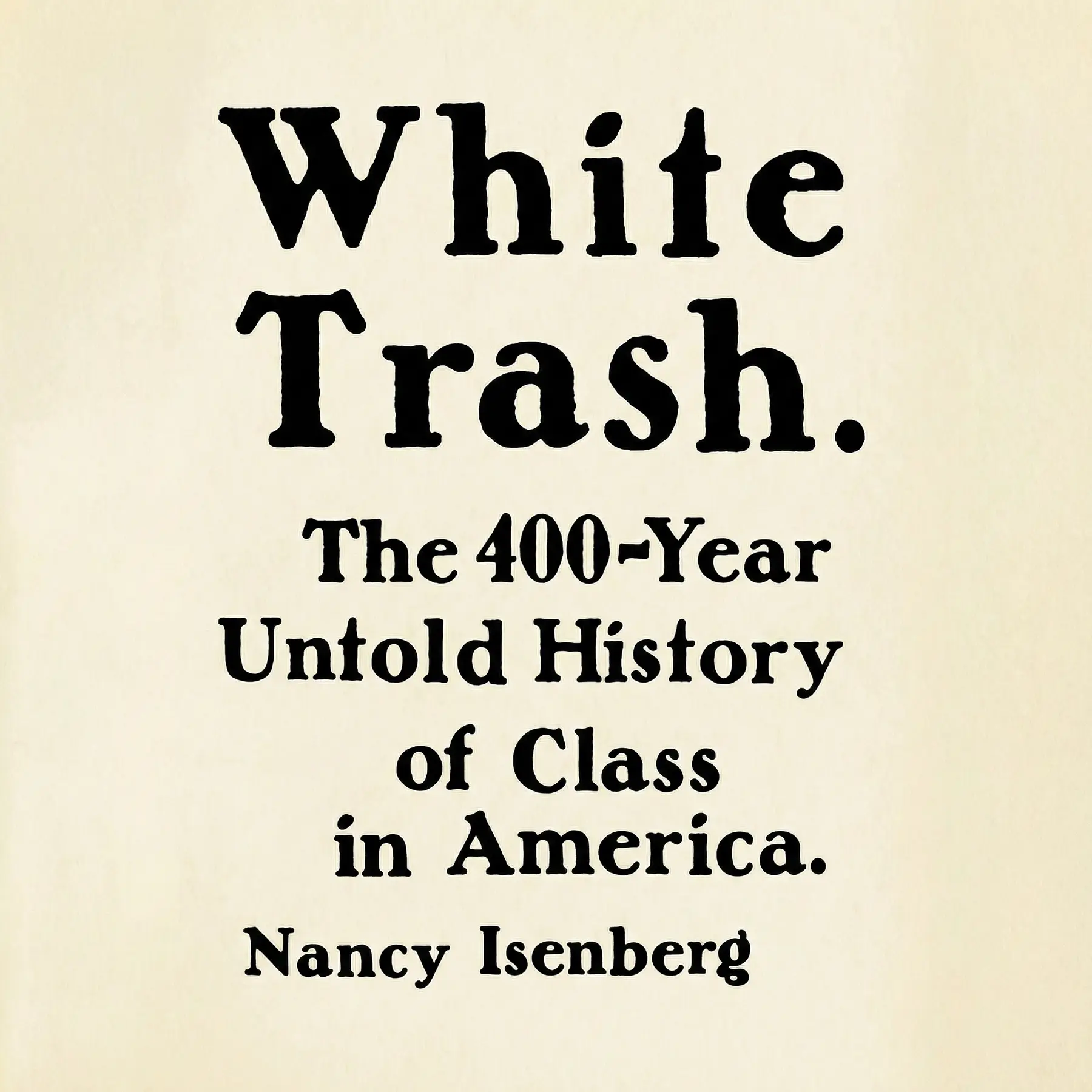
White Trash: The 400-Year Untold History of Class in America
A profound exploration of the 400-year history of the American class system, debunking the myth of classlessness by tracing the marginalized lives of the country’s poor white population from colonial times to today.
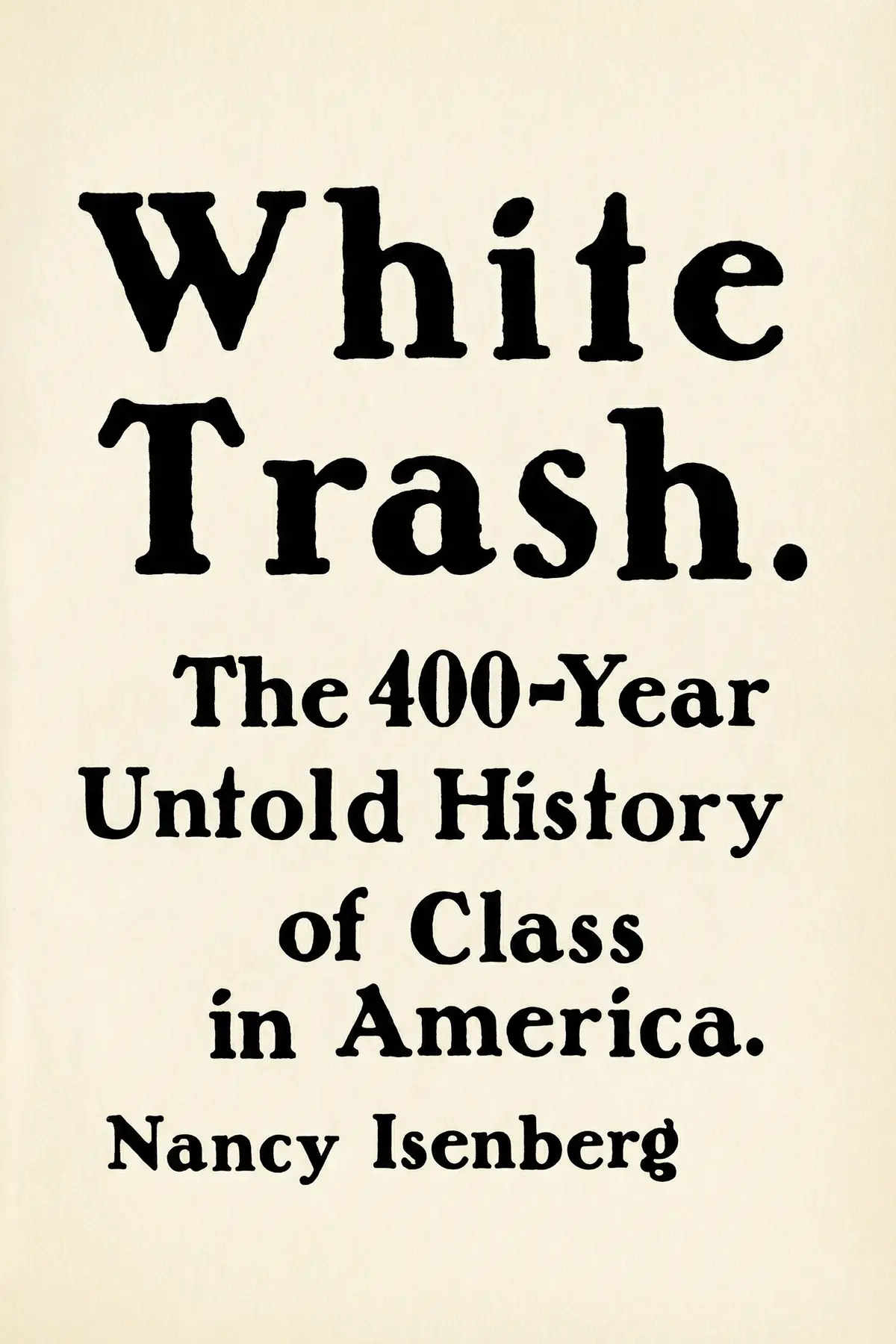
Table of Content
1. Introduction
1 min 21 sec
When we look at the landscape of modern American politics, we often hear about the ‘forgotten’ people or specific demographics that seem to vote against the expectations of the elite. During the 2016 presidential election, for instance, a spotlight was shined on the voting habits of the white working class, with some observers using derogatory labels to dismiss their concerns. But to understand the friction and the fervor of today’s social landscape, we have to look much further back than the last few election cycles. We have to confront a reality that many Americans find uncomfortable: the idea that the United States was never truly the classless meritocracy we were taught to believe in in school.
This journey takes us through four centuries of an ‘untold’ history. It is the story of a group of people who have been labeled in various ways—waste people, offscourings, lubbers, crackers, and eventually, white trash. These weren’t just insults; they were categories that defined a person’s worth in a society that claimed to value equality while simultaneously enforcing a strict social order. By tracing this lineage from the early English colonies to the rise of pop-culture icons and modern political figures, we can see how the treatment of the white poor has shaped the nation’s laws, its wars, and its very sense of self. What we discover is that the class struggles we see today are not new; they are the latest chapter in a long-running saga of stratification that began before the country even had a name.
2. The Colonial Dumping Ground
2 min 05 sec
Discover how the first English settlements in America were designed not as egalitarian utopias, but as a strategic solution for managing England’s unwanted ‘waste’ population.
3. The Hidden Classism of the Founders
1 min 57 sec
Uncover the surprising ways the Founding Fathers’ visions for a new nation were actually restricted by their own beliefs in natural hierarchy and social breeding.
4. The Rise of the American Squatter
2 min 02 sec
Follow the journey of nineteenth-century pioneers who, despite being reviled by the elite, eventually became the rugged symbols of the American spirit.
5. Class War Within the Civil War
2 min 00 sec
Explore how the clash between the North and South was as much about internal class tensions as it was about the battle over slavery.
6. Eugenics and the Science of Scorn
2 min 01 sec
Discover the dark era when American elites turned to scientific social engineering in an attempt to solve poverty through ‘good breeding.’
7. The Great Depression and the Shift to Reform
1 min 50 sec
See how the economic collapse of the 1930s forced America to reconsider its views on poverty as the middle class faced ‘white trash’ status.
8. The Commercialization of the Redneck
2 min 12 sec
Track the modern evolution of poor white identity as it moved from a source of shame to a powerful pop-culture brand and political weapon.
9. Conclusion
1 min 33 sec
As we look back over four centuries of American history, the throughline is unmistakable: the United States has never been a classless society. From the ‘waste people’ of the early 1600s to the ‘white trash’ of the modern era, there has always been a group of people at the bottom who have been marginalized, stereotyped, and used to define the boundaries of the ‘respectable’ middle and upper classes. This stratification was not a mistake; it was a deliberate part of how the country was built, managed, and expanded.
By understanding this history, we gain a new perspective on the political and cultural divisions that seem so unsolvable today. We see that the anger and the ‘whitelash’ often discussed in modern politics are rooted in a deep-seated feeling of being discarded by a system that claims to be fair but has historically viewed the poor through the lens of biological or moral failure. The lesson here is that the American dream remains incomplete as long as we refuse to acknowledge the class structures that still hold so many people back.
The real challenge for the future is to move beyond the stereotypes and the labels. If we want to live up to the promise of an equal society, we have to address the structural inequalities that have persisted since the days of the first tobacco colonies. We have to recognize that the ‘white trash’ label is not a description of a person’s character, but a reflection of a society’s own prejudices. Only by confronting this 400-year-old history can we hope to build a nation where a person’s worth is not determined by their pedigree or their zip code, but by their shared humanity.
About this book
What is this book about?
This narrative history challenges one of the most cherished myths in the United States: the idea that it is a classless society where everyone has an equal shot at success. By looking back four centuries, the story reveals a persistent and often ignored social hierarchy that has existed since the first English settlers arrived. It examines how the 'waste people' of the British Empire were transformed into the 'white trash' of the modern era, showing that class distinctions were not accidental but were actually woven into the very fabric of the nation’s founding and expansion. From the tobacco fields of colonial Virginia to the trailer parks of the twentieth century, the promise of this exploration is a deeper understanding of American identity. It looks at how political leaders, scientists, and cultural icons have all played a role in maintaining or shifting the status of the white poor. By the end, listeners will see how the history of class in America continues to shape modern politics, cultural stereotypes, and the ways we define the American dream versus the American reality.
Book Information
About the Author
Nancy Isenberg
Nancy Isenberg is a professor of history at Louisiana State University. She is the author of several award-winning books on American history and the founding fathers. She’s also a regular contributor to Salon.com, where she reflects on contemporary political and cultural affairs from a historical perspective.
Ratings & Reviews
Ratings at a glance
What people think
Listeners find the work captivating and accessible, commending its superior historical research and thoroughly documented facts. They also describe it as a sociological treasure that offers deep reflections on social ideologies. However, reactions to the writing are varied, as some consider it well-crafted while others characterize it as plodding prose. The tempo is also criticized for being redundant and uninteresting; while some listeners feel it provides a far greater understanding, others contend it fails to sufficiently explain its content.
Top reviews
Alejandra
Nancy Isenberg has crafted a stunningly thorough examination of the social philosophies that shaped our nation from its very inception. By focusing on the "waste people" and "mudsills" often ignored in standard history books, she provides a sociological gem that challenges the myth of a classless America. To be fair, the level of detail regarding early colonization can be dense, yet it feels necessary to dismantle our preconceived notions. I was particularly fascinated by the evolution of slurs like "clay-eaters" and "lubbers" through the centuries. This isn't just a book about poverty; it's a deep dive into how elites systematically marginalized the white poor. Every chapter feels like a revelation.
Show moreBella
Picked this up because I was tired of the shallow political commentary regarding the "white working class" and wanted something with real historical teeth. Isenberg delivers a tour de force that examines everything from indentured servitude to the chilling Supreme Court rulings on eugenics. The chapter on Buck v. Bell was particularly haunting, showing how deeply the desire to "weed out" the unproductive was woven into our legal system. It is a dense, challenging read that requires your full attention, but the payoff is a total reevaluation of American exceptionalism. This is the kind of history that makes you feel queasy because it rings so true to our current social divide.
Show moreSai
Wow, what a wake-up call regarding the "democracy of manners" that we all fall for during every single election cycle. I never realized how far back the tradition of politicians "playing the fiddle" with the poor goes, only to ignore them once the votes are cast. Isenberg’s research into the 1500s and the idea of America as a giant workhouse for England’s "waste people" changed how I view our origin story. The book is packed with well-documented information that makes it impossible to look at class the same way again. It’s a sociological gem that should be required reading for anyone interested in the real history of the United States.
Show morePita
Ever wonder why we are so obsessed with class while simultaneously pretending it doesn't exist in our modern democracy? This book forced me to look at my own family history and the subtle demarcations that my mother always pointed out when I was growing up. Isenberg strips away the Disney-fied version of Pocahontas and the romanticized "American Dream" to reveal a much grittier reality of breeding and land ownership. The way she traces these attitudes from 16th-century English workhouses to modern trailer parks is truly eye-opening and deeply unsettling. Some might find the academic tone a bit much, but the historical weight of the research is undeniable for anyone seeking the truth.
Show moreViolet
Truth is, the historical study presented here is excellent even if the pacing occasionally stumbles into academic tedium. I was particularly drawn to the analysis of pop culture, specifically how shows like "The Honeymooners" or films like "Deliverance" reinforce class stereotypes. Isenberg is at her best when she is lifting rocks to reveal the uncomfortable beliefs of the Founding Fathers regarding "social detritus." While some of the connections between the 1800s and today felt a bit stretched, the overall argument remains incredibly persuasive. It’s a thought-provoking look at how the poor have been used as political pawns for centuries and how little that has changed over time.
Show moreChamlong
As someone who grew up in a rural area where terms like "redneck" and "hillbilly" are tossed around daily, this book gave me a much-needed context. It’s fascinating and heartbreaking to see how these labels originated as a way to describe "rubbish" humans who were seen as literal waste. Isenberg does a great job documenting the physical toll of poverty, from the "hook-wormed" faces of the past to the caricatures we see on reality TV today. My only gripe is that the writing can be a bit repetitive, hammering the same themes in every chapter. Still, it’s a necessary read for anyone trying to understand the deep-seated anger in America today.
Show morePetch
I struggled to stay invested in this one because the prose felt incredibly plodding and repetitive after the first few chapters. While the historical study is clearly well-documented, the narrative voice lacks the engagement needed to keep a casual reader hooked for 400 years of history. Isenberg makes strong points about Benjamin Franklin and Thomas Jefferson’s less-than-charitable views on the lower classes, but the delivery is dry. Frankly, the middle section on the eugenics movement felt like it circled back to the same three points far too many times. It is an informative read, but you really have to push yourself through the slower sections to find the insights.
Show moreWilliam
The sheer breadth of information here is impressive, yet the book suffers from a lack of consistency in its character focus. Because it spans four centuries, people like Richard Hakluyt or Andrew Jackson appear and vanish before you can really grasp their full impact on the class structure. I appreciated the sections on how "white trash" identity was weaponized in politics, but the writing often felt more like a series of lectures than a cohesive book. It provides a far greater understanding of the terminology we use for the poor, but it doesn't always explain the economic "why" behind their situation. A solid resource, but not exactly a page-turner for a rainy weekend.
Show moreSun
While the research is clearly top-tier, the actual experience of reading this book was a bit of a slog due to the plodding prose. Nancy Isenberg obviously knows her subject inside and out, but she doesn't always translate that knowledge into an engaging story. The sections on the Civil War as a class struggle were interesting, but she seemed to gloss over the racial elements in a way that felt slightly lopsided. I appreciated the photographs and the focus on "white niggers" and "low-downers," as it highlighted a history I never learned in school. It’s an okay book if you’re a history buff, but the casual reader might find it a bit too repetitive.
Show moreJom
This felt like a missed opportunity to actually hear from the people being discussed rather than just reading what elites thought of them. The book is filled with what Franklin and Jefferson had to say, but where are the voices of the "squatters" or the "crackers" themselves? I found the prose to be incredibly dry and the organization of the chapters felt more like a data dump than a historical narrative. It fails to sufficiently explain the systemic causes of poverty, focusing instead on the insults used to describe it. For a book about the poor, it feels ironically detached from the actual experience of living in poverty. It was honestly a chore to finish.
Show moreReaders also enjoyed
A Splendid Exchange: How Trade Shaped the World
William J. Bernstein
A Spy Among Friends: Philby and the Great Betrayal
Ben Macintyre
1491: New Revelations of the Americas Before Columbus
Charles C. Mann
A Year in the Life of William Shakespeare: 1599
James Shapiro
AUDIO SUMMARY AVAILABLE
Listen to White Trash in 15 minutes
Get the key ideas from White Trash by Nancy Isenberg, plus 5,000+ more titles in English and Thai.
- 5,000+ titles
- Listen as much as you want
- 7-day free trial
- Cancel anytime







