

59 Seconds: Change Your Life in Under a Minute
Richard Wiseman
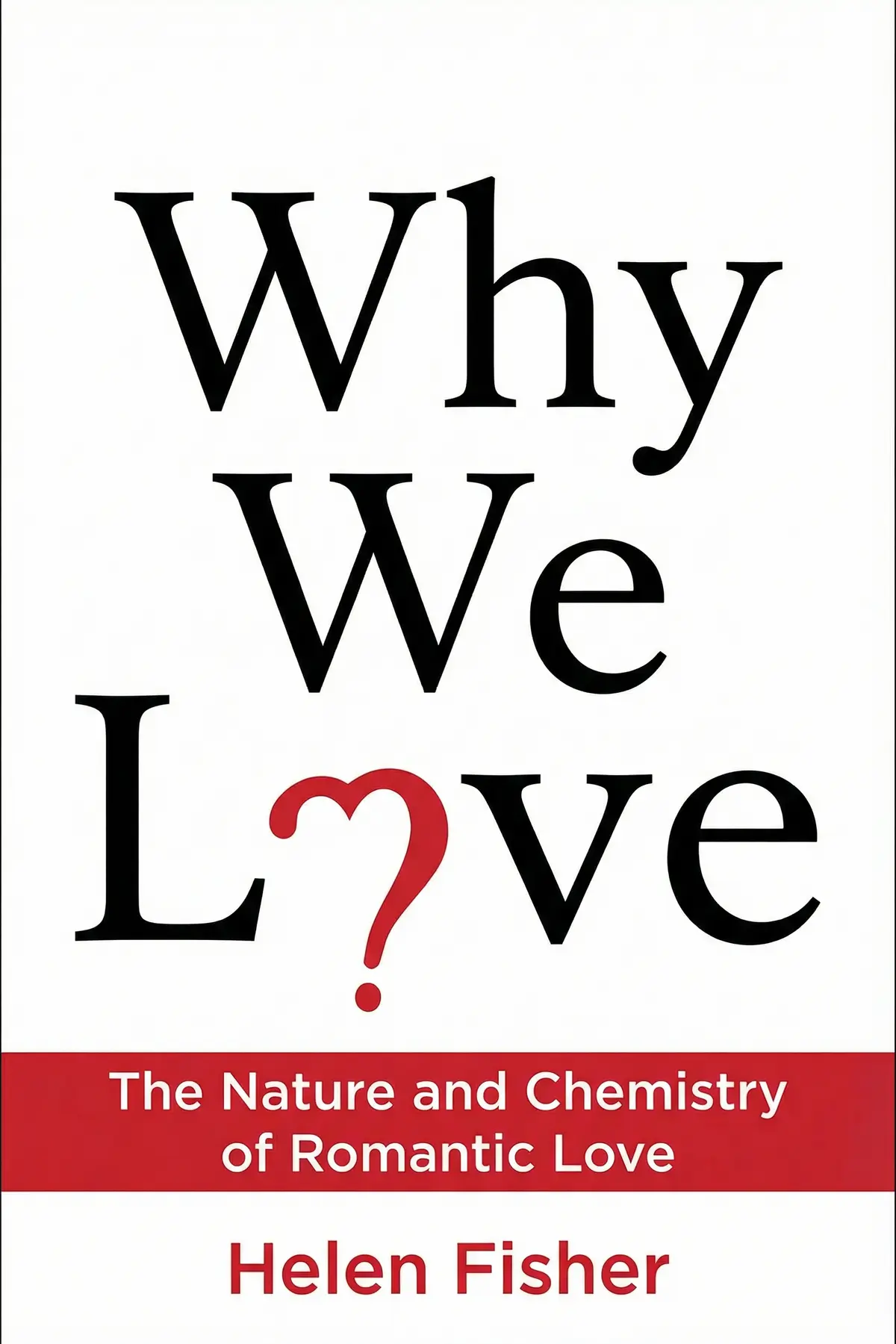
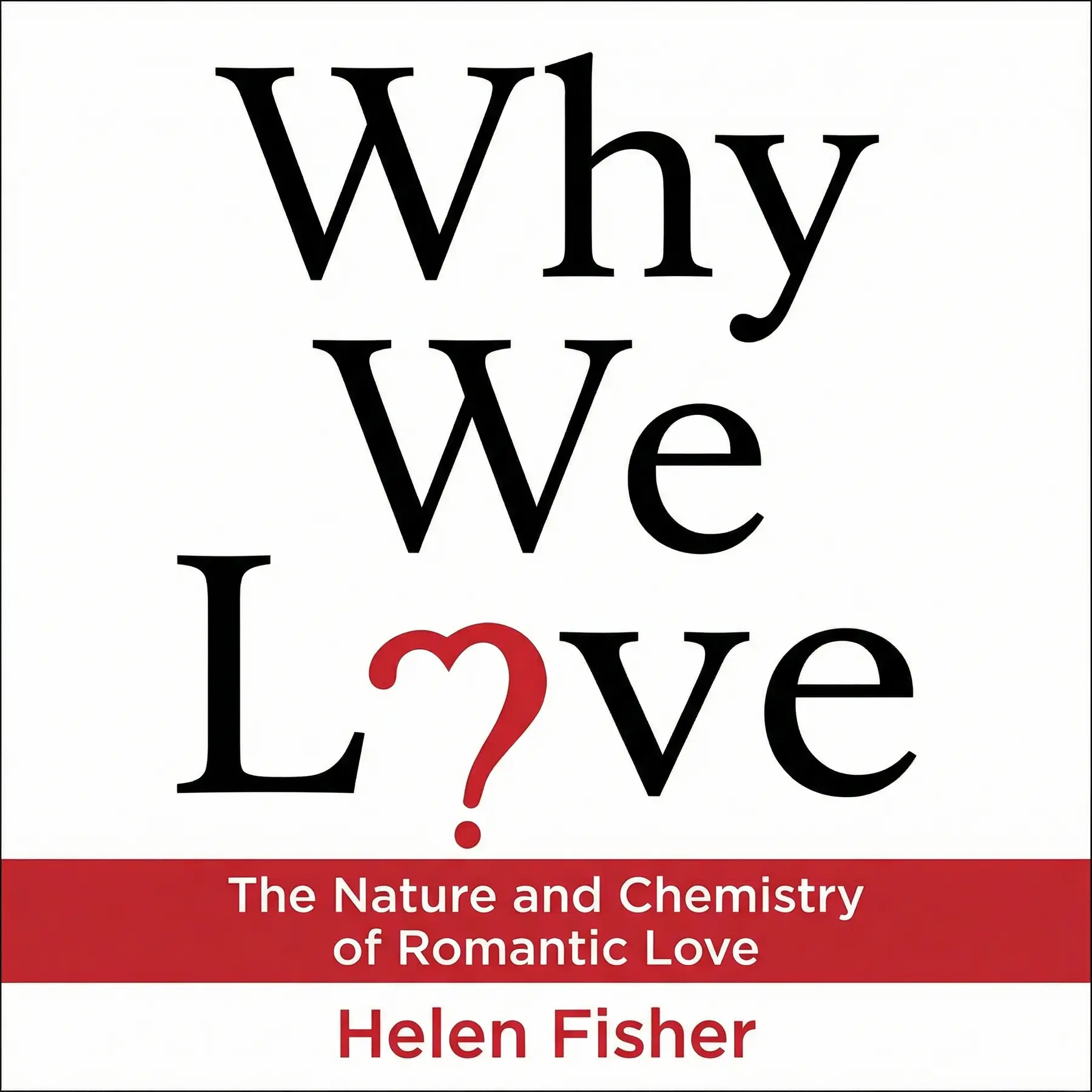
Explore the biological foundations of romance in this deep dive into the brain chemistry and evolutionary history of human attraction, explaining why we crave connection and how our bodies drive our deepest emotions.
1 min 28 sec
Every culture has its songs, stories, and myths about the overwhelming power of love. We describe it as a spark, a fever, or a profound spiritual connection. But beneath the poetry lies a complex web of biological machinery. Why do we focus all our energy on one specific person? Why does the world feel brighter when they are near, and why do we feel a physical ache when they leave?
In this exploration of Helen Fisher’s work, we are going to look under the hood of the human experience. We will see how romantic love is less about mystery and more about the specific chemical processes occurring in our brains. By viewing love through the lens of a biological anthropologist, we can begin to understand it as an evolutionary drive—a survival mechanism designed to ensure our species continues.
Over the course of this summary, we will trace the history of romance back millions of years. We will examine the distinct roles of dopamine, norepinephrine, and serotonin, and see how they turn us into obsessive, focused, and energized pursuers. We’ll also look at how men and women navigate attraction differently and how our personal histories create a unique ‘love map’ that guides us toward our partners. Ultimately, this journey provides a scientific perspective on the most intense feelings we have, offering clarity on both the bliss of a new connection and the heavy weight of a broken heart. It is a story of how biology dictates the throughline of our lives.
2 min 15 sec
While every relationship feels like a unique story, humans across the globe actually exhibit the same psychological symptoms when they fall deeply in love.
2 min 25 sec
Science has identified a specific cocktail of brain chemicals responsible for the intoxicating feelings of bliss and obsession associated with new love.
2 min 38 sec
Human affection is not a single emotion but a combination of three distinct biological drives that evolved for different reproductive purposes.
2 min 13 sec
We aren’t just attracted to people at random; our brains are hard-wired to seek out specific traits like symmetry and genetic diversity.
2 min 11 sec
Men and women often prioritize different traits in partners due to the varying biological costs of reproduction and child-rearing.
1 min 59 sec
Each of us carries an unconscious ‘love map’—a unique list of traits and experiences that determines exactly who we will fall for.
2 min 06 sec
Human romantic love may have its origins in the prehistoric moment our ancestors began to walk on two feet, changing the way we cared for our young.
2 min 11 sec
As the human brain grew in size and complexity, our capacity for sophisticated romantic expression and long-term commitment grew along with it.
2 min 12 sec
Understanding the science of the brain allows us to take active steps to maintain the romantic spark in long-term relationships.
2 min 11 sec
The pain of rejection is a form of chemical withdrawal, and the best way to recover is to treat it like overcoming an addiction.
1 min 40 sec
Through the work of Helen Fisher, we see that love is far more than a cultural construct or a poetic whim. It is a foundational biological drive, a legacy of our 3.5-million-year journey from the African savannah to the modern world. From the dopamine-fueled highs of a new crush to the oxytocin-rich comfort of a lifelong partnership, our romantic lives are governed by a sophisticated chemical and evolutionary logic.
We have learned that we are attracted to symmetry and genetic diversity because they signaled health to our ancestors. We’ve seen how the shift to walking upright and the growth of the human brain forced us to become the ‘pairing’ species, developing deep bonds to ensure the survival of our helpless infants. And perhaps most importantly, we have learned that we have the power to influence these systems. By introducing novelty, we can reignite the fires of romance, and by understanding the nature of heartbreak as chemical withdrawal, we can navigate the path to recovery with more grace.
As you move forward, keep your ‘love map’ in mind. Recognize the biological triggers that draw you to certain people and the hormones that keep you connected. Love may be a product of chemistry, but knowing the formula doesn’t make the experience any less extraordinary. Instead, it allows us to appreciate the profound complexity of our own nature. Whether you are seeking new love, nurturing a long-term bond, or healing from a loss, remember that your heart is following an ancient, resilient rhythm. By aligning your actions with your biology, you can build deeper, more fulfilling connections that honor both the spirit and the science of what it means to love.
Have you ever wondered why a certain person makes your heart race, or why the pain of a breakup feels so physically overwhelming? Why We Love offers a comprehensive look at the internal mechanics of romance, moving beyond poetry and into the laboratory. Biological anthropologist Helen Fisher reveals that love is not just a vague emotion but a powerful, primitive brain system evolved over millions of years. This summary breaks down the specific neurotransmitters—like dopamine and serotonin—that create the euphoric highs and obsessive lows of infatuation. You will learn about the three distinct systems of affection: lust, romantic attraction, and long-term attachment, and how they interact to guide our reproductive choices. From the evolutionary shifts that forced our ancestors to pair up to the modern strategies for keeping a relationship vibrant, this guide explains the 'why' behind our most intense human experiences. It provides a roadmap for understanding your own 'love map' and offers scientific strategies for overcoming the agony of rejection.
Helen Fisher is a prominent American biological anthropologist and a leading expert on the science of human attraction. She has dedicated her career to studying the evolution and neurochemistry of love, conducting extensive research on the brain’s romantic pathways. Fisher has authored five books on the subject, establishing herself as a primary authority in understanding how our biological heritage shapes our modern romantic lives.
Listeners find the book to be educational and thoroughly researched, with one review noting how it integrates science with human experience. They describe it as a pleasure to read from start to finish and value the exploration of brain chemistry in love. The work receives praise for its writing quality, with one listener highlighting its focus on making romance last, and listeners generally find the content easy to understand. While the argument is convincing, views regarding the author are mixed.
Wow. It’s rare to find a book that manages to weave complex biological data into such a compelling narrative about the human heart. Fisher explains the dance of dopamine and norepinephrine in a way that feels both educational and deeply personal. I loved how she categorized love into three distinct systems: lust, romantic attraction, and long-term attachment. Each section provides a window into why we act so irrationally when we are under the spell of another person. While some might find the heavy use of literary quotes a bit much, I thought they anchored the science in reality. This is a joy to read if you want to understand the machinery behind your emotions.
Show moreAfter hearing so many people talk about this book, I finally picked it up and I’m blown away. We are essentially just 'human animals' pretending to be cultivated, yet our primate brains are still running the show. Fisher’s breakdown of the three brain systems for mating and reproduction is absolutely stunning material. It helped me realize that my feelings aren't just random coincidences but part of a magnificent evolutionary mechanism. The way she connects DNA and neurobiology to our spiritual search for a partner is something I’ll be thinking about for a long time. This should be mandatory reading for anyone who wants to understand the secret world of their own body.
Show moreFinally got around to reading this, and I’m struck by how much we still don't know about our own evolution. Fisher provides a spectacular look at how our brains have adapted to handle the complexities of lust and attachment. It’s not just about hormones; it’s about a unified field of biological processes that make us who we are. I felt like I was learning to 'unlearn' some of the more cynical views of romance I’ve picked up over the years. The connection between our physical brain and our higher consciousness is explored in a way that feels both grounded and visionary. This book is a magnificent achievement in the field of anthropology.
Show moreEver wonder why romantic rejection feels like physical pain? Fisher dives into fMRI studies to show that our brains are literally wired for this kind of intense emotional experience. The book is well-researched and does a great job of explaining how our ancestors evolved these traits to ensure the survival of the species. I found the distinction between the 'lust' brain and the 'attachment' brain particularly enlightening for my own relationships. To be fair, there are moments where she seems to guess at conclusions rather than proving them. However, the overall quality of the writing makes it very accessible for a layperson. It’s a solid look at the chemistry of romance.
Show moreFisher manages to make complex neurobiology surprisingly accessible for the average reader. The book focuses heavily on making romance last, which is a practical takeaway I didn't expect from a science-heavy text. I particularly enjoyed the chapter on 'Animal Magnetism,' even if the author admits she changed her mind about how much animals actually feel. It’s a convincing argument for why we are wired for monogamy, or at least for serial pair-bonding. Some of the fMRI data felt a bit dated, but the core message remains powerful. If you’re looking for a bridge between the laboratory and the bedroom, this is a great place to start.
Show morePicked this up on a whim and ended up finishing it in two sittings because the prose is so engaging. The truth is, most of us have no idea what is actually happening in our heads when we fall in love. Fisher explains the role of dopamine as a reward system that keeps us focused on a single person to the exclusion of all else. It's a bit unsettling to realize we are at the mercy of our own chemistry, but also deeply liberating. I appreciated the educational tone, though I do agree with other reviewers that the literature quotes were a bit overkill. Still, it’s a very high-quality exploration of the human experience.
Show moreThis was a bit of a mixed bag for me. On one hand, the sections on neurotransmitters and the evolutionary basis for pair-bonding were fascinating and well-explained. On the other hand, the book is incredibly padded with poetry and song lyrics that don't really add much to the scientific argument. It frankly felt like a high-level undergrad paper where the student needed to hit a specific page count. I was also disappointed to see that she didn't give much credit to Dorothy Tennov, whose work on limerence is clearly a huge influence here. It’s a decent introductory text, but seasoned readers of psychology might find it a bit superficial.
Show moreIn my experience, this book serves better as a cultural artifact than a definitive scientific textbook. Fisher is clearly the go-to expert for the media, and her writing style reflects that—it’s polished, easy to digest, and slightly repetitive. While the discussion of the three different 'love brains' is helpful, she tends to generalize quite a bit. I found the section on introverts and their 'deep still waters' to be a bit condescending, as if it were a surprise that they feel love too. It’s a mediocre book that summarizes other people's research without adding a whole lot of new insight. It’s fine for a quick read, but don’t expect a masterclass.
Show moreThe author relies far too heavily on anecdotal evidence and flowery quotes to pad out the page count. If you stripped away all the snippets of Shakespeare and pop songs, you'd be left with a very thin volume of actual science. My biggest gripe is the constant use of phrases like 'I think' or 'it may be' without providing solid reasoning. It feels like she is just picking her favorite theories and ignoring anything that doesn't fit her narrative. To be fair, she acts more as a media talking head rather than a rigorous scientist in this particular work. Read Dorothy Tennov’s 'Love and Limerence' instead if you want a deeper dive into the investigative study of romantic love.
Show moreLook, I wanted to like this, but the blatant biases and what some call 'neurotrash' were hard to ignore. Every time the author started a sentence with 'I guess' or 'I suspect,' I felt like I was reading a blog post rather than a scientific study. The chapter on animal love was particularly confusing since she basically retracts her own premises halfway through. It’s also quite frustrating how she overlooks the contributions of researchers like Dorothy Tennov while presenting similar ideas as her own. If you want actual science, you might want to look elsewhere. It reads like a pop-psychology book that values style over substance and quotes over data.
Show moreRichard Wiseman
Steven C. Hayes
Deborah Gruenfeld

bell hooks
Anthony Pratkanis
AUDIO SUMMARY AVAILABLE
Get the key ideas from Why We Love by Helen Fisher, plus 5,000+ more titles in English and Thai.







