
20 min 20 sec
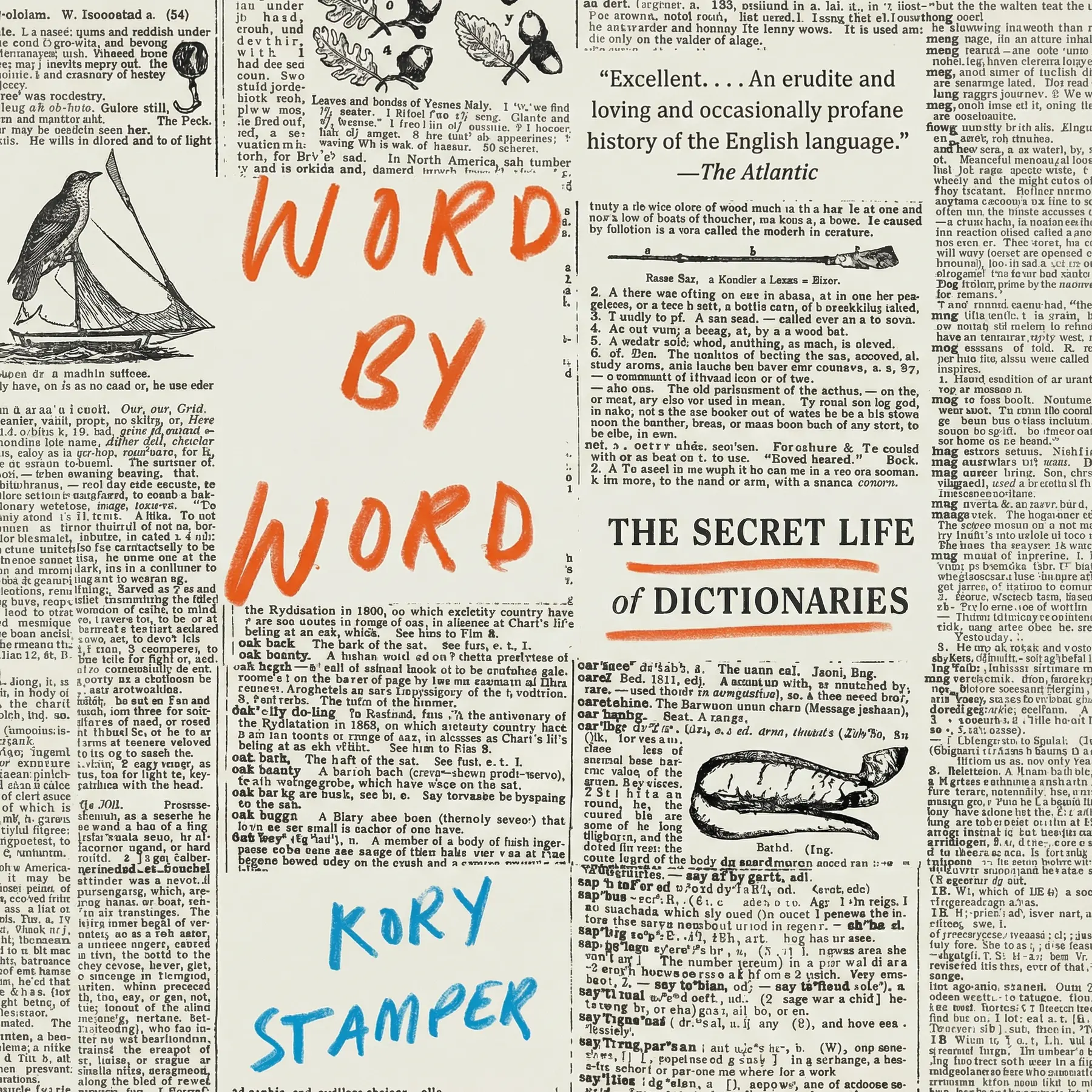
Word by Word: The Secret Life of Dictionaries
By Kory Stamper
Explore the hidden, surprisingly vibrant world of dictionary-making. Kory Stamper reveals how lexicographers shape our understanding of language, debunking grammar myths and navigating the complex evolution of the words we use every day.
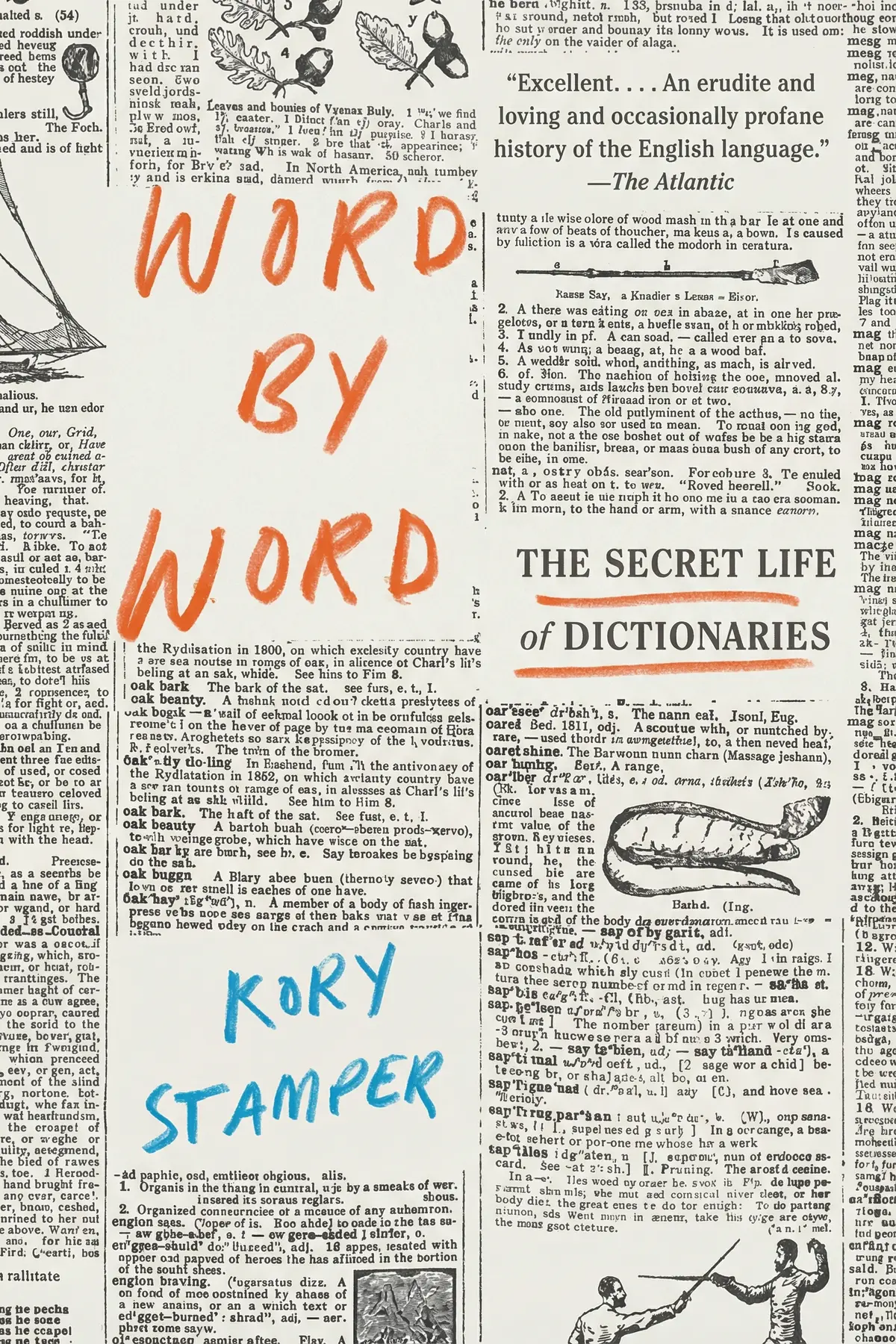
Table of Content
1. Introduction
1 min 50 sec
Most of us treat the dictionary as a final authority, a heavy volume of absolute truths that we consult only when we need to settle a bet or check a spelling. We think of it as a finished product, a static collection of rules that has always existed in its current form. However, if you look closer, you’ll find that the dictionary is actually a vibrant, shifting map of human communication. It is less like a dusty law book and more like a carefully maintained garden that is constantly being weeded, replanted, and redesigned. At the heart of this process are lexicographers, the dedicated individuals who spend their lives submerged in the tiny details of how we express ourselves.
Kory Stamper invites us into this world, revealing that the work of a lexicographer is far more than just writing definitions. It is a pursuit that challenges our deepest assumptions about right and wrong, logic and tradition. It is a job that requires an almost monastic level of focus and a willingness to embrace the chaos of a language that refuses to stay still. By looking at how these books are made, we begin to see that dictionaries don’t tell us how we *should* speak; they reflect how we *do* speak. This shift in perspective changes everything. It turns grammar from a tool of judgment into a window of understanding. As we move through the secret life of dictionaries, we will discover the hidden labor behind every entry, the controversies that erupt over a single definition, and the reason why the most common words are often the hardest to capture. This is a journey into the soul of the English language, showing us that every word has a story, and every definition is a small attempt to understand what it means to be human.
2. The Solitary Life of Lexicographers
2 min 04 sec
Enter the hushed editorial floors of a major dictionary publisher and discover why this rare profession attracts such a diverse group of quiet thinkers.
3. The Hidden Complexity of Grammar
2 min 08 sec
Think you know your parts of speech? Learn why the smallest words in the English language cause the biggest headaches for experts.
4. Describing Language vs. Prescribing Rules
2 min 03 sec
Explore the shift from judging how people speak to observing how language actually lives, and why ‘doing good’ might be older than you think.
5. The Surprising Persistence of Wrong Words
2 min 08 sec
How do words like ‘irregardless’ end up in the dictionary? Discover the historical evidence that keeps controversial terms on the page.
6. The Gap Between Lexical and Real Definitions
1 min 59 sec
Why the dictionary can’t tell you the meaning of life, and why readers often walk away frustrated by the definition of ‘love.’
7. The High Bar for Entering the Dictionary
2 min 03 sec
Discover the three strict criteria a word must meet before it is officially recognized, and the curious case of the disappearing ‘snollygoster.’
8. The Art of the Boring Citation
2 min 07 sec
Learn why the best example sentences in a dictionary are the ones you barely notice, and why lexicographers are discouraged from being creative.
9. When Words Become Political
2 min 04 sec
Explore the moment the dictionary steps out of the shadows and into the headlines, and why describing society can be a controversial act.
10. Conclusion
1 min 54 sec
The world of the dictionary is far more complex and human than the heavy, silent volumes on our shelves suggest. Through the eyes of Kory Stamper, we’ve seen that lexicography is not a dry academic exercise, but a vibrant and often difficult task of capturing the shifting winds of human thought. We’ve learned that the silence of the editorial floor is where the hard work of understanding our communication takes place, and that the rules we often use to judge others are far more flexible than we were taught in school. From the struggle to define simple words like ‘the’ and ‘but’ to the controversy over social shifts like same-sex marriage, the dictionary serves as a constant, evolving mirror of our collective experience.
The throughline of this journey is that language belongs to everyone who uses it. It is not owned by a committee of experts or a set of ancient rules. When we look up a word, we aren’t just looking for a definition; we are participating in a historical record that spans centuries. The dictionary’s true power is not in telling us how to speak correctly, but in helping us understand how we are already speaking. It encourages us to be curious rather than judgmental, and to see the beauty in the ‘mistakes’ that eventually become the standard.
As a final thought, take a moment to look at a physical dictionary again. Don’t just search for a specific term; browse the pages and notice how words live next to each other. See the history in the etymologies and the care in the citations. Language is our most powerful tool for connection, and the dictionary is the map that helps us navigate it. By understanding the labor that goes into every word, we can appreciate the incredible, messy, and wonderful complexity of the way we talk to one another.
About this book
What is this book about?
Have you ever wondered who decides what counts as a real word? This exploration takes you behind the scenes at Merriam-Webster to meet the lexicographers who spend their days in silence, obsessing over the nuances of language. It turns out that a dictionary is not a static rulebook handed down from on high, but a living, breathing record of how we actually speak and write. Through personal anecdotes and professional insights, the promise of this journey is a complete reframing of your relationship with English. You will see why there are no simple rules in grammar, how a word like irregardless earns its place on the page, and why defining something as simple as love is a task fraught with philosophical tension. It is a look at the grit, the humor, and the unexpected political drama involved in the seemingly quiet craft of defining the world, one word at a time.
Book Information
About the Author
Kory Stamper
Kory Stamper is a professional lexicographer who has spent her career at Merriam-Webster. Beyond her work defining the English language, she is a well-known blogger. Her insights and writing on linguistics have been featured in major publications, including the Guardian and the New York Times.
Ratings & Reviews
Ratings at a glance
What people think
Listeners find this work both amusing and scholarly, as it provides an intriguing perspective on language and the inner workings of lexicography. The prose breathes life into the dictionary-making process, and listeners value the small treasures of anecdotes and factual nuggets peppered throughout. They describe it as a guaranteed captivating experience for language lovers, with one listener observing that it serves as a quality addition to the field of linguistics.
Top reviews
Ratchanee
This book is a love letter to the English language that manages to be both profoundly educational and surprisingly hilarious. Stamper takes us behind the scenes at Merriam-Webster, showing that lexicographers aren't dusty relics but real people grappling with a living, breathing beast. I found her breakdown of the word 'nude' particularly moving because it shows how much social responsibility goes into a simple definition. The way she describes the hunt for evidence—from snapping photos of eyeshadow in the supermarket to scouring Google Images—makes the process feel like a high-stakes detective novel. It’s breathless, witty, and entirely necessary for anyone who thinks they know how a dictionary works. Not gonna lie, I will never look at a definition for 'irregardless' the same way again.
Show moreRungtip
Picked this up on a whim and was absolutely floored by how much drama exists in the world of defining words. Stamper’s writing is sharp and self-effacing, especially when she recounts her early days as an ingénue trying to understand the 'descriptive' nature of the job. The chapter on the 'marriage' definition controversy was eye-opening; it’s wild to think about the stress and anxiety caused by fielding write-in campaigns from people who think dictionaries are moral arbiters. She handles the vitriol with a mix of professional calm and personal honesty that is really refreshing. It’s a perfect reminder of the human craft behind those dusty volumes propping our doors open. If you love 'fart goblin' etymologies and deep dives into usage, buy this immediately.
Show moreWatcharaporn
After hearing so much about John Simpson’s 'The Word Detective,' I wasn't sure if there was room for another lexicography memoir, but Stamper’s perspective is completely different. Where Simpson is calm and professional, Stamper is a whirlwind of snark and deep-seated passion for the messiness of English. She treats the dictionary not as a set of rules, but as a record of how we actually talk. I loved her breakdown of the 'nude' revision and how she struggled with the racial implications of old definitions. It is a brilliant case study in how society and language dance around each other. Frankly, this is the most fun I’ve ever had reading about etymology and grammar. She makes the 'dictionary life' sound like a grand adventure.
Show moreSven
Finally got around to reading this and I’m kicking myself for waiting so long. As someone who worships at the altar of the Merriam-Webster Dictionary of English Usage, seeing Kory Stamper talk about being trained by E. Ward Gilman (Gil!) made me absolutely starry-eyed. Her approach to descriptivism is an inspiration; she shows that a dictionary’s job is to tell the truth about language, not to be a gatekeeper of correctness. The way she handles the 'irregardless' debate is masterclass in evidence-based linguistics. She manages to make the 'monastic' life of a lexicographer seem vibrant and essential. This is a must-own for anyone who cares about the evolution of English. It’s witty, smart, and profoundly respectful of the people who use the words she defines.
Show moreMattanee
Frankly, I didn't think a book about writing the dictionary could make me feel so much, but Stamper’s dedication to the craft is genuinely moving. She captures the silent fist pumps of a perfect definition and the sheer anxiety of public backlash with equal skill. The way she describes the 'dictionary life' choosing her felt so authentic and relatable to anyone who has ever felt like an outsider. I particularly enjoyed the alphabetized acknowledgments at the end; it was such a clever, nerd-tastic touch. This book proves that language isn't a static thing to be protected, but a living creature that we all help shape. It’s an essential, rapturous read for anyone who loves the secret histories hidden in plain sight.
Show moreBun
Ever wonder what happens inside those quiet cubicles at Merriam-Webster? Kory Stamper pulls back the curtain with a voice that is part expert and part enthusiast. I was particularly fascinated by the section on how 'irregardless' ended up in the dictionary, a word that makes most people’s skin crawl but has a legitimate history of use. Truth is, the book is a bit disorganized as it bounces from Philly slang like 'done work' to the technicalities of the word 'is,' but Stamper’s humor keeps things moving. Her description of lexicography as a 'monastic' devotion really resonated with me. While some of the pronunciation chapters were a bit skimmable, the sheer personality on display makes this a must-read for any word nerd.
Show moreSavannah
Wow, I had no idea that lexicographers were so intensely passionate—and funny! Kory Stamper writes with a conversational tone that makes you feel like you’re sharing a drink with the smartest, quirkiest person in the room. I loved the little gems of facts sprinkled throughout, like the German origins of 'pumpernickel' or the way 'irregardless' became her signature social media topic. My only gripe is that it felt a little disjointed in places, jumping between personal anecdotes and hardcore linguistics without a clear transition. Still, the insight into how a team decides what becomes 'official' is fascinating. It’s a great addition to the world of linguistics books and far more entertaining than your average grammar guide.
Show moreSebastian
The chapter on the word 'marriage' alone is worth the price of admission. It’s a sobering look at how even a dictionary can become a battlefield in the culture wars. Stamper describes the 'frenzied' atmosphere of her office during that time with such vividness that you can almost feel her screaming in terror at her inbox. To be fair, some readers might find her 'breathless' style a bit much after a while, but I found it charmingly human. It’s not just a book about words; it’s a book about how we communicate and why we get so angry when things change. It’s a bit disorganized in the middle, but the gems of trivia—like the 'done work' Philly regionalism—keep you hooked. Definitely a satisfying read.
Show moreWatcharin
As a self-proclaimed word nerd, I found parts of this absolutely riveting, while other chapters felt like they needed a serious edit. Stamper is at her best when she’s recounting the human drama, like the vitriol she faced over the definition of 'marriage' or the quirky history of words like 'pumpernickel.' However, the book sometimes loses its momentum when it dives into the technical grinding repetitive nature of defining small words like 'take.' Personally, I think the middle sections on pronunciation and proprietary markings could have been trimmed down to keep the pace up. It’s a solid look into a hidden world, but it requires a lot of patience for the slower, more technical passages. Not quite the 'rapturous' read I expected, but decent.
Show moreChanida
Look, I really wanted to love this because I enjoy reading about language, but it just didn't click for me. I expected a more straightforward memoir about a career, but it often felt bogged down in the extreme minutiae of pronunciation markings and phrasal verbs. While Stamper is clearly brilliant and her enthusiasm is obvious, the prose occasionally felt a bit hyperactive and disorganized for my taste. There were sections that dragged on forever, especially when she went into the technical weeds of how many entries they produce a year. To be fair, if you are a hard-core linguistics student, you’ll probably find this gold, but for a casual reader looking for a narrative, it was a bit of a slog.
Show moreReaders also enjoyed
AUDIO SUMMARY AVAILABLE
Listen to Word by Word in 15 minutes
Get the key ideas from Word by Word by Kory Stamper, plus 5,000+ more titles in English and Thai.
- 5,000+ titles
- Listen as much as you want
- 7-day free trial
- Cancel anytime







