
17 min 04 sec
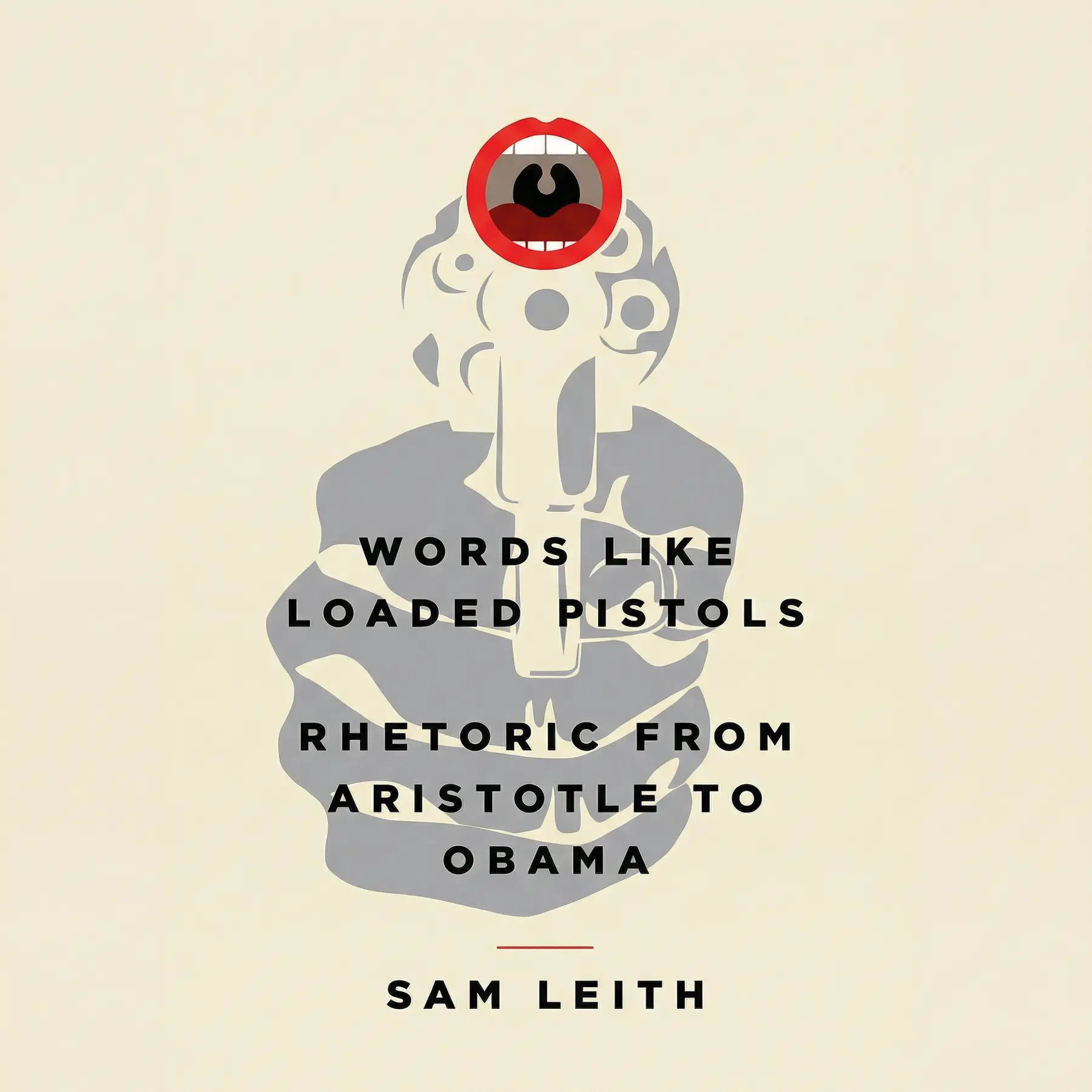
Words Like Loaded Pistols: Rhetoric from Aristotle to Obama
By Sam Leith
Explore the mechanics of persuasion with this guide to rhetoric. Learn how the ancient techniques of Aristotle still shape modern politics, media, and our daily personal interactions today.
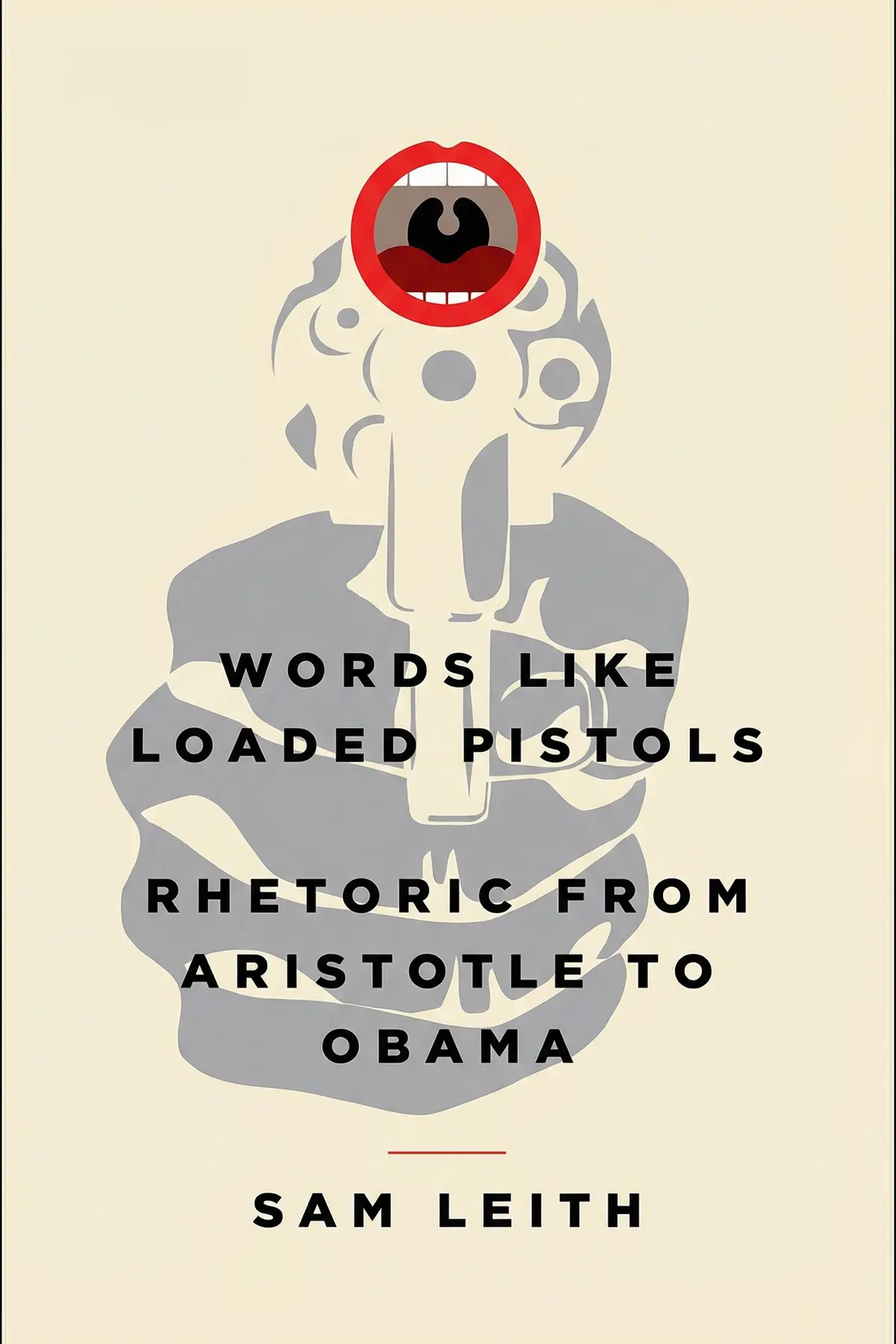
Table of Content
1. Introduction
1 min 24 sec
Think about the last time you were truly moved by a speech, or perhaps the last time you felt yourself being manipulated by a clever advertisement. Most of us have a complicated relationship with the word rhetoric. We often use it as a synonym for empty promises or political spin. We hear phrases like, “That’s just campaign rhetoric,” and we immediately assume it’s a mask for a lack of substance. But if we look closer, we find that rhetoric is actually the very fabric of our social lives. It is the art of using language to influence others, and it is as old as humanity itself.
In this exploration of Sam Leith’s work, we are going to look at why words are compared to loaded pistols. They aren’t just sounds or symbols; they are tools that can be used to build or to destroy. We will travel back to the roots of Western thought to see how Aristotle laid the groundwork for everything we know about persuasion. Along the way, we will see how these ancient principles explain the success of modern figures as different as Barack Obama and Sarah Palin. By the end of this journey, you’ll see that rhetoric isn’t something to be feared or dismissed. Instead, it’s a skill that, once understood, allows you to navigate the world with a much clearer sense of how you are being influenced and how you can exert influence of your own. Let’s dive into the mechanics of the spoken word and see how history has been shaped by the way we talk to one another.
2. The Universality of Influence
2 min 08 sec
Rhetoric isn’t reserved for the podium or the courtroom; it is a fundamental element of every human interaction, from job interviews to casual chats.
3. The Pillars of Civilization
2 min 10 sec
Rhetoric acts as the foundation of democratic society, serving as a peaceful alternative to force while also being a potential tool for control.
4. The Art of Invention
1 min 54 sec
Effective persuasion begins with the stage of invention, where a speaker identifies their core argument and tailors it to their specific audience.
5. Three Paths to Persuasion
2 min 07 sec
Great communicators balance ethos, logos, and pathos to create a compelling case that appeals to character, reason, and emotion.
6. The Power of Structure
1 min 55 sec
Organizing your ideas into a logical sequence is crucial for guiding an audience through your argument and making a lasting impact.
7. Style, Memory, and the Act of Delivery
2 min 03 sec
The final elements of rhetoric—style, memory, and delivery—transform a written argument into a living, persuasive performance.
8. The Temporal Dimensions of Speech
1 min 55 sec
Rhetoric is often categorized by its focus on time, distinguishing between future-oriented political appeals and past-oriented judicial arguments.
9. Conclusion
1 min 28 sec
As we wrap up our look at the art of rhetoric, it’s worth returning to the idea of words as loaded pistols. Throughout this journey, we have seen that language is never neutral. It is a tool of immense power that has been used to build the foundations of our laws, to inspire revolutions, and unfortunately, to lead people into darkness. But by studying the five-part structure of invention, arrangement, style, memory, and delivery, and by recognizing the three modes of ethos, logos, and pathos, we take that power back into our own hands.
The lesson here isn’t that you should go out and try to manipulate everyone you meet. Instead, the goal is to become an effective communicator who understands the weight of their own words and a critical thinker who can see through the persuasion of others. Whether you are navigating a political debate, a professional meeting, or a personal conversation, the principles of rhetoric remain the same. They are the keys to understanding how human beings connect and how change is made.
So, the next time you hear a compelling speech or read a persuasive article, don’t just take it at face value. Look for the structure. Identify the emotional appeals. Check for the credibility of the source. And when it’s your turn to speak, remember that you have an ancient and powerful toolkit at your disposal. Use it with intention, use it with empathy, and never forget that in the world of human interaction, your words are the most powerful tools you will ever own.
About this book
What is this book about?
Words Like Loaded Pistols is an exploration of the ancient and enduring art of persuasion. From the grand stages of classical Greece to the modern digital landscape, the way we use words to influence others has always been the cornerstone of human society. This book serves as both a history lesson and a practical guide, unmasking the techniques that politicians, activists, and advertisers use to sway our opinions and guide our actions. The promise of this work is to pull back the curtain on the mechanics of language. By revisiting the foundational theories of Aristotle and examining how they apply to contemporary figures, it teaches us how to become more discerning listeners and more effective communicators. Whether you are navigating a corporate boardroom or a casual debate with a friend, understanding the five-part structure of a powerful argument—and the three modes of persuasion—will change the way you perceive every sentence you hear. It’s an invitation to see language not just as a means of relaying facts, but as a potent tool for change, capable of building democracies or toppling them.
Book Information
About the Author
Sam Leith
Sam Leith is a prominent voice in contemporary literary circles, currently serving as the literary editor of the Spectator. His expertise in language and culture is widely recognized, and his insights have appeared in several prestigious international publications. Throughout his career, he has contributed to the Wall Street Journal, the Evening Standard, and the Guardian, among other major outlets, establishing himself as a sharp analyst of the written and spoken word.
Ratings & Reviews
Ratings at a glance
What people think
Listeners find this book to be a valuable handbook for rhetoric and persuasion, commending the historical context provided for the topic. The prose is widely admired, with one listener highlighting its youthful energy, and listeners frequently praise the excellent sense of humor. Listeners also celebrate its accessibility; one review draws attention to its straightforward models for learning, while another notes the inclusive range of vital themes covered.
Top reviews
Bella
Ever wonder why certain speeches stick in your mind while others fade the moment the speaker steps off the podium? Sam Leith explores this brilliantly by bridging the gap between ancient masters like Aristotle and modern giants like Obama. The chapter on the 'memory palace' was a total game-changer for me. I actually remembered the list of animals he used as an example! The book follows the classic Roman ideal to 'move, educate, and delight,' and it hits all three marks with youthful exuberance. While some of the British political context was lost on me, the 'Champions of Rhetoric' sections provided such clear models for understanding persuasion in the real world. This is a comprehensive, energetic, and genuinely useful guide.
Show moreSarocha
This book manages to do what many textbooks fail at: it makes a dense, ancient subject feel vibrant and relevant to the modern world. Leith writes with a youthful exuberance that is infectious, even when he’s talking about something as technical as judicial oratory or the Scholastic period. The way he analyzes the 'Champions of Rhetoric' provides clear models for how to structure an argument that actually moves people. I especially appreciated the deep dive into how pathos and ethos work together to build authority. It’s easily one of the better books on persuasion I’ve read. It covers all the essential bases from Aristotle to the present day without ever feeling like a chore. Highly recommended for anyone who wants to sharpen their communication skills.
Show moreKevin
Wow. I didn't think I'd actually enjoy a book about persuasion techniques, but the way Leith analyzes historical figures like Churchill and Lincoln is fascinating. This is a brilliant, useful guide to understanding the art of the argument. The author is clearly passionate about the topic, and that energy shines through on every page. From the historical framework of the Renaissance to modern-day media, he shows how rhetoric is the hidden engine behind everything we hear and read. The footnotes are actually laugh-out-loud funny if you appreciate British wit. It’s the perfect balance between serious discussion and entertainment. If you want to know how words can be used as 'loaded pistols,' this is the book you need on your shelf. Simply excellent.
Show moreChloe
Finally got around to finishing this, and I have to say the breakdown of ethos, pathos, and logos was incredibly refreshing. Leith has a way of making the ancient art of rhetoric feel practical and easy to understand for the average person. I loved how he pulls examples from everywhere: cartoons, advertisements, film, and even Lincoln’s Gettysburg Address. Some of the British humor eluded me, and those footnotes are a bit of a distraction, but the 'Champions of Rhetoric' chapters are pure gold. It’s a well-structured journey through the five parts of rhetoric that doesn't bore you to tears. While some of the pop-culture references already feel a bit outdated, the core lessons on how to influence an audience remain timeless and very helpful.
Show moreYam
As someone who has never given much thought to the mechanics of argument, this book was an eye-opener. Leith starts with a solid historical framework, explaining why Plato hated rhetoric and how Aristotle saw it as the 'royal road' to human nature. The diverse cast of examples—from Martin Luther King Jr. to ads and editorials—helped me see how these strategies are used in everyday life. My only real gripe is that the organization can feel a bit arbitrary at times. I found myself losing the thread of the argument because of the author’s penchant for tossing around Greek phrases without enough repetition to make them stick. Regardless, it’s a worthwhile read for anyone wanting to understand the 'noise' of modern communication. It’s informative, even if it is a bit cynical.
Show morePairot
The chapter on the 'memory palace' alone makes this worth the price of admission, even if some of the British political references flew right over my head. I bought this as a refresher for essay writing and found the conversational style much more engaging than any manual I used in school. Leith provides numerous examples to illustrate things like epideictic oratory and the five canons of rhetoric. It’s a useful guide that balances academic definitions with great humor. Occasionally, the 'bad boy' approach to the prose feels a bit forced, but the insights into how Churchill and Hitler used language are undeniably fascinating. It’s a comprehensive coverage of essential topics that managed to both educate and delight me, just as Cicero intended.
Show moreLaddawan
To be fair, Leith’s writing style is definitely an acquired taste, full of those 'cheeky' footnotes that either make you laugh or roll your eyes. Personally, I found them more hit than miss, but I can see why a student trying to cram for an exam might find the yapping a bit much. The structure is fantastic, moving from the historical framework of Plato and Aristotle to modern examples of persuasion. I particularly enjoyed the analysis of the 'Champions of Rhetoric' like Martin Luther King Jr. and Churchill. The book is entertaining and informative, though it occasionally prioritizes a funny comparison over a clear, concise definition of technical terms. Still, it’s one of the better guides to the art of persuasion I’ve encountered recently.
Show moreWipawan
After hearing so much about it, I was surprised by how much the author yapped about things only loosely related to the actual art of persuasion. I was reading this for a class, and honestly, the 'funny haha' comparisons just made it harder to grasp the actual definitions I needed for my notes. It's better than a boring, dry textbook, I'll give it that. But the jokes are often overdone to the point of being cringey. I genuinely enjoyed about a quarter of it, especially the parts on ethos, pathos, and logos, but then it just started feeling repetitive. It’s an interesting look at great speeches from history, yet I didn't leave with a clear answer on what makes a 'live round' versus a 'dud.' A decent read for funsies, perhaps, but not for serious study.
Show moreWararat
Frankly, this felt like sitting through a lecture by a professor who thinks they're the life of the party but actually just makes everyone uncomfortable with dated memes. The author tries way too hard to be 'hip' with pop-culture references that already feel ancient. While the core breakdown of how rhetoric works is solid, it's buried under a mountain of condescending footnotes and 'look-at-me' humor. It’s a shame because the theoretical material on persuasion is clearly well-structured. However, the tone is just so grating that I found myself wanting to put the book down every few pages. If you can ignore the misguided hipness, there's a decent guide here, but I just couldn't get past the personality of the prose. Not for me.
Show moreSoontorn
Not what I expected from a book that claims to bridge the gap between Aristotle and Obama. The tone feels borderline condescending at times, as if the author is winking at the reader about how clever he's being with his rhetorical tricks. I was looking for a clear, profound exploration of persuasion, but instead, I got a lot of cynicism and 'wise-ass' commentary. He even teases the audience for not knowing esoteric acronyms! The analysis of Obama felt dated, and the timing—the 'kairos' as he’d call it—of the political examples just doesn't land the same way anymore. It’s too complex for a total beginner but lacks the depth for a serious enthusiast. It's a great idea that feels rushed and overwrought.
Show moreReaders also enjoyed
AUDIO SUMMARY AVAILABLE
Listen to Words Like Loaded Pistols in 15 minutes
Get the key ideas from Words Like Loaded Pistols by Sam Leith, plus 5,000+ more titles in English and Thai.
- 5,000+ titles
- Listen as much as you want
- 7-day free trial
- Cancel anytime







