
18 min 38 sec
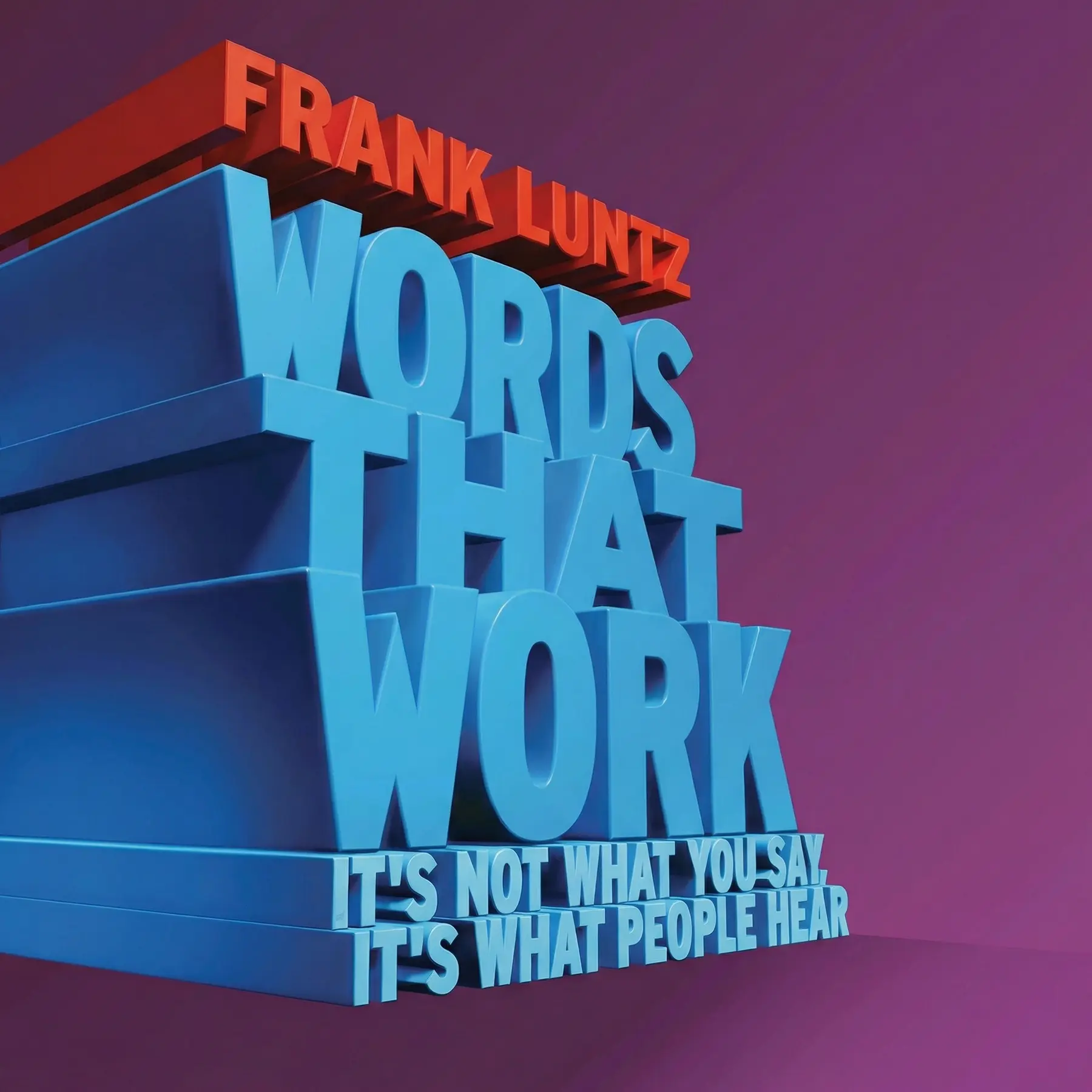
Words That Work: It’s Not What You Say, It’s What People Hear
By Frank Luntz
Words That Work explores the subtle art of strategic language. Learn why the impact of your message depends entirely on the listener's perception and how to choose words that truly resonate.
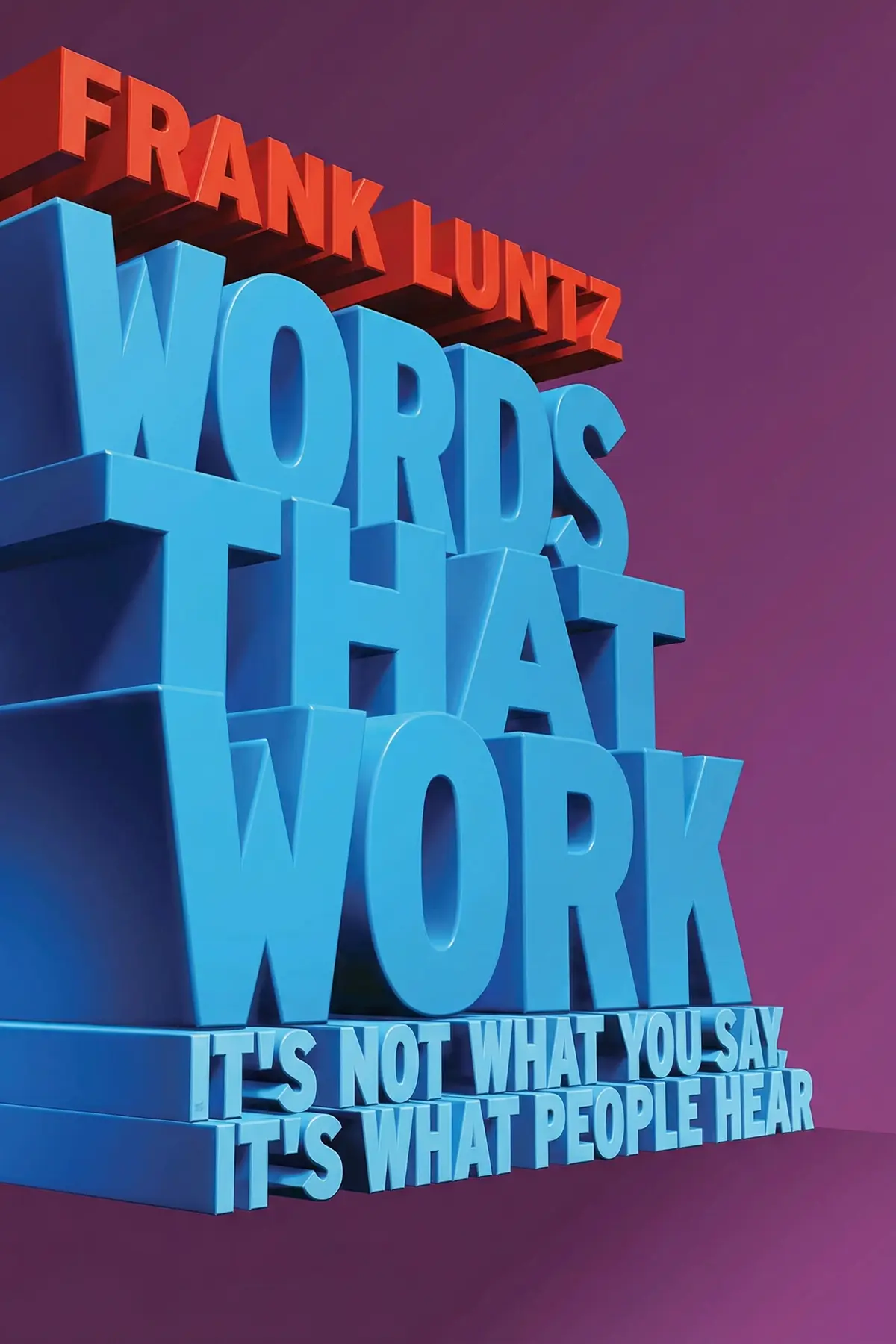
Table of Content
1. Introduction
1 min 39 sec
We often think of communication as a straightforward exchange: I have an idea, I put it into words, I speak those words, and then you receive the same idea. But if you’ve ever been in a heated argument where both people claim they were misunderstood, you know that’s not how it works in reality. There is a massive gap between the speaker’s intention and the listener’s interpretation. As the legendary writer Goethe once suggested, words can sometimes feel like mere smoke, drifting away without substance. However, in the world of modern business and politics, words are anything but smoke. They are the bedrock of influence.
In this exploration of Frank Luntz’s insights, we are going to dive deep into the mechanics of why some messages land with a thud while others spark a revolution. The throughline here is a radical shift in perspective: you must stop focusing on your own vocabulary and start focusing on the mental landscape of your audience. Whether you are trying to convince a boss to give you a promotion, a child to clean their room, or a nation to vote for a candidate, the rules are the same. It is the listener, not the speaker, who ultimately defines the meaning of what is said.
Over the next several segments, we will break down the essential pillars of language that actually works. We will look at why simple words almost always beat complex ones, how to trigger the senses through speech, and why emotional connection is the ultimate trump card in any debate. We’ll also look at real-life scenarios—from high-stakes political debates to the stressful moment of being pulled over by a police officer—to see these principles in action. By the end, you’ll have a toolkit for ensuring that what you say is exactly what people hear.
2. The Supremacy of the Listener’s Perspective
2 min 15 sec
Discover why the objective definition of a word matters less than the baggage your audience brings to it, and how similar terms can trigger wildly different reactions.
3. The Power of Simplicity and Clarity
2 min 22 sec
Learn why big words often lead to big failures and how keeping your sentences short and direct can make your message unforgettable.
4. Painting Pictures with Words
1 min 56 sec
Explore how to engage the senses and the imagination to make your ideas feel more tangible and persuasive.
5. Emotional Connection Through Humanization
2 min 11 sec
Find out why facts and figures often fail to move people, and how personalizing your message can lead to profound shifts in opinion.
6. The Balance of Consistency and Novelty
2 min 23 sec
Discover the secret to maintaining a trusted brand while still surprising your audience enough to keep them paying attention.
7. Decoding the Audience's Cultural DNA
2 min 06 sec
Uncover the common misconceptions about how people process information and how to tailor your message to their true priorities.
8. Applying Communication Strategy to Daily Life
2 min 03 sec
See how the principles of effective language can help you navigate high-stress situations like missing a flight or getting a traffic ticket.
9. Conclusion
1 min 43 sec
As we wrap up our look at the power of strategic language, the core lesson remains clear: the effectiveness of your message is measured by the response it triggers, not the intent behind it. We have seen how simplicity beats complexity every time, how sensory language can make an abstract idea feel real, and how emotional connection is the foundation of all true persuasion. We’ve also learned that communication is an ongoing process of studying your audience, understanding their cultural filters, and adjusting your vocabulary to meet them where they are.
If there is one throughline to take away from this, it is that you must become a receiver-oriented communicator. Every time you prepare to speak, whether it’s an important presentation or a simple email, ask yourself: ‘What will they hear?’ instead of ‘What will I say?’ This small shift in perspective changes everything. It turns your words from ‘mere sound and smoke’ into a precision tool for building connections and achieving your goals.
For an immediate way to put this into practice, look at your written communication. We live in an age of shrinking attention spans. If you want your messages to be read, put your most important point right at the beginning. Make your first paragraph a single, clear sentence that states exactly what you need or what you are offering. Keep the rest of the message brief and direct. By respecting your reader’s time and making your point impossible to miss, you ensure that your words don’t just sit in an inbox, but actually work for you. Communication is a craft, and like any craft, it improves with mindful practice. Start paying attention to the words around you, and you’ll soon find that the right words truly can change your world.
About this book
What is this book about?
Have you ever felt completely misunderstood despite being perfectly clear? In Words That Work, communications expert Frank Luntz reveals that effective messaging isn't about what you say, but what people actually hear. This summary breaks down the psychological and linguistic strategies used by top politicians and corporations to influence public opinion and drive action. You will discover the core pillars of successful communication, including the power of simplicity, the necessity of emotional resonance, and the importance of visual and sensory language. By exploring real-world examples from presidential campaigns to iconic advertising slogans, the book provides a blueprint for mastering the verbal tools that shape our world. Whether you're trying to win an election, sell a product, or simply navigate a difficult conversation, these insights will help you transform your speech into a powerful instrument of persuasion.
Book Information
About the Author
Frank Luntz
Dr. Frank Luntz is a renowned pollster and public opinion guru who regularly works as a communications consultant for American politicians. He has led over 1,500 surveys and focus groups, and has contributed to numerous political and corporate campaigns.
Ratings & Reviews
Ratings at a glance
What people think
Listeners describe this work as exceptionally engaging and educational, offering a thorough exploration of linguistic influence alongside superb clarifications. Its prose is straightforward and clear, ensuring it is easy for a broad range of people to understand. They value its utility, as one listener points out the helpful real-world illustrations, and find the content stimulating, with one account emphasizing its singular perspective on linguistic manipulation. The title earns acclaim for its examination of politics, including one listener who commends its background in history, and listeners view it as the ultimate example of successful messaging.
Top reviews
Nam
Luntz is a master of the invisible art of communication, showing exactly how tiny adjustments in phrasing can shift the entire national conversation. Look, you might not agree with his politics, but you cannot deny the brilliance of his 'Ten Rules of Effective Language.' His insistence on simplicity and brevity is a breath of fresh air in a world of academic jargon and corporate doublespeak. The book is packed with practical examples that you can use immediately to improve your writing and speaking. I found the section on 'Imagine' as the most important word in the English language to be particularly thought-provoking. This is an essential manual for anyone who wants their voice to actually be heard and understood by their target audience.
Show moreWanida
To be fair, many people find this book cynical, but I think it’s a vital manual for anyone who wants to be understood in an era of 8-second attention spans. Luntz isn't just teaching you how to 'spin'; he's teaching you how to be relevant to your audience's lived experience. The breakdown of gender-specific metaphors and the importance of 'sound and texture' in slogans was incredibly insightful. I've read dozens of books on communication, but few offer this level of granular detail on the psychological impact of specific word choices. It is a comprehensive look at the power of words, and the writing style is simple and articulate throughout. If you want to know why some ideas catch fire while others fizzle, this is the book to read.
Show moreLadawan
Wow, I never realized how much my own 'corporate speak' was holding back my ability to lead my team effectively until I read this. The truth is, we often use big words to sound smart, but Luntz proves that plain language is what actually builds credibility and trust. I loved the section on how 'hassle-free' and 'financial security' trigger emotional responses that 'efficient' and 'solvency' never could. The book is a fascinating blend of psychology, marketing, and political analysis that kept me engaged from start to finish. It’s an eye-opening look at verbal trickery and the power of framing. Whether you are in business, politics, or education, these lessons are absolutely invaluable for making an impact.
Show moreKung
Finally got around to this classic on rhetoric, and it's a fascinating look at the distance between what we say and what the audience actually internalizes. The chapter on 're-' words—like restore, reinvent, and revitalize—was a total revelation for my own corporate presentations. Luntz explains how these words suggest innovation without discarding the past, which is a powerful tool for leadership. While his tone can be a bit condescending toward the 'average American,' his data-driven approach to language is hard to argue with. I especially liked the analysis of the 'four big goals' speech by Hillary Clinton and how a single word change could have made it more aspirational. It's a highly readable book that provides a unique lens into the power of framing.
Show moreBee
The chapter on focus groups and 'dial sessions' was a total eye-opener for me regarding how political messaging is actually crafted. Luntz shows that nothing in a successful campaign is accidental; every syllable is tested until it hits the right emotional notes. I found his rules on 'Credibility' and 'Visualizing' particularly applicable to my own sales career. Not gonna lie, some of the examples about the 'death tax' vs. 'estate tax' feel a bit manipulative, but that's exactly why this book is so informative. It pulls back the curtain on how the public consciousness is shaped. It’s an epitome of effective communication theory, even if the author's personality is a bit much to take in large doses.
Show moreSuthida
Not what I expected from a political strategist, but the business applications for 'Words That Work' are surprisingly robust and practical. By focusing on 'humanizing' the message and speaking to people's fears and hopes, Luntz provides a roadmap for anyone trying to cut through the noise of the digital age. I've already started implementing his advice on using rhetorical questions to create interaction during my team meetings. The book is well-organized, though it does get a bit repetitive when he discusses the 'Contract with America' for the tenth time. Still, the historical context and the breakdown of why certain slogans like 'Got Milk?' work so well make this a very worthwhile read for any communicator.
Show moreParichat
As someone who works in marketing, I found the core ten rules of language incredibly useful, even if I had to hold my nose through the political grandstanding. Personally, I think the advice on using small words and short sentences is spot-on for our current attention-starved culture. However, the book is much too verbose and meandering for my liking, which is ironic given that Luntz preaches brevity. You can honestly get most of the value just by reading the first chapter and then skimming the political memos in the appendix. The insights into how 'stay-at-home mom' tests better than 'housewife' are fascinating, but the author’s constant self-promotion makes it a slog. It’s a decent resource for verbal trickery, but it lacks the humility to be truly great.
Show moreSophia
Looking past the author's obvious bias, there is a core set of principles here that actually make a lot of sense for any public-facing professional. The idea that it's not what you say, but what people hear, is a vital distinction that most managers ignore. I appreciated the specific examples of how 'spending' sounds like a loss while 'investment' sounds like a gain, even when describing the exact same dollar amount. That said, the middle section of the book wanders aimlessly through personal anecdotes that feel like they were included just to hit a page count. To be fair, Luntz knows his audience, but he assumes that audience has no interest in nuance. It’s a mixed bag of genuine psychological insight and repetitive political spin.
Show moreLucia
Is it possible to respect a book while simultaneously finding its core message morally bankrupt? Luntz starts by quoting George Orwell on the misuse of language, yet he spends the rest of the text teaching us exactly how to commit those sins for corporate gain. Truth is, converting 'gambling' into 'gaming' or 'drilling for oil' into 'exploring for energy' isn't effective communication; it's a cynical attempt to narrow the range of human thought. The book is deeply political, frequently taking sly digs at Democrats while praising companies like Enron for their 'communication strategies.' I found the writing style articulate but the ethics behind it completely hollow. It’s a manual for Newspeak that pretends to be a guide for better understanding. Unless you want to learn how to frame failure as 'reframing success,' you can probably skip this one.
Show morePloy
Dr. Frank Luntz (and yes, he insists on that title constantly) is perhaps the most insufferable narrator I’ve encountered this year. Frankly, the book feels more like a 300-page ego trip than a serious guide to rhetoric. While he is clearly a skilled pollster, his attempts to branch out into the history of the English language and basic grammar are outright cringe-inducing and poorly researched. It felt like a contest of endurance just to finish the final chapters without throwing the book across the room. He spends so much time bragging about the 'Contract with America' that he forgets to actually teach the reader anything of substance beyond his own arrogance. If you aren't a die-hard Republican looking for a pat on the back, there is very little here to justify the 'Doctor's' pompous tone.
Show moreReaders also enjoyed
AUDIO SUMMARY AVAILABLE
Listen to Words That Work in 15 minutes
Get the key ideas from Words That Work by Frank Luntz, plus 5,000+ more titles in English and Thai.
- 5,000+ titles
- Listen as much as you want
- 7-day free trial
- Cancel anytime







