

30 min 08 sec
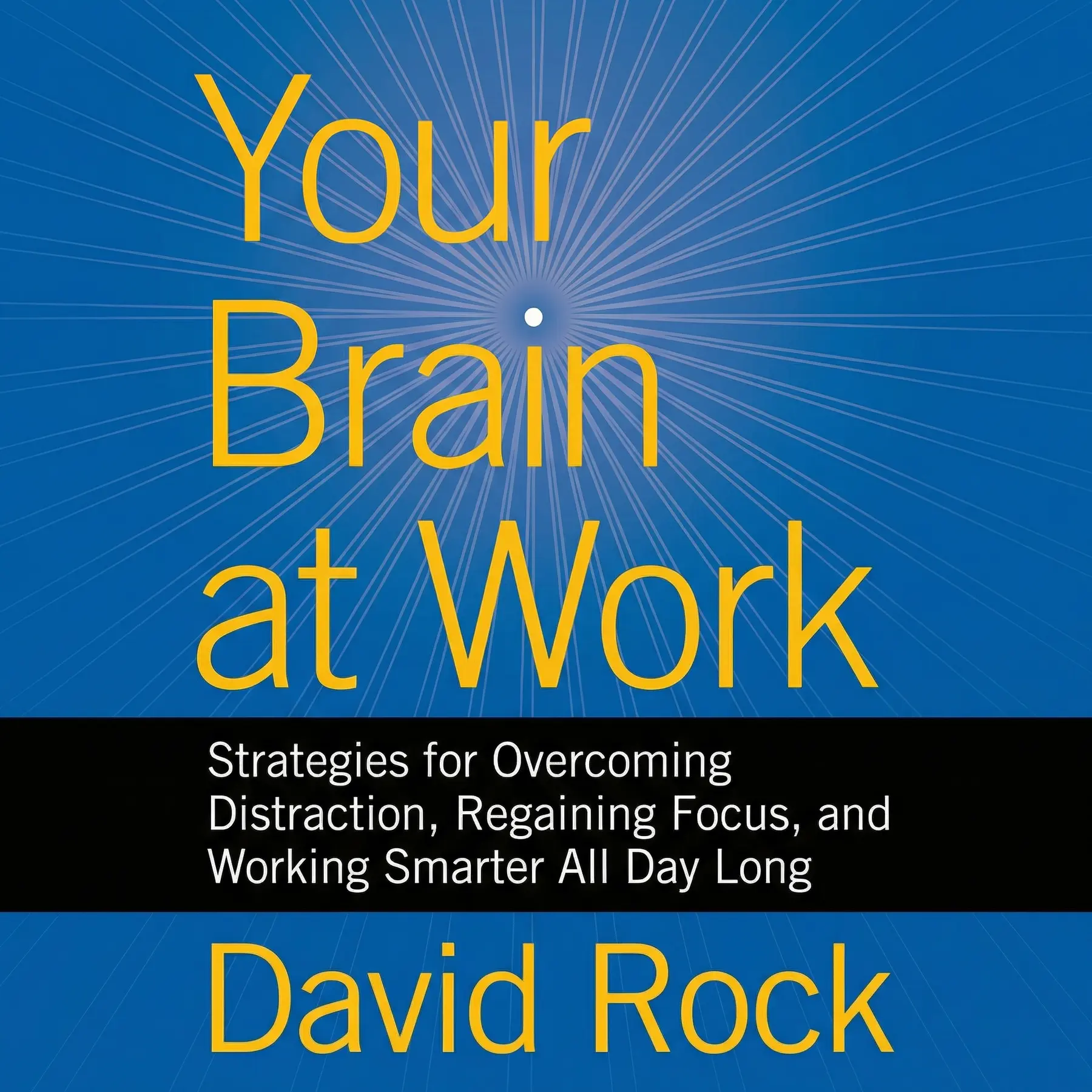
Your Brain at Work: Strategies for Overcoming Distraction, Regaining Focus, and Working Smarter All Day Long
By David Rock
David Rock’s guide explores the neuroscience of productivity. Learn how to manage mental energy, overcome constant distractions, and leverage brain chemistry to improve focus, creativity, and professional relationships throughout the workday.
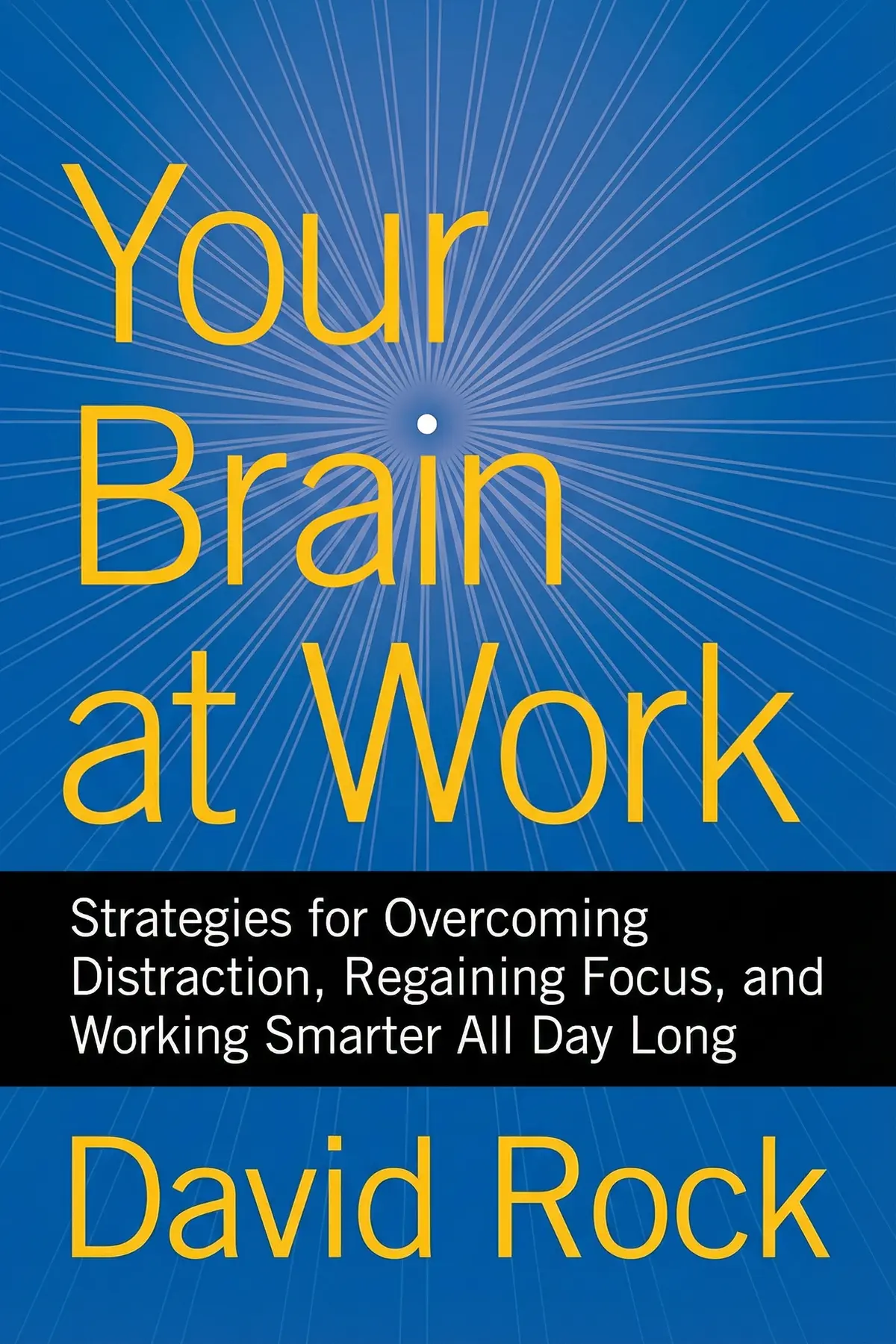
Table of Content
1. Introduction
1 min 54 sec
In the modern workplace, we often treat our brains like computers—expected to run at full speed for eight to ten hours a day without a glitch. We push through fatigue, juggle multiple projects, and respond to every notification as it arrives. But what if our biological hardware simply wasn’t built for that kind of constant, high-intensity processing?
David Rock’s exploration of the cognitive landscape suggests that many of our professional struggles—from mid-afternoon brain fog to the frustration of an interrupted creative flow—stem from a fundamental misunderstanding of how the brain operates. We are trying to drive a finely tuned biological machine without reading the manual. The reality is that our capacity for deep thought is a limited resource, and our focus is far more fragile than we’d like to admit.
This summary provides that missing manual. We will look at the neuroscience of focus, the chemical triggers of motivation, and the social dynamics that can either shut the brain down or light it up with insight. You will discover why your IQ can drop significantly when you leave your email inbox open, and why trying to ‘force’ a solution to a problem is often the worst way to solve it.
The throughline of this journey is the concept of mental economy. By learning to conserve our cognitive energy for the tasks that matter most, and by understanding the biological rewards our brains crave, we can move from merely surviving the workday to truly mastering it. We’ll explore strategies for regaining focus, managing stress through reappraisal, and even how to help others reach their own breakthroughs. It’s time to stop fighting your brain and start giving it the conditions it needs to thrive.
2. Conscious Thought as a Finite Resource
3 min 14 sec
Discover why your brain gets exhausted even when you aren’t moving, and how to protect your most valuable mental fuel for your toughest tasks.
3. The High Cost of Digital Distraction
2 min 43 sec
The modern office is a minefield of interruptions. Learn how to ‘veto’ the urge to check your phone and reclaim hours of lost productivity.
4. Finding the Chemical Sweet Spot for Focus
2 min 41 sec
Your brain needs a specific cocktail of chemicals to perform its best. Learn how to dial your levels up or down to stay in the zone.
5. The Mechanics of the 'Aha!' Moment
2 min 24 sec
Stuck on a problem? Discover why logical thinking might be your enemy and how your unconscious mind holds the key to creative breakthroughs.
6. Building a Stronger Brain Through Mindfulness
2 min 24 sec
Mindfulness isn’t just about relaxation; it’s a high-performance tool that physically reshapes your brain for better control.
7. The Biological Craving for Certainty and Autonomy
2 min 38 sec
Uncertainty feels like physical pain to the brain. Learn how to reclaim your sense of control and lower your stress levels instantly.
8. Managing the Dopamine Highs and Lows of Expectation
2 min 28 sec
Unmet expectations can feel like actual physical pain. Learn the art of managing your internal forecast to keep your mood stable and productive.
9. The Social Brain: Fairness and Connection
2 min 31 sec
Your brain treats social rejection like a physical wound. Explore why fairness and friendship are essential fuels for your best work.
10. The Science of Status and Self-Competition
2 min 24 sec
Status isn’t just about your job title; it’s a powerful brain chemical trigger. Learn how to ‘level up’ without needing anyone else’s permission.
11. Leading Others Toward Their Own Breakthroughs
2 min 34 sec
Giving feedback often causes more harm than good. Learn the neuro-friendly way to help colleagues see their own mistakes and grow.
12. Conclusion
2 min 13 sec
The journey through the neuroscience of work brings us to a singular, transformative conclusion: your brain is a biological organ with specific needs and limits, and managing it effectively is the ultimate professional skill. We have seen that our conscious thinking is a finite resource that must be guarded against the ‘IQ tax’ of constant distraction and the exhaustion of over-multitasking. We’ve learned that our focus isn’t a matter of simple willpower, but a chemical balance that can be managed by understanding the roles of dopamine and norepinephrine.
The key to long-term success isn’t just working harder—it’s working with the grain of your biology. This means respecting the ‘theatre’ of your prefrontal cortex by prioritizing when you’re fresh and automating routines. It means recognizing that your brain treats social connection, fairness, and status as survival rewards, and that threatening these in yourself or others is a recipe for cognitive shutdown.
Perhaps the most actionable lesson is the power of the ‘Director’ within—the mindful observer who can step back from the fray. By developing the ability to watch your own thinking, you can veto distractions, reappraise stressful situations to reclaim your autonomy, and manage your expectations to keep your dopamine levels stable.
As you move back into your daily routine, start small. Identify your biggest distractions and veto them before they start. When you feel stuck, step away and let your unconscious mind seek an insight. And when you interact with others, remember that their brains are just as sensitive to status and fairness as yours. By applying these neuroscientific principles, you won’t just improve your productivity; you’ll create a more sustainable, creative, and rewarding way to work. You have the manual now—it’s time to start using it.
About this book
What is this book about?
Your Brain at Work acts as a manual for the most complex organ in the human body, specifically tailored for the modern professional environment. It addresses the common struggle of feeling overwhelmed by endless tasks, digital interruptions, and the pressure to perform at a high level. By explaining the biological mechanics of the prefrontal cortex—the part of the brain responsible for complex thinking—David Rock offers a blueprint for navigating a high-pressure career without succumbing to burnout. The promise of the book is that by understanding how your brain processes information, deals with stress, and interacts with others, you can stop fighting your biology and start working with it. This leads to better decision-making, more frequent creative breakthroughs, and a more sustainable approach to professional achievement. You will learn why your brain gets tired, how to stay cool under pressure, and how to influence others by respecting their brain’s social needs.
Book Information
About the Author
David Rock
David Rock is an acclaimed author and business consultant who bridges the gap between hard science and leadership. He is the pioneer of the term NeuroLeadership, a field dedicated to connecting neuroscientific research with management and leadership development. Beyond this work, he has authored Quiet Leadership: Six Steps to Transforming Performance at Work.
Ratings & Reviews
Ratings at a glance
What people think
Listeners find the text accessible and enlightening, with one individual pointing out its use of scientific evidence. The narrative structure is praised, as one listener observes that every chapter kicks off with a story that feels personally applicable.
Top reviews
Samroeng
David Rock has managed to turn complex neuroscience into a practical toolkit for the modern professional. The SCARF model alone is worth the price of admission, explaining why a simple suggestion from a boss can feel like a physical threat to our status. Frankly, understanding that my brain treats social pain the same as physical pain was a massive 'aha' moment for me. The writing is clear and engaging, though it does get a bit technical when discussing the limbic system's interference with the PFC. If you want to stop reacting impulsively and start responding with intention, this is the manual you've been looking for. Five stars for the actionable application of brain science.
Show morePat
The metaphor of the 'stage' in our mind is a total game-changer for understanding how focus functions. Rock explains that we only have room for a few 'actors' at once, and if we try to cram too much on there, the whole production falls apart. It’s a brilliant way to conceptualize mental limits. This book isn't just dry theory; it's a practical guide for surviving the modern workplace. My favorite part was the section on the 'Director'—that mindful part of us that can step back and observe our own emotional chaos. I’m recommending this to everyone on my team. It’s easily one of the most useful books I’ve read this year.
Show moreKoi
To be fair, I expected another dry, academic self-help book, but I was pleasantly surprised by the depth of the social research included here. The way Rock breaks down our fundamental need for autonomy and certainty is eye-opening. We often think of work as purely rational, but this book proves our limbic systems are running the show more than we'd like to admit. The chapters on managing others through the lens of social rewards are especially powerful. If you've ever wondered why your team gets defensive during performance reviews, the answer is in here. It's a masterclass in human interaction. I can't recommend it enough for anyone in a leadership position.
Show moreAndrei
Wow, I didn't realize how much I was working against my own biological hardware every single day. David Rock breaks down the brain's limitations with such clarity that you can't help but change your daily habits. From the importance of 'labeling' to dampen the limbic system to the power of a quick walk to reset an impasse, everything feels immediately actionable. The 'Director' concept has stayed with me since the first chapter and helps me stay mindful when I'm feeling overwhelmed. It’s not just a book about productivity; it’s a book about being a more effective human being. If you feel buried by your inbox, please read this. It’s a lifesaver.
Show moreSaranya
Ever wonder why you're a total zombie by 3 PM? This book explains the biological 'why' behind that afternoon slump with remarkable clarity. David Rock uses the metaphor of the prefrontal cortex being a small stage with limited actors, which really clicked for me. It's not about being lazy; it's about managing your 'theatrical' energy before it runs out. I found the tips on labeling emotions particularly useful for staying calm during high-stress meetings. However, some of the scenes with the characters Paul and Emily felt a little bit like a corporate training video from the 90s. Despite the slightly cheesy framing, the actual neuroscience is top-notch. It completely changed how I schedule my most difficult tasks.
Show moreWatcharee
After hearing several productivity gurus mention this title, I finally decided to dive in and see what the fuss was about. What sets this apart from other self-help books is the focus on meta-cognition—essentially thinking about how you're thinking. Most books just tell you to 'focus,' but Rock explains that focus is actually the process of inhibiting distractions, which drains your glucose fast. The advice to 'visualize' solutions rather than dwelling on problems is backed by how our internal circuitry handles new ideas. It is a bit repetitive in the middle sections, but the core message is solid. I’ve started doing my creative work first thing in the morning when my 'stage' is empty. It actually works.
Show moreJiraporn
This book offers a fascinating look at why our brains stall when we try to force an answer to a complex problem. I loved the explanation of how 'insights' happen—basically, you have to quiet the noise of the PFC to hear the quiet signals of the rest of the brain. It’s why we get our best ideas in the shower! The author provides scientific explanations that actually make sense to a non-scientist without being patronizing. I was particularly struck by the idea that the brain is naturally biased toward seeing threats everywhere. Learning to reappraise those 'threats' as just brain activity has helped my work-related anxiety significantly. It’s a very readable, transformative piece of work.
Show moreAisha
As someone who constantly struggles with multitasking, reading about the energy constraints of the prefrontal cortex was a huge relief. I always thought I was just bad at juggling tasks, but it turns out the human brain literally isn't built for it. Rock explains how switching tasks is like clearing a stage and bringing on a whole new set of actors—it's exhausting and inefficient! The book is very informative and provides a clear roadmap for working with your biology instead of against it. My only minor gripe is that the character examples are a bit dry at times. Still, the practical takeaways regarding 'the director' are too good to ignore.
Show moreEmily
Look, there are some great nuggets here, but be prepared for a significant amount of padding. The book follows a couple, Paul and Emily, through their workday, showing how they mess up and then how they could do better using brain science. While the 'before and after' scenarios make the science relatable, they also make the book feel twice as long as it needs to be. The insights on 'relatedness' and 'fairness' are quite interesting, but I felt like I was reading the same point three times. It’s a 4-star book trapped in a 3-star structure. Useful for the science, but it definitely requires some patience to get through the fluff.
Show moreTanyaporn
I really wanted to like this, but the narrative device involving the characters Paul and Emily felt incredibly forced and distracted me from the actual science. It felt like I was reading a mediocre soap opera script interspersed with textbook snippets. To be fair, the information regarding the energy-hungry nature of the prefrontal cortex is accurate and vital for anyone in a high-pressure job. But did we really need sixty pages of their fictional office drama to explain that multitasking is a myth? I ended up skimming the 'story' parts just to get to the chapter summations at the end. It is a decent resource if you can tolerate the format, but I found it quite boring.
Show moreFeatured in
Readers also enjoyed

Acting with Power: Why We Are More Powerful Than We Believe
Deborah Gruenfeld

Age of Propaganda: The Everyday Use and Abuse of Persuasion
Anthony Pratkanis


168 Hours: You Have More Time Than You Think
Laura Vanderkam

59 Seconds: Change Your Life in Under a Minute
Richard Wiseman
AUDIO SUMMARY AVAILABLE
Listen to Your Brain at Work in 15 minutes
Get the key ideas from Your Brain at Work by David Rock, plus 5,000+ more titles in English and Thai.
- 5,000+ titles
- Listen as much as you want
- 7-day free trial
- Cancel anytime







