
12 min 59 sec
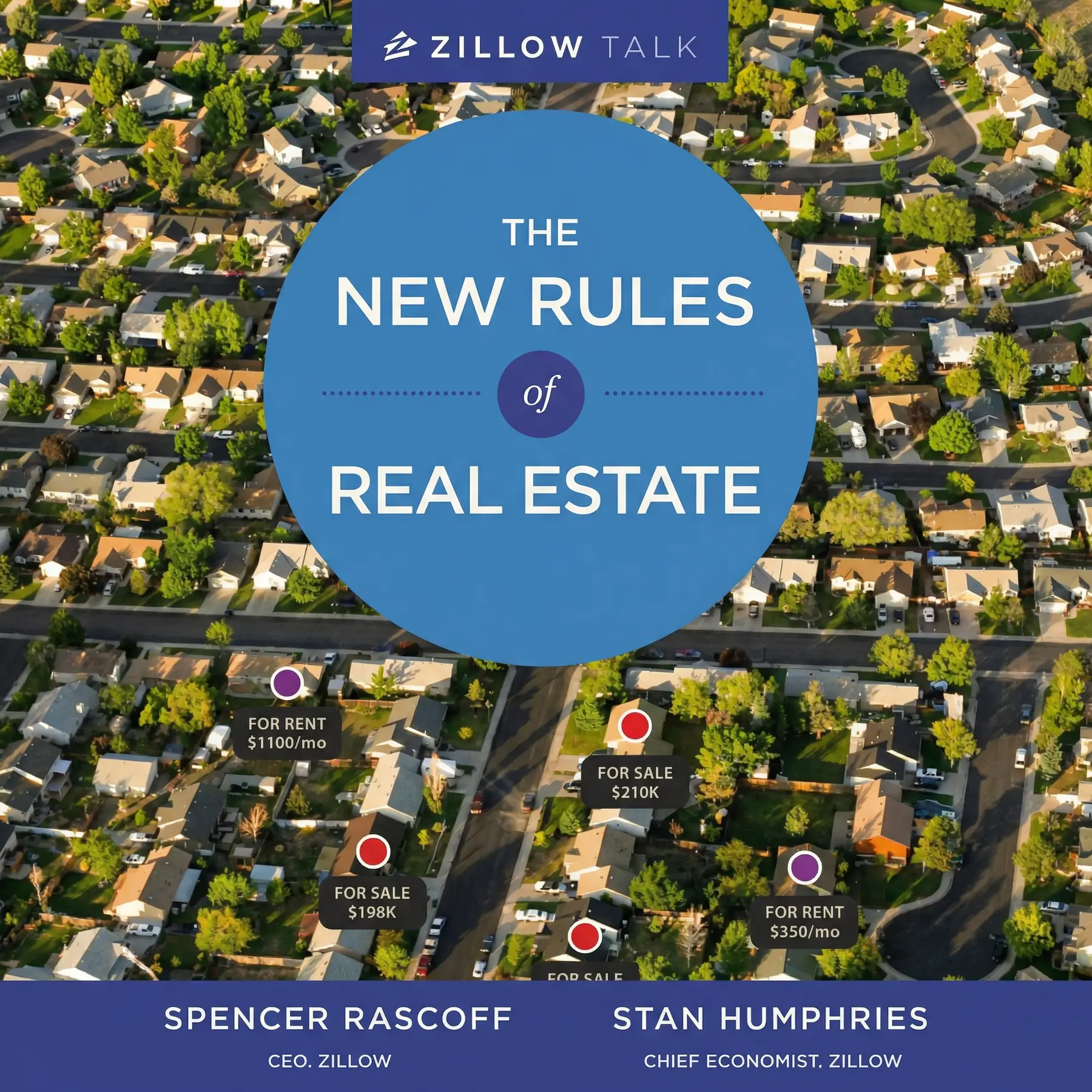
Zillow Talk: The New Rules of Real Estate
Discover how data-driven insights can transform your real estate decisions. This summary explores the hidden mechanics of the housing market, from the true cost of renovations to the ideal timing for selling.
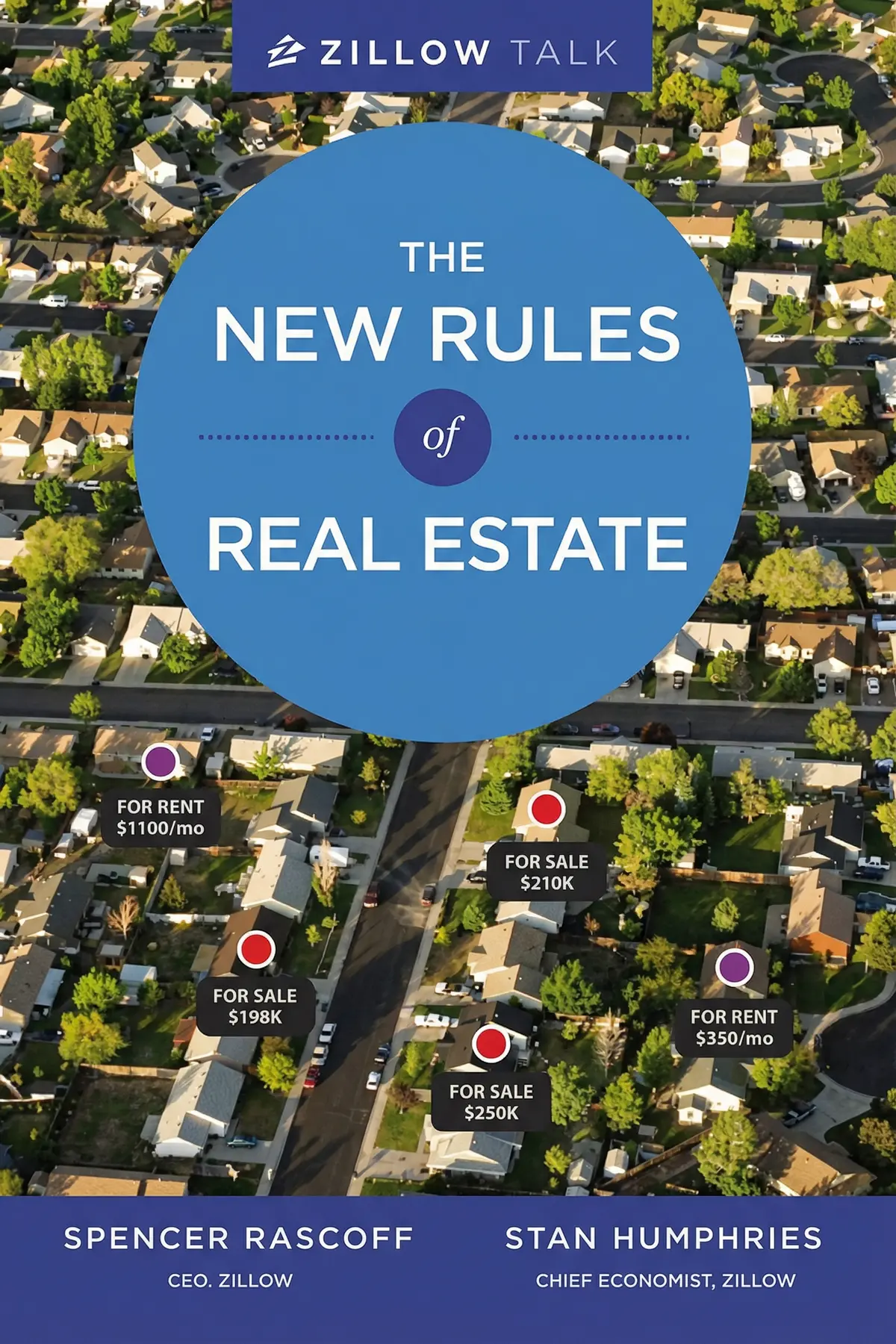
Table of Content
1. Introduction
1 min 30 sec
For many, the image of the American Dream is inextricably linked to the white picket fence and a set of house keys. It is an emotional milestone, often triggered by life’s big shifts—perhaps a new child, a marriage, or a career move that finally makes that spare bedroom a necessity. But beneath the sentimentality of finding a place to call home lies a complex, often counterintuitive financial landscape. Real estate is perhaps the only industry where people routinely make million-dollar decisions based on gut feelings and neighborhood gossip.
In the following insights, we are going to strip away the myths and look at the hard numbers. We often assume that buying is always superior to renting, that a luxury bathroom will pay for itself, or that the best investment is to find the worst house in the best neighborhood. As it turns out, the data tells a very different story. We’ll explore the tools used to measure the true cost of homeownership and the subtle triggers that cause property values to skyrocket or stagnate.
This isn’t just about finding a roof over your head; it’s about understanding the mechanics of an investment. We will walk through the strategic shifts required to maximize your returns, from the moment you decide to move to the final signature on a sales contract. By the end of this journey, you’ll see the housing market not as a series of emotional hurdles, but as a data-driven opportunity to build lasting wealth and security. Let’s look at the new rules of the game.
2. The Math of the Break-Even Horizon
1 min 54 sec
Is buying truly better than renting? Discover the specific calculation that reveals exactly when a home purchase starts saving you money.
3. The Gentrification Advantage
2 min 03 sec
Traditional wisdom says to buy the worst house in the best area, but the data suggests a much more lucrative alternative.
4. The Hidden Risks of the American Dream
1 min 51 sec
Is homeownership always a smart move? Explore why for many people, the flexibility of renting is a safer and more strategic financial choice.
5. The Trap of Luxury Remodeling
2 min 10 sec
Think that gold-plated faucet will add thousands to your home’s value? Learn why functionality always beats aesthetics when it comes to ROI.
6. Cracking the Code of the Perfect Listing
2 min 03 sec
Timing and vocabulary are the secret weapons of successful sellers. Learn how to use them to get the highest possible price.
7. Conclusion
1 min 28 sec
As we have seen, the world of real estate is far more than just a collection of bricks and mortar; it is a landscape of data that, when read correctly, can lead to incredible financial security. We have challenged the idea that homeownership is a universal requirement for the American Dream, noting that for many, the flexibility of renting is a powerful asset. We have learned that the true value of a home isn’t found in its luxury fixtures, but in its location and its basic functionality.
If there is one throughline to take away from this, it is that successful real estate decisions are made with the head, not just the heart. Whether you are choosing a neighborhood based on its future commercial potential or deciding to skip the marble countertops in favor of a mid-range kitchen refresh, you are using data to protect your investment.
One final, actionable piece of advice as you move forward: never underestimate the power of a school district. Even if you don’t have children and never plan to, the quality of the local schools is perhaps the most reliable insurance policy for your home’s value. Houses in top-tier school districts remain in high demand regardless of the economic climate, as there is always a new generation of parents looking for the best for their kids. By keeping your eye on the data, the timing, and the long-term trends, you can navigate the housing market with confidence and turn your home into a true engine for wealth.
About this book
What is this book about?
The real estate market is often shrouded in myths and emotional decisions, leading many to make choices based on tradition rather than hard evidence. Zillow Talk pulls back the curtain on these misconceptions by applying a rigorous, data-driven lens to the world of buying, selling, and owning a home. It challenges the conventional wisdom that owning is always better than renting or that luxury renovations are the best way to increase a property’s value. By leveraging the massive data sets available through Zillow, the authors provide a roadmap for navigating the complexities of modern real estate. You will learn how to identify up-and-coming neighborhoods before they peak, why being the cheapest house on a wealthy block is a strategic mistake, and how the specific language in a listing can significantly impact the final sale price. Whether you are a first-time buyer or a seasoned investor, this guide promises to sharpen your perspective on one of the most significant financial investments of your life.
Book Information
About the Author
Spencer Rascoff
Spencer Rascoff is a prominent entrepreneur who co-founded the discount travel site Hotwire. Following the acquisition of his startup by Expedia, he became a founding member of the real estate search engine Zillow in 2005. Stan Humphries serves as the chief economist at Zillow and is a recognized authority on housing market trends. He is a frequent contributor to major financial news outlets, including CNBC, Bloomberg TV, and Fox Business News.
Ratings & Reviews
Ratings at a glance
What people think
Listeners find the book accessible and enjoy its analytical focus on real estate, offering practical insights for both property buyers and investors. They appreciate the guidance on market transactions, and one listener highlights how the statistics accurately mirror modern circumstances. Feedback regarding the prose and overall worth is divided; while some consider it well-crafted, others feel the writing is subpar, and some find it a worthwhile expenditure of time and money whereas others disagree.
Top reviews
Zoey
Finally got around to reading this, and it’s a goldmine for anyone looking to sell in a competitive market. The advice about pricing your home ending in the number "9" or using "8" for certain demographics isn't just a marketing gimmick—they back it up with actual consumer behavior data. I particularly enjoyed the section on remodeling, which explains why a bathroom upgrade often yields better returns than a kitchen overhaul. It’s written in a very accessible, Freakonomics-style tone that makes complex market shifts easy to grasp. Truth is, real estate can feel like a guessing game, but Rascoff and Humphries provide a solid framework to make smarter decisions. It’s a fast-paced read that I’ll definitely be referencing when we list our place next spring. The insights are worth every penny.
Show moreKevin
Wow, this completely flipped my thinking on buying foreclosures. I always thought they were the ultimate "deal," but the authors use their data to show they often aren't worth the headache. The book is filled with these little counter-intuitive gems that make you second-guess traditional real estate "wisdom." I loved the chapter on how local markets matter more than national trends—it’s a reminder that real estate is hyper-local. The charts are simple to read and the "new rules" they propose feel modern and relevant to today's tech-savvy buyer. It’s a refreshing change from the old-school books that rely on anecdotes instead of massive datasets. Definitely a must-read if you want to be an informed participant in the market today.
Show morePita
Ever wonder why certain houses sell faster even when they look identical on paper? This book answers that question using millions of data points, and the results are often shocking. I particularly liked the analysis of street names and how a "Way" or a "Court" can influence a buyer's subconscious perception of value. It's not just about the four walls; it's about the data surrounding the property. Rascoff and Humphries have created something that feels like a roadmap for the modern era. I’ve already recommended it to three friends who are currently house-hunting. It empowers you to go into a deal with more than just a real estate agent’s opinion—you go in with hard facts. This is essential reading.
Show moreNora
As someone currently listing a home, I found the specific word-choice analysis to be incredibly tactical. Avoid "unique" because it’s a red flag? That’s the kind of practical insight I was looking for. The book does a great job of debunking myths, like the idea that buying the worst house in the best neighborhood is always a win. Instead, they show how diminishing returns can eat your profits alive. The writing is conversational and breezy, which I appreciated after a long day of dealing with agents. I do think they lean a bit too hard on their own website as the only source of truth. However, the data on how proximity to a Starbucks impacts home value was well-reasoned and supported by the numbers.
Show moreSamart
Picked this up on a whim after using the Zillow app for months. I wasn't expecting much, but the breakdown of the "timing" for listings was actually very helpful. Who knew March was the magic month to list your property? The authors write in a way that is easy to understand without being overly jargon-heavy, which is a plus for a layperson. I also liked the global perspective, like how New York real estate operates on its own set of bizarre rules compared to the rest of the country. It’s not a perfect book—there’s a bit too much fluff and filler—but the "insider" feel of the data makes it a compelling read for any casual investor or buyer.
Show moreSiriphen
Is it a marketing brochure or a data study? To be fair, "Zillow Talk" sits right in the middle, offering some genuinely "aha!" moments alongside plenty of self-promotion for the site. I found the insights about street names versus court names fascinating, yet other tips felt like common sense dressed up as data science. Why do we need a whole chapter telling us to hire a qualified home inspector? Some of the political commentary regarding the Mortgage Interest Deduction felt out of place and a bit preachy for a book about real estate trends. Still, for a casual reader who wants a quick overview of how big data is changing the housing landscape, it's worth a skim. Just don't expect a comprehensive masterclass or deep academic research.
Show moreYuwadee
Some chapters really fly by while others drag on for an eternity. I was captivated by the discussion on how the "American Dream" of home ownership can actually widen the wealth gap in certain cities. That was a bold take. On the other hand, the sections regarding fixed versus variable rate mortgages felt like filler you could find in any basic finance pamphlet. The conversational style is okay, but it sometimes borders on being too simplistic for such a complex topic. It’s a decent entry-point for a first-time buyer, but if you’ve already bought and sold a few homes, you might find most of this redundant. It's a bit like a long-form podcast in book format; some parts are fascinating, others are skippable.
Show moreKwame
The premise seemed solid, but the execution left me frustrated and frankly bored. The authors claim to be non-partisan, yet they spend significant time critiquing past administrations and specific policy decisions that don't directly relate to their core data points. My biggest gripe is how they treat web traffic as a substitute for actual academic research. Just because people are clicking on waterfront properties doesn't mean those buyers are "irrational" about rising sea levels. The chapters are fragmented and lack a cohesive narrative thread, making the whole experience feel like a collection of disparate blog posts. While the "magic of nine" pricing tip was interesting, it wasn't enough to save a book that feels fundamentally directionless and arrogant. I would recommend skipping this one.
Show moreWilliam
Look, the analytics here are surprisingly underwhelming for a company that prides itself on being a data giant. They often confuse correlation with causation, leading to some pretty "mysterious" conclusions that could be explained by simple qualitative factors. For a book that uses "Talk" in the title, it spends a lot of time patting itself on the back for its own success. I didn't appreciate the condescending tone regarding homeowners who value "charm" or "cozy" vibes in their listings. The writing quality is hit-or-miss, with some sections feeling like they were rushed to meet a publishing deadline. If you want real econometrics, go elsewhere; if you want a light read that feels like a promotional pamphlet, this is for you.
Show moreWachira
I expected deep data mining but instead got a lengthy commercial for the Zillow platform. The writing is incredibly basic, almost as if it was written for a blog rather than a bound book. While the "Starbucks effect" is a fun anecdote, the actual statistical rigor is severely lacking throughout the text. I found the analysis of housing price declines in New Orleans to be particularly shallow and poorly contextualized. If you have an undergraduate degree in economics, you will likely find the regressions and correlations used here to be amateurish at best. It is disappointing because the authors have access to so much information. They just failed to do anything truly meaningful with it. Save your money and just browse the free articles on their website instead of buying this.
Show moreReaders also enjoyed
AUDIO SUMMARY AVAILABLE
Listen to Zillow Talk in 15 minutes
Get the key ideas from Zillow Talk by Spencer Rascoff, plus 5,000+ more titles in English and Thai.
- 5,000+ titles
- Listen as much as you want
- 7-day free trial
- Cancel anytime







