
20 min 53 sec
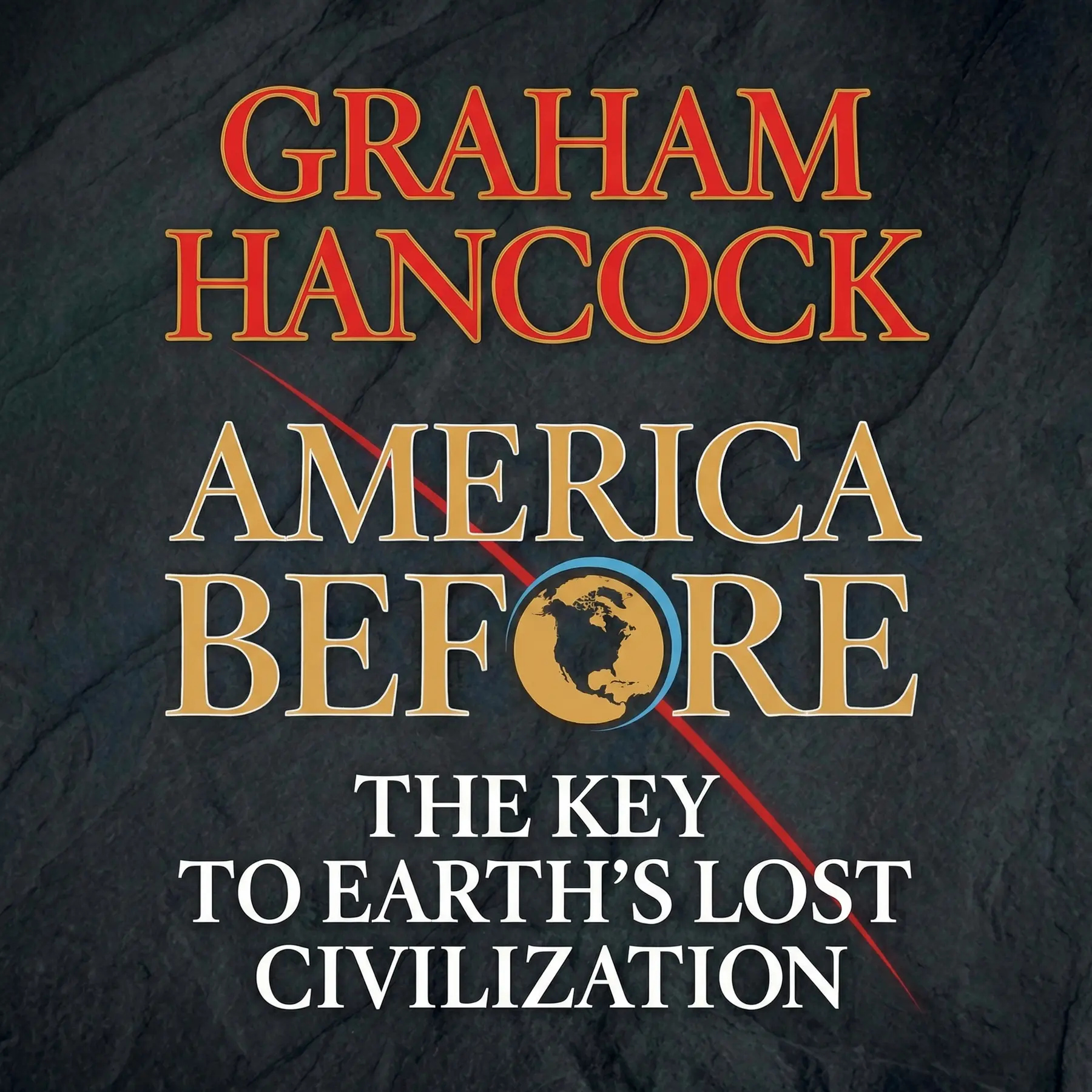
America Before: The Key to Earth’s Lost Civilization
A provocative exploration of a forgotten American past, suggesting a sophisticated civilization thrived before the Ice Age, supported by surprising genetic, archeological, and astronomical evidence that challenges the mainstream historical timeline.
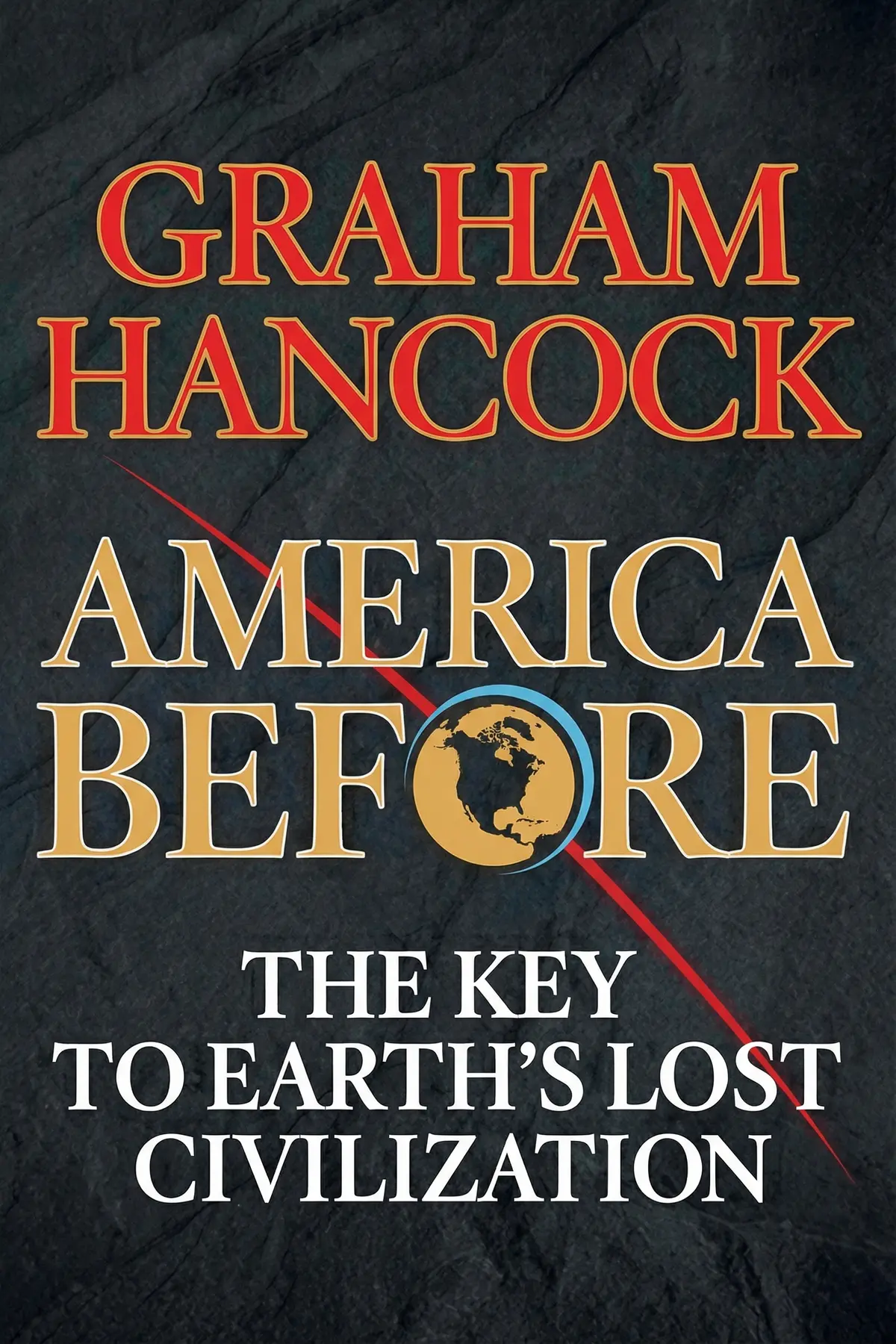
Table of Content
1. Introduction
1 min 46 sec
For generations, the story of the Americas has been told through a very specific lens. We have been taught that the New World was the last place on Earth to be settled by humans, a vast wilderness that only saw its first footprints some 13,000 years ago. According to this narrative, small bands of hunters crossed an icy bridge from Siberia, chasing big game into a virgin landscape. It is a neat, tidy story that fits perfectly into the textbooks. But what if that story is not just incomplete, but fundamentally wrong?
In America Before, we dive into a mystery that spans tens of thousands of years. We are going to look at evidence that the academic establishment has ignored or dismissed for decades. We will see how the Americas might actually have been home to a sophisticated, advanced civilization that predates the end of the last Ice Age—a civilization that was capable of navigating the oceans, mapping the stars with incredible precision, and building monuments that still baffle us today.
This isn’t just about moving a few dates on a timeline. This is about reimagining the entire human story. We will explore how genetic ghosts in the Amazon connect South Americans to Australia, how 130,000-year-old bones in California shatter our understanding of migration, and how a cosmic disaster nearly wiped the slate clean. Through the lens of this investigation, the ‘New World’ starts to look much more like the ‘Old World,’ and the history we thought we knew becomes just a small fragment of a much larger, lost epic. By the end of this journey, you will see the landscape of the Americas not as a recent discovery, but as the site of a profound, forgotten human heritage that challenges the very foundations of modern archeology.
2. The Persistence of Archeological Dogma
1 min 57 sec
Science is often seen as a pursuit of truth, but the history of American archeology reveals a surprising amount of resistance to new ideas.
3. A Discovery That Rewrote the Calendar
1 min 55 sec
A construction project in California unearthed a secret that suggests humans were in America ten times longer than we previously believed.
4. The Genetic Mystery of the Amazon
1 min 52 sec
Modern DNA testing has revealed a ‘ghost’ population that connects the deep Amazon to the distant shores of Australasia.
5. Hidden Cities Beneath the Canopy
1 min 49 sec
The Amazon was long thought to be a pristine wilderness, but new evidence suggests it was once a sprawling, engineered landscape.
6. The Universal Language of Geometry
1 min 45 sec
Massive earthworks in both North and South America share a sophisticated mathematical and astronomical code.
7. A Shared Map of the Afterlife
1 min 55 sec
Despite never meeting, the civilizations of Ancient Egypt and Native America shared an identical and complex vision of the soul’s journey.
8. The Fire That Changed the World
1 min 39 sec
A massive cosmic impact nearly 13,000 years ago may be the ‘missing link’ that explains the sudden disappearance of a high civilization.
9. The Missionaries of Knowledge
1 min 36 sec
Ancient texts suggest that survivors of a lost world traveled the globe to restart civilization among simpler tribes.
10. Echoes of Ancient Seafarers
1 min 30 sec
Ancient maps and submerged ruins provide a paper trail for a civilization that mapped the world long before we thought possible.
11. A Different Kind of Science
1 min 42 sec
The lost civilization may not have relied on machines, but on a sophisticated understanding of the human mind and spirit.
12. Conclusion
1 min 27 sec
The evidence presented in America Before invites us to step out of the narrow confines of traditional history and into a much larger, more mysterious past. We have seen how the ‘Clovis First’ narrative, which once seemed so solid, is being dismantled by genetic discoveries, ancient maps, and the undeniable evidence of human activity stretching back over a hundred thousand years. The Americas were not a late addition to the human story; they were a central stage for a high civilization that was tragically interrupted.
What this means for us today is a profound shift in how we view our place in the world. We are not the pinnacle of an ever-ascending line of progress. Instead, we may be the survivors of a long cycle of rise and fall, living among the ruins of an older, wiser era. The earthworks of Ohio and the ‘black earth’ of the Amazon are not just relics; they are messages from a society that understood the connection between the earth and the stars in a way that we are only just beginning to rediscover.
The final takeaway is a call for humility and curiosity. If we can accept that our ancestors were more sophisticated than we gave them credit for, we can start to learn from them. Whether it is their sustainable agricultural techniques, their precise astronomical observations, or their deep spiritual insights into the journey of the soul, there is a wealth of forgotten wisdom waiting to be reclaimed. The ‘New World’ is actually a very old world, and its secrets are finally beginning to come to light.
About this book
What is this book about?
America Before takes listeners on a journey through the deep history of the American continent, arguing that the traditional narrative of its discovery is fundamentally flawed. Graham Hancock challenges the 'Clovis First' dogma, which suggests humans only arrived 13,000 years ago. Instead, he presents evidence ranging from 130,000-year-old mastodon bones to mysterious genetic links between Amazonian tribes and Australasian populations. The book promises to reveal a lost world of advanced knowledge, where ancient inhabitants of the Americas possessed sophisticated seafaring skills, a deep understanding of the stars, and complex agricultural techniques. By examining the ruins of the Mississippi Valley and the hidden geoglyphs of the Amazon, Hancock builds a case for a shared global heritage that was nearly erased by a cataclysmic event known as the Younger Dryas. It is an exploration of the possibility that the Americas were the cradle of a high civilization that influenced the ancient world long before recorded history.
Book Information
About the Author
Graham Hancock
Graham Hancock has devoted his life to discovering an ancient lost civilization. A best-selling author who has been scoffed at by establishment archeologists and scholars around the world, Hancock has set out his theories in best-selling titles including Magicians of the Gods: The Forgotten Wisdom of Earth’s Lost Civilization, and Fingerprints of the Gods: The Quest Continues.
Ratings & Reviews
Ratings at a glance
What people think
Listeners describe this work as an engaging experience, noting the well-documented research and accessible prose. They value the exploration of antiquity and archaeological findings, where one listener points out how the author skillfully merges thorough scientific data with logical reasoning. This title earns praise for its intriguing subject matter and high production standards, even if some feel the pacing is occasionally sluggish.
Top reviews
Ern
Graham Hancock has a remarkable gift for weaving complex scientific data into a narrative that feels like a high-stakes detective novel. This book is essentially the culmination of his life’s work, focusing on the staggering possibility of a lost civilization in the Americas that predates everything we were taught in school. Personally, I found the sections on the Younger Dryas Impact Hypothesis and the 'terra preta' in the Amazon to be the most compelling parts of the entire volume. He challenges the 'Clovis First' orthodoxy with such vigor that it’s hard not to question why this isn't more mainstream. While the book is undeniably dense and requires a significant time investment, the payoff is a completely shifted worldview. The way he connects the Serpent Mound in Ohio to astronomical alignments is nothing short of brilliant. Even if you don't buy into every single conclusion, the sheer volume of verifiable facts makes it a mandatory read for anyone interested in our ancient past.
Show moreNoah
After hearing Hancock on a podcast, I knew I had to read his latest evidence for myself. This book is a masterpiece of alternative history that feels increasingly less 'alternative' with every new archaeological discovery. The evidence from the Cerutti Mastodon site in San Diego is particularly hard to dismiss, placing humans in America over 130,000 years ago. Franky, it makes the mainstream insistence on a 13,000-year timeline look increasingly fragile. I loved how he connected the dots between the mounds of the Mississippi Valley and the star-aligned temples of the ancient world. The book is well-researched and presented with a passion that is infectious. It’s not just a collection of theories; it’s a call to keep an open mind about who we are and where we came from. For me, the section on the cataclysmic comet fragments was the most chilling and persuasive part of the book. Absolutely essential reading.
Show moreChon
Ever wonder why there are so many 'anomalies' in the archaeological record that just get ignored? This book tackles that head-on. Hancock takes us on a journey across 'Turtle Island,' showing us evidence of advanced knowledge that has been buried or dismissed for decades. I was captivated by the descriptions of the Mound Builders and the sophisticated geometry they used in their earthworks. It’s a beautiful, well-written book that feels like a labor of love. Not gonna lie, the sheer scale of the floods he describes—scouring the landscape and changing the world overnight—is terrifying to think about. He bridges the gap between myth and science in a way that very few authors can. It’s a thick read, but every chapter opened my eyes to a new way of seeing the Americas. If this truly is his last major work, he’s going out on a high note.
Show moreCooper
Finally got around to finishing this massive tome and I’m left reeling from the implications. The genetic evidence alone should be enough to trigger a massive re-evaluation of American prehistory. How do we explain Australasian DNA in the heart of the Amazon? Hancock argues that our ancestors were far more mobile and sophisticated than we give them credit for. The book is comprehensive, scientific, and yet deeply emotional. He writes with a sense of urgency, especially given his recent health scares mentioned in the end. I found his description of the Serpent Mound and its relationship to the constellations to be particularly moving. It’s a reminder that the ancient people were not 'primitive' but were observers of the cosmos in ways we’ve forgotten. This is easily his best work since Fingerprints of the Gods. Do yourself a favor and get the audiobook—he narrates it himself and his passion really shines through.
Show moreLillian
The chapter on the Serpent Mound in Ohio completely changed how I look at my own backyard. I’ve lived near these sites my whole life and never realized the level of mathematical precision involved in their construction. Hancock does an amazing job of pulling together disparate threads—genetics, geology, astronomy, and mythology—to create a unified theory of a lost past. The book is a compelling read, even if it’s a bit slow in the technical sections. I appreciated how he addressed the backlash from the academic community; it adds a layer of 'forbidden history' that makes the book hard to put down. Whether you believe in a global lost civilization or not, the evidence for a much earlier human presence in America is becoming undeniable. This book is a bold, well-researched challenge to the status quo. It’s the kind of work that stays with you long after you’ve turned the final page.
Show moreLily
As someone who has always been skeptical of the standard 'Out of Africa' timeline, this book provided a lot of food for thought. Hancock’s exploration of the genetic links between Amazonian tribes and Australasian populations is genuinely mind-blowing. It suggests a history of migration that is far older and more complex than the Bering Strait theory allows for. The writing style is easy to follow, though I’ll admit it gets a bit slow-paced during the deep dives into Egyptian metaphysics. Truth is, the middle section could have used a tighter edit to keep the momentum going. However, the work quality is evident in the bibliography alone. He’s clearly done his homework, even if he interprets the data through a very specific lens. It’s a compelling read that asks the right questions about our collective human amnesia. Just be prepared for a bit of a slog through the technical calculations.
Show moreAmy
This book is a bit of a marathon, but the scientific data woven throughout makes it worth the effort. I was particularly struck by the discussion on the Younger Dryas impact proxies. Hancock presents a very strong case for a world-changing event that wiped the slate clean around 12,800 years ago. While some of his comparisons between Native American myths and Egyptian beliefs felt a bit forced, the underlying thesis is solid. Why are we so afraid to admit that we might have lost a massive chunk of our history? The writing is accessible, and he does a great job of explaining complex geological shifts without sounding like a textbook. I did feel like he cherry-picked some of the data to fit his lost-civilization narrative, but the questions he raises are important. It’s a thought-provoking piece of work that deserves a place on any history buff's shelf, even if you remain a skeptic.
Show moreWan
Look, the research into the Amazonian civilizations and the sophisticated agriculture they practiced is absolutely fascinating. Hancock is at his best when he’s describing these forgotten ruins and the 'terra preta' soil that shouldn't exist. However, the book is incredibly bloated. It easily could have been edited down by 200 pages without losing any of the core arguments. I found myself skimming through pages of dense calculations about solstice alignments that didn't feel vital to the narrative. To be fair, he makes some interesting points about the 'Clovis-first' wall in academia, but his constant defensive tone gets old after a while. I appreciate the effort to bring these sites to light, but the logic-jumps toward the end—especially regarding psychotropic drugs and 'supernaturals'—lost me. It’s a good book for data mining, but you definitely need to read it with a bucket of salt.
Show morePawinee
To be fair, Hancock is a brilliant storyteller, even when his logic makes some pretty massive leaps. I enjoyed the first half of the book immensely, especially the parts about the submerged landmasses like Beringia and Sundaland. It provides a great visual of how different the world looked during the Ice Age. But then we get into the more 'fringe' territory, and I started to lose the thread. He relies heavily on unsubstantiated assumptions once he leaves the geological evidence behind. The comparison between the Inca and the ruling classes of Egypt was interesting but felt speculative at best. I also think he’s a bit too hard on mainstream archaeologists; science is supposed to be conservative. It’s an entertaining read and great for sparking curiosity, but I wouldn't take it as gospel. It’s more of a starting point for your own research than a definitive history.
Show moreLaddawan
The first half of this book actually had me interested, but then it took a sharp turn into the absurd. I picked this up hoping for a rigorous look at pre-Clovis archaeological sites, which is a fascinating topic on its own. Instead, Hancock spends an exhausting amount of time complaining about 'institutional' scientists trying to silence him. Then, just when you think he’s grounding his theories in genetics and geology, he hits you with the telepathy. In the final stretch, he suggests that ancient Americans were using ESP and telekinetics to build monuments. Look, I’m all for questioning the status quo, but the jumps in logic here are too massive to ignore. It felt like I was watching a late-night History Channel special that started with archaeology and ended with Ancient Aliens. I wanted to like this, but I can't get past the wild, unsubstantiated claims in the later chapters.
Show moreReaders also enjoyed
A Splendid Exchange: How Trade Shaped the World
William J. Bernstein

A Spy Among Friends: Philby and the Great Betrayal
Ben Macintyre


1491: New Revelations of the Americas Before Columbus
Charles C. Mann
A Year in the Life of William Shakespeare: 1599
James Shapiro

1929: Inside the Greatest Crash in Wall Street History--and How It
Andrew Ross Sorkin
AUDIO SUMMARY AVAILABLE
Listen to America Before in 15 minutes
Get the key ideas from America Before by Graham Hancock, plus 5,000+ more titles in English and Thai.
- 5,000+ titles
- Listen as much as you want
- 7-day free trial
- Cancel anytime







