
18 min 38 sec
Antimatter
By Frank Close
Explore the enigmatic world of antimatter, from its theoretical beginnings to modern experiments at CERN. This guide explains how this mirror-image substance works and why it is fundamental to the universe's origin.
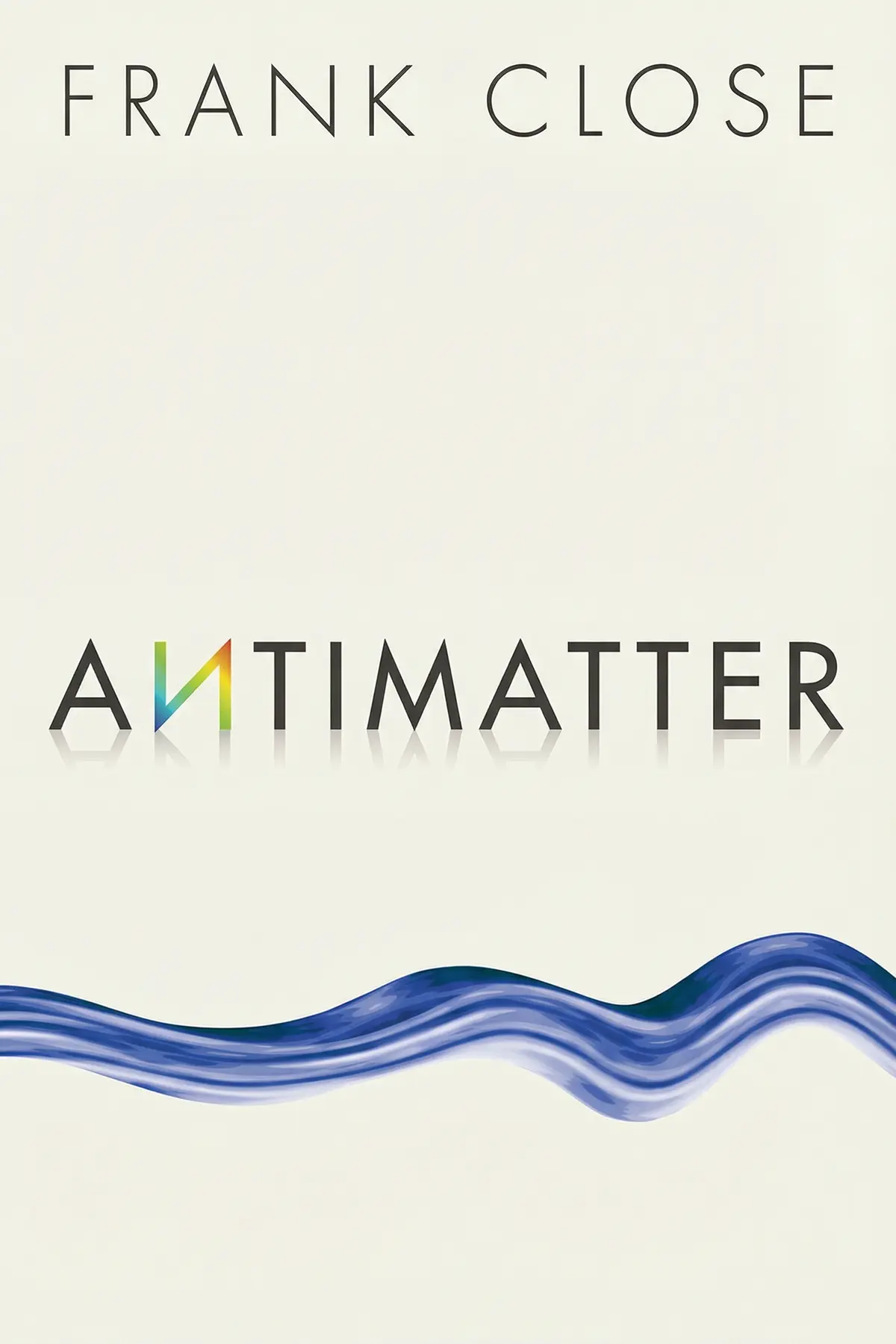
Table of Content
1. Introduction
1 min 49 sec
The universe is often described as a vast, dark theater where the laws of physics perform their grandest acts. Among the cast of characters, we find things we recognize—light, gravity, and the solid matter that makes up our bodies and our planet. But there is a hidden player in this cosmic drama, one that is as mysterious as it is volatile. This is the world of antimatter. For decades, the mere mention of this substance evoked images of futuristic starships and devastating weapons, but the reality is far more interesting and grounded in the very fabric of our existence.
In this journey through the work of Frank Close, we are going to peel back the layers of complexity that often surround high-level physics. We aren’t going to get lost in impossible equations or dense academic jargon. Instead, we will look at the human story of discovery and the fascinating logic that suggests every particle in our universe has a secret twin. We will explore how a few quiet lines of math led to a revolution in how we see the vacuum of space, and how massive machines buried under the mountains of Europe are helping us touch the very moments of creation.
By following this throughline, we will see that antimatter isn’t just a curiosity for researchers; it is a vital clue to the mystery of why we are here. We will trace the path from early twentieth-century theories to the cutting edge of modern technology, examining why this substance is so difficult to handle and what it tells us about the fundamental symmetry—or lack thereof—in the cosmos. Get ready to explore a mirror world where everything is inverted, and where the meeting of two opposites results in the most powerful release of energy known to science.
2. The Concept of Mirror-Image Matter
2 min 47 sec
What if every building block of our world had a perfect, inverted twin? Explore the explosive nature of antimatter and its fundamental relationship with the reality we touch.
3. From Mathematical Theory to Physical Proof
2 min 29 sec
Discover how a quiet physicist’s radical idea about negative energy paved the way for the actual discovery of particles that shouldn’t exist.
4. The Diversity of the Subatomic Realm
2 min 24 sec
Journey deeper than the atom to meet the strange family of particles that make up our universe, including the tiny quarks that hide within.
5. Capturing the Elusive in the High-Tech Lab
2 min 20 sec
How do you hold onto something that disappears the moment it touches anything? Learn about the incredible technology used to study antimatter.
6. The Mystery of Cosmic Asymmetry
2 min 18 sec
If matter and antimatter are perfectly balanced, why is the universe full of one and not the other? Delve into the question that baffles physicists.
7. The Reality of Practical Antimatter
2 min 39 sec
From sci-fi weapons to interstellar travel, the potential of antimatter is vast, but the logistical hurdles are even bigger. Separating fact from fiction.
8. Conclusion
1 min 52 sec
As we reach the end of our journey into the world of antimatter, we are left with a sense of profound wonder at the complexity of the universe. We have seen how what started as a few lines of quiet mathematics in Paul Dirac’s office transformed into a physical reality that can be observed and even captured in a lab. Antimatter is not just a curiosity or a plot point in a science fiction movie; it is a fundamental part of the symmetry that defines the laws of physics. It is the mirror image that allows us to understand the reflection.
Perhaps the most important takeaway is the realization of just how delicate our existence really is. The fact that we live in a universe dominated by matter—rather than one that vanished in a burst of light eons ago—is thanks to a tiny, unexplained imbalance in the earliest moments of time. We are the survivors of a cosmic coin flip that favored matter by the smallest of margins. Every star, every planet, and every person is a testament to that broken symmetry.
While the dreams of antimatter-powered spaceships or limitless energy remain far on the horizon, the pursuit of this knowledge continues to drive human innovation. By building massive machines like those at CERN and pushing the limits of our engineering, we are slowly uncovering the secrets of our origins. Antimatter teaches us that the world is much deeper and more mysterious than it appears on the surface. It encourages us to keep asking ‘why’ and to look closer at the vacuum of space, for even in what seems to be nothingness, there is a sea of potential waiting to be discovered. The throughline of antimatter is a story of balance, discovery, and the enduring human quest to understand the very fabric of reality.
About this book
What is this book about?
Have you ever wondered if there is a shadow version of the world we see? In this exploration of high-level physics, we dive into the mystery of antimatter—a substance that is the exact opposite of everything we know. While it sounds like a concept pulled from the pages of a science fiction novel, antimatter is very real, and its discovery has fundamentally changed our understanding of the cosmos. This summary takes a journey through the history of particle physics, beginning with the quiet mathematical genius who first predicted antimatter's existence and moving through the high-stakes experiments that proved him right. You will discover how scientists today are able to create and trap this volatile material in the world's most advanced laboratories. Along the way, the narrative addresses one of the greatest questions in science: if matter and antimatter destroy each other on contact, why does anything in our universe exist at all? By the end, you will have a clear grasp of the delicate balance that allows our world to function and the staggering energy potential hidden within the smallest particles of reality.
Book Information
About the Author
Frank Close
Frank Close is a physics professor at Oxford University and a Fellow of Exeter College. He previously served as the head of the Theoretical Physics Division at the Rutherford Appleton Laboratory. A prolific science communicator, he is also the author of acclaimed books such as Lucifer's Legacy and Eclipse.
Ratings & Reviews
Ratings at a glance
What people think
Listeners consider this title to be a vital read for the general public, serving as a concise and inviting introduction to the world of antimatter. Furthermore, the prose earns high marks, with one listener observing that it is skillfully written for the casual science buff. The book's informative depth is also widely praised; one listener notes that it stays tightly focused on its primary themes, while another values how it dispels common myths about the subject. The overall narrative is highly engrossing, with one listener characterizing it as a fascinating story that is expertly delivered.
Top reviews
Rosa
Wow, Frank Close really knows how to turn complex subatomic physics into a compelling narrative for the curious reader. I was fascinated to learn that sunlight is actually the byproduct of positrons being annihilated in the Sun’s core, creating gamma rays that take a hundred thousand years to reach the surface. The book does a marvelous job of stripping away the 'magic' of antimatter while keeping the sense of wonder intact throughout. His section on PET scans provided a much-needed practical perspective on how this 'exotic' material actually saves lives today. While some parts on kaons and decay were a bit heady, the overall flow kept me engaged until the very end. This is the perfect read for anyone who wants to understand the 'anti' version of our universe without getting a degree. Highly recommended for fans of popular science who want specific details rather than generalities.
Show moreLevi
Ever wonder if an antimatter bomb is actually possible or just a staple of Hollywood thrillers and action movies? Close tackles this question head-on, providing a sobering look at the economic and technical impossibility of mass-producing the stuff today. I appreciated how he debunked the Tunguska antimatter theory with actual data rather than just hand-waving the mystery away. The writing is sharp, clear, and avoids the usual fluff found in popular science books that try too hard. I especially liked the historical tidbits about Stueckelberg’s diagrams and how they predated Feynman’s more famous work by several years. It's a nifty little book that manages to cover a lot of ground in under two hundred pages. For a couple of hours of reading, the intellectual payoff is massive for any science enthusiast. Definitely worth keeping on the shelf for reference.
Show moreIvan
In my experience, few popular science writers can balance technical accuracy with readability as well as Frank Close does here. He manages to turn the discovery of the positron into a detective story that spans decades of human intellect. The explanation of why the universe is made of matter—the surviving one out of ten billion protons—is hauntingly beautiful to contemplate. I found the discussion on the PET scanner to be the most grounded part of the book, showing real-world utility. It’s a short volume, but it doesn't skimp on the big ideas like the Big Bang or cosmic entropy. Personally, I didn't mind the older publication date because the historical context is what matters most for this topic. This is superb science communication for anyone interested in the building blocks of existence.
Show moreGame
Finally got around to finishing this, and I’m genuinely impressed by how much Close crammed into such a slim volume. The quote about us being 'nuclear waste' or 'stardust' really resonates after he explains the stellar furnace process in detail. It’s a fascinating journey from the first millionth of a second of the Big Bang to the modern halls of CERN. Even the parts that were tough going felt rewarding once the concept finally clicked in my mind after a second read. He demystifies the idea of antimatter weapons effectively, showing why we aren't likely to see them used in our lifetimes. If you want to know the why and how behind the mirror image of our world, start right here. It’s a smart, focused, and ultimately enlightening piece of work for any curious mind.
Show moreJob
Picked this up because I wanted something deeper than a Wikipedia entry but shorter than a dense textbook. Close delivers a punchy overview, though he occasionally veers into 'dad joke' territory that feels a bit out of place for the subject. The explanation of the Dirac Code was brilliant, yet I found the chapter on matrices surprisingly clunky for such a short book. It’s a strange mix of accessible analogies and sudden, dense technicality that might require some rereading. You might find yourself scanning certain sentences three times just to grasp the parity laws and time reversal. Still, for an armchair scientist, it’s an essential bridge between science fiction and subatomic reality. I particularly enjoyed the grounded discussion on why antimatter propulsion remains a pipe dream for the foreseeable future. It's informative and concise, even if it feels slightly dated by now.
Show moreHassan
This book provides a solid, concise history of one of the most mysterious substances in the known cosmos. Close walks us through the 'Great Annihilation' after the Big Bang, explaining why we exist in a matter-dominated world at all. The concept of an antiparticle traveling backward in time was a total lightbulb moment for my understanding of physics. However, the pacing is a little uneven, with some chapters feeling light and others becoming an uphill battle of technical jargon. I found the section on fermions and bosons particularly helpful for clearing up my confusion regarding subatomic building blocks. It isn't perfect, and some of the humor is pretty cringeworthy, but the core information is absolute gold. It’s a great starting point for those who want to demystify the science behind the buzzwords.
Show moreDream
After hearing so many sci-fi buzzwords like 'quantum' and 'antimatter,' I decided it was time to learn the actual reality. Close’s book is a short, sharp shock of facts that separates the Star Trek fantasy from laboratory truth effectively. The way he explains Dirac’s 'hole theory' in the vacuum sea was surprisingly intuitive for such a weird concept. I did struggle with the chapter on matrices, which felt like hitting a brick wall in the middle of a marathon. Fortunately, the later chapters on the mirror universe and CP violation pulled me back in before I gave up. It’s a bit out of date, yet the fundamental physics remains a solid foundation for any armchair scientist. If you can push through the occasional dense paragraph, you'll learn a lot of fascinating details.
Show moreMax
To be fair, this is over a decade old, so some of the 'modern' research feels like ancient history compared to current discoveries. I found the structure a bit scattered, jumping from Dirac’s early theories to the Tunguska event without a smooth transition between topics. Close is clearly an expert, but he sometimes assumes the reader has a stronger physics background than a 'layman' usually possesses. I spent a lot of time on Google looking up terms that weren't fully defined within the text itself. It’s not a bad book, but it’s definitely 'tough going' if you aren't already familiar with the Standard Model. If you’re looking for a quick, breezy read, this might be more frustrating than enlightening for a weekend project. It’s okay as a reference, but there are probably better-organized options available for beginners today.
Show moreWatcharee
Frankly, the subject matter is more interesting than the delivery in several of the more technical chapters. While I appreciate Close's attempt to keep it brief, the brevity often leads to a lack of clarity in the harder sections. I constantly felt like I was missing a step in the logic, especially when he discussed the three flavors of neutrinos. The book is definitely informative, but it feels a bit all over the place as it tries to cover everything. It’s a decent three-star read for those who already have a baseline understanding of subatomic particles and forces. If you're a total novice, you might find the difficulty spikes a bit too much to handle without external help. I’m glad I read it, but I won’t be revisiting it anytime soon.
Show moreFah
Look, I really wanted to like this, but I ended up feeling more stupid than when I started the first chapter. The author jumps from simple analogies to complex matrix math so fast it gave me serious mental whiplash. One minute he’s talking about snooker balls, and the next, I’m drowning in talk of parity and time reversal laws. The narrative lacks a coherent thread, feeling more like a collection of random essays than a properly structured book. I missed the wonder entirely because I was too busy trying to figure out what a Z boson actually does. It’s probably a great resource for someone with a physics degree, but for a casual reader, it’s a bit of a mess. Honestly, the clunky writing made it a chore to finish the final few chapters.
Show moreReaders also enjoyed

Alien Earths: The New Science of Planet Hunting in the Cosmos
Lisa Kaltenegger



A Life Decoded: My Genome: My Life
J. Craig Venter
A Planet of Viruses
Carl Zimmer
A Short History of Nearly Everything
Bill Bryson
AUDIO SUMMARY AVAILABLE
Listen to Antimatter in 15 minutes
Get the key ideas from Antimatter by Frank Close, plus 5,000+ more titles in English and Thai.
- 5,000+ titles
- Listen as much as you want
- 7-day free trial
- Cancel anytime







