
Agent Sonya: The Spy Next Door
Ben Macintyre
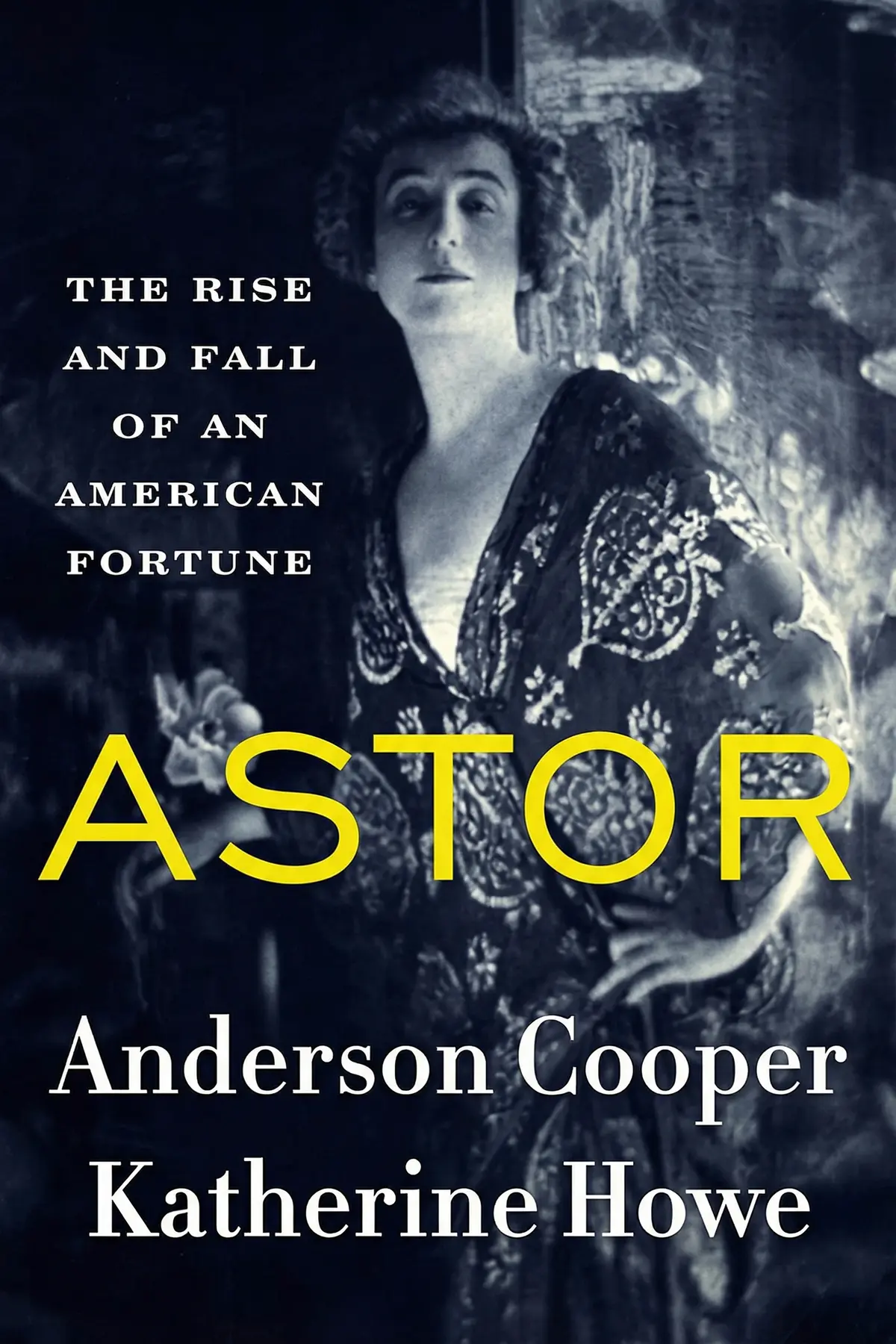
A sweeping exploration of the Astor family’s rise from fur trading to real estate dominance, detailing how America’s first great fortune was built, protected, and eventually lost over two centuries.
1 min 22 sec
When we think of the great American fortunes, we often imagine glass skyscrapers and tech empires. But long before the modern era of billionaires, there was one name that defined the very concept of wealth in the United States: the Astors. This is not just a story of money, but a saga of how a single immigrant’s ambition transformed the landscape of New York City and established the country’s first true dynasty. For over two centuries, the Astor name was synonymous with power, exclusivity, and the kind of influence that could open any door.
Yet, as we will explore, the trajectory of this family serves as a profound mirror to the American experience itself. It begins with the grit of the frontier and the shrewdness of early trade, peaks in the opulence of the Gilded Age, and ultimately descends into a series of tragic missteps and public scandals. What does it take to build an empire that lasts two hundred years, and what causes such a structure to finally crumble? As we move through the chapters of this family’s history, we’ll see how the Astors shaped the social and physical foundations of New York, only to find themselves becoming relics of a world that no longer had a place for them. This journey through their rise and fall offers a fascinating look at the fragile nature of legacy and the relentless passage of time.
2 min 10 sec
Discover how a penniless German immigrant transformed a fascination with beaver pelts into a multi-million dollar real estate empire that rivaled the federal government’s wealth.
2 min 01 sec
Follow the expansion of the family business as the second and third generations traded frontier risks for the steady power of Manhattan real estate dominance.
2 min 06 sec
Learn how Caroline Astor used her immense wealth to construct a rigid social hierarchy, famously known as The 400, that defined American aristocracy.
2 min 05 sec
Witness the birth of the world’s most famous hotel, arising from a bitter family feud to become a symbol of modern hospitality and democratic elegance.
2 min 03 sec
Explore the pivotal moments of tragedy and scandal that began to chip away at the family’s impenetrable armor during the early 20th century.
2 min 16 sec
Examine the tragic final chapter of the Astor story, where philanthropy met elder abuse and a centuries-old fortune finally ran dry.
1 min 25 sec
The saga of the Astor family is a profound narrative of American ambition that spanned over two centuries, marking the evolution of the United States from a frontier nation to a global power. It is a story that began with a single immigrant’s vision and ended with the quiet disappearance of a name that once ruled New York. We’ve seen how John Jacob Astor built a fortune on the literal ground of Manhattan, how his descendants turned that wealth into a social empire, and how the Waldorf-Astoria became a monument to both family pride and public progress.
But the overarching lesson of the Astor throughline is one of impermanence. The very factors that made them successful—exclusivity, massive land holdings, and rigid social control—eventually became the things that isolated them from a changing, more democratic world. Their decline reminds us that no empire, no matter how vast, is immune to the forces of cultural shifts, economic change, and internal strife. Today, the Astor name survives mostly in the names of streets, neighborhoods, and buildings, serving as a ghostly reminder of a time when a single family could define the height of American society. As we reflect on their journey, we are left with a cautionary tale about the pursuit of legacy and the inevitable reality that even the most glittering dynasties must eventually fade into history, leaving only the city they helped build behind them.
This narrative traces the multi-generational journey of the Astor family, beginning with John Jacob Astor’s arrival in America and his savvy transition from the fur trade to Manhattan real estate. It offers a front-row seat to the creation of the Gilded Age and the rigid social structures that defined New York’s elite for decades. The book promises to reveal the inner workings of a dynasty that shaped the American landscape, showing how wealth is both a builder of legacies and a catalyst for internal decay. Listeners will discover the stories behind iconic landmarks like the Waldorf-Astoria and the tragic figures who eventually saw one of the world's most significant fortunes disappear through a combination of cultural shifts and personal scandals.
Anderson Cooper is an American political commentator, broadcast journalist, and author of several works of historical non-fiction and memoirs, including Vanderbilt: The Rise and Fall of An American Dynasty, Dispatches from the Edge, and The Rainbow Comes and Goes. Katherine Howe is a New York Times bestselling author of historical fiction and non-fiction who has won numerous awards, including the 2015 Massachusetts Book Award for Young Adult Fiction. She co-authored Vanderbilt: The Rise and Fall of An American Dynasty and edited The Penguin Book of Witches.
Listeners find this work highly engaging and skillfully composed, praising its rich historical detail and extensive research. The narrative earns high marks; specifically, one listener enjoyed the way different branches of the Astor family tree are woven together, while another characterized the account as a harsh chronicle of rising from poverty to wealth and then falling back again. They appreciate the exploration of the family's legacy, with one person highlighting the insight into how fortune impacts descendants over time, even if some feel the progression of the book can be sluggish at points.
This book is a sweeping, brutal examination of how an American dynasty is forged and then eventually squandered. Cooper and Howe do a fantastic job tracing the lineage from the first John Jacob Astor’s grit in the fur trade to the tragic legal battles of Brooke Astor’s final years. It is a classic rags-to-riches-to-rags story that feels deeply researched. I found the details about early Manhattan real estate particularly fascinating, as it shows how the family essentially built New York City. While some readers might find the jumping timelines a bit distracting, I felt it added a layer of historical context that kept the narrative moving. To be fair, the family members are often quite unlikable, but their pathology regarding wealth is what makes the book so hard to put down. It’s an entertaining, well-written look at how extreme money can warp a person's character over several generations.
Show moreAfter hearing Anderson Cooper discuss this on his podcast, I was curious to see if he could maintain a journalistic distance from such a wealthy legacy. He and Howe have crafted a masterful narrative that is both entertaining and deeply cynical about the American Dream. The story of John Jacob Astor’s rise from a German butcher's son to the richest man in America is legendary, but the authors are careful to show the human cost. The descriptions of the 19th-century slums are eye-opening and gut-wrenching. It’s a brutal tale of how wealth affects people through the generations, leading to isolation and eventually, the dissolution of the entire fortune. I couldn't put it down. Every chapter felt like a new revelation about the dark side of the Gilded Age. This is easily one of the best family biographies I’ve read in years, despite the family themselves being largely unlikable.
Show moreThe chapter on the 19th-century New York tenements provides an eye-opening look at the misery that funded the Astor's extravagant lifestyles. I’ve always been fascinated by the Gilded Age, and this book delivers the goods on the social rivalries and the sheer scale of the family's wealth. It is a fascinating picture of a dynasty that eventually vanished. I loved the details about 'The' Mrs. Astor and her quest to define American society, even if she seemed incredibly cold. The book is well-paced and the research feels solid throughout. It’s rare to find a history book that reads this much like a novel. I highly recommend it to anyone who enjoys stories about the rise and fall of powerful families. It is a poignant reminder that money can buy mansions and titles, but it certainly can't buy happiness or a functional family.
Show moreEver wonder how much work it actually takes to skin a beaver pelt? The early chapters of this book dive deep into the smells and blood of the fur trade that started it all. It’s a stark contrast to the later chapters filled with jewels and yachts. I appreciated the depth of information regarding the New York City tenements, as it reminds us that this fortune was built on the misery of the poor. The authors aren't afraid to call out the 'slumlord' behavior of the early Astors, which adds necessary grit to the story. My only minor gripe is the chapter on the movie versions of the Titanic sinking; it felt like filler. Look, if you want a book that balances backstairs gossip with serious economic history, this is definitely worth your time. Cooper’s narration in the audiobook version is also top-notch, adding a personal touch to the historical weight.
Show morePicked this up because I was curious about the Gilded Age, and I found the comparison between the Astors and the Vanderbilts quite illuminating. The book does an excellent job showing how the Astors were 'old money' snobs who looked down on everyone, despite their own patriarch being a rugged immigrant. The research is thorough, especially when discussing the family’s massive real estate holdings. I liked how the authors computed the fortunes into today’s dollars because it really puts that level of wealth into perspective. Some of the side stories, like the one about the gay bar at the Astor Hotel, were unexpected but actually quite interesting additions to the social history of the city. Personally, I found the pacing a little slow in the middle, but the tragic ending involving Anthony Marshall and Brooke Astor made for a compelling final act. It’s a solid 4-star read for history buffs.
Show moreFinally got around to finishing this, and while the early chapters on the fur trade were gripping, the later sections felt a bit rushed. The authors do a great job of intertwining various Astor family narratives, showing how each generation tried—and often failed—to live up to the name. I actually enjoyed the 'trivia' like the story of the cat burglar at the Waldorf Astoria, though I can see why some might find it a distraction. To be fair, the book is at its best when it focuses on the psychological toll of inheriting that much money. The ending with Brooke Astor is particularly heartbreaking and serves as a cautionary tale. My only criticism is that the tone sometimes shifts from serious history to celebrity gossip a bit too abruptly. Overall, it’s a well-written and engaging look at a family that defined New York for over a century.
Show moreFrankly, the authors seem a bit too obsessed with the idea that the Astors were 'misanthropes,' but the evidence they provide is pretty convincing. This book is a deep dive into a family that had everything and yet seemed to enjoy very little of it. I found the section on the Astor Hotel bar and its importance to gay history to be a really thoughtful and unexpected inclusion. It showed a different side of the family’s legacy that I hadn't heard before. While the jumping between centuries can be a little confusing at first, the themes of greed and legacy tie everything together nicely. The writing style is engaging and doesn't get bogged down in too much dry data, despite the thorough research. It’s a compelling look at the dark side of New York’s elite history. I definitely plan on reading Cooper’s other work after this.
Show moreWow, the sheer level of greed on display in these pages is enough to make anyone’s skin crawl. The Astors were not a kind family, and Cooper doesn't try to paint them as such, which I appreciated. However, the book jumps all over the place chronologically, making it hard to keep track of which William or John Jacob we are talking about. I found the chapter on the Titanic to be a bit repetitive since that story has been told a thousand times before. Frankly, I would have preferred more focus on the actual business dealings rather than the socialite gossip. The writing is accessible and clear, but it lacks the 'punch' I expected from such a high-profile release. It’s an okay overview if you know nothing about the family, but seasoned historians might find it a bit superficial in its analysis of their economic impact.
Show moreNot what I expected, as the book manages to be both a piece of historical research and a collection of somewhat disjointed anecdotes. I found the sections on the family's 'philanthropy' to be quite interesting, especially since much of it was done to clean up a very dirty reputation. But did we really need a comparison to the Kardashians? That felt a bit forced and unnecessary for a book of this stature. The writing is clear, and Cooper’s voice definitely comes through, though sometimes I wondered if his own Vanderbilt connections biased his view of the Astor's 'miserly' nature. It's a quick read and definitely entertaining, but it feels a bit 'history-lite' at times. If you're looking for a scholarly deep dive, this might not be it, but for a plane ride or a weekend read, it's perfectly fine.
Show moreAs someone who appreciates deep history, I felt the narrative structure here was incredibly messy and often drifted into unnecessary tangents. Why was there an entire chapter dedicated to Mary Astor, the actress, when she isn't even part of the family? It felt like the authors were just trying to fill pages with trivia rather than sticking to a cohesive biography. Anderson Cooper is a fine reporter, but he struggles here to keep a consistent tone. One minute we are learning about the Astor Place Riot, and the next he is making odd comparisons to the Kardashians. Truth is, the book feels like a collection of magazine articles rather than a unified history. I wanted to love this after enjoying 'Vanderbilt,' but this one just didn't have the same emotional resonance or tight editing. It’s a bit of a disappointment for such a fascinating subject.
Show moreBen Macintyre
Michael Axworthy
Tom Standage

Jacinda Ardern
Ron Chernow
James Comey
Philip Freeman
AUDIO SUMMARY AVAILABLE
Get the key ideas from Astor by Anderson Cooper, plus 5,000+ more titles in English and Thai.







