
26 min 42 sec
Back Channel to Cuba: The Hidden History of Negotiations Between Washington and Havana
Explore the secret history of diplomacy between the United States and Cuba. This account reveals the hidden back-channel communications that persisted through decades of public hostility and Cold War tensions.
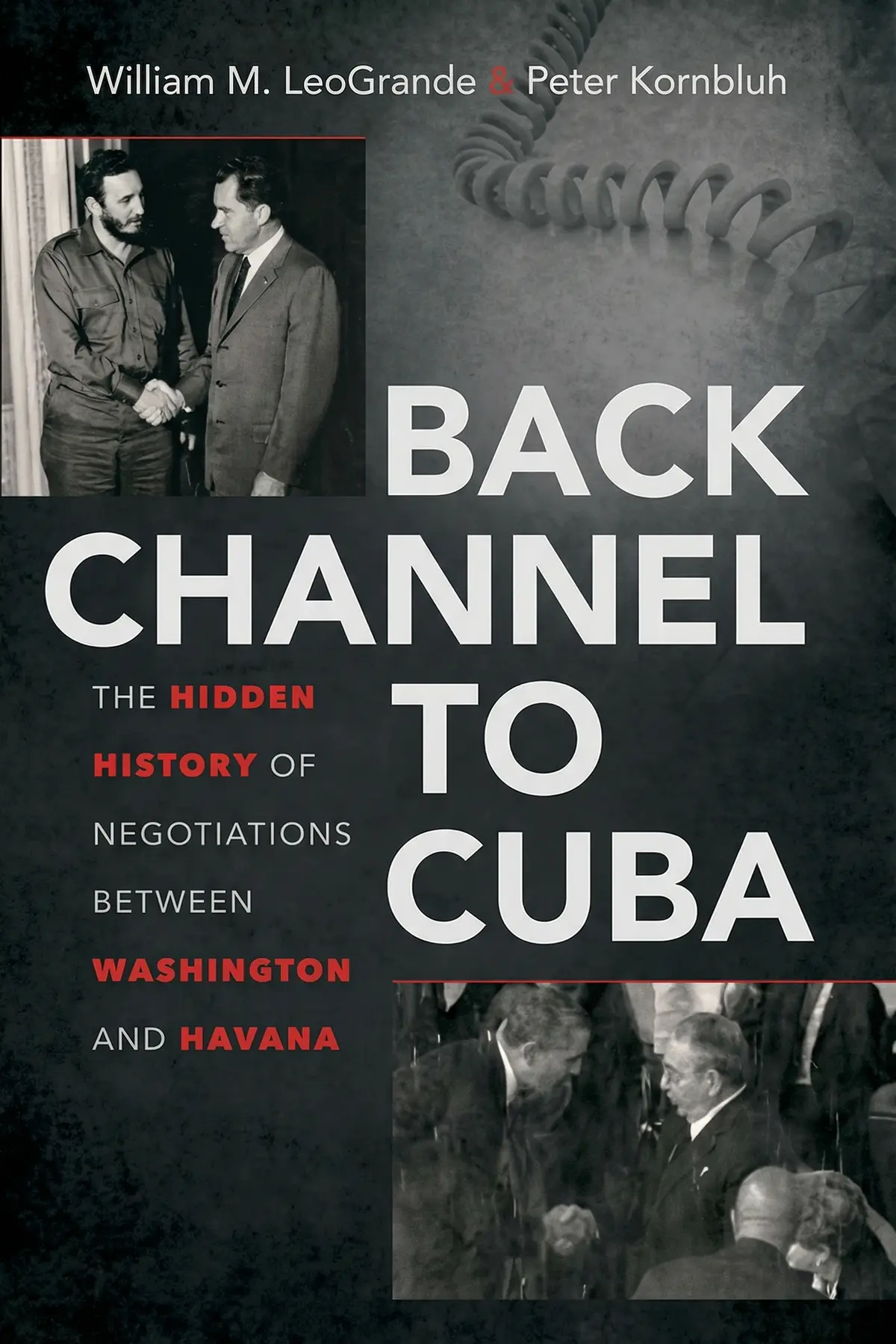
Table of Content
1. Introduction
1 min 32 sec
Imagine a relationship defined by decades of silence, punctuated only by occasional outbursts of public vitriol and the looming shadow of global catastrophe. For over fifty years, this was the reality for the United States and its neighbor, Cuba. Located just a short distance from the Florida coast, the island nation has occupied a disproportionately large space in the American political consciousness. Most people are familiar with the headlines: the Bay of Pigs, the Cuban Missile Crisis, and the long-standing trade embargo. But there is a hidden layer to this history that rarely makes the evening news.
While the public saw a frozen conflict, the private reality was often far more fluid. Behind the closed doors of international embassies and through the work of unofficial intermediaries, a persistent stream of communication—a back channel—remained open. These secret dialogues were sometimes initiated by presidents and at other times by adventurous journalists or private citizens. They were used to exchange prisoners, de-escalate military tensions, and explore the possibility of a permanent peace.
In this journey through the hidden annals of diplomacy, we will explore the evolution of this complex relationship. We will see how shifting priorities in Washington and Havana led to moments of profound hope and crushing disappointment. By looking past the political theater, we can understand the strategic logic that drove both nations to talk in secret even when they refused to shake hands in public. This is the story of how two neighbors, trapped in the orbit of the Cold War, navigated a path through fifty years of enmity.
2. The Roots of Revolution and the End of Allyship
2 min 07 sec
Discover how the 1959 revolution shattered the existing order between Washington and Havana, turning a long-standing ally into a source of deep anxiety for the United States.
3. The Collapse of Formal Diplomacy under Eisenhower
2 min 05 sec
Explore the rapid deterioration of relations as Cold War tensions and economic retaliation pushed Cuba into the arms of the Soviet Union.
4. The Kennedy Paradox: Covert War and Secret Peace
1 min 48 sec
Uncover the dual-track strategy of the Kennedy administration, where public aggression masked a hidden search for reconciliation.
5. The Negotiator: James Donovan and the Prisoner Crisis
1 min 57 sec
Learn how a private lawyer became the most important diplomat in the US-Cuba relationship, achieving what formal government could not.
6. The Journalist as Envoy: Lisa Howard’s Secret Mission
1 min 55 sec
See how a pioneering female journalist used her access to Fidel Castro to create a unique and effective channel for peace.
7. The Johnson and Nixon Freeze: A Turn Toward Hardline Policies
1 min 56 sec
Observe how domestic politics and the fear of appearing weak led to a long period of diplomatic stagnation and increased hostility.
8. Kissinger’s Realpolitik: Searching for a Strategic Opening
1 min 54 sec
Witness the shift toward pragmatic diplomacy as Henry Kissinger attempted to apply his global strategy to the Cuban problem.
9. The Carter Years: Human Rights and the Mariel Boatlift
1 min 58 sec
Follow Jimmy Carter’s attempt to prioritize human rights in diplomacy and the unforeseen crisis that derailed his efforts.
10. The Reagan and Bush Era: Waiting for the Collapse
2 min 01 sec
See how the resurgence of Cold War rhetoric and the eventual fall of the Soviet Union shaped a policy of patient hostility.
11. Domestic Politics and the Clinton Standoff
2 min 03 sec
Analyze how the influence of the Cuban-American vote in Florida transformed Cuba policy from a foreign concern into a domestic battle.
12. The George W. Bush Hardline and the Rise of Raul Castro
1 min 54 sec
Examine the return to an uncompromising stance under the Bush administration and the transition of power within the Cuban leadership.
13. The Obama Opening: A New Philosophy of Engagement
2 min 01 sec
Follow the historic shift toward normalization as the Obama administration moved away from isolation and toward a policy of direct dialogue.
14. Conclusion
1 min 31 sec
The history of the secret negotiations between the United States and Cuba is a testament to the enduring power of diplomacy, even in the most hostile of circumstances. For over half a century, the public face of the relationship was one of uncompromising enmity, yet the private reality was a constant, if often fragile, search for common ground. This hidden history reveals that the ‘back channel’ was not just a secondary tool of foreign policy; it was often the only thing preventing a cold war from turning into a hot one.
We have seen how individual initiative—from the tireless advocacy of James Donovan and Lisa Howard to the secret missions of Gabriel Garcia Marquez—often paved the way for presidential action. We have also seen how domestic politics, particularly the influence of the Florida voting bloc, repeatedly acted as a brake on the prospects for peace. The story of Washington and Havana is a reminder that foreign policy is never conducted in a vacuum; it is always a reflection of internal pressures, personal friendships, and the lingering ghosts of history.
The ultimate lesson of this fifty-year saga is that dialogue is not a sign of weakness, but a tool of necessity. Even when two nations seem fundamentally irreconcilable, the existence of a channel for communication provides a safety valve for crisis and a seedbed for eventual reconciliation. As the relationship continues to evolve in a post-Castro world, the lessons of the back channel remain as relevant as ever: when you cannot change your neighbor, you must find a way to live with them, and that process always begins with a conversation.
About this book
What is this book about?
For more than half a century, the relationship between Washington and Havana has been defined by public animosity, economic sanctions, and the threat of nuclear war. However, beneath the surface of this icy stalemate, a different story was unfolding. Back Channel to Cuba uncovers the clandestine world of secret negotiations, private messengers, and unofficial diplomats who worked tirelessly to bridge the gap between two ideological enemies. From the early days of the 1959 revolution to the tentative steps toward normalization under the Obama administration, this narrative tracks how every U.S. president handled the Cuban challenge. You will learn about the private deals that resolved hostage crises, the missed opportunities for peace during the Kennedy and Clinton years, and the domestic political pressures that often dictated foreign policy. This is a story of how even the bitterest of rivals find ways to talk when the stakes are high enough.
Book Information
About the Author
William M. Leogrande
William M. LeoGrande is an author and professor at the School of Public Affairs at American University. His other books include Our Own Backyard: The United States in Central America, 1977-1992. Peter Kornbluh is the director of the National Security Archive’s Cuba Documentation Project. His other books include The Pinochet File: A Declassified Dossier on Atrocity and Accountability.
Ratings & Reviews
Ratings at a glance
What people think
Listeners find the book thoroughly researched and educational, with one review calling it a must-read for citizens of the Americas. The narrative receives positive marks, with one listener describing it as a fascinating tale of negotiations.
Top reviews
Gift
This book is an absolute masterclass in archival research and historical storytelling. I was genuinely blown away by the level of detail regarding the secret communications that occurred right under our noses for decades. While many history books feel like a collection of dry dates, LeoGrande and Kornbluh manage to make the back-and-forth between Havana and DC feel like a high-stakes spy thriller. I particularly enjoyed learning about the Brazilian ambassador's role during the Kennedy years, which was a revelation to me. To be fair, it is a long read, but the insights into how Kissinger operated behind Nixon’s back are worth every page. It really makes you rethink everything you thought you knew about the Cold War in the Caribbean.
Show moreTen
Finally got around to finishing this massive tome and it is easily the most informative book on Latin American policy I have ever encountered. The storytelling is top-notch, especially when detailing the unlikely messengers like James Donovan and various journalists who kept the lines open. It is a fascinating tale of missed opportunities and the heavy cost of political pride on both sides of the Florida Straits. I was impressed by how the authors balanced the macro-level geopolitics with the personal stories of the negotiators involved. Every citizen of the Americas should probably read this to understand the roots of our current foreign policy challenges. It really highlights how much happens behind closed doors while the public is fed a different narrative.
Show moreLillian
The chapter on Cuba’s intervention in Angola and how it stalled negotiations with the U.S. was a standout moment for me. It perfectly captured the disconnect between the two nations, where the U.S. demanded preconditions that the Cubans were never going to meet. LeoGrande and Kornbluh have clearly spent years digging through the archives to bring these "back channel" conversations to light for the first time. In my experience, books on diplomacy can be hit or miss, but this one hits the mark by focusing on the human element of statecraft. The authors show that even in times of extreme tension, there were always individuals trying to find a path toward peace. It’s a thick book, but the historical payoff is immense.
Show moreSuda
Truth is, I didn't realize how much the Vatican and the Pope were involved in modern diplomacy until I reached the final chapters of this book. This is a must-read for anyone interested in the inner workings of the State Department and the nuances of international back-channels. The authors do a great job of explaining the "why" behind the "what," moving beyond simple headlines to the actual motivations of the players involved. It is an incredibly timely work that sheds light on a relationship that has been defined by hostility for far too long. Even though it's packed with information, the narrative remains compelling enough to keep you turning the pages. I came away with a much deeper appreciation for the difficulty of the diplomat's job.
Show moreFelix
After hearing so many conflicting reports about U.S.-Cuba policy on the news, I wanted to go back to the source and understand the full history. This book delivered exactly what I was looking for by starting with the revolution in 1959 and carrying through to the modern day. The authors are willing to call out both sides for their missteps, whether it was the U.S. demands or the Cuban interventions that shut down talks. It’s a fascinating tale of what could have been if only both sides had been a little more flexible at the right moments. Not gonna lie, some parts are heavy on the details of trade and migration, but those details are necessary to see the full picture. Truly an impressive piece of scholarship.
Show moreGiulia
As someone who enjoys diplomatic history, I found this to be an incredibly dense yet rewarding exploration of U.S.-Cuba relations. The authors do a fantastic job of illustrating how we ended up in a fifty-year stalemate despite numerous attempts to break the ice. It is fascinating to see how close both sides came to normalization during the Carter and Clinton years, only for domestic politics or international incidents to derail the progress. Personally, I think the writing can get a bit bogged down in government memos and bureaucratic jargon at times. However, the sheer volume of information provided here is unparalleled for anyone wanting a deep dive into the subject. It definitely requires some patience to get through the middle sections.
Show moreAisha
Ever wonder why it took over five decades for the United States to finally start talking to a neighbor only ninety miles away? This book provides a comprehensive answer by tracing the hidden diplomatic efforts of every president from Eisenhower to Obama. The authors highlight a frustrating cycle where one small step forward is almost always followed by two massive steps back due to mistrust. I was especially interested in the "lessons learned" section at the end, which applies these diplomatic failures to other global conflicts. Look, it’s not exactly a light beach read, but it is an essential text for understanding the complexity of international relations. The detail on the shoot-down of civilian aircraft was particularly sobering.
Show moreVarinee
Picked this up after the announcement of the 2014 normalization and it really put the entire historical context into perspective. It shows that Obama’s move wasn't a sudden shift but the culmination of decades of stop-and-start efforts by almost every administration. Gotta say, the U.S. doesn't always come off looking great here, as we often moved the goalposts just when a breakthrough seemed possible. My only real gripe is that the prose can be a bit dry and academic in places, which makes it feel like a slog during the Reagan years. Still, the information about Henry Kissinger’s secret initiatives is absolutely wild and worth the price of admission alone. It’s a solid addition to any history buff’s library.
Show moreBird
Not what I expected given the high praise this usually receives in academic circles. While the early chapters on the Eisenhower and Kennedy administrations are genuinely gripping and well-sourced, the narrative feels increasingly slanted as it approaches the modern era. Frankly, the authors seem to have a very specific agenda regarding the normalization of relations, often painting the Cuban government’s actions in a much softer light than our own. I found the section on the Elian Gonzalez case to be particularly one-sided, which made me question the objectivity of the later chapters. It’s still a valuable resource for the "secret" history aspect, but you have to be prepared for a heavy partisan lean.
Show moreWitthaya
Wow, this was a difficult one to get through and I struggled to stay engaged past the first hundred pages. While the research is clearly there, the book is incredibly dry and reads more like a collection of government reports than a cohesive narrative. It felt like a massive slog to uncover the actual "secrets" promised in the title, and the pacing is painfully slow. To be fair, if you are a professional historian you might love the minutiae, but for a casual reader, it’s just too much. I also felt the authors were too sympathetic to the Castro regime, which colored the entire experience for me in a negative way. I ended up skimming the last few chapters just to be done with it.
Show moreReaders also enjoyed

A Year in the Life of William Shakespeare: 1599
James Shapiro
A Warning
Miles Taylor
Agent Sonya: The Spy Next Door
Ben Macintyre
1491: New Revelations of the Americas Before Columbus
Charles C. Mann
Alexander Hamilton
Ron Chernow
1929: Inside the Greatest Crash in Wall Street History--and How It
Andrew Ross Sorkin
Alexander the Great
Philip Freeman
AUDIO SUMMARY AVAILABLE
Listen to Back Channel to Cuba in 15 minutes
Get the key ideas from Back Channel to Cuba by William M. Leogrande, plus 5,000+ more titles in English and Thai.
- 5,000+ titles
- Listen as much as you want
- 7-day free trial
- Cancel anytime







