
Psychopathology Of Everyday Life
Sigmund Freud
Explore Sigmund Freud’s groundbreaking shift in psychoanalysis as he moves beyond the simple pursuit of happiness to uncover a hidden, darker instinct within the human psyche that yearns for total stillness.
1 min 00 sec
Most of us like to think of ourselves as rational seekers of happiness. We assume that every choice we make, from the food we eat to the careers we pursue, is designed to maximize our comfort and minimize our suffering. For a long time, this was the bedrock of psychological theory—a concept known as the pleasure principle. But as Sigmund Freud looked deeper into the human experience, he began to notice cracks in this foundation. He saw people who repeatedly returned to painful memories and children who played games centered on loss.
What if our primary motivation isn’t just about finding joy? In this exploration of Beyond the Pleasure Principle, we dive into one of Freud’s most challenging and controversial ideas: the notion that we possess a deep-seated instinct to return to a state of total inactivity. This throughline suggests that our lives are defined by a constant struggle between the urge to move forward and a hidden, subconscious pull toward the stillness of the past.
1 min 22 sec
Discover why the human drive for satisfaction doesn’t explain all our actions and how Freud identified behaviors that seem to defy our natural survival instincts.
1 min 27 sec
Explore a simple childhood game that reveals a complex psychological mechanism used to turn passive suffering into active control.
1 min 29 sec
What if the ultimate goal of life is not growth, but a return to the absolute peace that existed before we were born?
1 min 21 sec
Learn how the constant friction between our drive to live and our drive for rest creates the unique rhythm of the human experience.
1 min 09 sec
Sigmund Freud’s journey beyond the pleasure principle fundamentally changed the landscape of psychoanalysis. By acknowledging that we are not solely driven by the search for happiness, he opened the door to a more nuanced understanding of trauma, habit, and the human condition. We are not just seekers of joy; we are also masters of our own pain, constantly trying to resolve the tensions of existence through repetition and routine.
The throughline of this work reminds us that the pull toward stillness is just as natural as the urge to grow. While the idea of a ‘death drive’ might seem grim at first glance, it actually offers a profound perspective on our need for balance. It teaches us that our desire for peace, our attachment to the familiar, and even our struggles with the past are all parts of a deep, biological rhythm. As you move forward, consider the ways these two forces—the drive to live and the drive for rest—interact in your own life. Recognizing this balance might just be the key to understanding your own most mysterious motivations.
This summary explores one of the most provocative shifts in psychological history. For years, the prevailing belief was that human beings were primarily motivated by the pursuit of pleasure and the avoidance of pain. However, Sigmund Freud noticed patterns of behavior that this theory couldn’t explain—moments where people seemed to intentionally revisit trauma or seek out repetitive, distressing experiences. Beyond the Pleasure Principle introduces the concept of the death drive, a counter-instinct to our drive for life. It suggests that deep within our biological makeup is a pull toward the inorganic, a desire to return to a state of absolute equilibrium and lack of tension. By understanding this internal tug-of-war between the drive for life and the drive for rest, readers gain a new lens through which to view human habits, resilience, and the mysterious nature of the subconscious mind.
Sigmund Freud was a pioneering Austrian neuropsychiatrist who became one of the most influential figures in modern thought by developing the field of psychoanalysis. He is famous for his revolutionary theories regarding the unconscious mind and the various defense mechanisms humans use to navigate reality. His extensive body of work includes landmark titles such as The Interpretation of Dreams and Civilization and Its Discontents, which continue to shape psychology and culture today.
Sigmund Freud
Listeners view Beyond the Pleasure Principle as a seminal and layered text that debuts the controversial "death drive" in addition to the pleasure principle. While some listeners believe the writing can be speculative or dense, they respect Freud’s talent for weaving together psychology, philosophy, and biology. Moreover, they appreciate the volume's legacy in defining repetition compulsion, with one listener remarking that it serves as "indubitable proof" of Freud’s intellectual depth. They also remark on the book’s status as a timeless classic, as one listener underlines its "immense historical value" for anyone interested in the study of human behavior.
This foundational text is a wild ride through the darkest corners of the human psyche. Freud moves with an almost frantic pace from clinical observation to grand philosophical speculation, making it a demanding yet rewarding experience. I found his introduction of 'Thanatos' to be incredibly provocative, even if the biological justifications feel a bit dated by modern standards. You have to appreciate how he manages to link the trauma of war veterans to the simple games of children. It’s indubitable proof of his genius, even when he’s arguably wrong. Not gonna lie, some sections required three readings just to grasp the core logic. However, the sheer depth of his thinking on the compulsion to repeat traumatic events remains unparalleled in early psychoanalytic literature. It’s essential for anyone who wants to understand why we aren't just driven by simple pleasure.
Show moreWow, the way Freud bridges the gap between biological entropy and human desire in these pages is absolutely staggering. He basically upends his own life's work by suggesting that the pleasure principle isn't the end-all-be-all of our existence. The writing is surprisingly poetic in parts, despite the clinical subject matter. He’s dealing with the heaviest themes imaginable—war, trauma, and the literal end of life—and he does it with a cold, analytical precision that is strangely beautiful. Gotta say, it’s one of the few books that makes you rethink your entire motivation for living. It’s a difficult, dense text that requires a lot of focus, but the intellectual payoff is immense. This is Freud at his most daring and least "safe."
Show moreFinally got around to this classic and it’s much more poetic than I anticipated. Freud isn't just a doctor here; he’s a philosopher grappling with the meaning of life and its inevitable conclusion. The idea that we are driven to return to a state of peace—even if that peace is the inorganic stillness of death—is haunting. The book is short, but it moves so quickly through complex ideas like transference neurosis and the history of organisms that it feels much longer. Truth is, it’s a foundational piece of literature that transcends psychology. Even if you don't agree with his conclusions, the way he frames the conflict between our creative and destructive impulses is masterly. It’s a challenging read that demands your full attention, but it’s worth every second.
Show moreEver wonder why we keep making the same self-destructive mistakes over and over again? Freud tackles this head-on by suggesting that there is a drive within us that seeks a return to an inorganic state. This concept of the 'death instinct' is a total game-changer for how we view human motivation beyond mere pleasure-seeking. The writing style is dense, and his tangents into biology and entropy can feel a little bit like a detour into a different book entirely. Truth is, it’s not the easiest read in his corpus, but the insights into repetition compulsion are worth the effort. I particularly liked the analysis of how dreams attempt to master past traumas. It bridges the gap between the poetic and the scientific in a way few other writers could manage during that era.
Show moreThe chapter on the "fort-da" game is actually brilliant and serves as a perfect entry point into Freud’s more complex theories. It’s fascinating to watch him observe a toddler’s play and derive a universal principle about the mastery of loss and the compulsion to repeat. While the book later descends into some pretty heavy metaphysical speculation regarding Eros and Thanatos, that initial spark of clinical observation remains grounded. I did find the transitions between psychology and biology a bit jarring at times. In my experience, you have to read this with a grain of salt regarding his scientific "proofs." Still, the way he challenges the supremacy of the pleasure principle is revolutionary. It’s a slim volume but it packs a massive intellectual punch if you have the patience for it.
Show moreAs someone who has always been fascinated by why we self-sabotage, this book offered some incredibly dark but necessary insights. Freud is at his most speculative here, moving away from the couch and toward a broader view of human existence. The tension between the creative force of Eros and the destructive pull of Thanatos creates a compelling narrative of the human condition. I’ll admit, the middle sections where he talks about the history of the earth and the sun are pretty out there. However, the core concept of the "repetition compulsion" is so visible in everyday life that you can’t help but be impressed. It's a challenging, multi-faceted read that bridges psychology and literary theory. It’s definitely not light reading, but it’s foundational for a reason.
Show moreTo be fair, Freud feels like he’s grasping at straws for a good portion of this essay. He starts with a fascinating premise about why people reenact painful memories, but then he veers off into these wild theories about the origins of life and multicellular organisms. It’s speculative to a fault. I appreciate the historical value and the way it sets the stage for his later work on the ego and id, but it’s a bit of a hot mess structurally. The prose is dry and the logic leaps are occasionally hard to follow without a background in 19th-century biology. Personally, I think the secondary sources on the 'death drive' are often more coherent than the man himself was in this specific text. It’s a foundational work, sure, but it’s definitely not his most polished or convincing effort.
Show moreAfter hearing so much about the "death drive," the actual text is surprisingly abstract and at times quite confusing. Freud is clearly struggling with the limitations of his previous theories here, and the result is a work that feels like a transitional phase. It’s a fascinating look into a genius mind trying to solve a puzzle that doesn't quite fit together yet. The prose is dense, and he spends a lot of time on biological metaphors that haven't aged particularly well. To be honest, it’s more of a philosophical treatise than a psychological one. I liked the focus on how we handle trauma, but I was less sold on the idea that all life inherently seeks to die. It’s a 3-star read because while the ideas are big, the execution is messy and frequently opaque.
Show moreLook, I appreciate the immense historical significance of this work, but the speculative energy is palpable and sometimes overwhelming. It feels like Freud was trying to find a grand unified theory for everything from shell shock to the evolution of cells. Some of it hits the mark—especially the parts about how we recreate traumatic dynamics in adult relationships—but other parts feel like a reach. The "death instinct" is a provocative idea, but his biological justifications are frankly bizarre by today’s standards. It’s a classic for a reason, and it’s indubitable proof of his wide-ranging intellect, but it's a bit of a mess. I’m glad I read it to understand the roots of these terms, but I wouldn't call it an enjoyable experience.
Show moreFrankly, this was a massive slog that didn't quite live up to the hype for me. I was expecting a deep psychological dive into self-destruction, but instead, I got a lot of rambling about protozoa and "vesicles" of living substance. Freud admits himself that he’s being highly speculative, and it shows. The whole "death drive" thing feels like a pessimistic leap that doesn't necessarily follow from his initial observations about trauma. While I see why it's historically significant for the field of psychoanalysis, the actual reading experience was frustratingly abstract. I'm giving it two stars because the early sections on the 'fort-da' game were interesting, but the rest felt like a scientist trying to be a philosopher and failing to be either one convincingly. Maybe skip the source text and just read a summary.
Show more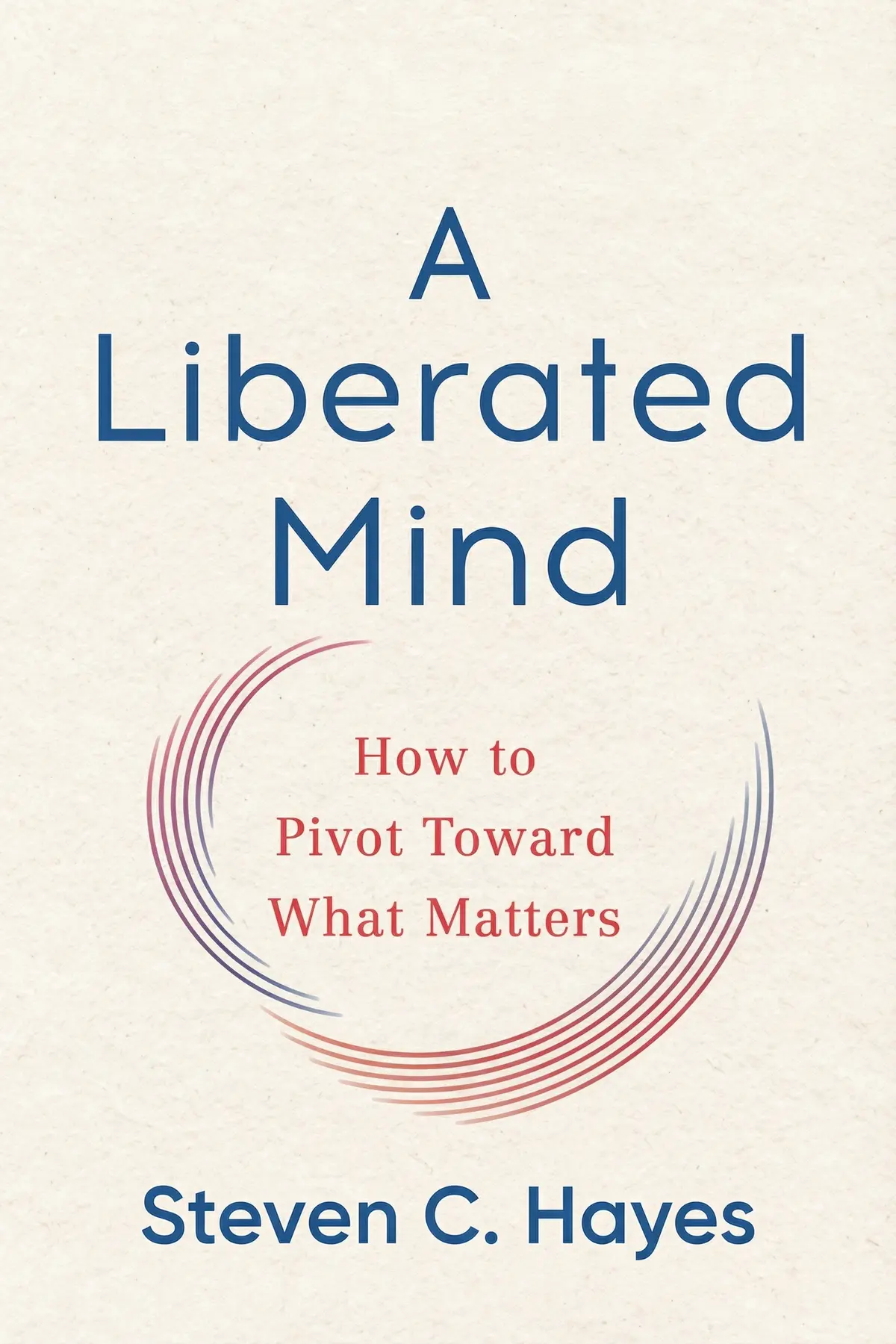
Steven C. Hayes
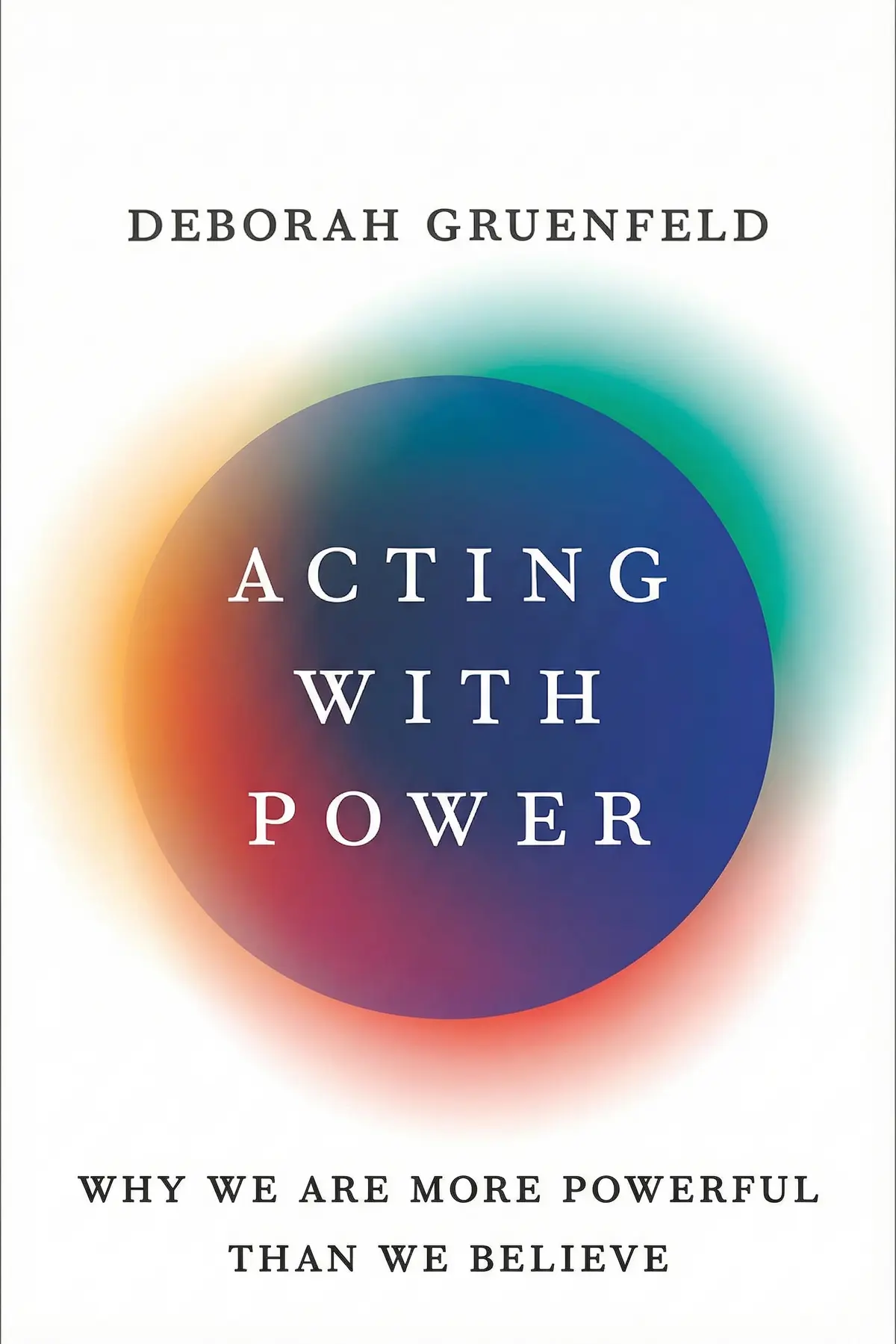
Deborah Gruenfeld
Anthony Pratkanis
Richard Wiseman
AUDIO SUMMARY AVAILABLE
Get the key ideas from Beyond the Pleasure Principle by Sigmund Freud, plus 5,000+ more titles in English and Thai.







