
13 min 51 sec
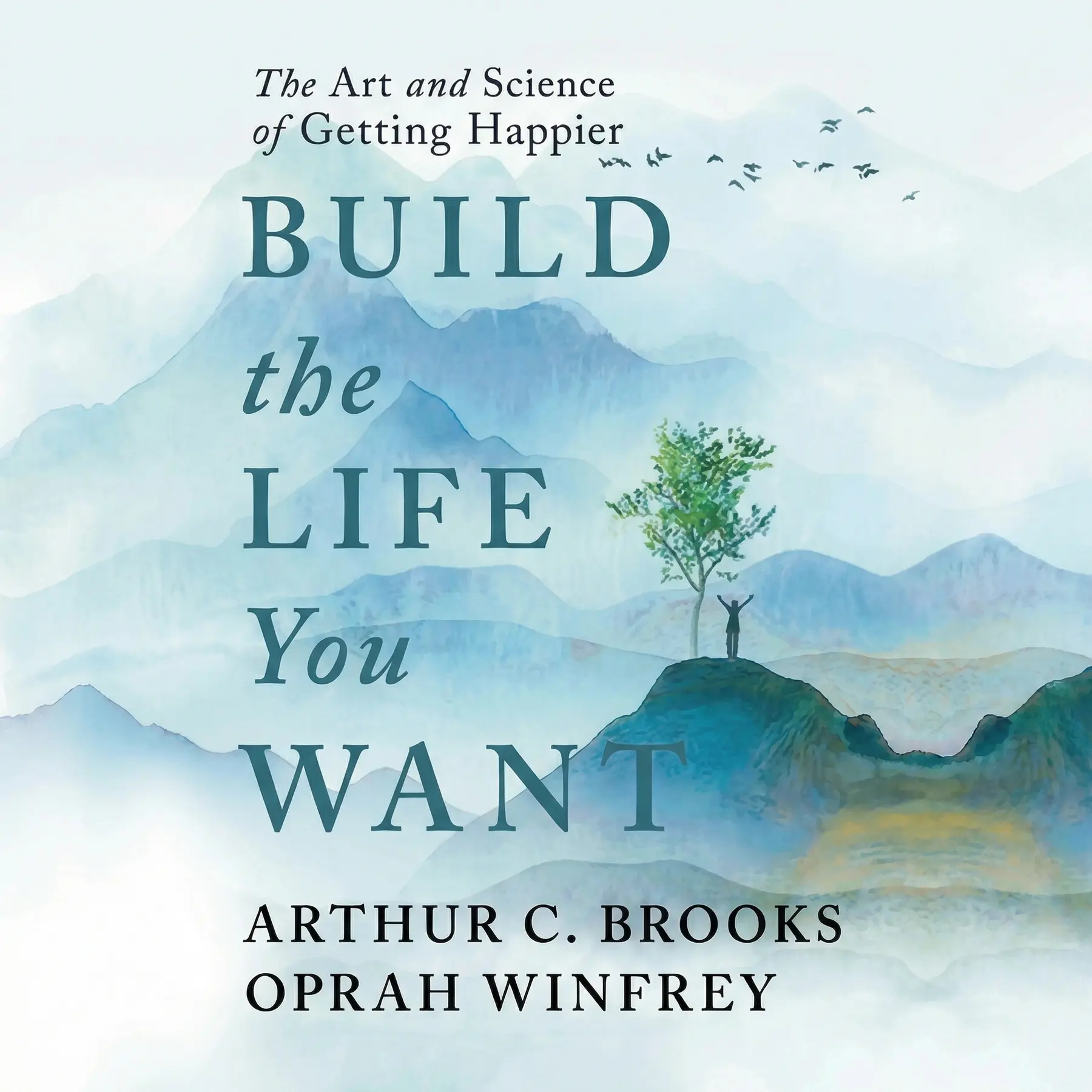
Build the Life You Want: The Art and Science of Getting Happier
Build the Life You Want provides a strategic framework for reclaiming personal happiness. By focusing on emotional self-management and four essential pillars, readers can construct a fulfilling life regardless of external challenges.
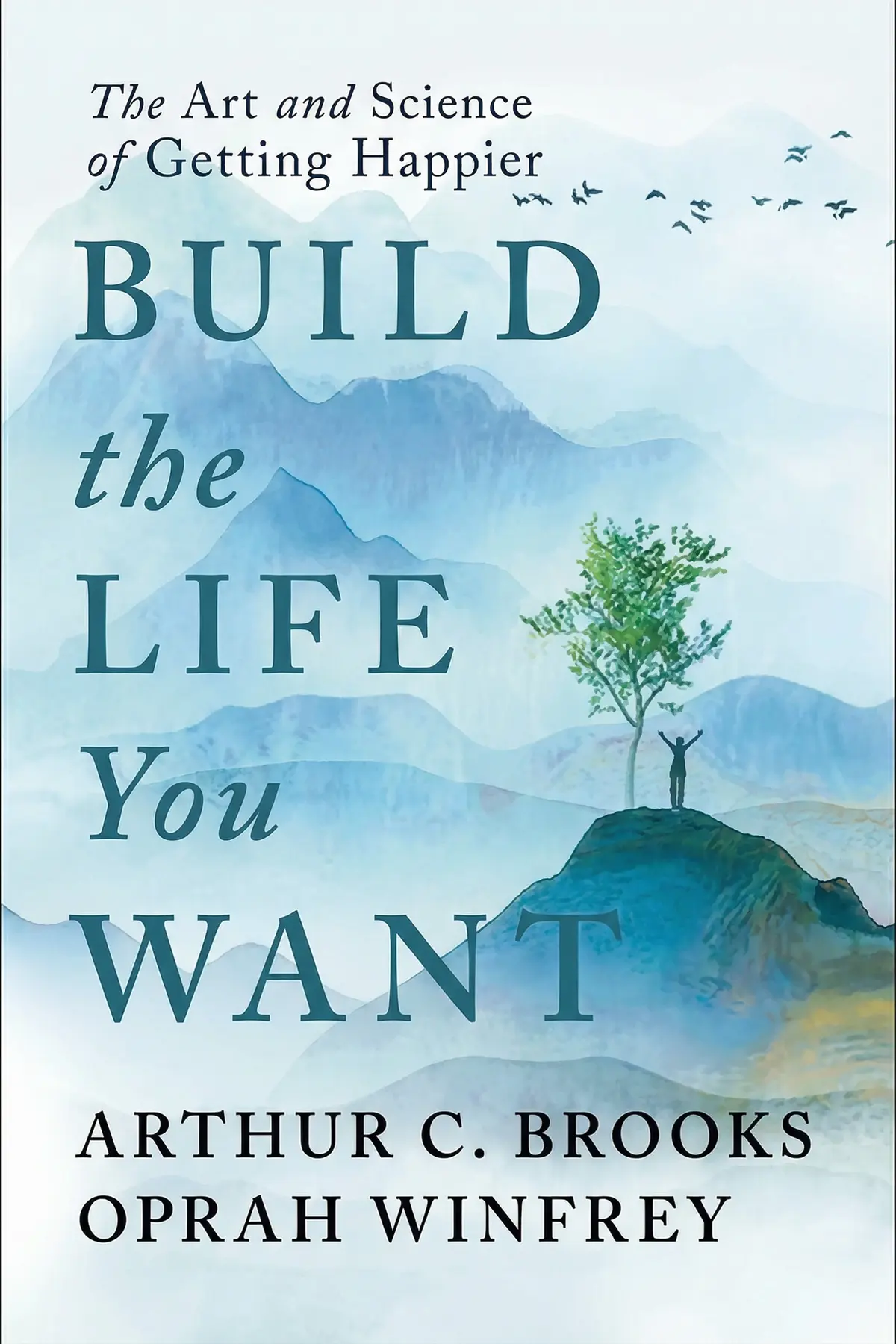
Table of Content
1. Introduction
1 min 42 sec
We often treat happiness like a distant horizon—a place we will finally reach once the promotion comes through, the bank account hits a certain number, or our personal lives finally align with some idealized vision. We tell ourselves that we are just one change away from lasting contentment. But as many of us have discovered, that horizon keeps moving. No matter what we achieve or acquire, the feeling of ‘enough’ remains frustratingly out of reach. We might find ourselves trying to fill that void with distractions, from endless scrolling on our phones to retail therapy, yet the underlying sense of dissatisfaction persists.
The truth is that happiness is not a result of your external environment; it is an internal build. It is not something that happens to you, but something you create through intentional habits and a shift in perspective. To truly live well, we have to stop waiting for life to become perfect and start taking responsibility for how we process our experiences. This shift moves us from a state of passive waiting to active building.
In this exploration, we are going to look at a blueprint for a more fulfilling existence. We will move past the ‘idols’ of wealth, power, and status to focus on what actually moves the needle on human satisfaction. By understanding how to manage our emotional world and by reinforcing the four core pillars of our lives—our families, our friendships, our work, and our sense of the transcendent—we can construct a life that is resilient, meaningful, and genuinely happy. This isn’t about eliminating pain, but about building a structure strong enough to hold joy even when the storms of life are raging. Let’s look at how you can begin this construction project today.
2. Mastering Internal States over External Conditions
2 min 11 sec
Discover why happiness is an internal management project rather than a search for external rewards, and learn the three essential elements of a fulfilling life.
3. Nurturing the Complex Pillar of Family
2 min 05 sec
Learn to navigate the inevitable tensions of domestic life by shifting your focus from avoiding conflict to managing emotional temperatures.
4. Cultivating Deep and Non-Transactional Friendships
2 min 10 sec
Examine the difference between deal-based connections and soul-deep friendships, and why in-person interaction remains irreplaceable for our well-being.
5. Finding Meaning and Earned Success in Work
2 min 00 sec
Shift your perspective on career satisfaction by looking beyond external rewards and focusing on the power of growth and service to others.
6. Expanding Perspective through Spirituality and Awe
2 min 05 sec
Discover how connecting with something larger than yourself can provide a necessary escape from the ego and a deeper sense of universal belonging.
7. Conclusion
1 min 38 sec
Building the life you want is not a project that ends when you reach a certain destination; it is an ongoing practice of intentional living. We have seen that happiness isn’t a gift from the universe or a reward for perfect circumstances. Instead, it is the result of taking radical responsibility for our internal states and our primary relationships. By moving away from the empty pursuit of status and money, and moving toward purpose, enjoyment, and satisfaction, we reclaim our agency.
The four pillars—family, friendship, work, and spirituality—provide the structural support for a resilient and joyful life. Strengthening these pillars doesn’t require us to have a perfect family or a glamorous career. It requires us to communicate better, to seek out deep and non-transactional bonds, to find growth and service in our daily tasks, and to connect with the awe-inspiring world beyond our own egos.
As you move forward, ask yourself which of your pillars needs the most attention right now. Are you neglecting your deepest friendships for the sake of ‘deal’ connections? Is your home life characterized by a cold emotional temperature? Are you letting your work be defined only by your paycheck? Or have you forgotten to look up at the stars and feel the wonder of being alive? By consciously investing in these areas and choosing to manage your emotional responses rather than letting them manage you, you can build a life that is not only successful by the world’s standards, but deeply fulfilling by your own. The tools are in your hands; it’s time to start building.
About this book
What is this book about?
Many people spend their lives waiting for happiness to arrive, believing it is a destination reached only after achieving specific milestones like career success or financial security. This book challenges that passive approach, arguing that happiness is not a stroke of luck but a deliberate construction project. The authors present a blueprint based on social science and personal wisdom to help individuals move from being victims of their circumstances to architects of their own well-being. The core of the message revolves around strengthening four specific areas of life: family, friendship, meaningful work, and spirituality. By investing in these pillars and learning to manage emotional responses rather than being ruled by them, anyone can increase their sense of purpose and satisfaction. This guide offers a blend of practical strategies and profound insights designed to help you navigate life’s inevitable difficulties while maintaining a steady core of joy.
Book Information
About the Author
Arthur C. Brooks
Arthur C. Brooks is a prominent social scientist and a columnist for the Atlantic. He specializes in creating actionable strategies that help people reach their full potential. He has authored several best-selling books, including From Strength to Strength and Love Your Enemies. Oprah Winfrey is a globally respected media leader, philanthropist, and best-selling author. As the head of the Oprah Winfrey Network and the Oprah Magazine, she has influenced millions. Her Super Soul podcast series has reached over 350 million downloads, featuring deep conversations with today’s most significant thought leaders.

Ratings & Reviews
Ratings at a glance
What people think
Listeners find this work enlightening, as it merges academic research with life experiences and personal narratives. They also value its motivational tone, seeing it as an empowering manual for fostering happiness that is simple to follow. Furthermore, the text provides actionable techniques for handling life’s obstacles and helps people select healthier emotions. Listeners celebrate the high quality of the prose, and one listener points out how effectively Brooks and Winfrey collaborated.
Top reviews
Maria
Finally got around to this collaboration, and the balance between Oprah’s warmth and Arthur Brooks’ data-driven approach is nearly perfect. Most self-help books lean too far into "vibes" or too far into dry academia, but this one hits the sweet spot. The emphasis on building a life of purpose through four specific pillars—faith, family, friends, and work—gave me a concrete roadmap to follow. I loved the idea that we can actually rewrite our personal narratives by focusing on gratitude and hope. This isn't about ignoring the bad stuff; it's about taking the wheel and being the boss of your own reactions. The prose flows smoothly, and the motivational value here is genuinely high. Not gonna lie, I started implementing the "gratitude list" immediately. If you’re looking for a guide that feels both urgent and reachable, this is the one you need to pick up.
Show moreKai
Ever wonder why some people just seem "naturally" happier even when things go wrong? This book explains that it isn't luck—it's a deliberate architecture of the soul and mind. I found the section on "envy weeds" to be particularly convicting. We spend so much time comparing our insides to other people's outsides, and Brooks provides a scientific basis for why that’s so destructive. The collaboration between Winfrey and Brooks works surprisingly well; she brings the human element while he provides the structural integrity. It’s a book about the "art and science" of life, and it lives up to that subtitle. I felt motivated to look at my relationships with much more intentionality after finishing this. This is more than just a book; it’s a toolkit for anyone who wants to cultivate deep, lasting satisfaction. Every chapter felt like a step toward a more fulfilling version of myself.
Show moreMo
After hearing Arthur Brooks discuss his research on a podcast, I decided to give this a try. The book is remarkably well-structured, blending scientific data with actionable life advice. I particularly appreciated the focus on metacognition—the idea that we can observe our thoughts rather than being controlled by them. Brooks does the heavy lifting with the neuroscience, while Oprah adds a layer of emotional resonance through her section introductions. Is it groundbreaking? Not entirely, as many of these concepts exist in Stoicism or basic CBT. However, the way they package the "four pillars" of family, work, friendship, and faith makes the path to happiness feel much more attainable. Frankly, it’s a refreshing change from the toxic positivity often found in this genre. It’s an empowering guide that reminds us that happiness isn't a destination we reach, but a skill we practice every single day.
Show moreNitaya
The chapter on treating emotions as "alerts" rather than objective realities completely changed my perspective on my own anxiety. Instead of fighting every negative feeling, the authors suggest we simply listen to what the alert is trying to say and then let it pass. This concept of emotional management is backed by some really solid research. I found the sections on work particularly insightful, especially the distinction between work as an addiction and work as a source of earned success. The writing is clear and easy to understand, even when Brooks dives into the more technical aspects of brain function. My only real gripe is that Oprah’s parts felt a bit short. I wanted more of her personal vignettes to balance out the data-heavy chapters. Still, it’s an insightful read that provides practical strategies for navigating life's inevitable challenges without losing your mind in the process.
Show moreIsabella
Picked this up because I’ve been struggling with finding meaning in my career lately, and the "work" pillar really resonated. The authors explain that work should be a service to others, which is a powerful shift in perspective. To be fair, some of the advice regarding family conflict felt a bit idealistic, especially when dealing with truly toxic dynamics. Brooks suggests we shouldn't let politics or values separate us from family, which feels a bit tone-deaf in our current climate. Despite that, the practical strategies for choosing better emotions are excellent. The writing quality is superb, and it’s very easy to read a few pages before bed and reflect on your day. It’s an empowering guide that encourages you to stop waiting for life to change and start designing it yourself. I’d recommend it to anyone who feels like they’re stuck on a treadmill of dissatisfaction.
Show moreEleanor
This book manages to bridge the gap between ancient philosophy and modern neuroscience quite well, which is no small feat. I was especially drawn to the discussions on the Roman Stoics and how their wisdom aligns with what we now know about brain function. The idea that happiness is a byproduct of a well-lived life, rather than the goal itself, is a distinction more people need to hear. In my experience, the four pillars—faith, family, friendship, and work—provide a very stable foundation for self-reflection. While some might find Brooks' perspective on faith a bit narrow, he does acknowledge that spirituality can take many forms. The book is easy to understand and the writing is clean, lacking the annoying jargon that ruins many self-care guides. It’s a helpful, insightful read for those who want to understand the "why" behind their feelings while getting practical tips to improve them.
Show moreElise
Arthur Brooks handles the heavy lifting here while Oprah provides the soul, creating a guide that feels both intellectual and deeply personal. I loved the concept of "metacognition" and how it allows us to distance ourselves from our initial, often irrational, emotional reactions. The book is filled with practical strategies for navigating life's hurdles, like using humor and hope to neutralize negativity. While the authors are clearly coming from a place of significant privilege, the core psychological principles they discuss are universal. I did think the section on family was a bit weak, as it glosses over the reality of truly abusive relationships in favor of "forgiveness." However, the overall message of taking control of your own narrative is incredibly empowering. It’s a well-written, easy-to-read book that offers a lot of value to anyone willing to do the inner work required for a happier life.
Show moreSuda
As someone who prefers hard science over self-help fluff, I had mixed feelings about the execution of this book. On one hand, Arthur Brooks provides a very methodical, research-based framework that avoids the usual clichés of the "happiness" industry. On the other hand, the tone is often quite dry and can feel a bit like a college lecture. I appreciate the deep dive into the dACC and social anxiety, but there were moments where the momentum just stalled. Truth is, Oprah’s involvement feels a bit like a "wraparound" as one other reviewer put it. Her name is on the cover, but she only shows up for a few pages at a time to introduce new sections. It’s a decent primer if you’ve never read about Stoicism or cognitive behavioral therapy. However, if you're already familiar with those fields, you won't find much here that hasn't been covered more engagingly elsewhere.
Show moreNoppadol
To be fair, the writing is smooth and the concepts are well-explained, but a lot of this felt like common sense dressed up in lab coats. Call your friends, focus on your faith, and don't work too much—did we really need a whole book to tell us that? I found the parts about the prefrontal cortex interesting, but it didn't necessarily feel "life-changing." Frankly, Brooks can be a bit repetitive with his "methodical" approach, and I occasionally found my mind wandering during the more academic sections. That said, it’s a nice reminder to be mindful of our thought patterns. It’s not a bad book by any means, but it’s definitely not the revolutionary manual the marketing suggested. If you’re a fan of Arthur Brooks’ column in The Atlantic, you’ll know exactly what to expect. It's a solid, middle-of-the-road self-help book that serves as a good refresher for basic mental hygiene.
Show moreMalee
Wow, this was a massive letdown for anyone living in the real world. While Brooks is a talented writer, the advice feels incredibly detached from the struggles of the average person who isn't a billionaire. It’s easy to talk about choosing your emotions or ignoring political differences in your family when you have a massive financial safety net. To be fair, the science of the prefrontal cortex is interesting, but it doesn't pay the bills or fix systemic issues. Oprah’s contributions felt more like a marketing gimmick than a core part of the book’s philosophy. Looking back, the tone was a bit too "ivory tower" for my liking. If you enjoy dry, academic takes on happiness that ignore material reality, you might like it. For everyone else, it’s just another collection of platitudes dressed up in fancy terminology that doesn't offer much for the working class.
Show moreFeatured in

Readers also enjoyed
A Guide to the Good Life: The Ancient Art of Stoic Joy
William B. Irvine
A High-Performing Mind: Strengthen Your Mind and Live Your Best Life
Andrew D. Thompson
Abundance: The Inner Path to Wealth
Deepak Chopra
59 Seconds: Change Your Life in Under a Minute
Richard Wiseman
AUDIO SUMMARY AVAILABLE
Listen to Build the Life You Want in 15 minutes
Get the key ideas from Build the Life You Want by Arthur C. Brooks, plus 5,000+ more titles in English and Thai.
- 5,000+ titles
- Listen as much as you want
- 7-day free trial
- Cancel anytime







