
24 min 23 sec
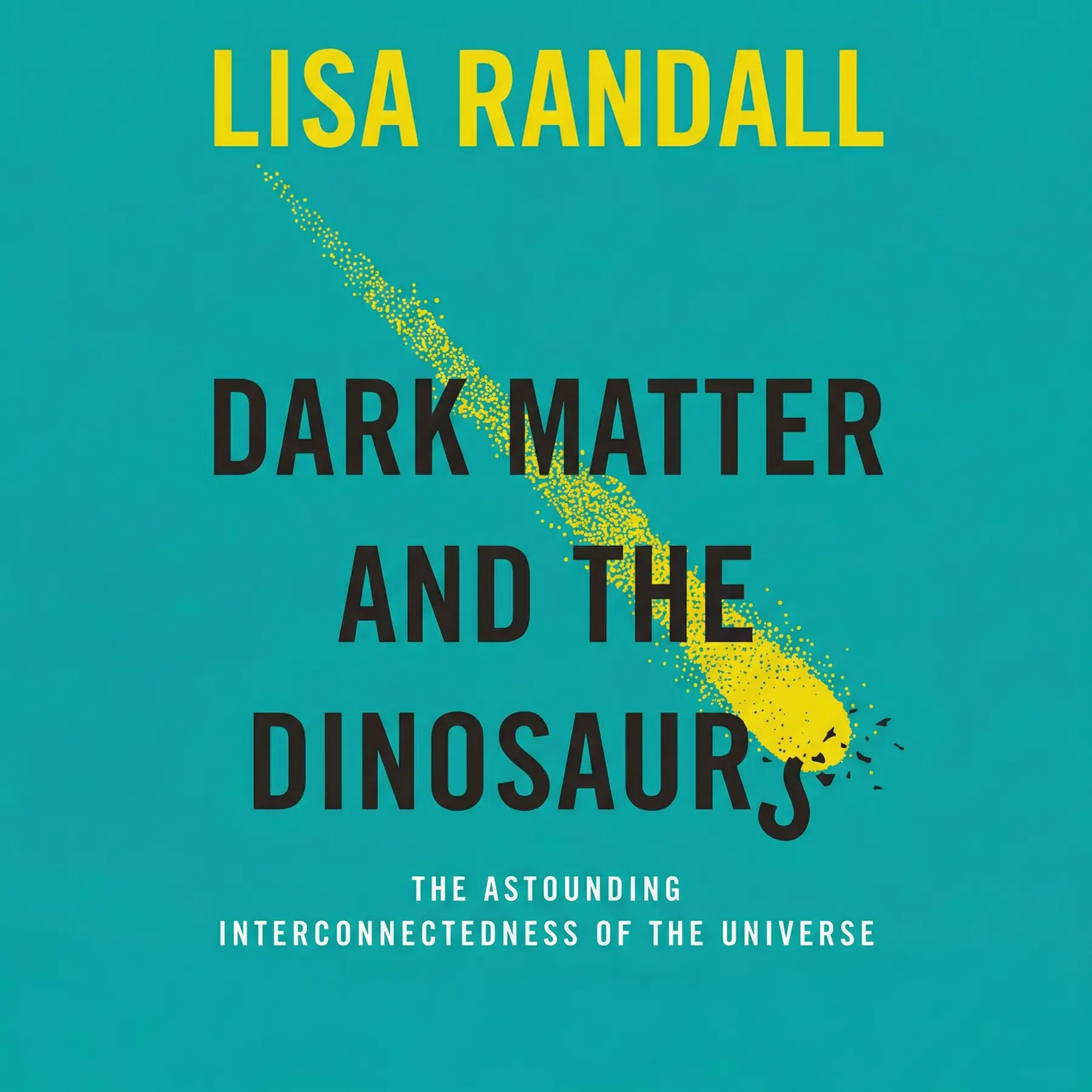
Dark Matter and the Dinosaurs: The Astounding Interconnectedness of the Universe
By Lisa Randall
Explore the cosmic connections between dark matter and Earth's history. Lisa Randall explains how invisible forces in the Milky Way might have triggered the asteroid impact that ended the age of dinosaurs.
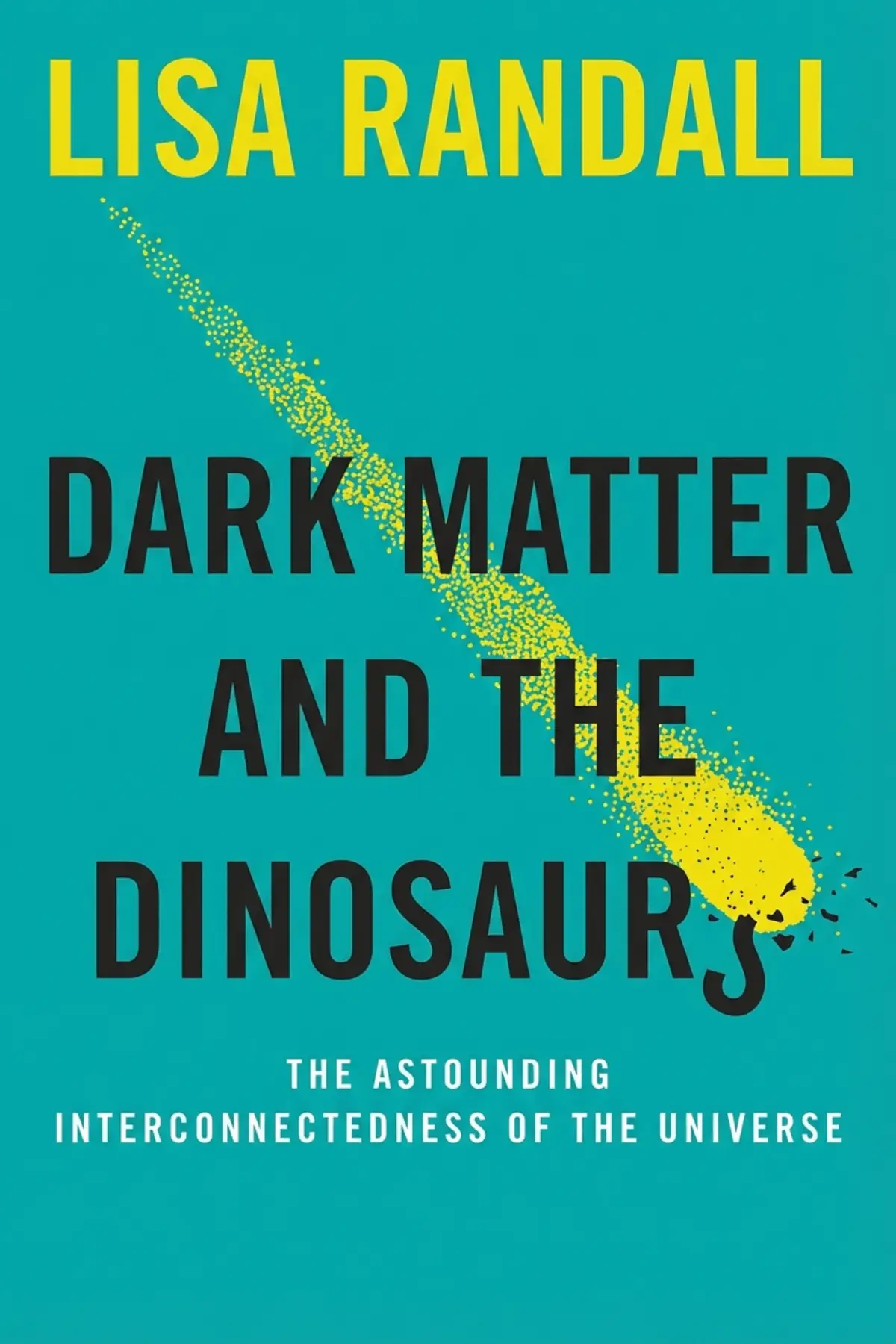
Table of Content
1. Introduction
1 min 50 sec
When we think about the dinosaurs, we often picture a world entirely separate from our own—a prehistoric landscape of giants roaming a lush, wild Earth. Their sudden disappearance sixty-six million years ago is one of history’s most dramatic turning points. We know now that a massive object from space was the culprit, but for a long time, we viewed this as a random stroke of celestial bad luck. However, what if there was a deeper, invisible logic to this catastrophe? What if the very structure of the universe itself was responsible for the end of the Cretaceous period?
This is the starting point for a journey into the heart of modern physics and ancient history. In this exploration, we are going to look at the astounding interconnectedness of everything in existence. We often think of the ‘heavens’ and the ‘earth’ as two distinct realms, but the reality is that our planet is a tiny boat in a vast, dark ocean, and the currents of that ocean determine our fate. The primary current we’re interested in is dark matter—a substance we cannot see, touch, or feel, yet which holds galaxies together.
Over the course of this summary, we will bridge the gap between the subatomic and the galactic. We’ll investigate how dark matter shaped the early universe and provided the scaffolding for our solar system. We’ll look at the history of cosmic impacts on Earth and see how these violent events might actually be responsible for the building blocks of life. Finally, we’ll dive into a revolutionary hypothesis: that our journey through the Milky Way brings us into contact with a hidden disk of dark matter, a meeting that happens on a clockwork cycle and may have been the ultimate cause of the dinosaurs’ demise. This is a story about how the invisible reaches out to touch the visible, and how the distant stars are closer to our history than we ever imagined.
2. The Invisible Majority
2 min 00 sec
Discover why the vast majority of the universe remains hidden from our sight and how scientists proved the existence of something they couldn’t see.
3. The Scaffolding of the Cosmos
2 min 03 sec
Explore the role dark matter played in the early universe, acting as the foundation for everything from galaxies to our own solar system.
4. Ancient Visitors and the Seeds of Life
1 min 52 sec
How the violent history of meteoroid impacts might have delivered the essential ingredients for life to our young planet.
5. Comets from the Cold Frontier
1 min 46 sec
Learn about the different types of cosmic debris and why the mysterious Oort cloud is the most dangerous source of potential impacts.
6. The Power of a Direct Hit
1 min 54 sec
Explore the terrifying destructive potential of cosmic impacts through the lens of the 1908 Tunguska event and modern defense efforts.
7. The End of an Era
1 min 57 sec
Examine the five great mass extinctions in Earth’s history, focusing on the specific evidence that tied the dinosaurs’ end to a cosmic visitor.
8. A Day of Fire and Acid
1 min 55 sec
Walk through the immediate and long-term environmental consequences of a massive asteroid impact and why the evidence is so hard to find.
9. The Mystery of Chicxulub
1 min 45 sec
Follow the scientific detective story that led to the discovery of the hidden crater in Mexico and confirmed the asteroid theory.
10. The Pulse of Extinction
1 min 46 sec
Is extinction a random event or a predictable cycle? Explore the evidence for a recurring pattern of mass death on our planet.
11. Wobbling Through the Galaxy
1 min 45 sec
How the movement of our solar system through the Milky Way provides a potential clue to the timing of cosmic disasters.
12. The Dark Matter Trigger
2 min 03 sec
Discover Lisa Randall’s groundbreaking theory about a disk of dark matter and how it might be the ultimate cause of the dinosaur extinction.
13. Conclusion
1 min 47 sec
The story of dark matter and the dinosaurs is a powerful reminder that we do not live in isolation. Our planet is not a closed system, and our history is not just a series of local events. Instead, we are part of a grand, celestial dance. From the invisible scaffolding of dark matter that allowed our galaxy to form, to the meteoroids that delivered the seeds of life, to the dark matter disk that may have cleared the way for our own mammalian ancestors by ending the reign of the dinosaurs, every chapter of Earth’s story has been co-authored by the universe.
What this really means is that the study of the very large—the movement of galaxies—and the very small—the nature of subatomic particles—is actually the study of ourselves. When we look at the iridium-rich clay of the K-Pg boundary, we are looking at a fingerprint left by the Milky Way. When we wonder about the future of our species, we must look to the stars and the hidden matter between them. This interconnectedness is both humbling and exhilarating. It suggests that we are deeply rooted in the cosmos.
As we move forward, the lesson is one of curiosity and vigilance. We are the first species with the ability to look up and understand these patterns. By continuing to explore the mysteries of dark matter and the dynamics of our galaxy, we are doing more than just satisfying scientific curiosity; we are mapping the forces that shape our destiny. The next time you look at the night sky, remember that you aren’t just looking at distant lights; you are looking at the architects of our past and the potential triggers of our future. The universe is more connected than we ever dared to dream, and our place in it is defined by the dark, invisible threads that hold it all together.
About this book
What is this book about?
Have you ever wondered if the smallest, most elusive particles in the universe could be responsible for the biggest changes in Earth's history? Dark Matter and the Dinosaurs offers a profound look at the hidden architecture of the cosmos and its direct influence on our planet. The book explores the mysterious nature of dark matter—an invisible substance that outweighs all known matter—and posits a revolutionary theory: that a disk of dark matter in our galaxy periodically triggers comet strikes on Earth. By weaving together particle physics, astronomy, and paleontology, this summary shows how the movement of our solar system through the Milky Way creates a cosmic cycle of extinction. You will learn about the formation of the solar system, the evidence for the asteroid that wiped out the dinosaurs, and the scientific detective work that revealed the Chicxulub crater. Ultimately, the book promises to change how you view the universe, showing that our existence is inextricably linked to the vast, invisible forces of the deep cosmos.
Book Information
About the Author
Lisa Randall
Lisa Randall is a distinguished science professor at Harvard University, where she focuses her research on cosmology and theoretical particle physics. Her influential work has made her a leading voice in the scientific community, earning her a spot on Time Magazine’s list of the 100 Most Influential People in 2007. Beyond her academic contributions, Randall is a celebrated author who excels at making complex scientific concepts accessible to the public, with other notable works including Warped Passages.
Ratings & Reviews
Ratings at a glance
What people think
Listeners consider this work captivating and straightforward to follow, noting its lucid accounts of intricate events and thorough explorations of dark matter hypotheses. The prose is approachable, catering well to non-experts, and listeners value how entertaining the material is. Feedback on the tempo is varied, as some characterize it as quick-moving while others see it as a gradual read.
Top reviews
Joshua
Wow. I didn't expect to be so captivated by a book about theoretical physics, but Lisa Randall makes the vastness of the cosmos feel strangely intimate. She weaves together cosmology and biology to explain how invisible dark matter might have nudged a comet toward Earth 66 million years ago. Frankly, her metaphors are brilliant and keep the reader grounded even through the dense particle physics. It’s a beautifully written reminder that we are part of a much larger, interconnected cosmic story.
Show moreKavya
Finally got around to reading this, and it totally changed how I look at the night sky. Randall isn't just a brilliant physicist; she’s a gifted communicator who brings a sense of wonder back to the study of the cosmos. I loved the little nuggets of humor, like the photograph in Figure 35 and her comparisons of dark matter to A-list celebrities. The book expertly guides you through the scientific method, showing how researchers formulate, test, and sometimes discard ideas in the face of new data. It’s rare to find a science book that feels this comprehensive yet remains so genuinely engaging for a lay reader. Even the dense bits about the Permian-Triassic extinction were fascinating because she connects them so well to the broader story of Earth’s place in the galaxy. This is science writing at its absolute best, right up there with the classics.
Show morePor
Ever wonder how a Harvard physicist connects the dots between invisible particles and the extinction of the dinosaurs? This book tackles that ambitious question with a blend of academic rigor and accessible storytelling that makes even the most complex phenomena feel understandable. Randall proposes that a thin disk of dark matter in our galaxy’s plane periodically perturbs the Oort cloud, sending comets hurtling toward our inner solar system every 32 million years. To be fair, the pacing is a bit uneven; I found the chapters on the solar system's structure fascinating, but the deep dives into the Standard Model were a slow read that required extra concentration. I appreciated her honesty about the theory being speculative, as she spends significant time explaining how future missions like GAIA will provide the necessary data to test these ideas. It is an engaging read for anyone who wants to see how different scientific disciplines can collide to solve ancient mysteries, even if you find yourself skimming the most jargon-heavy sections.
Show moreArt
Lisa Randall has an incredible knack for turning dense cosmological data into something that feels like a detective story. I really enjoyed how she laid out the clues, taking us from the birth of the universe to the impact crater in the Yucatan. The book isn't just about the 'Big One' hitting Earth; it’s about the hidden architecture of our galaxy and how we know dark matter is there even if we can't see it. Personally, I found the discussion of the Kuiper Belt and the Oort Cloud to be the highlight, as it made the solar system feel like a dynamic, dangerous place. Some of the particle physics chapters near the end felt like trying to bat away a swarm of meteoroids, but the overall journey was worth it. She isn't just teaching facts; she's showing us how to think like a scientist.
Show morePakpoom
After hearing Randall on a podcast, I was excited to see how she’d link particle physics to paleontology in this volume. The book delivers a deep, engaging look at how 'dark' things we can’t see shape the visible world we inhabit. I particularly liked her explanation of how the solar system bobs up and down through the galactic plane like a needle on a sewing machine. That visual helped me grasp the mechanics behind her theory of periodic comet showers from the Oort Cloud. While the pacing can be slow during the technical chapters on the Large Hadron Collider, the entertainment value remains high because of Randall’s witty asides and clear metaphors. She makes you feel like you’re part of a grand cosmic detective story. It is a solid 4-star read for anyone curious about the invisible forces governing our universe.
Show moreAurora
This book is a masterclass in how modern science is actually conducted. Lisa Randall takes us on a journey through multiple fields, showing how a single idea can ripple through geology and paleontology. In my experience, the theory that a dark matter disk killed the dinosaurs is secondary to the wealth of information she provides about our cosmic surroundings. I learned so much about the Kuiper Belt and how we monitor the skies. While the pacing drags in the middle, the payoff is worth the effort for anyone interested in the astounding interconnectedness of the universe.
Show moreRosa
As someone who isn't exactly a science whiz, I appreciated how Randall tried to simplify the complex relationship between dark matter and our solar system. The premise is fascinating—a dark matter disk essentially acting as a gravitational trigger for mass extinctions—but the execution felt a bit bloated. There are long stretches where the dinosaurs are barely mentioned, and the text becomes a dense history of dark matter research that might bore casual readers. Not gonna lie, my eyes glazed over during the highly technical sections on asymmetric dark matter and WIMPs. However, her writing remains friendly and she injects enough humor to keep you from totally giving up. It’s a decent book if you have the patience for a slow read, but don't expect a fast-paced thriller about prehistoric life.
Show moreMichael
The central hypothesis here—that a disk of dark matter triggered the comet that wiped out the dinosaurs—is undeniably provocative. Randall is a world-class scientist, and she clearly knows her stuff, providing detailed discussions of everything from the Chicxulub crater to the evolution of multicellular life. However, I felt the book struggled with its identity, oscillating between a general science primer and a specialized research paper. One chapter you’re learning about the difference between meteorites and meteoroids, and the next you’re lost in the weeds of galactic rotational velocity. Gotta say, the 'interconnectedness' she promises is there, but it requires a lot of heavy lifting from the reader to follow her logic through the dense middle sections. It’s an interesting intellectual exercise, but the mixed pacing and technical density make it a bit of a slog at times.
Show moreMoo
Look, the truth is that this book is basically two different texts stitched together. On one hand, you have a wonderfully accessible tour of our solar system and the history of mass extinctions that anyone can enjoy. On the other, there is a very rigorous and sometimes impenetrable defense of a specific dark matter model that feels aimed at other physicists. I found the sections on the 32-million-year periodicity of comet impacts to be the most compelling part, even if the statistics seem a bit dodgy to some critics. Randall’s prose is professional and clear, but the sheer volume of acronyms and astronomical units can be overwhelming for a weekend read. I’d recommend it to hardcore science fans, but casual readers should be prepared for some heavy eye-glazing moments. It’s a bold attempt to bridge disciplines that doesn't quite land a perfect impact.
Show moreKatya
Picked this up expecting a thrilling ride through prehistory, but I found myself drowning in a sea of particle physics instead. The 'dinosaurs' in the title feel more like a marketing gimmick to sell a book that is 80% about dark matter theory and galactic halos. To me, the whole concept felt like a theory built on a hypothesis built on another theory, which Randall herself admits is highly speculative. The writing style is fine, but the pacing is glacial and I struggled to stay engaged with the endless descriptions of meteoroid sub-types and cratering rates. I’m sure specialists will love the deep dive into the Standard Model, but for a layperson, it was just too much technical jargon for such a tenuous conclusion. It's not a bad book, just incredibly dry and misleadingly titled.
Show moreReaders also enjoyed
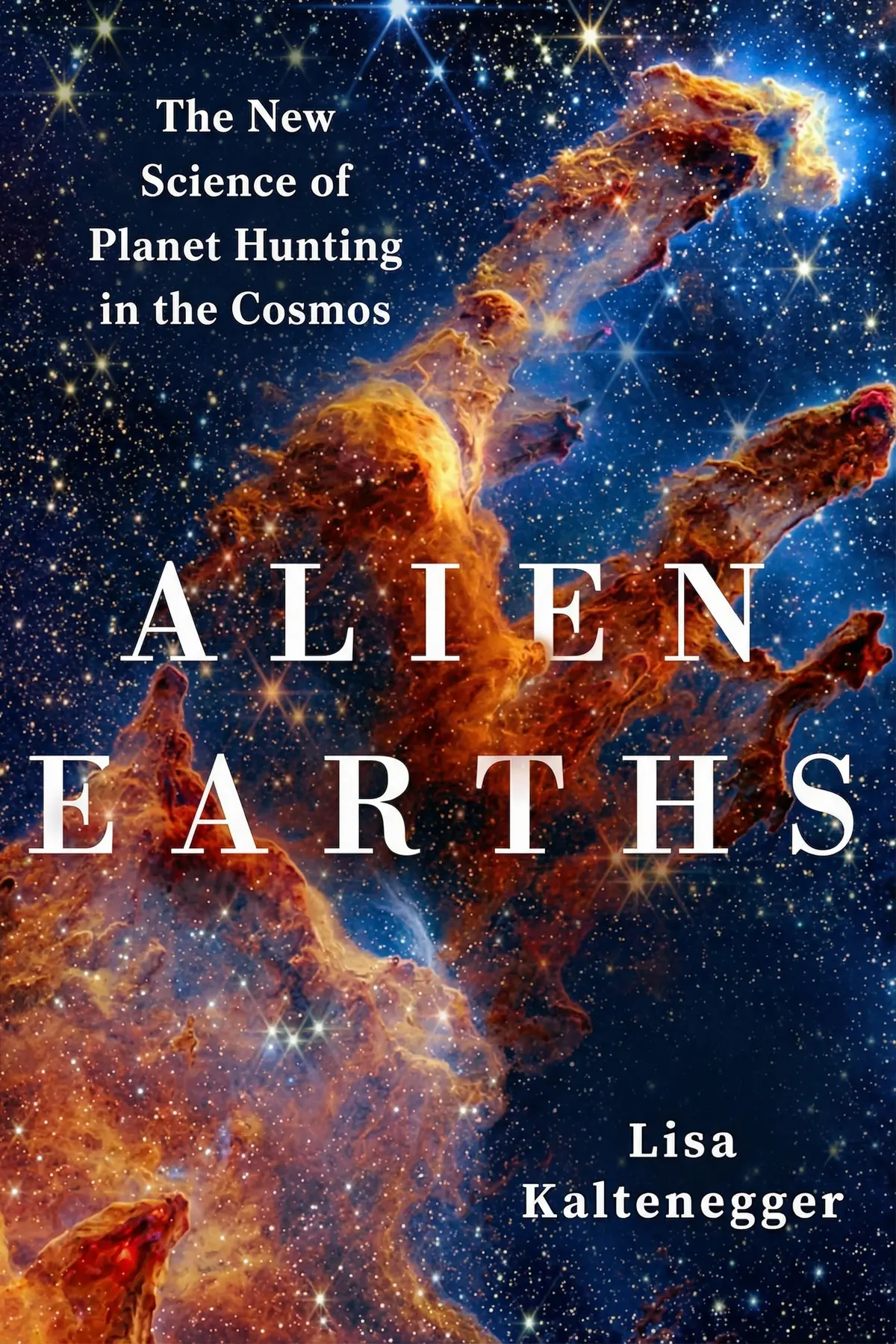
Alien Earths: The New Science of Planet Hunting in the Cosmos
Lisa Kaltenegger
A Life Decoded: My Genome: My Life
J. Craig Venter
A Planet of Viruses
Carl Zimmer
A Short History of Nearly Everything
Bill Bryson
AUDIO SUMMARY AVAILABLE
Listen to Dark Matter and the Dinosaurs in 15 minutes
Get the key ideas from Dark Matter and the Dinosaurs by Lisa Randall, plus 5,000+ more titles in English and Thai.
- 5,000+ titles
- Listen as much as you want
- 7-day free trial
- Cancel anytime







